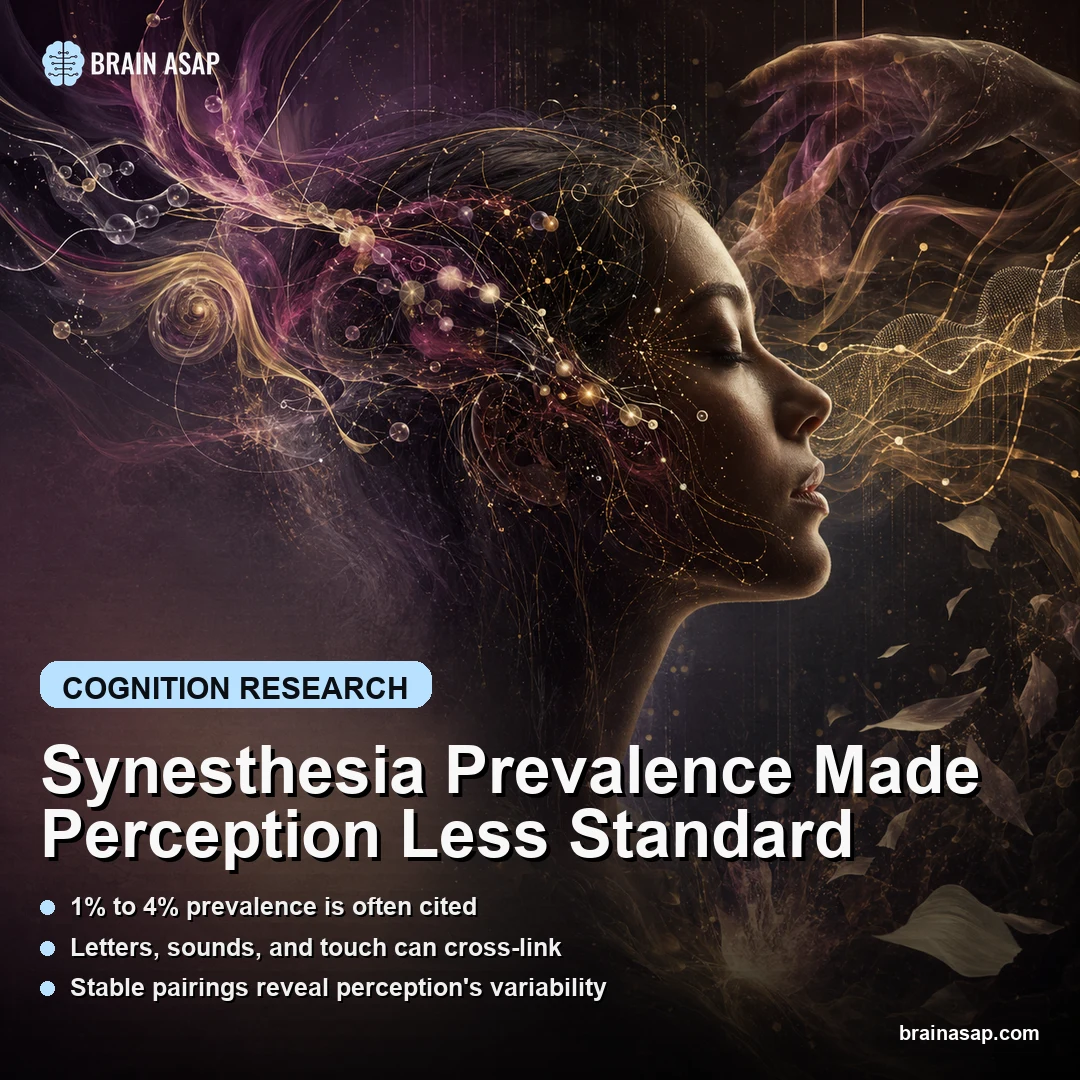
TL;DR: A 2006 study in Perception found that synesthesia was estimated to be 88 times more common than the old 0.05% figure after researchers used non-self-referred sampling and objective consistency tests. Key Findings Older conventional wisdom was about 0.05…
Read article ↗
How Psychedelics Hijack Brain Waves to Create Hallucinations TL;DR: A psychedelic drug that activates serotonin receptors dramatically amplifies slow 5-Hz brain oscillations in visual and memory regions, suggesting a mechanism for how hallucinogens distort per…
Read article ↗
Research reveals that our perception of multitasking is often an illusion – most cognitive tasks cannot actually be done simultaneously. Surprisingly, this illusion of multitasking can improve performance on activities, even when the tasks remain unchanged. Ke…
Read article ↗
A new study published in the Journal of Personality suggests that individuals exhibiting secondary psychopathic traits are perceived as less intelligent than those with primary psychopathic traits. The research examined how laypeople view the intelligence of o…
Read article ↗