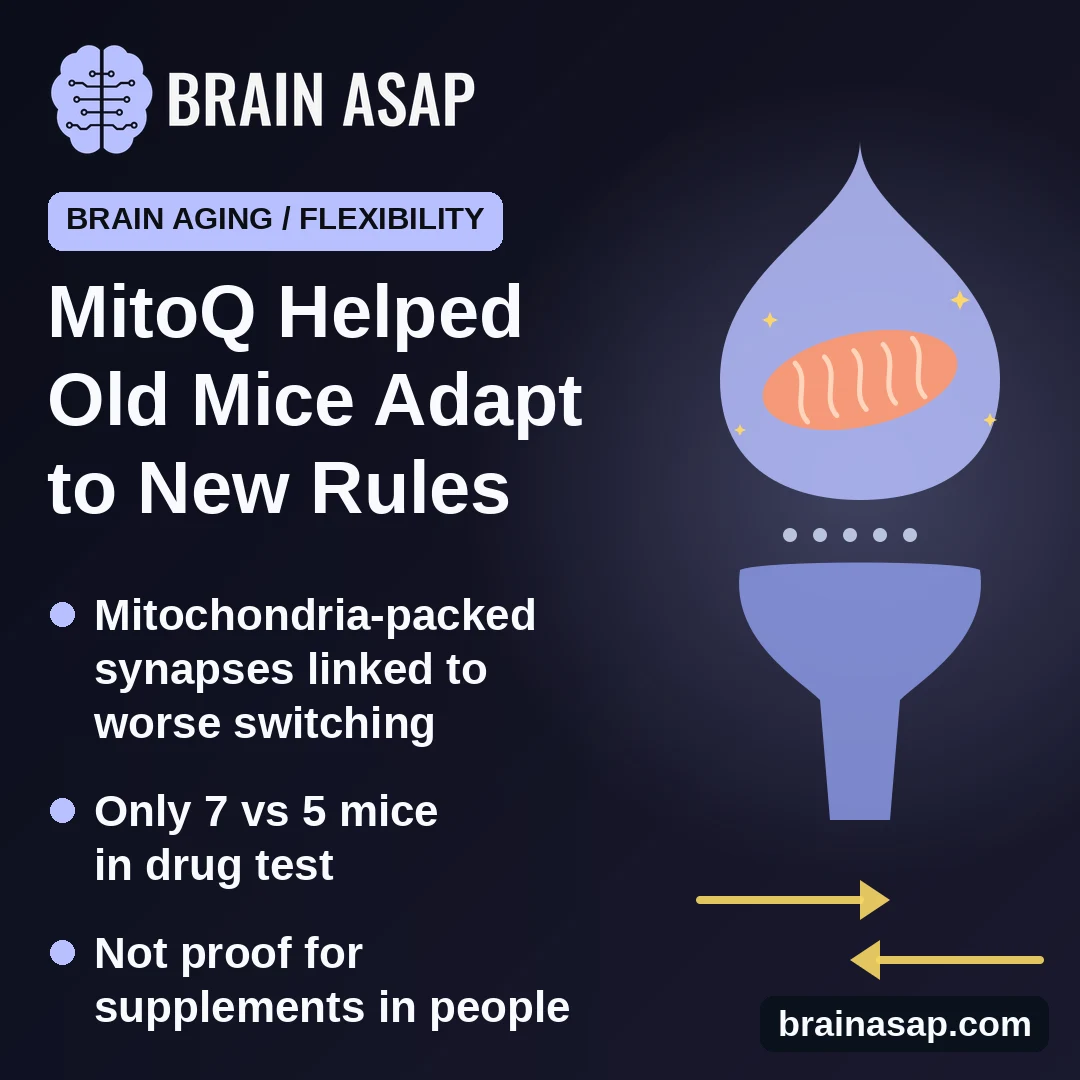
TL;DR: Some old mice lost the ability to switch strategies while others stayed sharp, and the struggling mice had more energy-producing mitochondria crowded into their brain connections. Twenty weeks of the antioxidant MitoQ improved strategy switching in a sm…
Read article ↗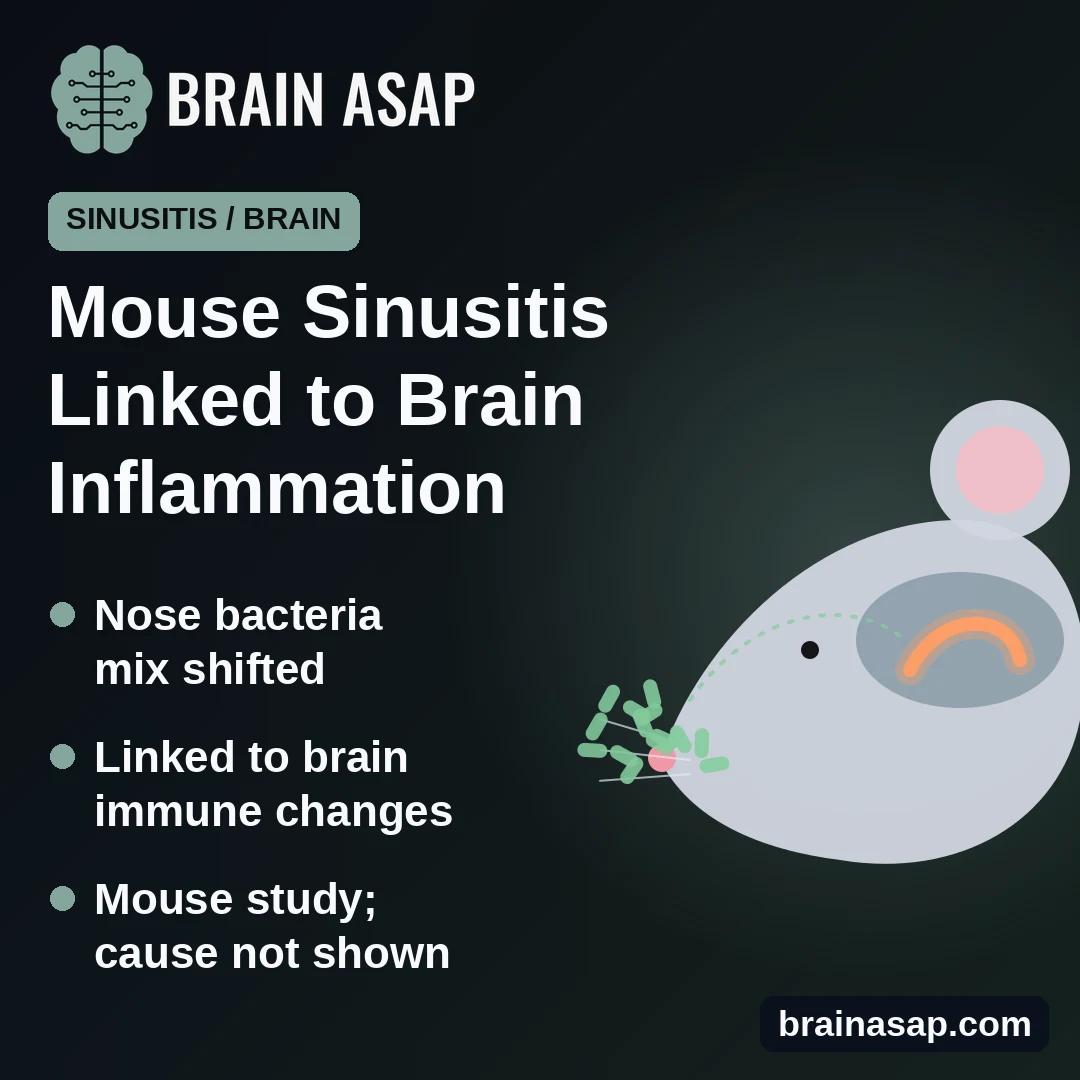
TL;DR: In mice with a long-lasting allergic-type sinus inflammation, the mix of nose bacteria changed, and signs of inflammation rose in the hippocampus, a memory area of the brain. Certain nose bacteria tracked with those brain changes, but the study cannot s…
Read article ↗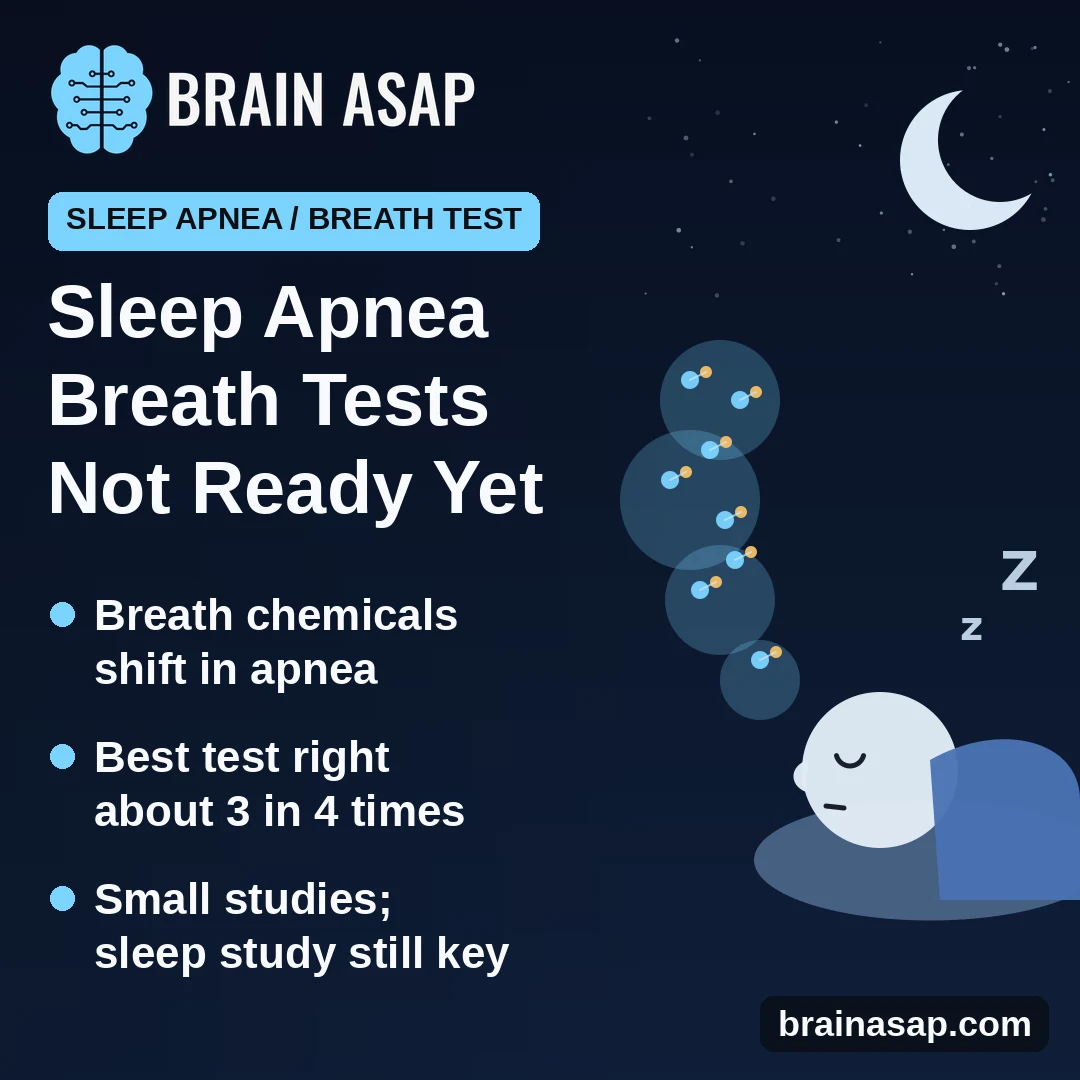
TL;DR: Chemicals in the breath of people with sleep apnea differ from those of people without it, and early studies suggest a breath test might one day help screen for it. The best result so far correctly sorted about 3 in 4 people, which is not yet good enoug…
Read article ↗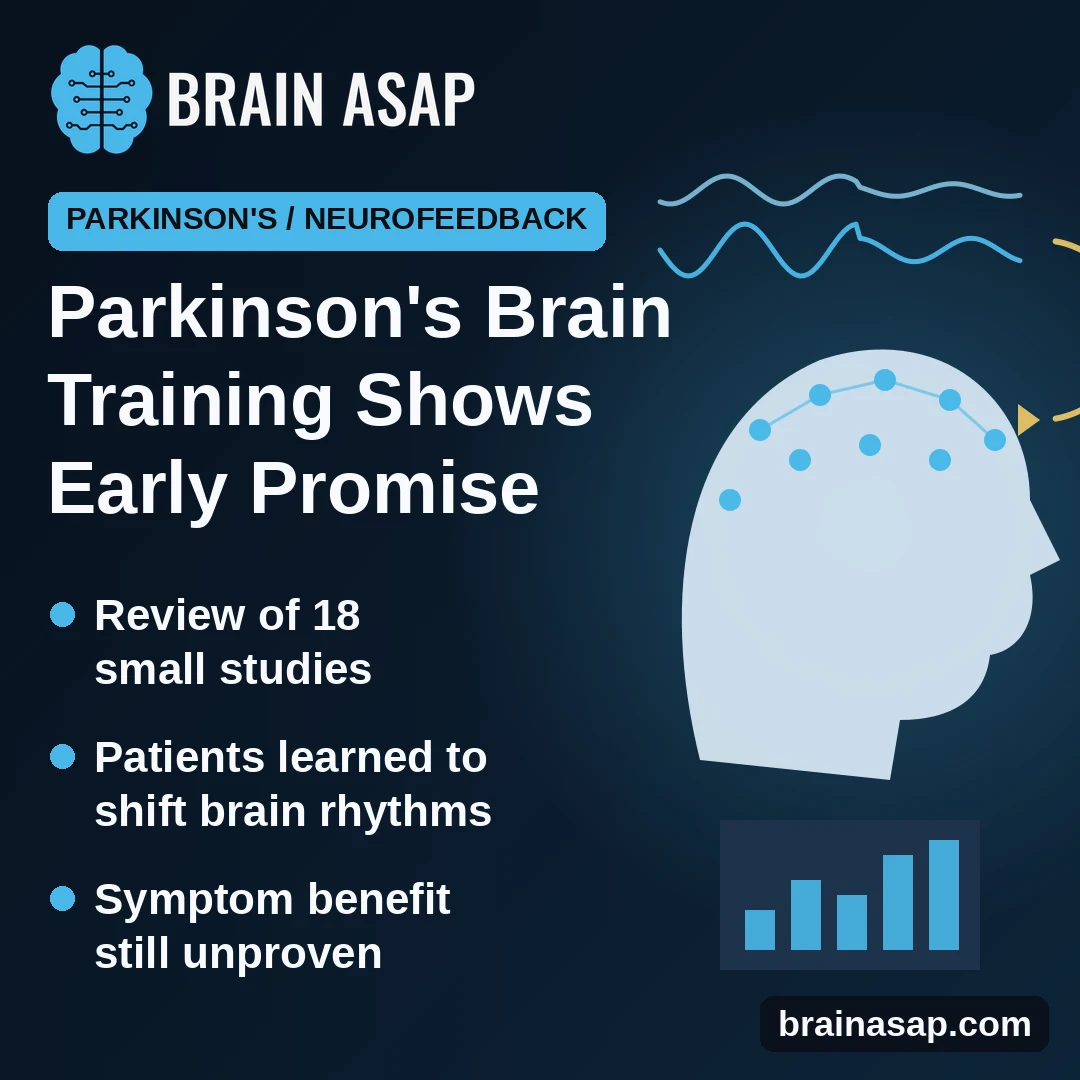
TL;DR: A review of 18 small studies finds that some people with Parkinson's can learn to control brain signals linked to their symptoms using neurofeedback. Whether that reliably improves movement or daily life is still unproven. Key Findings 18 studies, 3 app…
Read article ↗
TL;DR: Young female mice bred to develop Alzheimer's-like disease remembered objects normally on a standard test, but lost the resistance to memory interference that healthy females have. Separating the interference by place or strengthening the memory restore…
Read article ↗
TL;DR: In 8 healthy beagles, kratom capsules raised pain thresholds only modestly, and less consistently than the opioid buprenorphine. Kratom caused far less sedation, but the study was small and did not test pain relief in sick animals or people. Key Finding…
Read article ↗
TL;DR: Standing still for 30 seconds on a pressure-sensing mat, eyes closed and arms at the sides, best separated people with spinal cord compression in the neck from people without it. The 15-second version did almost as well. Key Findings 106 people tested:…
Read article ↗
TL;DR: When a computer sorted about 470 people only by their thinking-test and behavior scores, two kinds of frontotemporal dementia stood out clearly. Alzheimer's and two speech-loss types blurred together, which may help explain why these diagnoses take so l…
Read article ↗
TL;DR: A rare kind of sudden vision loss has been linked most consistently to injected semaglutide (Ozempic, Wegovy), not to every drug in its class, a new review finds. The authors say higher drug levels in the blood may matter, but the evidence is mostly obs…
Read article ↗
TL;DR: Four weeks of being kept awake about 20 hours a day damaged memory and brain-cell connections in middle-aged mice. An experimental compound called D30, given during the sleep loss, partly protected them. Key Findings Three kinds of memory got worse: Rec…
Read article ↗