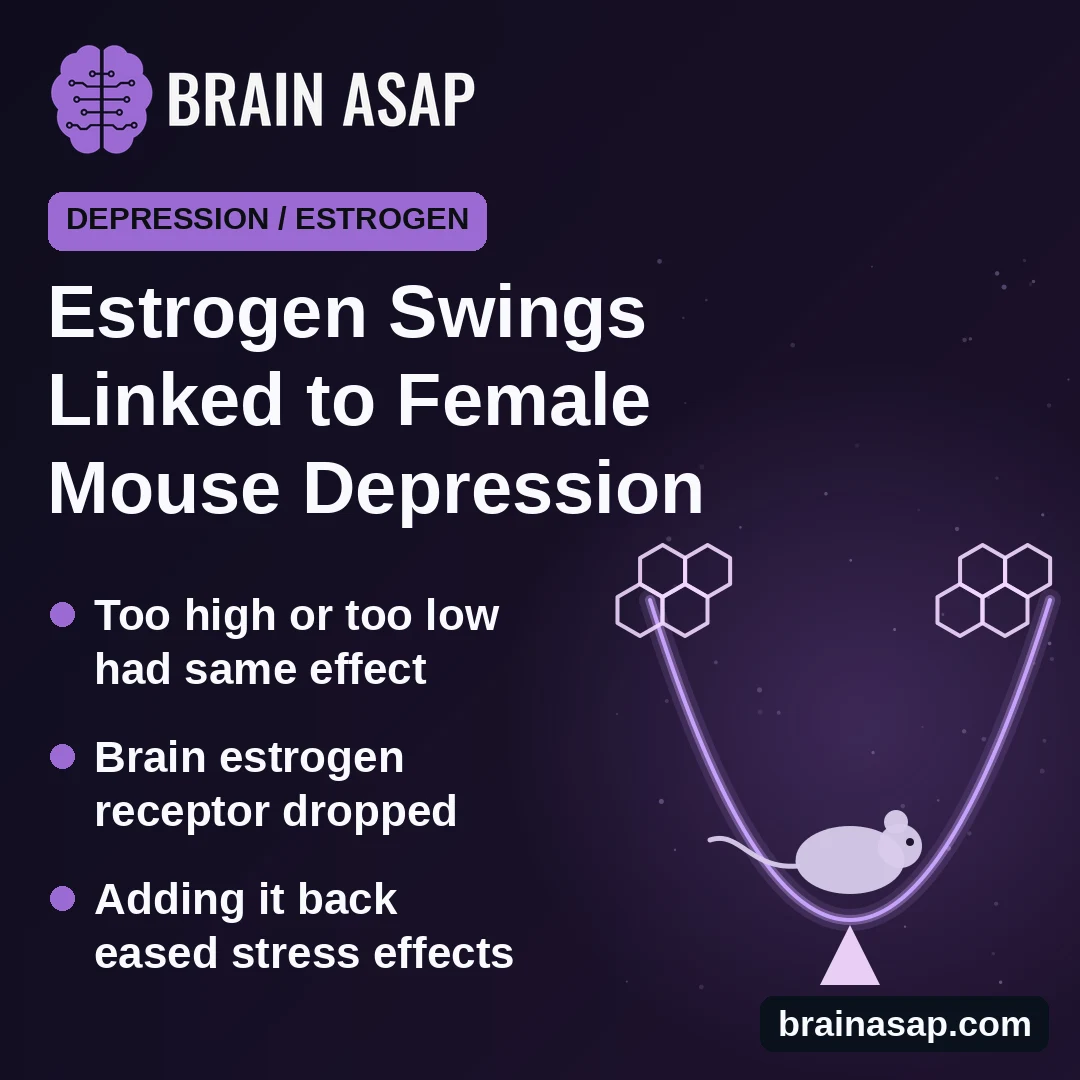
TL;DR: In female mice, both too little and too much estrogen led to depression-like and anxious behavior, and both lowered one estrogen receptor in a mood-related brain area. Boosting that receptor eased the effects of stress. Key Findings U-shaped pattern in…
Read article ↗
TL;DR: In a lab study of 187 UK students, a few minutes spent vividly imagining good future events made those with more low-mood symptoms feel more in control of their goals. It did not make anyone feel their goals were more likely or more important. Key Findi…
Read article ↗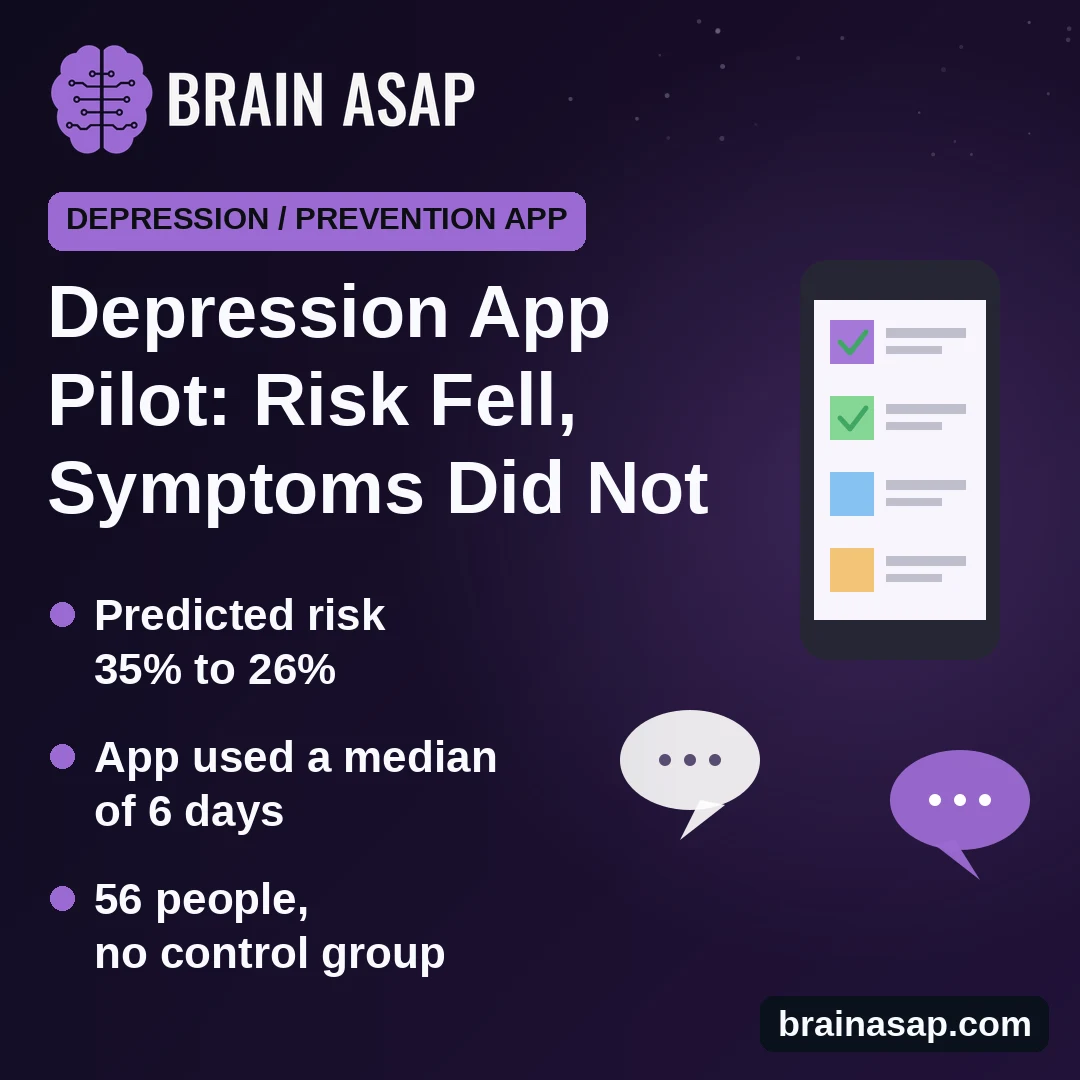
TL;DR: In a small Spanish pilot, adults at high risk of depression got a personalized prevention plan from their family doctor plus an app. After 3 months their predicted depression risk and anxiety scores fell, but depression symptoms did not, most people bar…
Read article ↗
TL;DR: A Swedish study of 42 people with depression found no link between the brain’s main calming chemical, GABA, and slowed movement, early waking or poor appetite. The researchers measured GABA with two kinds of scans, but most patients had fairly mild vers…
Read article ↗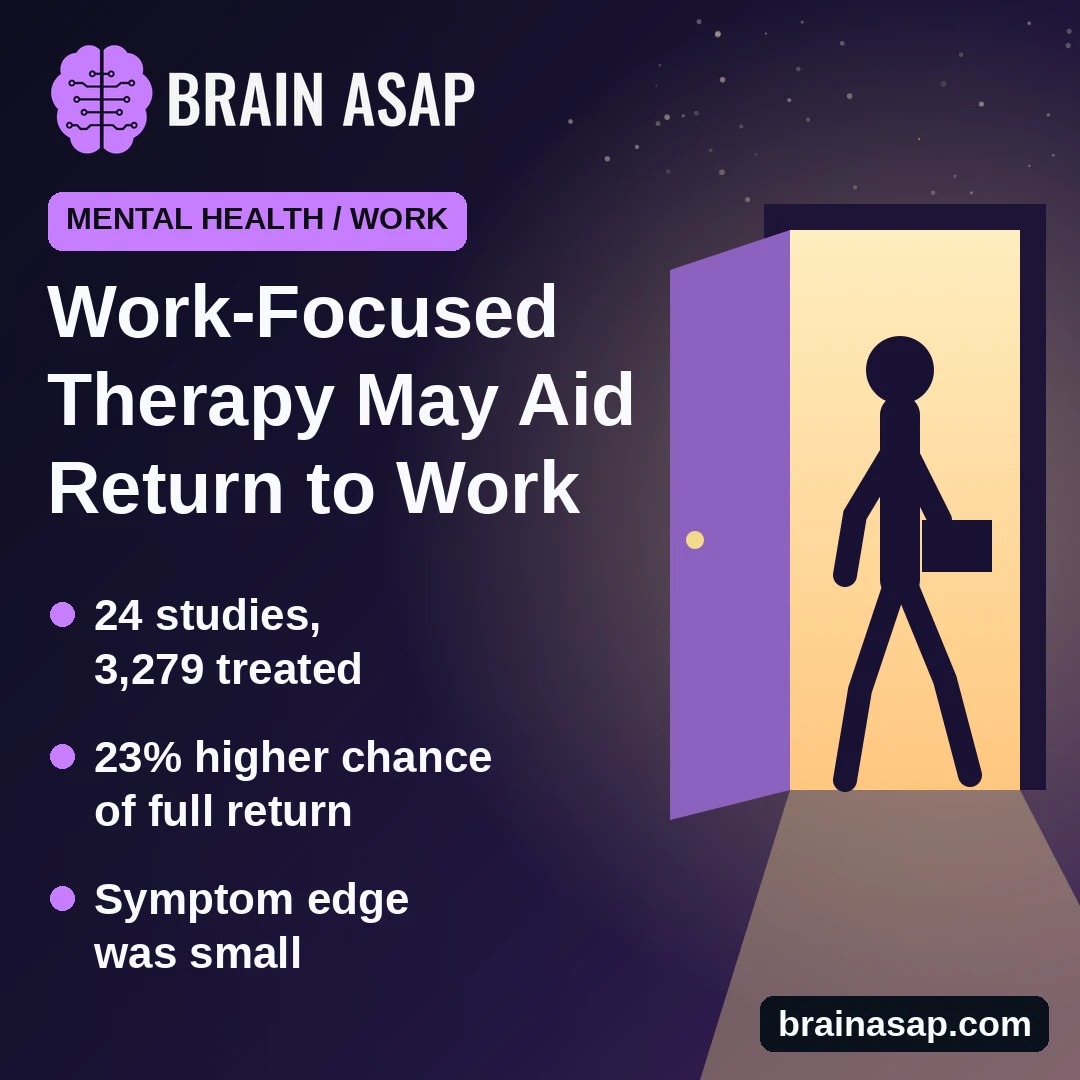
TL;DR: Across 24 studies of adults with depression, anxiety or stress, talk therapy built around getting back to work was linked to a modestly higher chance of fully returning. Its edge over other care for symptoms was small and faded by later follow-up. Key F…
Read article ↗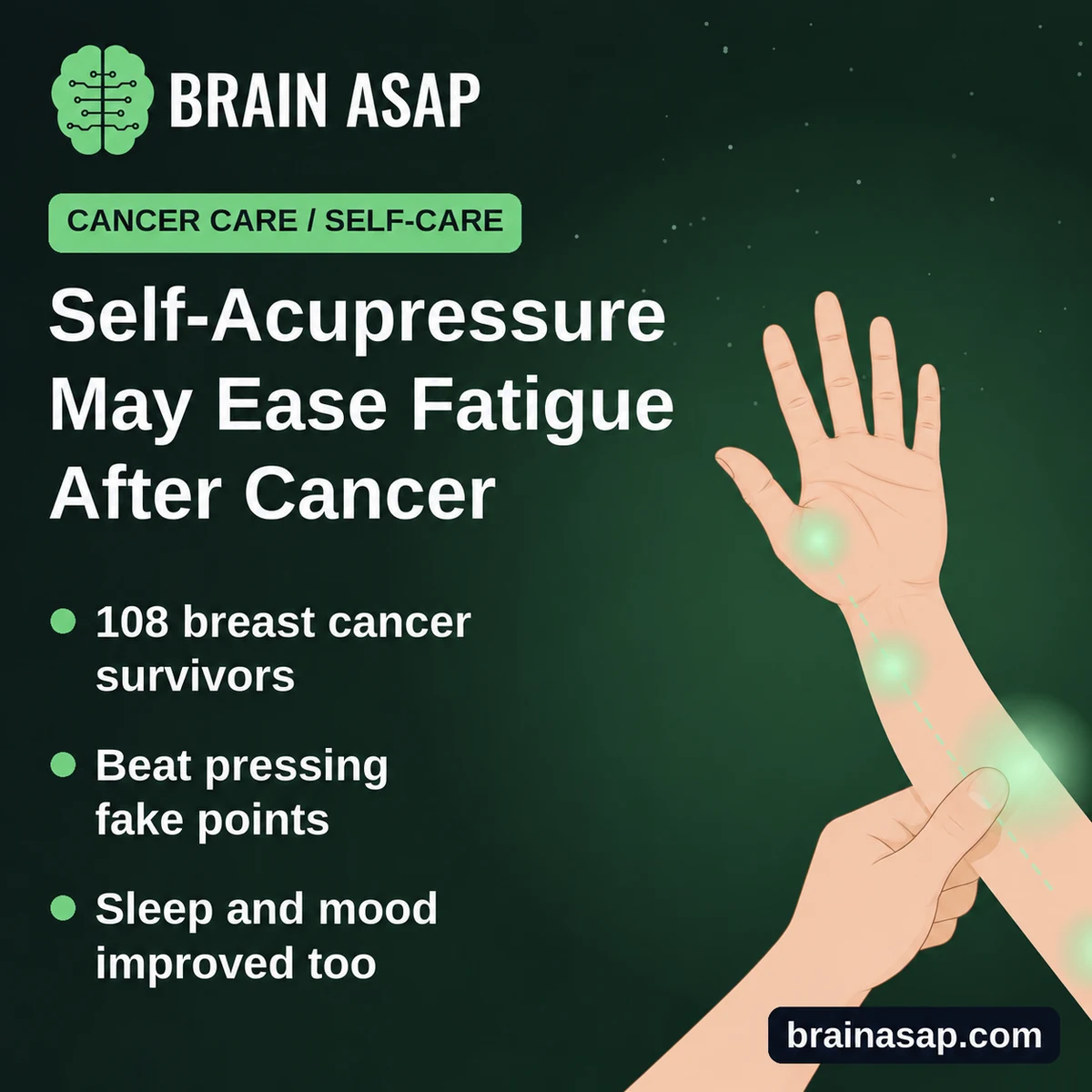
TL;DR: In a Chinese trial of 108 breast cancer survivors, 7 weeks of daily self-acupressure eased a combined score for fatigue, poor sleep and low mood more than pressing fake points or usual care. The gains held 12 weeks later, though all results were self-re…
Read article ↗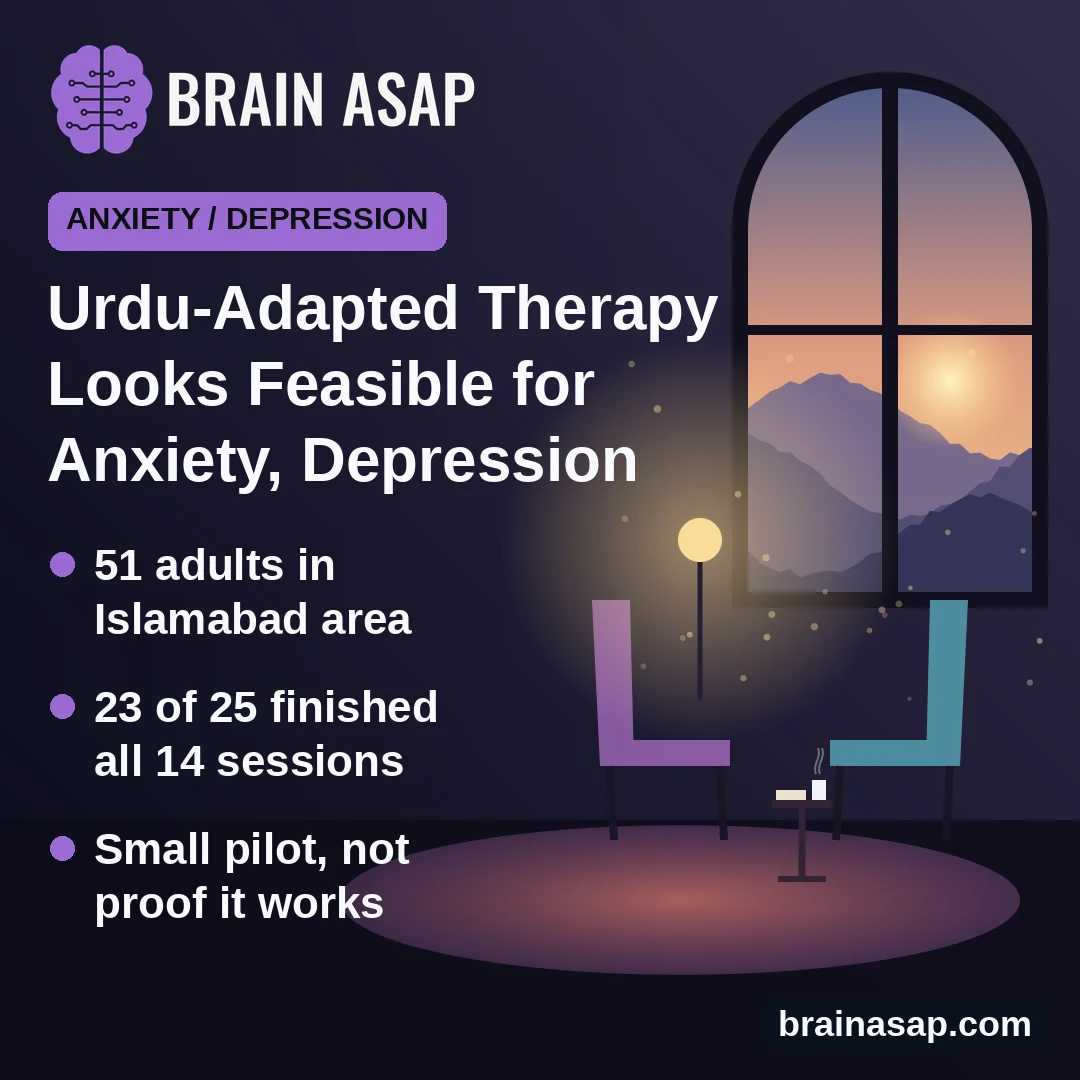
TL;DR: In a small Pakistan pilot, 23 of 25 adults given an Urdu version of a talk therapy for anxiety and depression finished all 14 weeks. The trial was too small to show the therapy works. Key Findings Signed up and stayed: 51 adults were randomly assigned t…
Read article ↗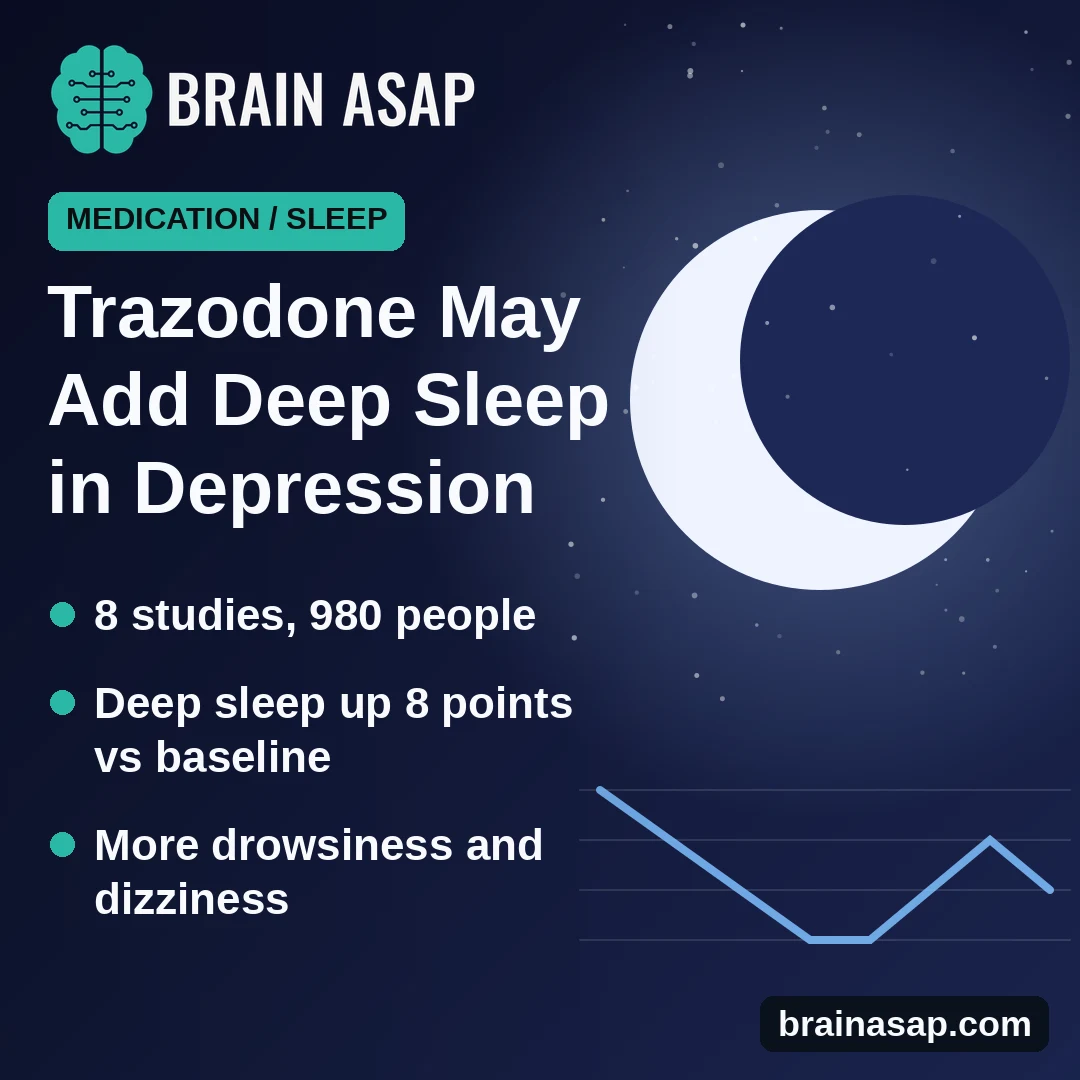
TL;DR: In a pooled review of 8 studies of 980 people with depression and sleep problems, sleep tests showed more deep sleep and less light sleep after taking trazodone than before. Compared with placebo, though, the deep-sleep gain was not clear, and drowsines…
Read article ↗
TL;DR: A therapy app did not reduce depression scores more than a look-alike education app in a trial of adults with past concussions. Insomnia scores improved more with the therapy app, but only 42 of 113 participants completed the main 12-week check-in. Key…
Read article ↗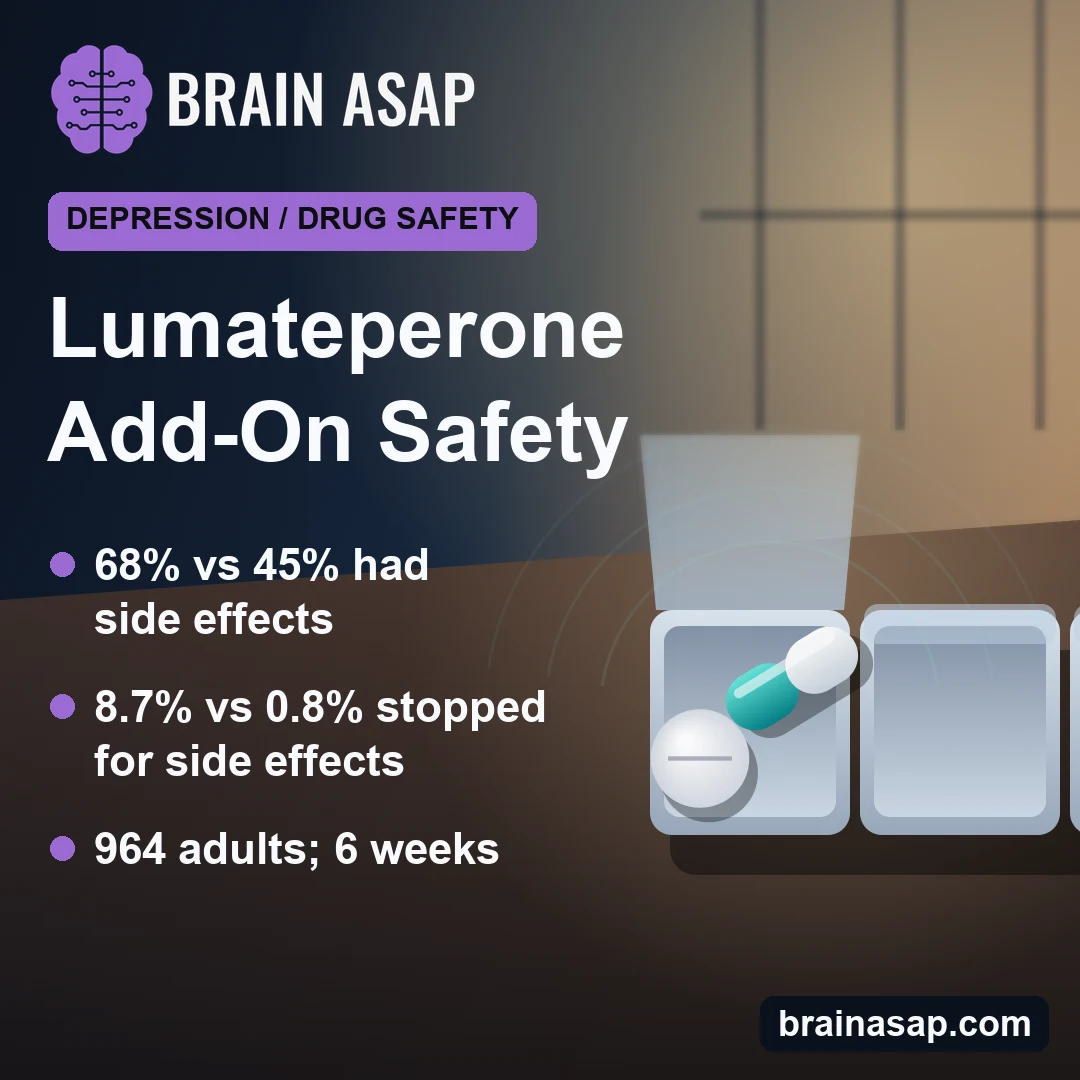
TL;DR: A 2026 pooled analysis in CNS Drugs combined two six-week trials of adults whose depression hadn’t responded well enough to an antidepressant. Adding the antipsychotic lumateperone instead of a placebo raised the share of people with side effects from 4…
Read article ↗