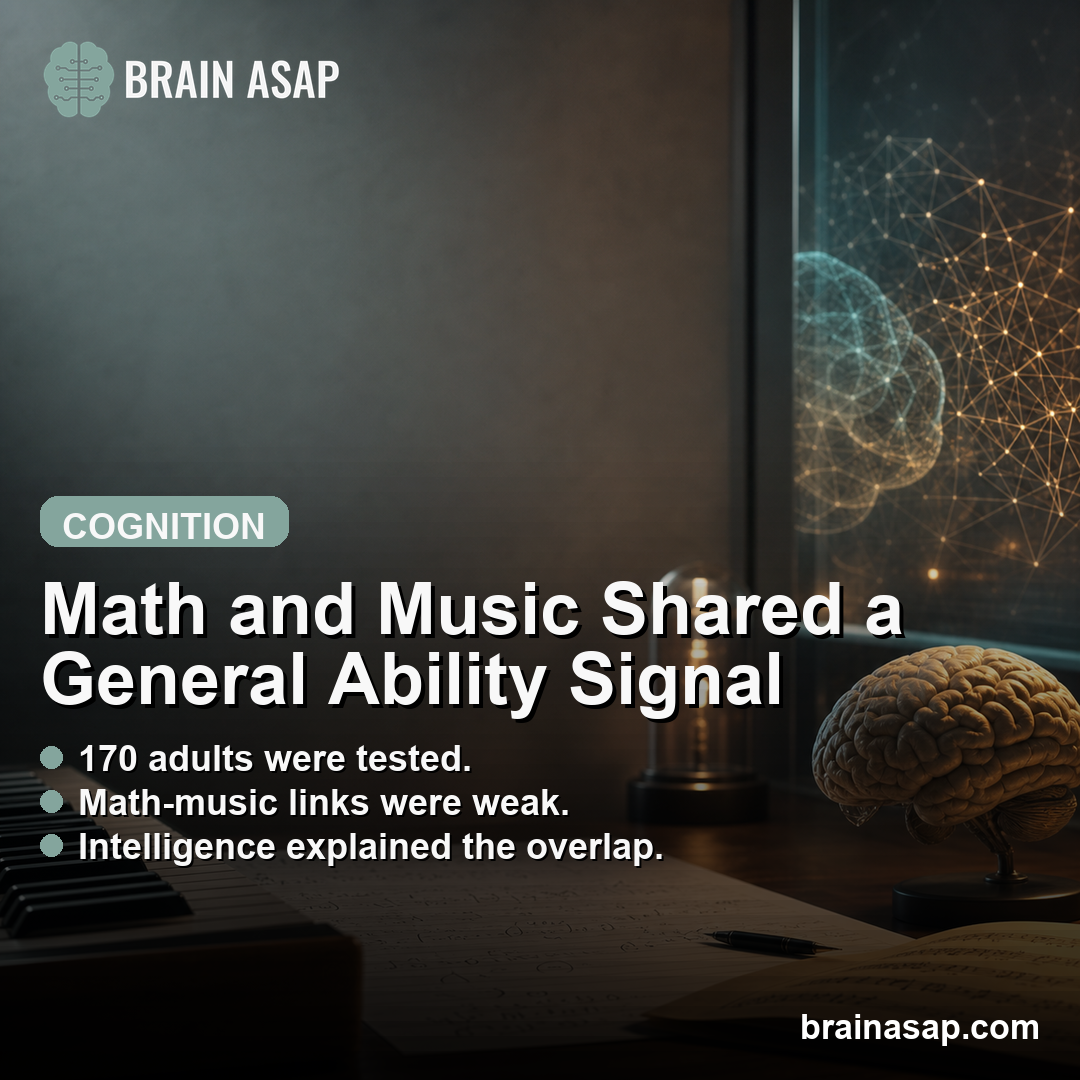
Math-Music Link Nearly Vanished After Accounting for Intelligence

Math-Music Link Nearly Vanished After Accounting for Intelligence

TL;DR: A 2026 Journal of Intelligence study of 170 adults found that math ability and music ability were only weakly related, and the link was reduced to almost zero after researchers accounted for general intelligence. Key Findings Adult ability groups were tested: The 170-person sample included math specialists, music specialists, and controls who did not …

Read more

IQ at Age 23 Predicted Socioeconomic Status at Age 27, With Genes Explaining 69-98% of the Link in TwinLife Germany

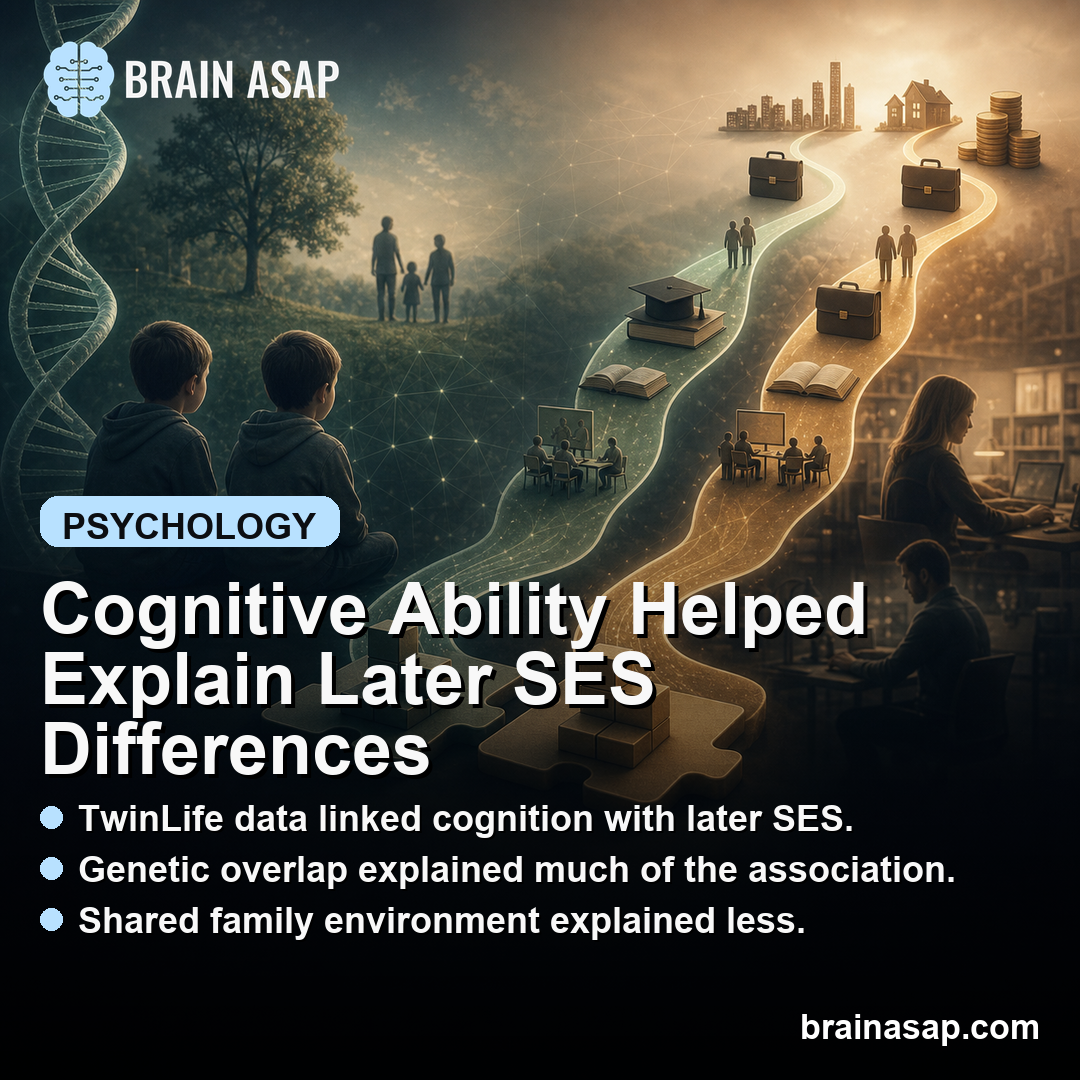
IQ at Age 23 Predicted Socioeconomic Status at Age 27, With Genes Explaining 69-98% of the Link in TwinLife Germany

TL;DR: A 2026 study in Scientific Reports used the German TwinLife panel (228 monozygotic and 212 same-sex dizygotic twin pairs) to show that intelligence quotient (IQ) at age 23 predicted four socioeconomic status (SES) outcomes at age 27, with genetic factors explaining 69-98% of the IQ-SES association. Key Findings IQ at age 23 predicted SES …

Read more

Chess Experts Differ in Chunk Memory & Brain Connectivity vs. Novices (2024 Study)

Expert chess players use chunk memory to make better decisions, showing unique brain connectivity that helps them perform well even against tougher opponents. Highlights: Consistent Performance: Expert chess players perform equally well regardless of the difficulty level, unlike beginners whose performance drops with increased difficulty. Stronger Brain Connections: Experts show stronger connections in specific brain …

Read more

Genetics & Intelligence (IQ): How DNA Shapes Cognition, Problem Solving, etc.

Our genes influence more than just our raw intelligence and problem-solving abilities. The latest discoveries in the genetics of intelligence are showing how our DNA shapes how we learn, our educational attainment, occupational success, and even our health outcomes. Genetic research is revealing the deep connections between inherited cognitive capacities and multiple aspects of life. …

Read more

Neurobiological Correlates of Human Intelligence (IQ): Genetics, Brain Regions, Cellular Structures

Human intelligence is a complex cognitive trait that has fascinated scientists and philosophers for centuries. New research is shedding light on the neurobiological underpinnings of intelligence, from genes to cells to brain networks. Key Facts: Intelligence is one of the most heritable human behavioral traits, with genetics explaining 50-80% of variability between individuals. Over 1000 …

Read more

Neuroanatomy of Intelligence (IQ): Correlates from MRI Research

Human intelligence has long fascinated scientists. With modern neuroimaging methods like MRI, we now have an unprecedented ability to examine the biological basis of intelligence in the living brain. Key Facts: Larger brain size predicts greater intelligence, but regional brain volumes matter more than total size. More intelligent individuals tend to have greater volumes in …

Read more

Intelligence, Psychopathy, Aggression: Sex Differences (Males vs. Females)

Psychopathic individuals are known to commit a disproportionate amount of violence and crime. Yet the connections between psychopathy, intelligence and aggression are complex. A new study unpacks the links between these dangerous traits in men and women. Key Facts: Psychopathy was assessed using the Psychopathy Checklist: Screening Version which divides psychopathy into 4 facets – …

Read more

High Neuroticism Increases Depression Risk: Intelligence May Help Counteract

New research suggests that having higher intelligence may reduce the risk of depression associated with neuroticism, a personality trait linked to emotional instability. Key Facts: Neuroticism is strongly associated with an increased risk of depression and psychological distress. Intelligence does not appear to protect against clinical diagnosis of major depressive disorder in highly neurotic individuals. …

Read more