TL;DR: In diabetic rats, giving the antidepressant nortriptyline together with tramadol or ibuprofen eased pain behavior at much lower doses than each drug alone. The combinations worked better together than their separate effects would predict, but this was a…
Read article ↗
TL;DR: In a phase III trial of 34 children with a rare inherited energy disorder, the drug dichloroacetate did not improve parent-rated movement problems more than placebo over 4 months. It did lower a harmful blood acid, lactate, and was well tolerated. Key F…
Read article ↗
TL;DR: In rats given the chemotherapy drug doxorubicin, which caused memory problems, adding the antipsychotic lurasidone protected memory on maze and object tests. This was a prevention study in male rats, not a treatment for people with “chemo brain.” Key Fi…
Read article ↗
TL;DR: In rats trained to spot a brief flash of light, a drug that blocks one nicotine-type receptor (alpha-7) made them better at telling flash from no flash, even with distractions. Drugs that boosted the same receptor made them worse at high doses. Key Find…
Read article ↗
TL;DR: In female mice without ovaries, a model of menopause, the osteoporosis drug raloxifene and the hormone progesterone each protected brain dopamine from a toxin that mimics Parkinson’s. Giving both together worked no better than either alone. Key Findings…
Read article ↗
TL;DR: In rats stressed with mild foot shocks, REM sleep, the dream stage, dropped. The insomnia drug suvorexant and two related experimental drugs partly brought it back, and suvorexant also helped the rats fall asleep faster, but this was a small study in 9…
Read article ↗
TL;DR: Healthy adults normally react a bit slower to a spot that recently caught their attention, a habit that helps attention move on. A single dose of a drug that boosts dopamine, and another that blocks it, both weakened this habit compared with placebo. Ke…
Read article ↗
TL;DR: Ambroxol, an old cough medicine, can boost a key brain enzyme in lab studies, but a review of 20 clinical reports found no proven benefit in Gaucher disease or GBA1-linked Parkinson’s. In a randomized trial of people with GBA1-linked Parkinson’s, ambrox…
Read article ↗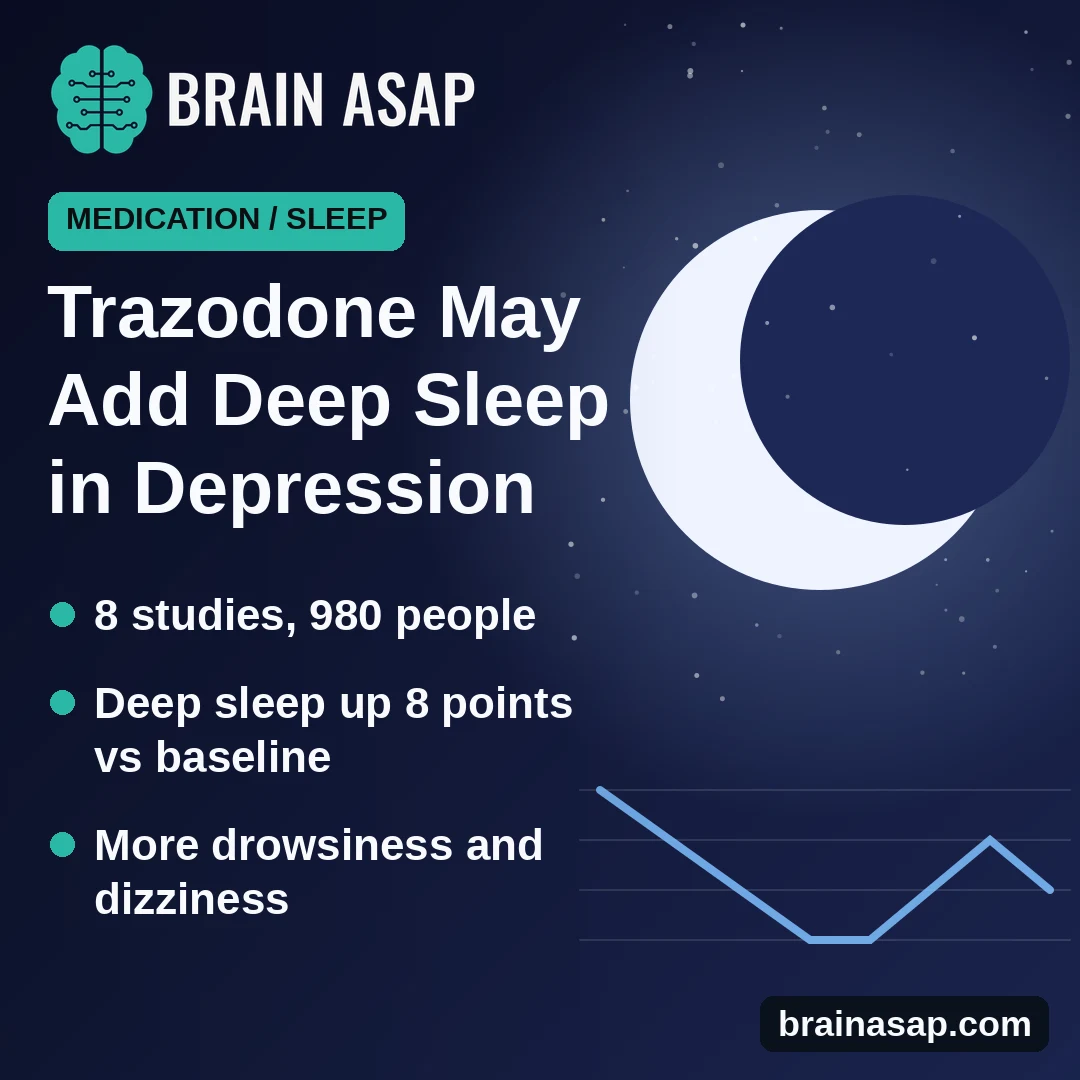
TL;DR: In a pooled review of 8 studies of 980 people with depression and sleep problems, sleep tests showed more deep sleep and less light sleep after taking trazodone than before. Compared with placebo, though, the deep-sleep gain was not clear, and drowsines…
Read article ↗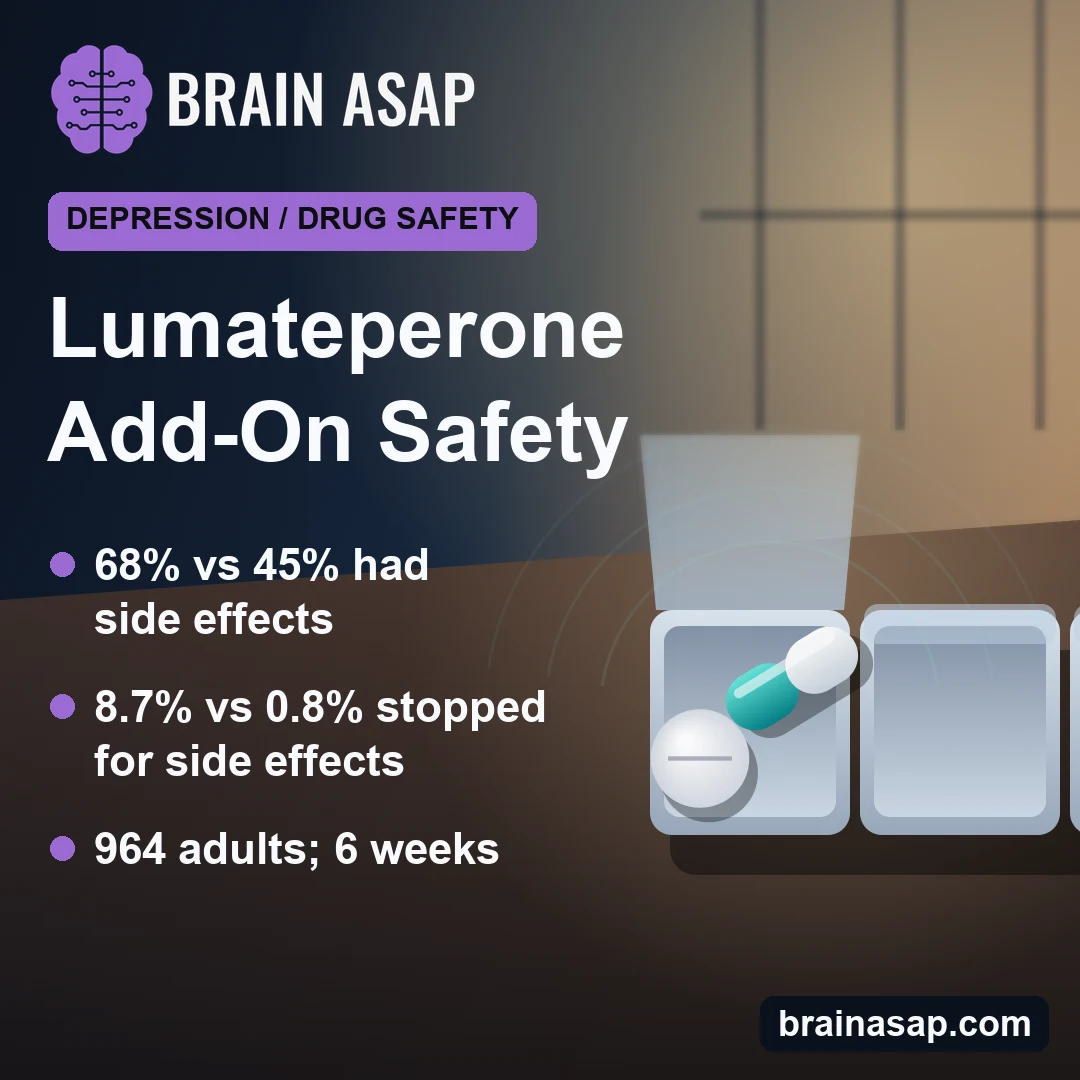
TL;DR: A 2026 pooled analysis in CNS Drugs combined two six-week trials of adults whose depression hadn’t responded well enough to an antidepressant. Adding the antipsychotic lumateperone instead of a placebo raised the share of people with side effects from 4…
Read article ↗