Antagonistic Relationships Shaped Human Brain Social Maps in fMRI Study
Antagonistic Relationships Shaped Human Brain Social Maps in fMRI Study

TL;DR: A 2026 study in Communications Psychology used functional MRI (fMRI) before and after a television drama and found that antagonistic relationships were represented most clearly in the left anterior supramarginal gyrus and right medial prefrontal cortex. Key Findings 21 young adults: The study scanned 21 college students before and after they watched a 6-episode …
Read more

Betrayal Biased Social Inference Through Selective Observation

Betrayal Biased Social Inference Through Selective Observation

TL;DR: A 2026 study in PLOS Computational Biology found that people overestimated an opponent’s competitiveness after betrayal, especially when they chose to watch the opponent instead of controlling their own avatar. Key Findings 62-person social task: 62 adults played a 2D prey-pursuit game with a computerized opponent whose hidden friendliness changed over time. Betrayal shifted …

Read more

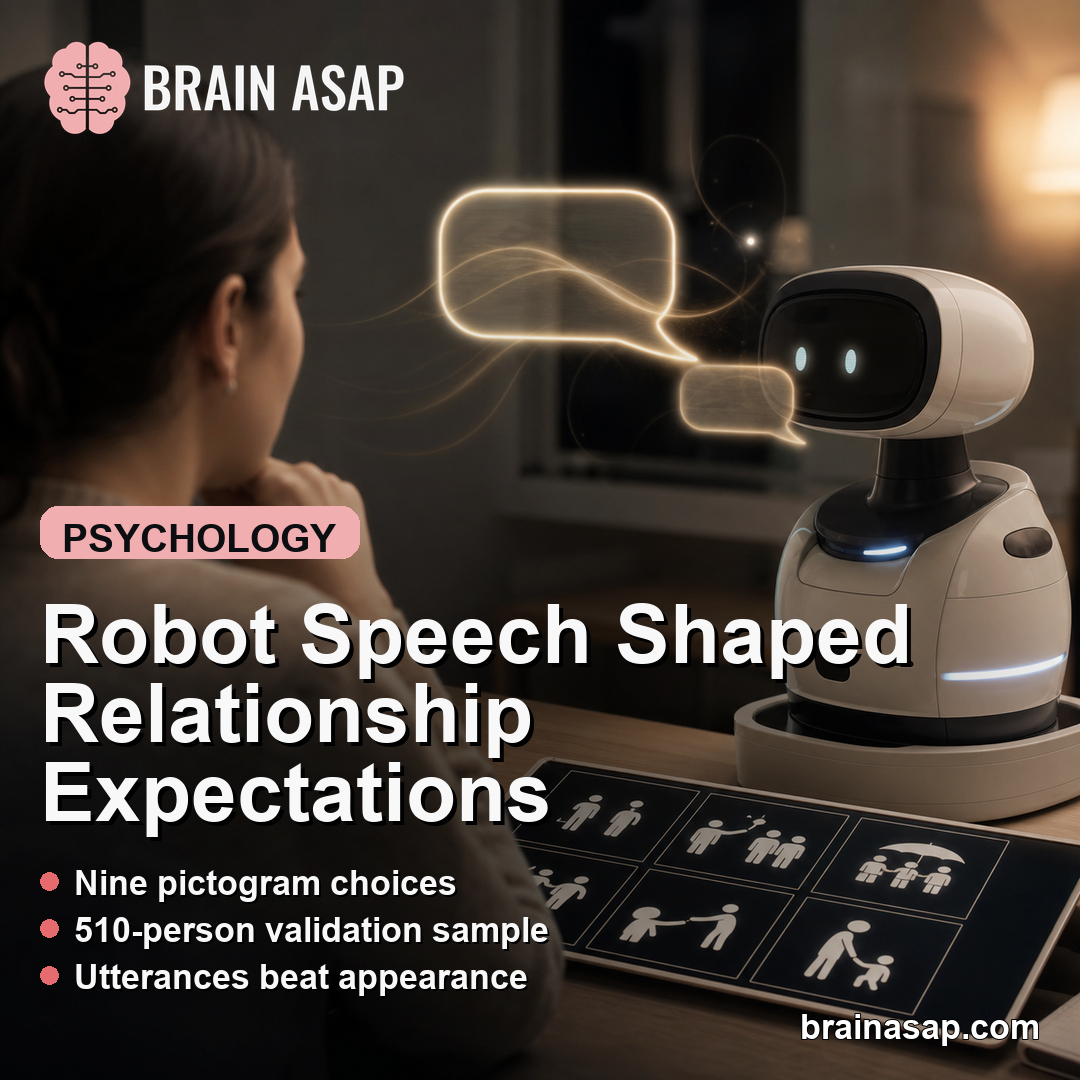
Robot Utterances Shaped Human-Robot Relationship Expectations More Than Appearance

Robot Utterances Shaped Human-Robot Relationship Expectations More Than Appearance

TL;DR: A 2026 Scientific Reports study found that a robot’s utterances shaped expected human-robot relationship structure far more than the robot’s physical appearance in Japanese online scenario experiments. Key Findings Nine pictograms: Researchers built a nine-pictogram questionnaire to capture perceived relationship structures such as balanced contribution, one-sided service, and shared goals. 510-person validation sample: Survey …

Read more

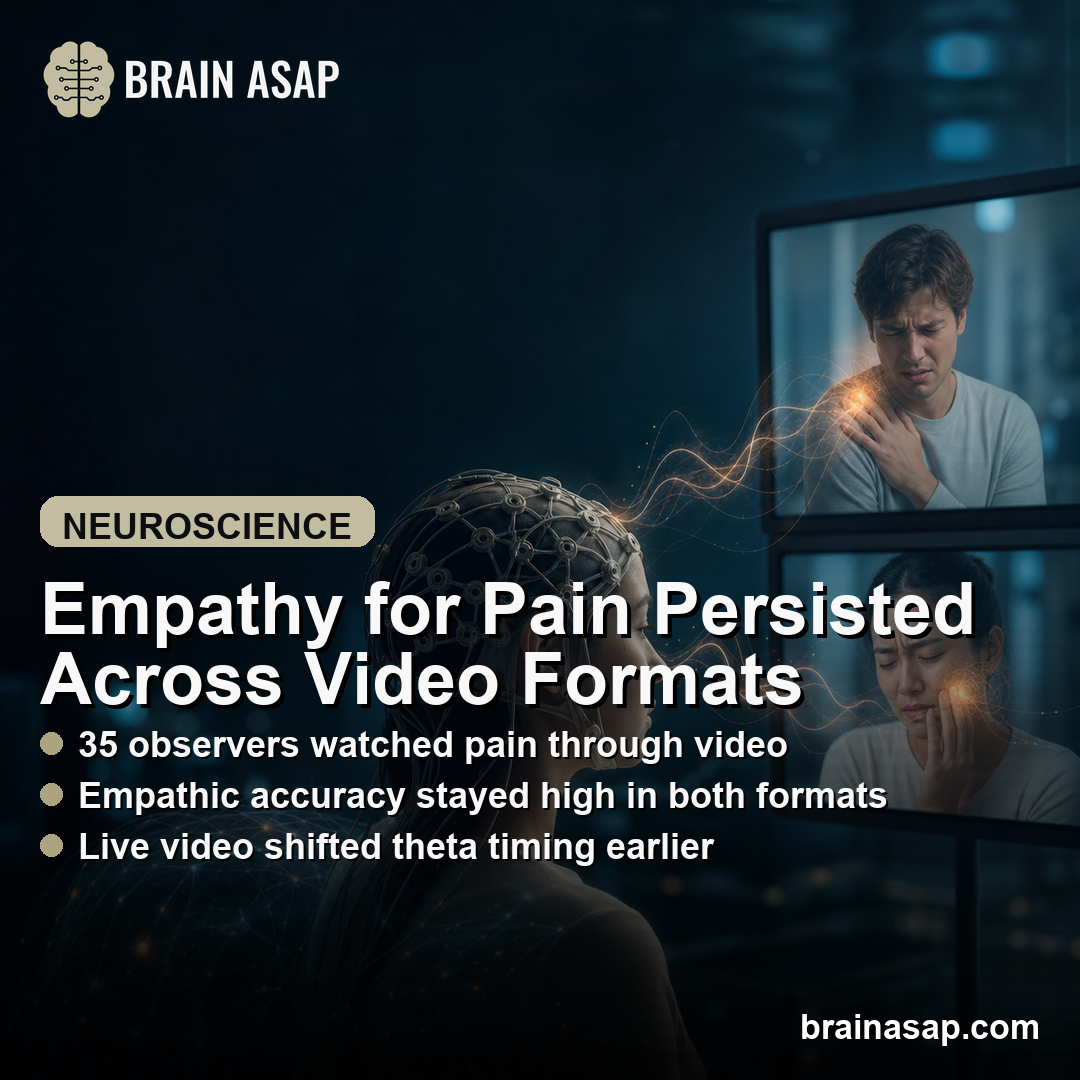
Empathy for Pain Persisted Across Live and Prerecorded Video in EEG Study

Empathy for Pain Persisted Across Live and Prerecorded Video in EEG Study

TL;DR: A 2026 electroencephalography (EEG) study in Cognitive, Affective, & Behavioral Neuroscience found that observers’ empathy-for-pain ratings and physiological coupling stayed similar whether they watched another person receive painful stimulation through a live video call or a prerecorded video, although live interaction produced an earlier frontal theta brain response. Key Findings 35 observers tested: Researchers …

Read more

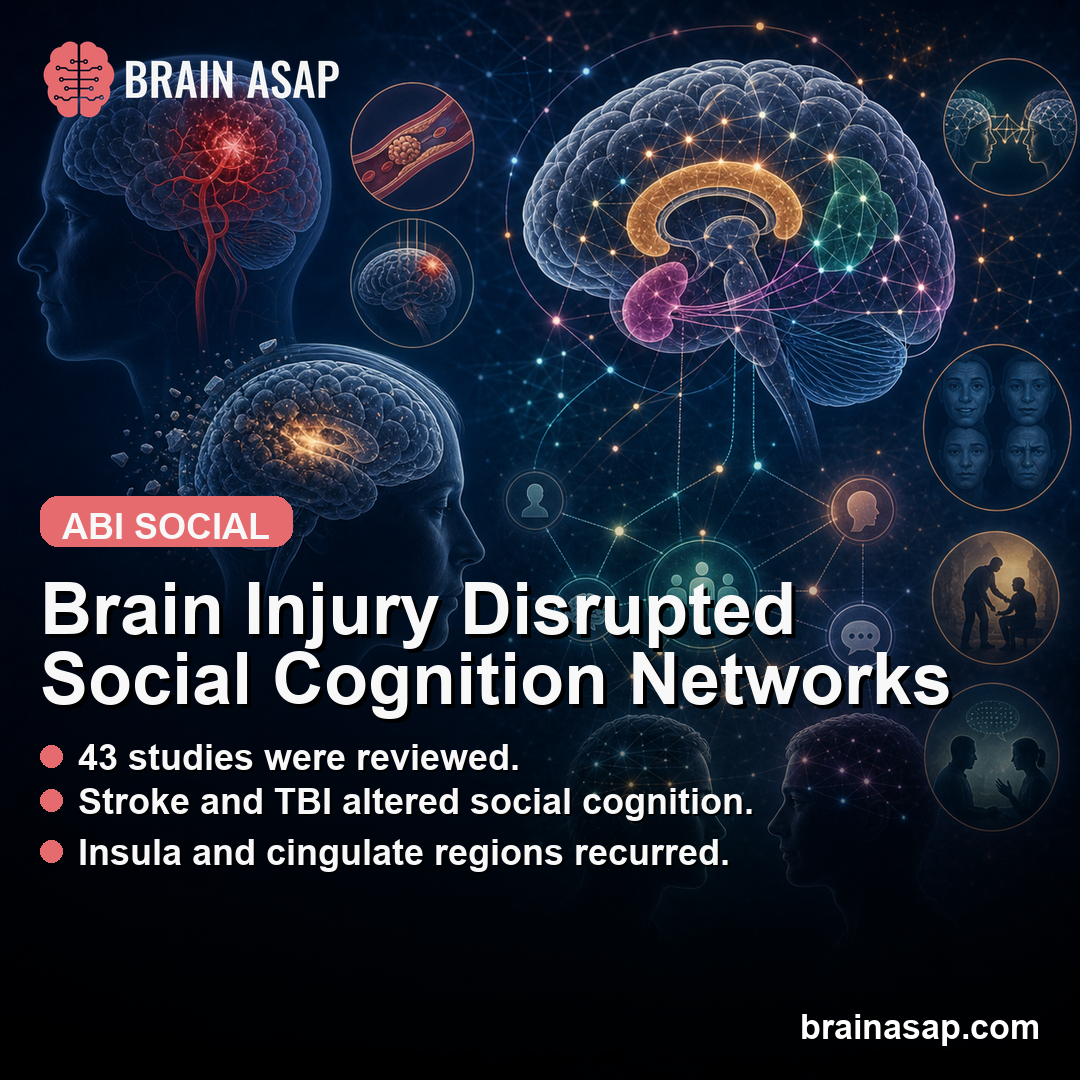
Social Cognition Deficits After Brain Injury Involved Distributed Networks

Social Cognition Deficits After Brain Injury Involved Distributed Networks

TL;DR: A 2026 systematic review in Cognitive, Affective, & Behavioral Neuroscience found that stroke and traumatic brain injury populations showed consistent social cognition alterations across domains, while insula, cingulate cortex, middle frontal gyrus, and corpus callosum were repeatedly implicated. Key Findings Study type: a PRISMA-guided systematic review of social cognition domains after stroke and traumatic …

Read more

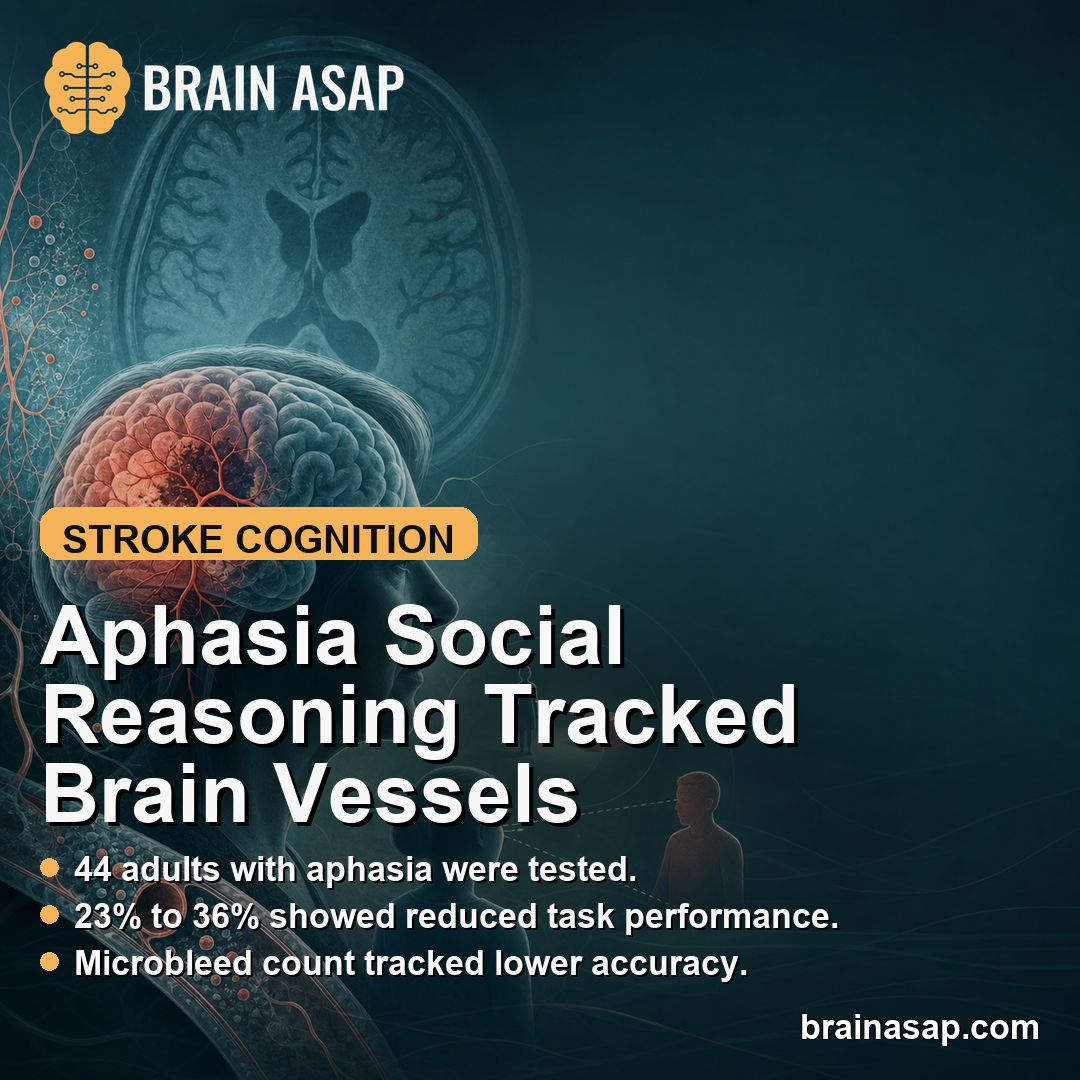
Post-Stroke Aphasia Theory of Mind Performance Tracked Vascular Brain Health

Post-Stroke Aphasia Theory of Mind Performance Tracked Vascular Brain Health

TL;DR: A 2026 medRxiv preprint found that nonverbal Theory of Mind (ToM), the ability to infer another person’s beliefs or perspective, varied in 44 adults with post-stroke aphasia and was more closely tied to vascular brain-health markers than to aphasia severity. Key Findings Study group: 44 adults with aphasia after mostly left-hemisphere stroke completed 2 …

Read more

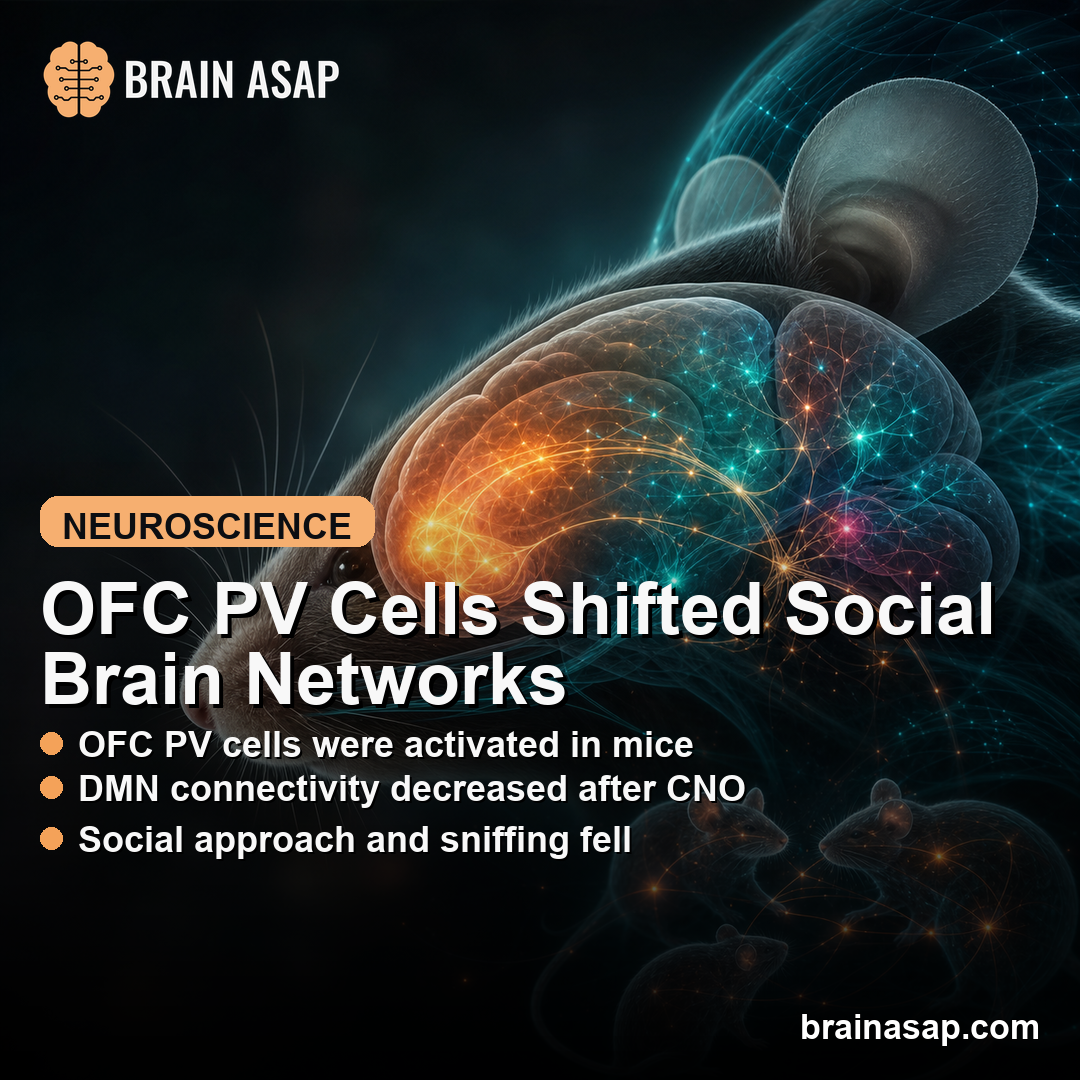
Orbitofrontal PV Interneurons Reduced Social Behavior via DMN Connectivity

Orbitofrontal PV Interneurons Reduced Social Behavior via DMN Connectivity

TL;DR: A 2026 mouse study in Communications Biology found that activating parvalbumin (PV) interneurons, inhibitory nerve cells in the orbitofrontal cortex, reduced default mode network connectivity and decreased normal social approach and sniffing behavior. Key Findings PV interneurons were targeted: Researchers used PV-Cre mice and a chemogenetic DREADD receptor to activate inhibitory PV interneurons in …

Read more

Consonant Chord Progressions With Face Gaze Increased Social Brain Activity

Consonant Chord Progressions With Face Gaze Increased Social Brain Activity

TL;DR: A 2026 study in The Journal of Neuroscience found that listening to consonant chord progressions while looking at a live partner increased functional near-infrared spectroscopy (fNIRS), a scalp blood-flow measure, in social brain systems. Key Findings Dyadic design: The study tested 20 participant pairs while both partners were recorded at the same time. Two …

Read more

Language and Theory of Mind Brain Systems Were Already Distinct in 3- to 9-Year-Old Children

Language and Theory of Mind Brain Systems Were Already Distinct in 3- to 9-Year-Old Children

TL;DR: A 2026 Communications Biology fMRI study found that language and theory of mind, the ability to infer other people’s mental states, were already neurally distinct in children aged 3-9 rather than slowly separating during development. Key Findings Children show distinct neural specificity for language and theory of mind in superior temporal lobe — just …

Read more

Digital Avatar Faces Appear Believable When Eyes Match Emotions

Digital Faces Looked More Believable When Their Eyes Matched the Emotion

Digital Faces Looked More Believable When Their Eyes Matched the Emotion TL;DR: A virtual smile or glare looked most believable with direct eye contact, while sadness became more believable when the digital face looked downward. Key Findings Direct gaze boosted approach emotions: Happy and angry avatar expressions looked most authentic when the eyes met the …

Read more