Transcranial Alternating Current Stimulation (TACS) for Depression: Effective Adjunct via Reducing Prefrontal Alpha Waves (2024 Trial)

Adding transcranial alternating current stimulation (tACS) to antidepressant treatment improves depression symptoms more effectively than using antidepressants alone. Highlights: Enhanced Efficacy: tACS combined with antidepressants significantly reduces depression symptoms compared to antidepressant treatment alone. Lasting Effects: The additional antidepressant benefits of tACS persist for at least 4 weeks after treatment ends. Brain Activity Changes: Patients …

Read more

TACS for Schizophrenia: Early Promise of Transcranial Alternating Current Stimulation

Schizophrenia is a severe mental disorder affecting about 1% of the population worldwide. It is characterized by hallucinations, delusions, disorganized thinking and behavior, and impaired cognitive functioning. Current treatments with antipsychotic medications are helpful but have significant limitations, especially for cognitive deficits and negative symptoms like social withdrawal and lack of motivation. This has driven …

Read more

Transcranial Alternating Current Stimulation (TACS) for Cognitive Enhancement & Psychiatric Disorders

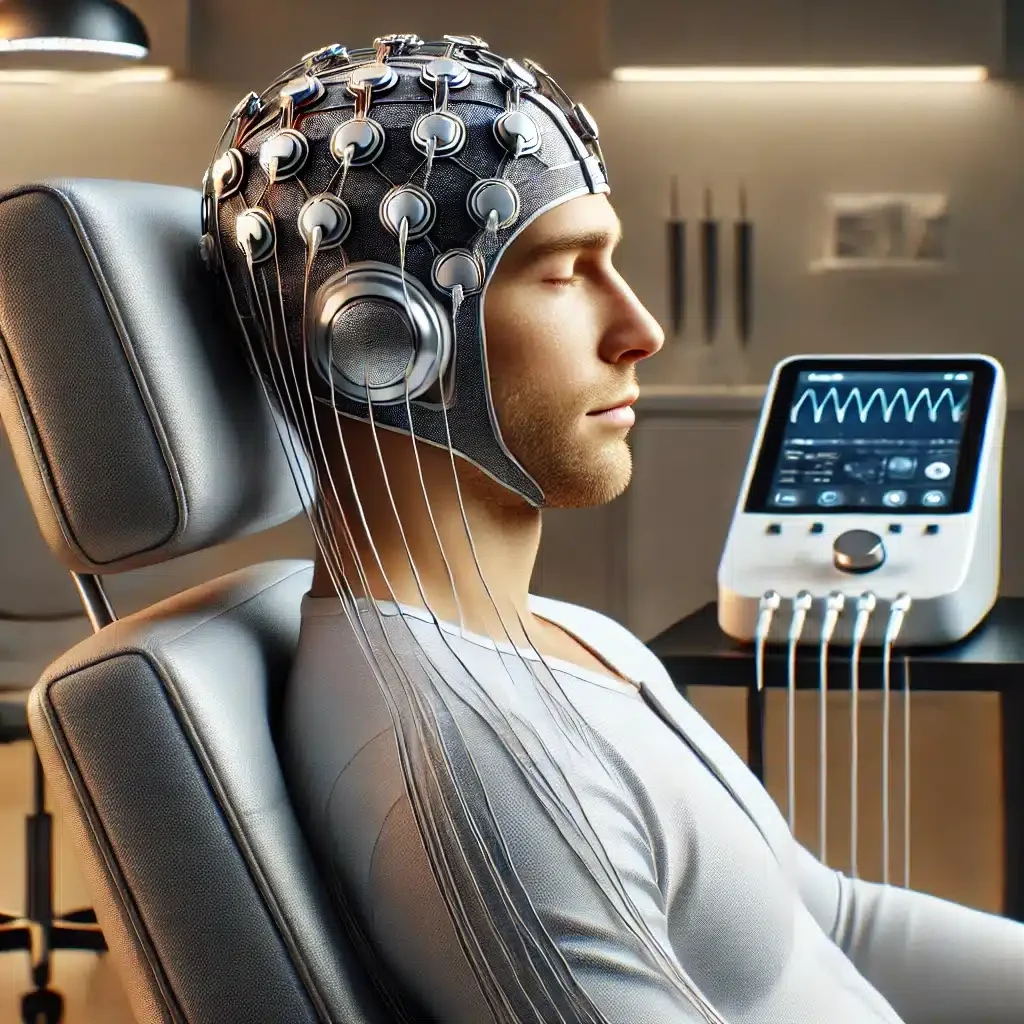
Transcranial alternating current stimulation (TACS) is an emerging non-invasive brain stimulation technique that shows promise for enhancing cognition and treating psychiatric conditions like depression and schizophrenia. Recent research indicates TACS may improve symptoms and function by modulating brain oscillations and connectivity. Key facts: TACS delivers alternating electrical current to the brain at specific frequencies, which …

Read more