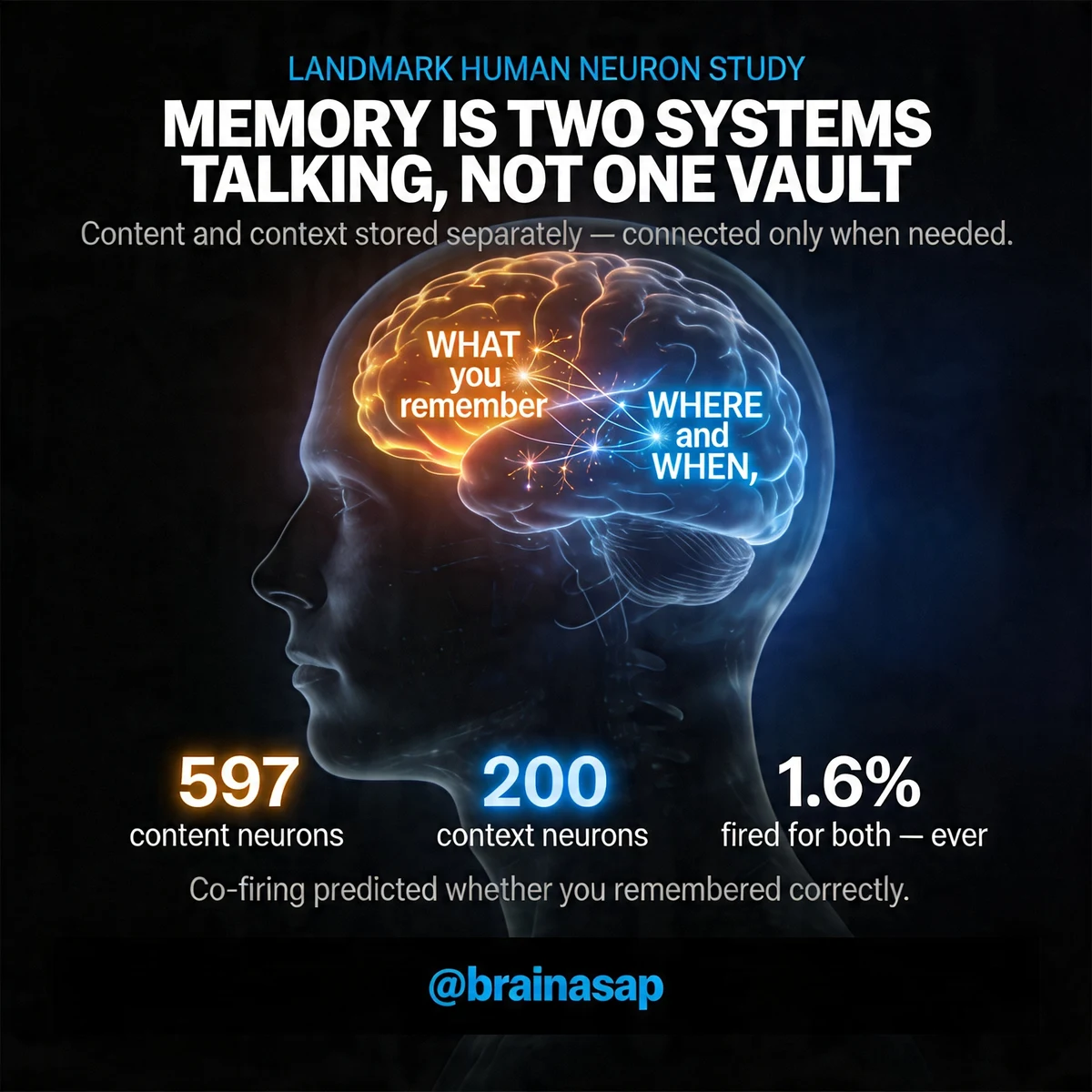
How the Brain Separates What We Remember from Why We Remember It TL;DR: The brain stores content (what you remember) and context (when/where) in separate neural populations linked by real-time coordination, not pre-wired conjunctive cells—a design that trades…
Read article ↗
Expert chess players use chunk memory to make better decisions, showing unique brain connectivity that helps them perform well even against tougher opponents. Highlights: Consistent Performance: Expert chess players perform equally well regardless of the diffi…
Read article ↗
Student cognitive abilities and college institutional factors both shape outcomes, but the historical evidence suggests student characteristics play an outsized role. Key Facts: In the research paper, student cognitive aptitude accounted for 41-47% of the vari…
Read article ↗
Education has long been thought to improve cognitive abilities like intelligence. But does simply spending more years in school actually make people smarter? A new meta-analysis of quasi-experimental studies provides compelling evidence that education signific…
Read article ↗
A new study published in Scientific Reports provides insight into which memory training techniques are most effective at improving working memory. The research compared an adaptive n-back training task to the memory palace technique over 20 days of training. B…
Read article ↗
Researchers have for the first time reconstructed all neurons and their connections in the brain of a fruit fly larva, revealing fundamental principles of brain organization. The study provides an important scaffold for understanding the neural basis of behavi…
Read article ↗
Summary: A new study reveals how certain genes and education levels impact Alzheimer’s disease risk, even in individuals destined to develop dementia. Key facts: The APOE gene influences Alzheimer’s onset in people with a genetic mutation causing early-onset A…
Read article ↗