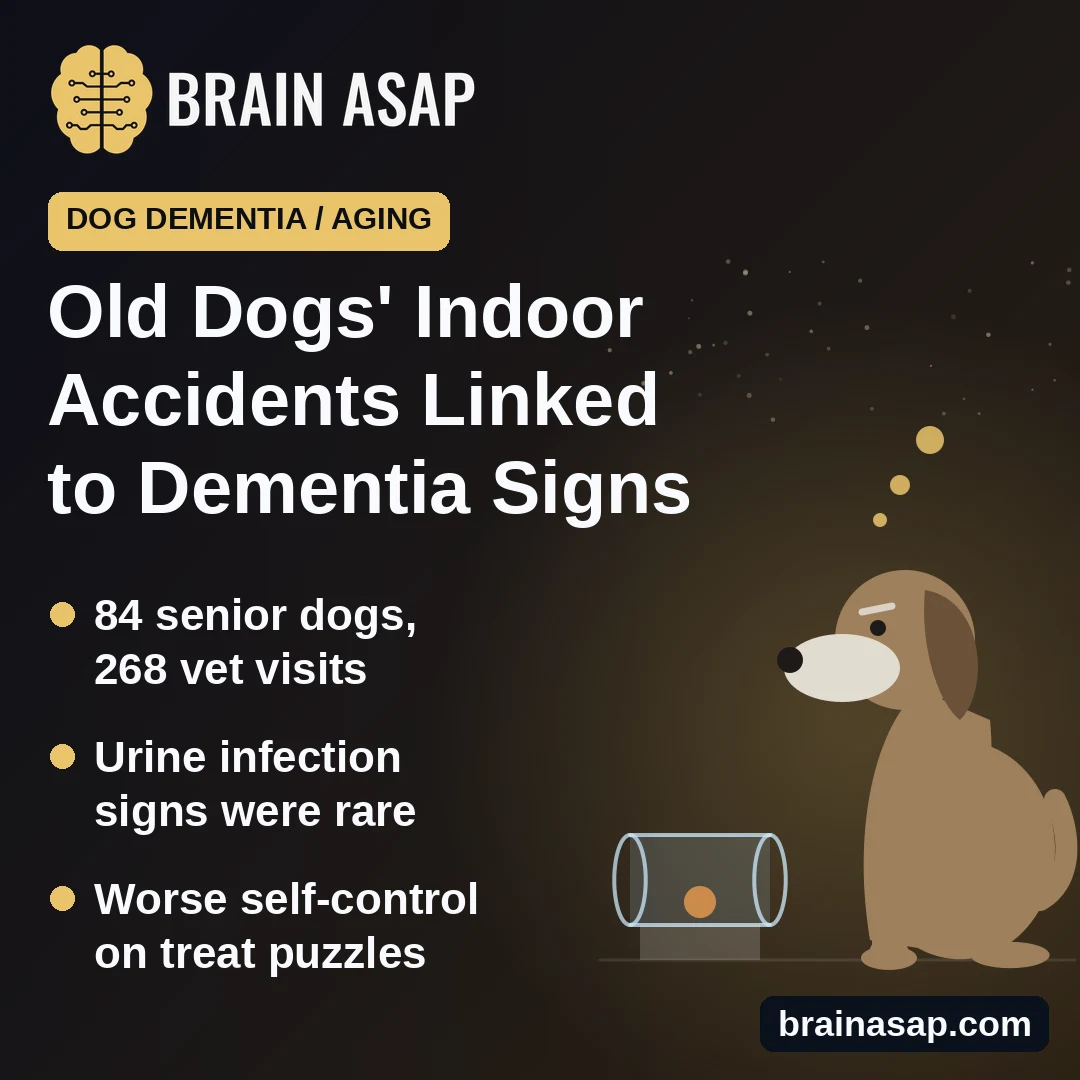
TL;DR: In 84 older pet dogs followed over several years, more indoor accidents went along with worse self-control on treat puzzles, while signs of urine infection were rare and not linked to the accidents. It's a hint that house soiling in old dogs may often r…
Read article ↗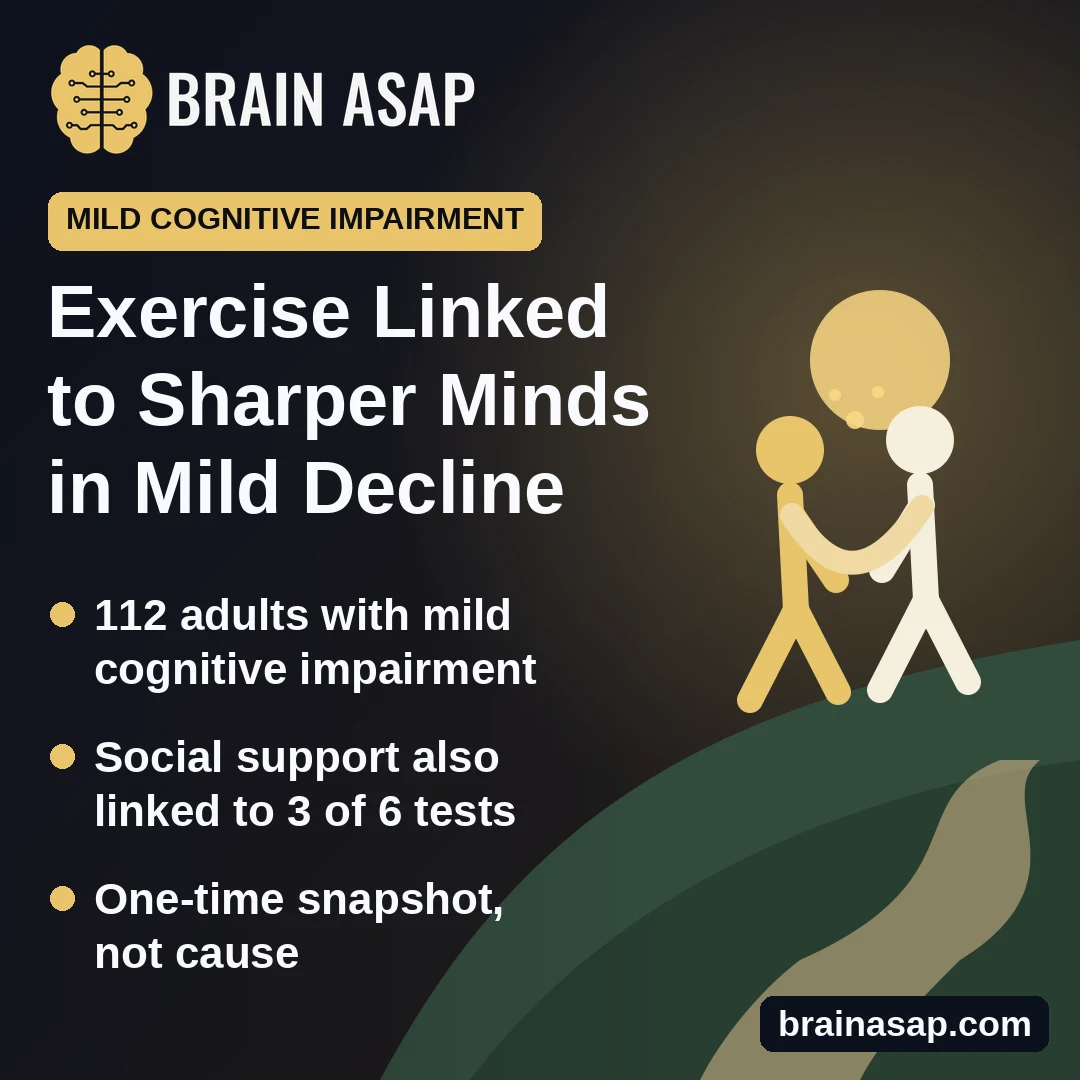
TL;DR: Among 112 older adults in Spain with mild cognitive impairment, those who reported more physical activity and felt more supported by family and friends scored better on several thinking tests. The study took one snapshot, so it cannot show that activity…
Read article ↗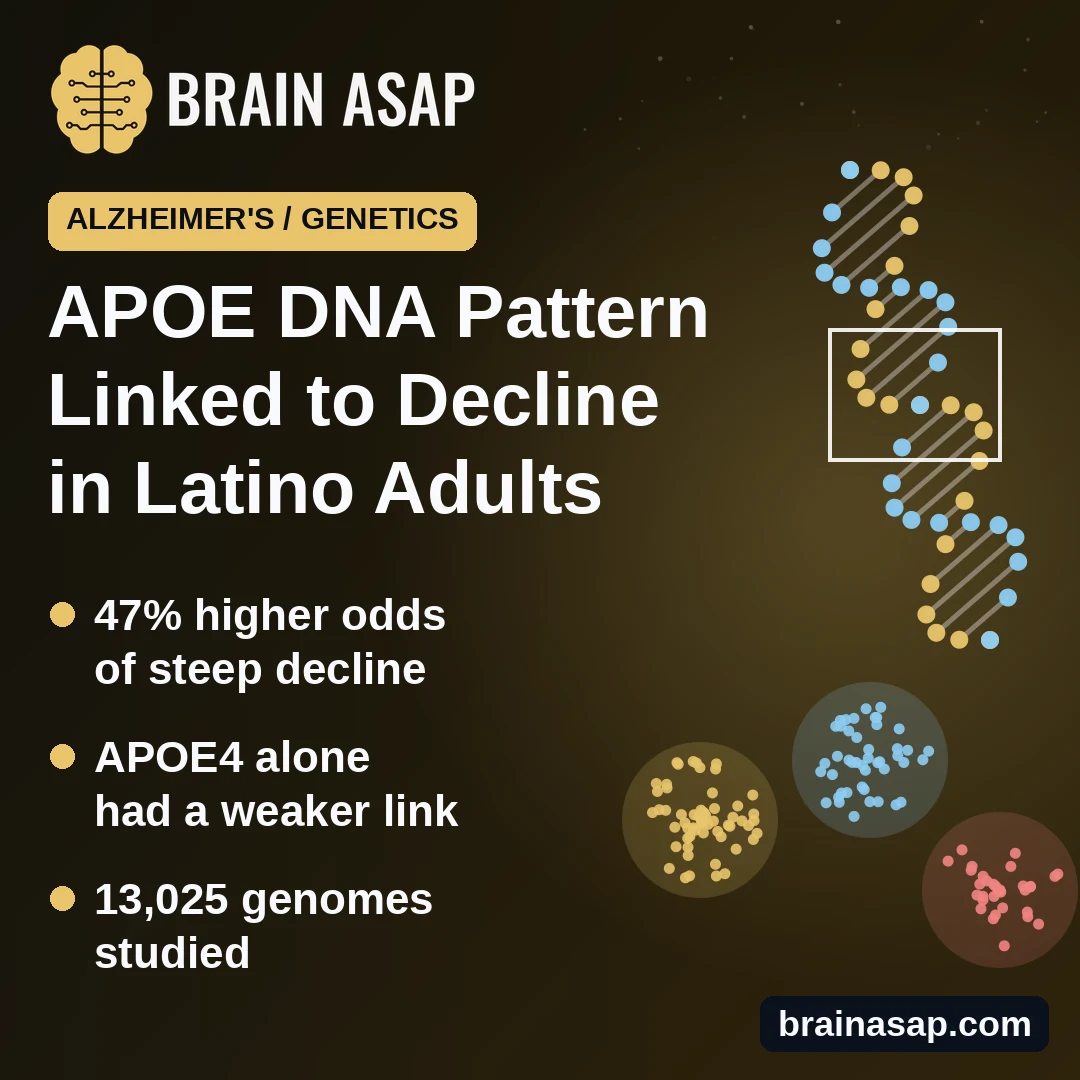
TL;DR: Among Hispanic and Latino adults in the U.S., people with one particular DNA pattern around the APOE gene were more likely to show steep thinking decline over about 7 years. The well-known APOE4 risk version had a weaker link in the same group. Key Find…
Read article ↗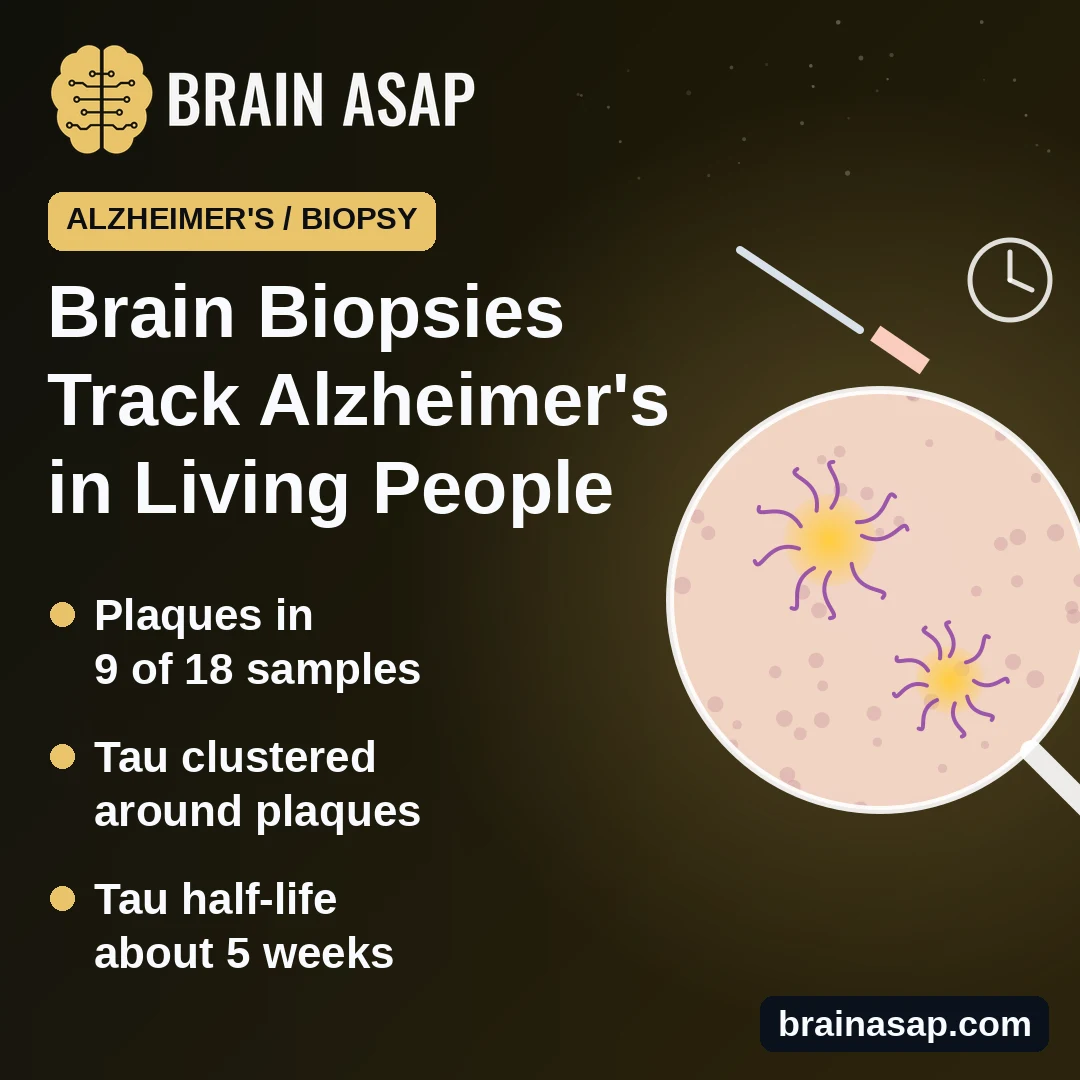
TL;DR: Tiny brain samples taken during routine shunt surgery let researchers study Alzheimer’s changes in living people. Half the samples had amyloid plaques, tau clustered around them, and brain tau had a half-life of about five weeks. Key Findings 18 living…
Read article ↗
TL;DR: In 149 people with memory problems or dementia, blood levels of some brain markers tracked spinal fluid levels well, but others did not match at all. Two common measures of a leaky blood-brain barrier also did not agree with each other. Key Findings Blo…
Read article ↗
TL;DR: Alzheimer’s-model mice fed very salty chow for 6 months had altered gut bacteria, more brain inflammation and plaques, and more anxious behavior than mice on normal chow. It’s a mouse study, and the gut-to-brain link was not proven. Key Findings 8% vs 0…
Read article ↗
TL;DR: Young mice carrying the human APOE4 gene, the biggest genetic risk factor for Alzheimer’s, had overexcited memory circuits months before any memory trouble showed up. Removing APOE4 from their neurons returned those cells to normal. Key Findings Early w…
Read article ↗
TL;DR: Across 27 trials in older adults with mild memory and thinking problems, tai chi and qigong classes lifted overall thinking scores by a moderate amount compared with no exercise. More weekly minutes were not always better, and the dosing patterns still…
Read article ↗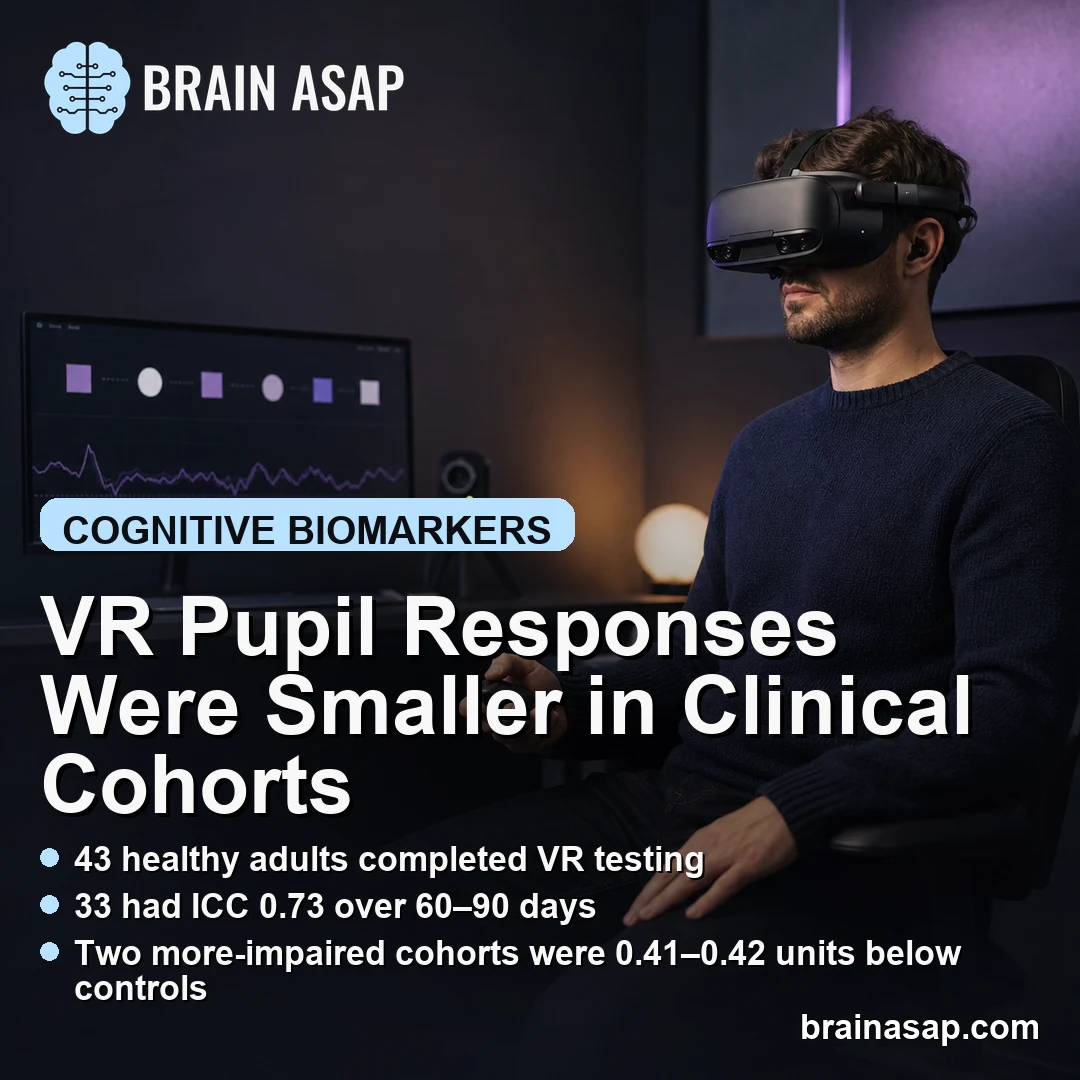
TL;DR: A 2026 medRxiv preprint found that pupil dilation measured inside a virtual reality (VR) headset increased as working-memory load rose in healthy adults, was reproducible 60–90 days later in 33 returnees, and was smaller under the highest load in cognit…
Read article ↗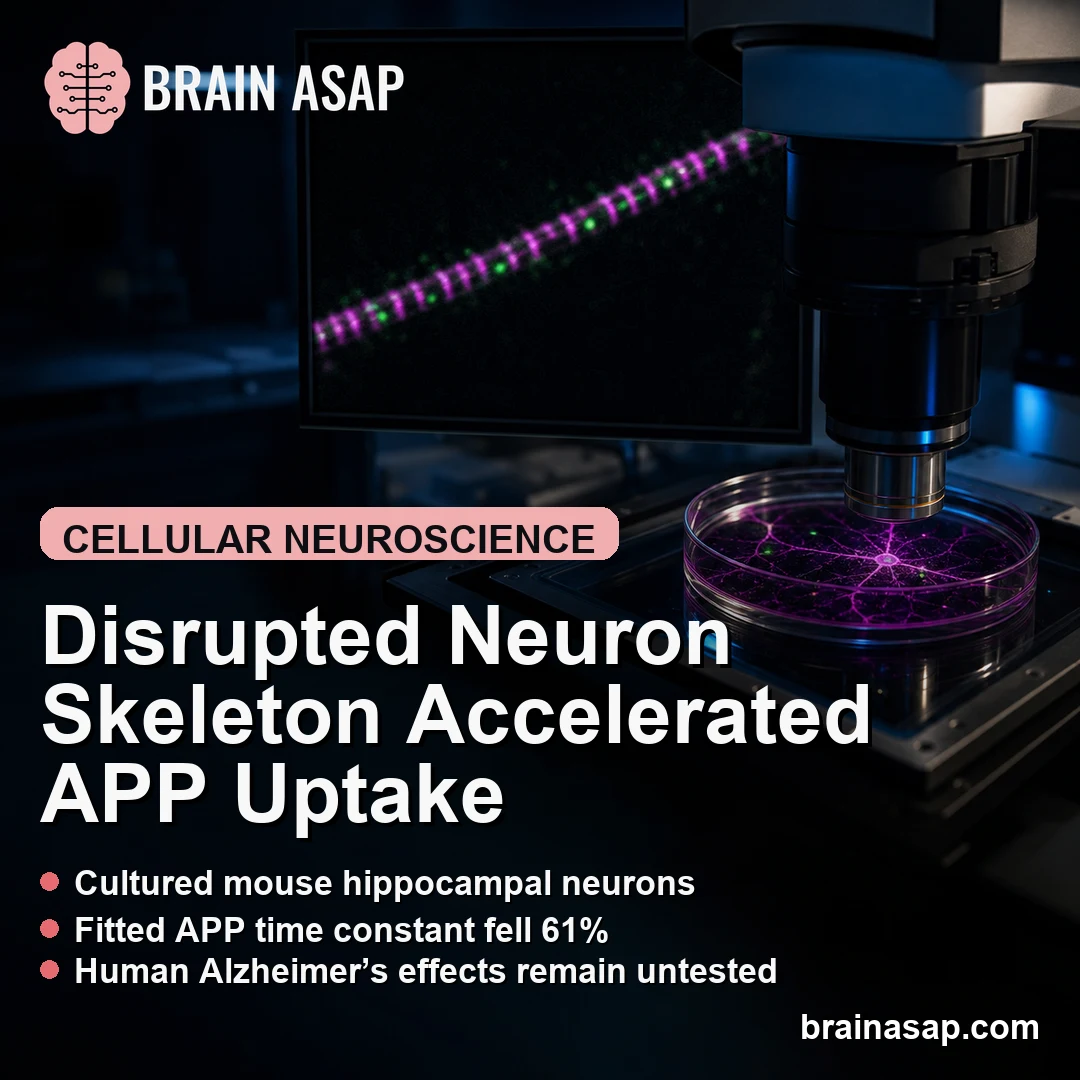
TL;DR: A 2026 study in Science Advances reported that disrupting the membrane-associated periodic skeleton (MPS), an actin-spectrin lattice beneath neuron membranes, reduced the fitted amyloid precursor protein (APP) uptake time constant in cultured mouse hipp…
Read article ↗