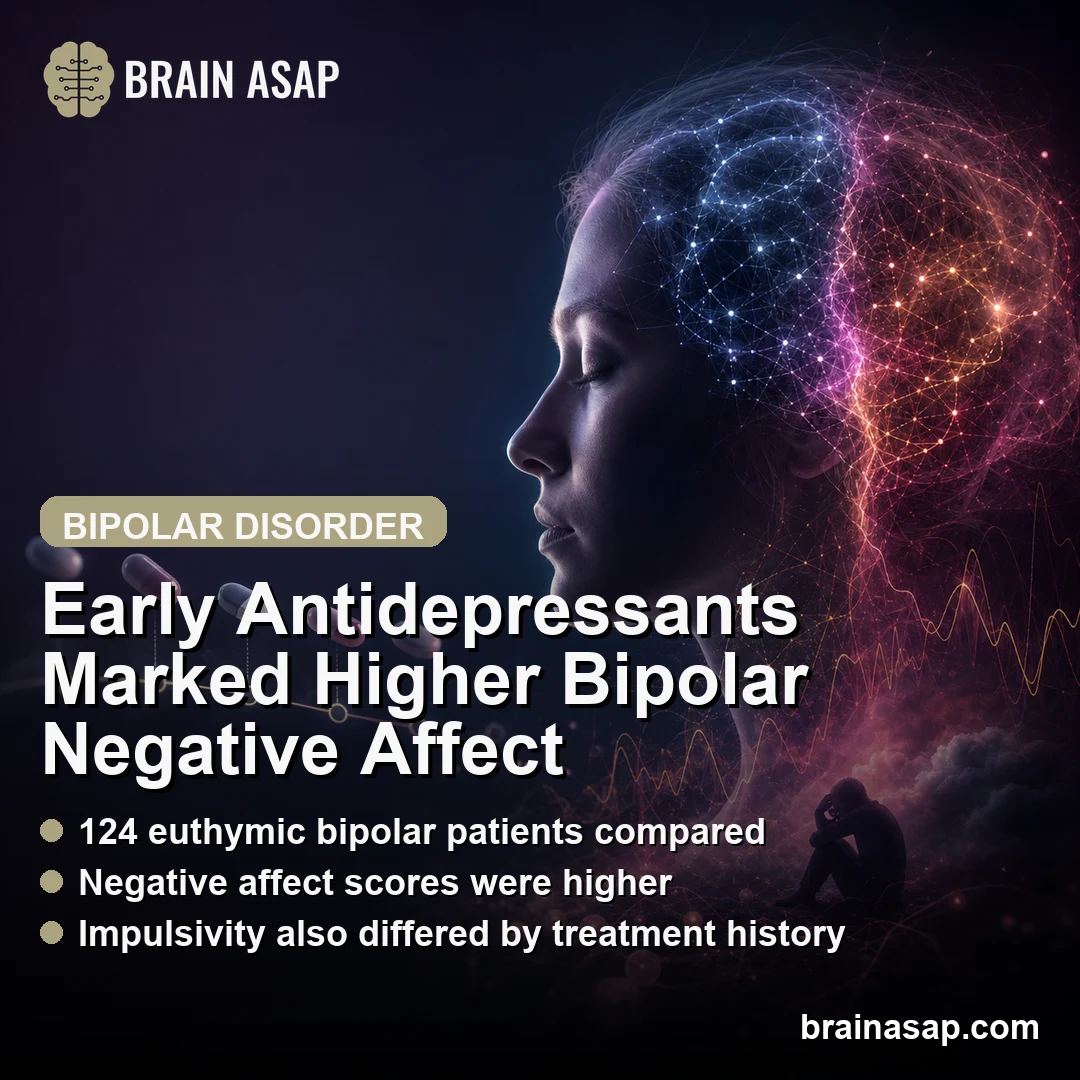
TL;DR: A 2026 cross-sectional study in PLOS One found that euthymic bipolar disorder patients with early systematic antidepressant treatment had higher negative affect and higher attentional, non-planning, and total impulsivity scores than matched patients wit…
Read article ↗
Antidepressant treatment in OCD is linked to structural and functional brain changes, particularly in corticosubcortical areas, but these findings need further validation in larger, more homogeneous samples. Highlights: Antidepressant Use: Antidepressants, esp…
Read article ↗
Antidepressant use has risen steadily for 30 years. Over 10% of adults in England now take them long-term, but evidence suggests up to half lack clear medical justification to continue. Patients and doctors are reluctant to stop treatment due to fears of relap…
Read article ↗
Depression often comes with significant sleep disturbances that can persist even after other symptoms improve. Choosing an antidepressant that alleviates sleep problems may improve outcomes. Key Facts: Sleep complaints like insomnia occur in 60-90% of depressi…
Read article ↗
Brain zaps are brief, electric shock-like sensations felt in the brain that can occur when decreasing or stopping dosage of certain antidepressants. Though poorly understood, new research is shedding light on this perplexing phenomenon. Key Facts: Brain zaps a…
Read article ↗