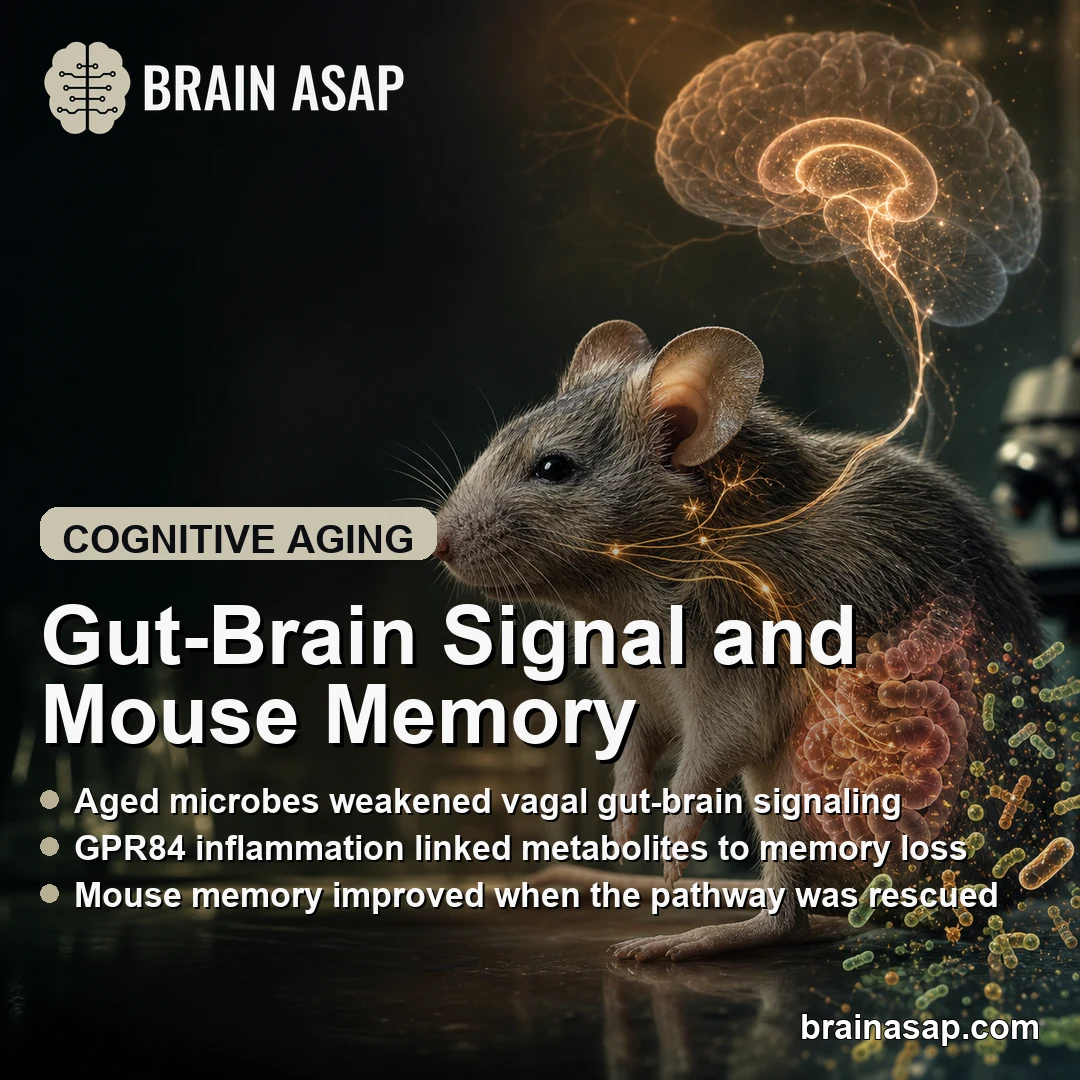
TL;DR: A 2026 mouse study in Nature found that age-related gut microbiome changes impaired vagal gut-brain signaling and hippocampal memory encoding, while several interventions restored memory performance in aged or microbiome-aged mice. Key Findings Aged mic…
Read article ↗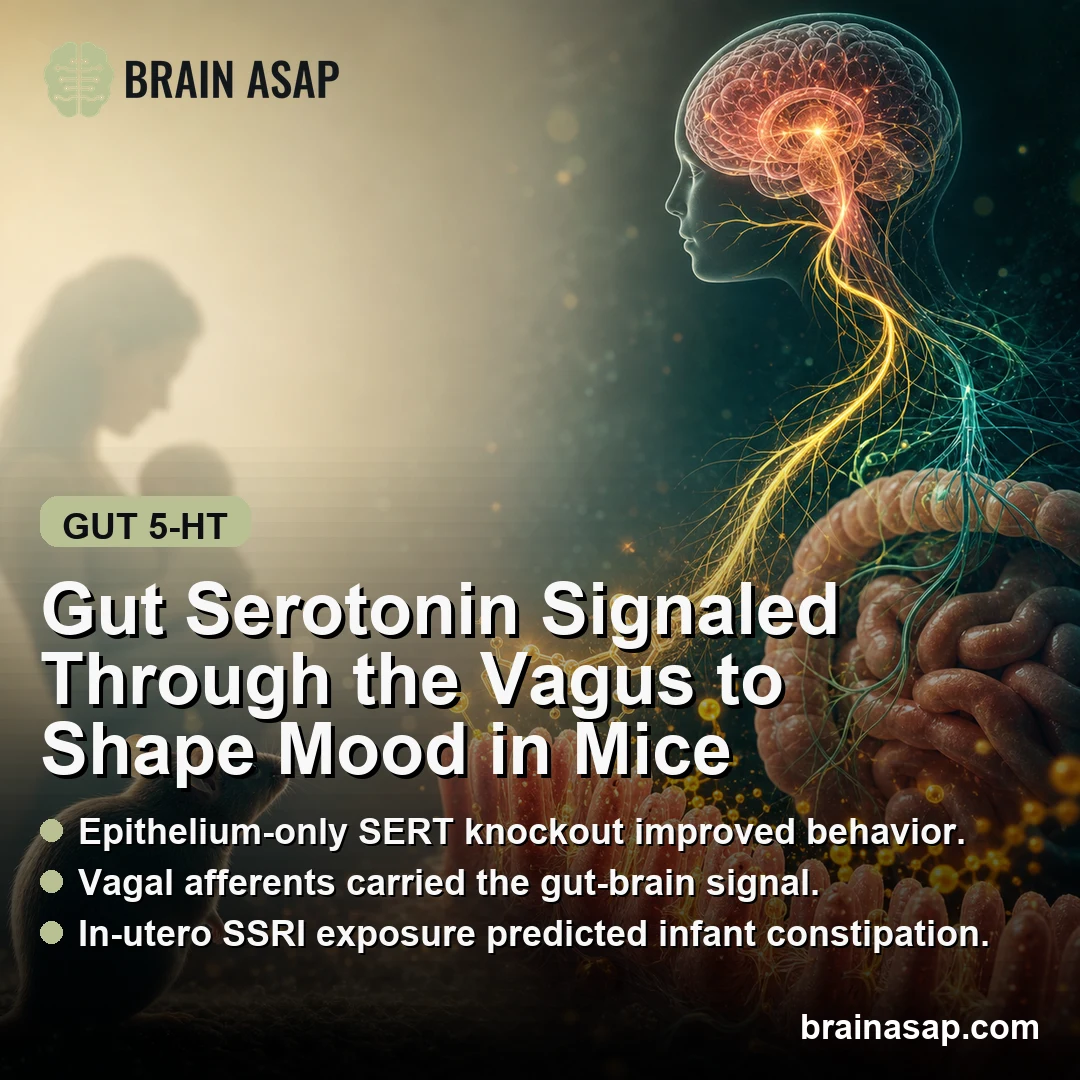
TL;DR: A 2024 Gastroenterology study found that intestinal epithelial serotonin reduced anxiety- and depression-like behavior in mice through vagal signaling, while prenatal SSRI exposure in a human cohort predicted infant functional constipation independent o…
Read article ↗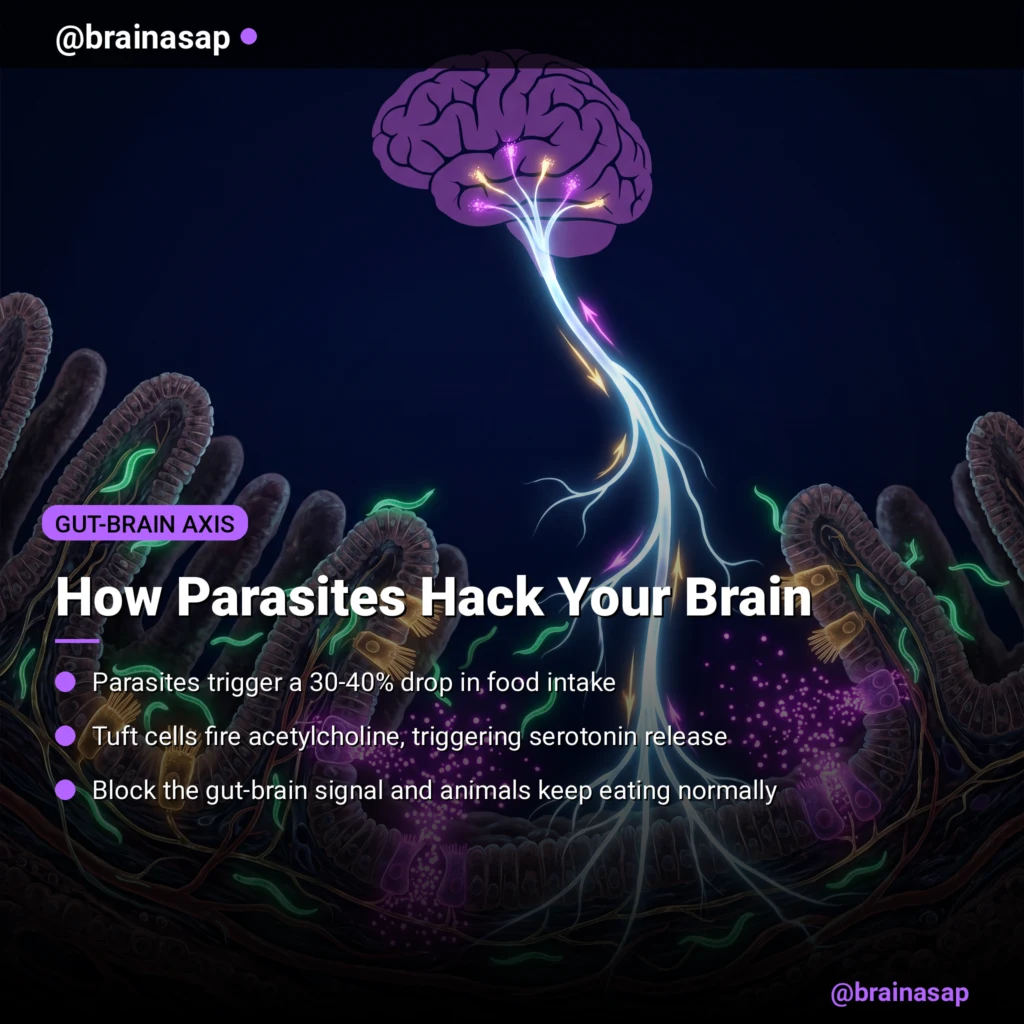
How Parasites Hack Your Gut-Brain Connection TL;DR: Parasitic infections trigger a sophisticated cellular conversation in the gut that signals the brain to stop eating—a protective response that reveals how infection hijacks the gut-brain axis through epitheli…
Read article ↗