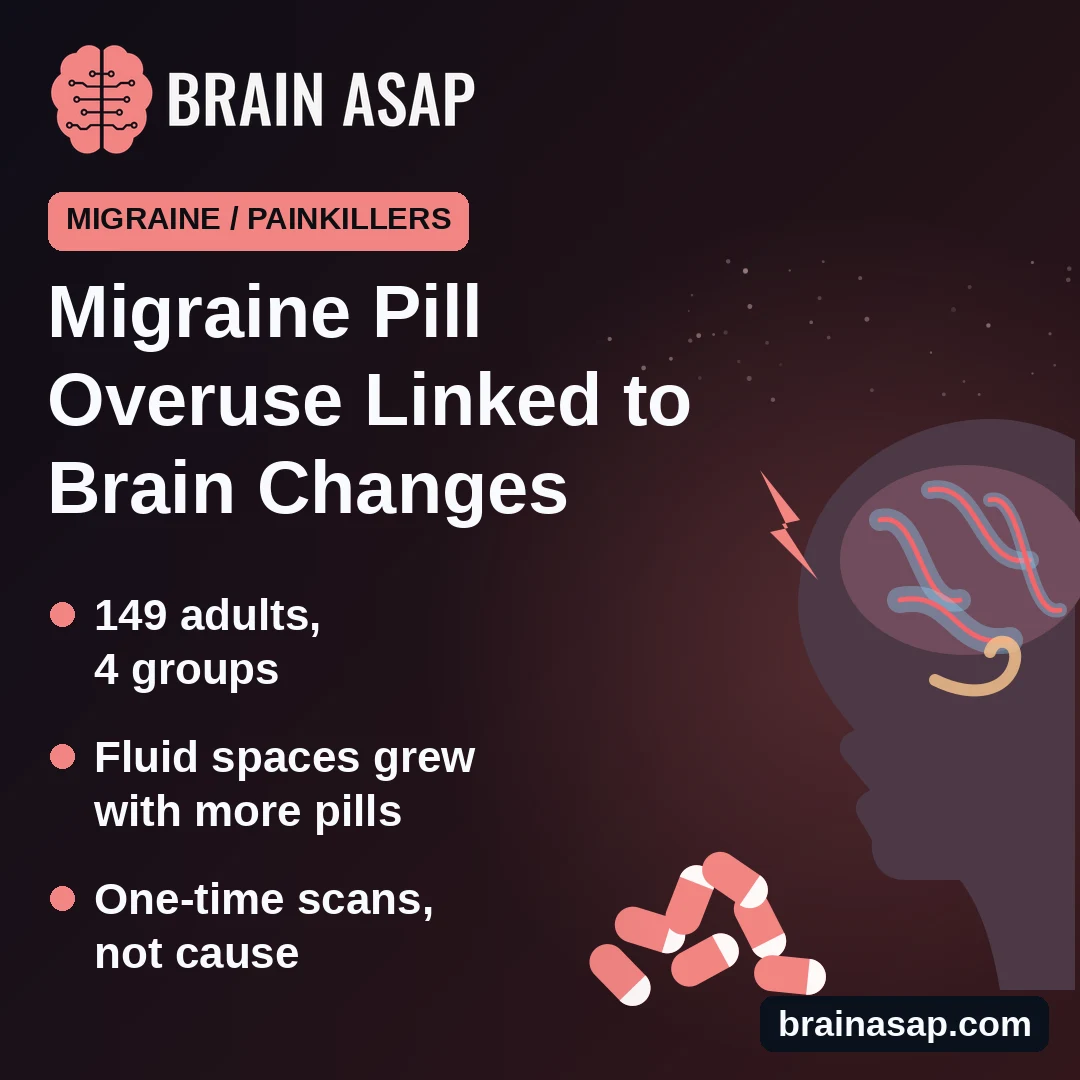
TL;DR: In brain scans of 149 adults, people whose migraine had turned into near-daily headaches from overusing painkillers had larger fluid-filled spaces around small brain vessels and a smaller hippocampus than people without migraine. The scans were taken on…
Read article ↗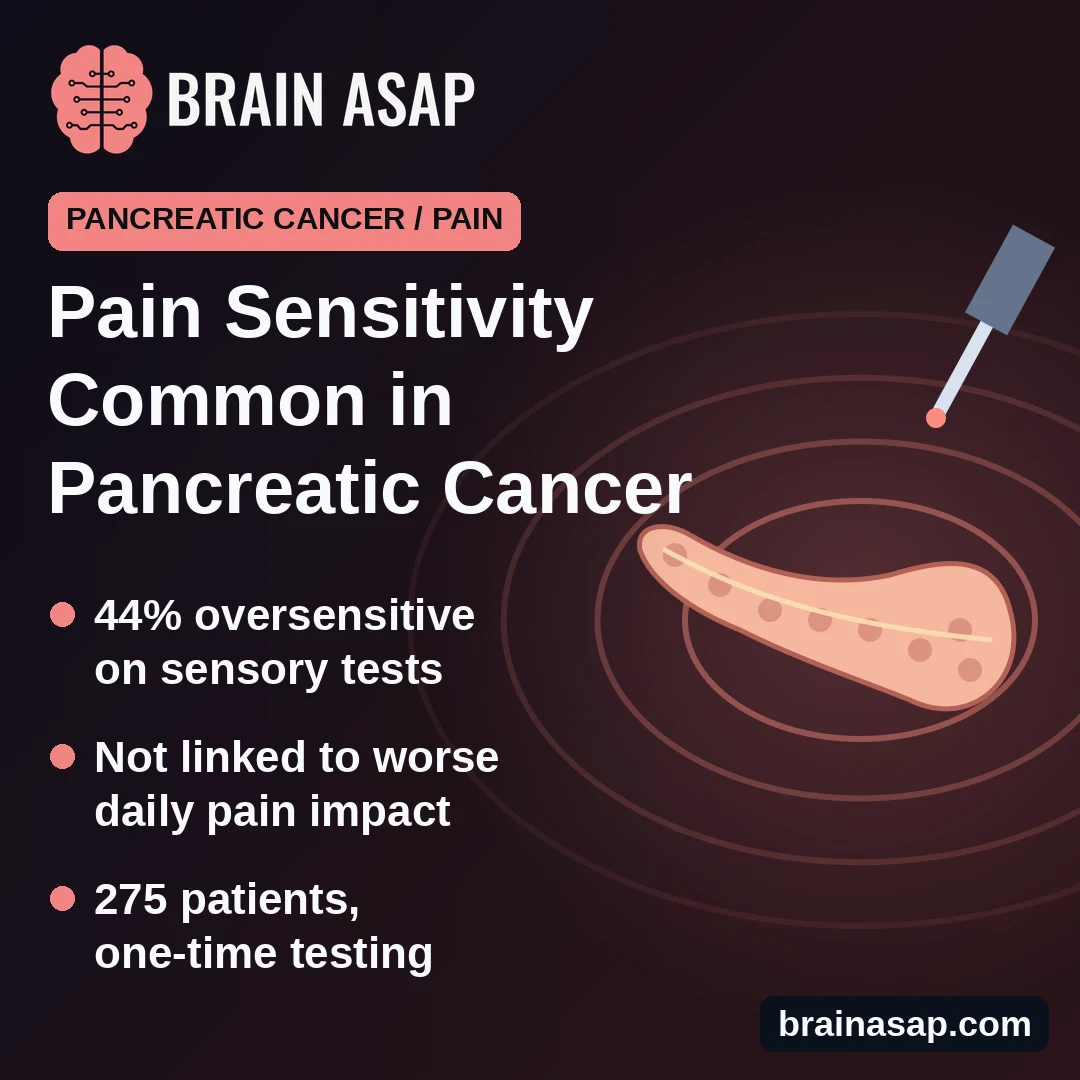
TL;DR: Among 121 people with painful pancreatic cancer, 44% had a heightened sensitivity to pain on standardized testing, much like people with long-term pancreatitis. But in the cancer group, that sensitivity was not consistently linked to worse pain, mood or…
Read article ↗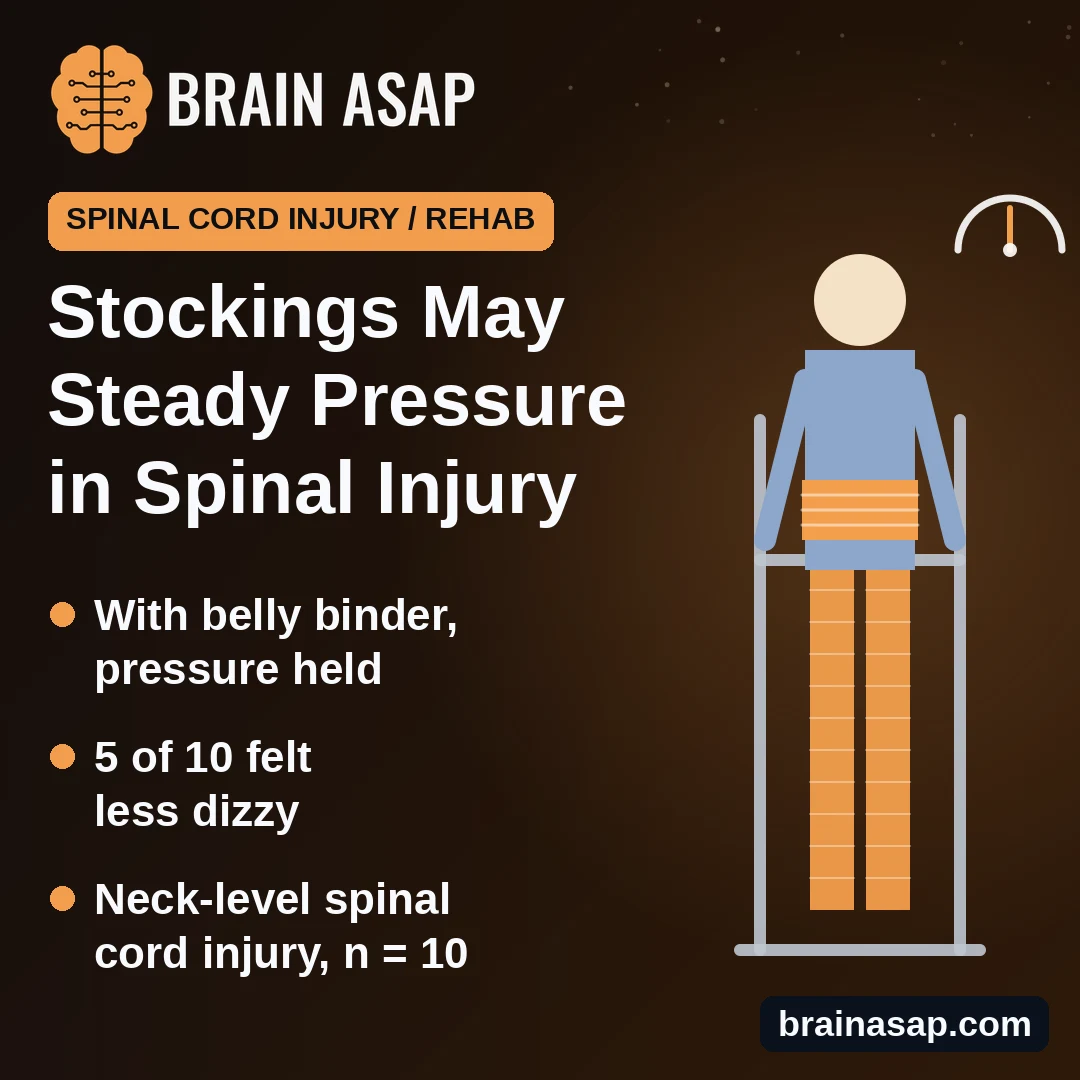
TL;DR: In 10 young adults with a neck-level spinal cord injury, standing upright in a frame made blood pressure drop. Wearing compression stockings and a belly binder kept blood pressure from falling, and the five people who felt faint said they felt better. K…
Read article ↗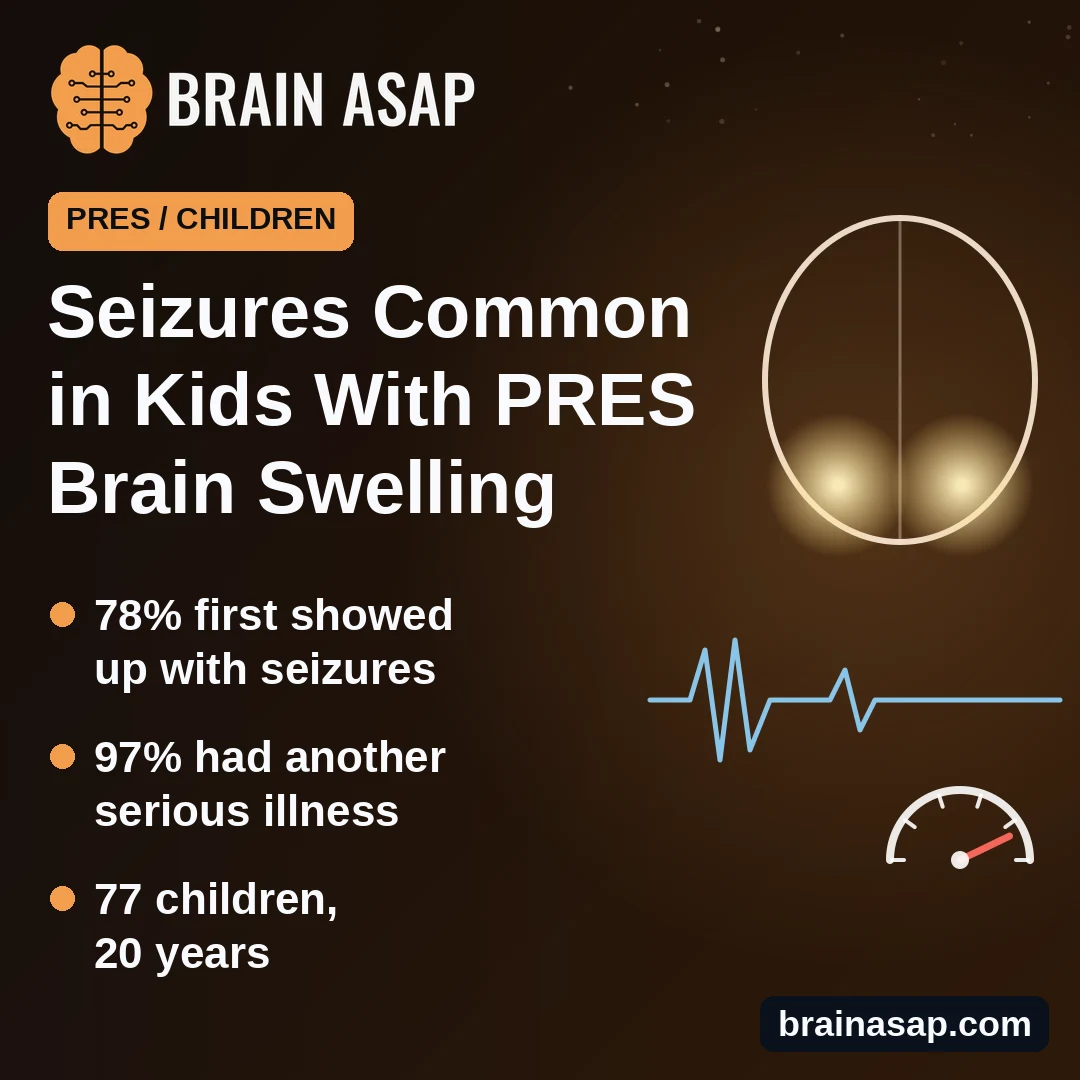
TL;DR: At a leading London children’s hospital, 77 children with PRES, a sudden brain-swelling syndrome, were reviewed over 20 years. Nearly 4 in 5 first showed up with seizures, almost all had another serious illness, and about a third of those given seizure…
Read article ↗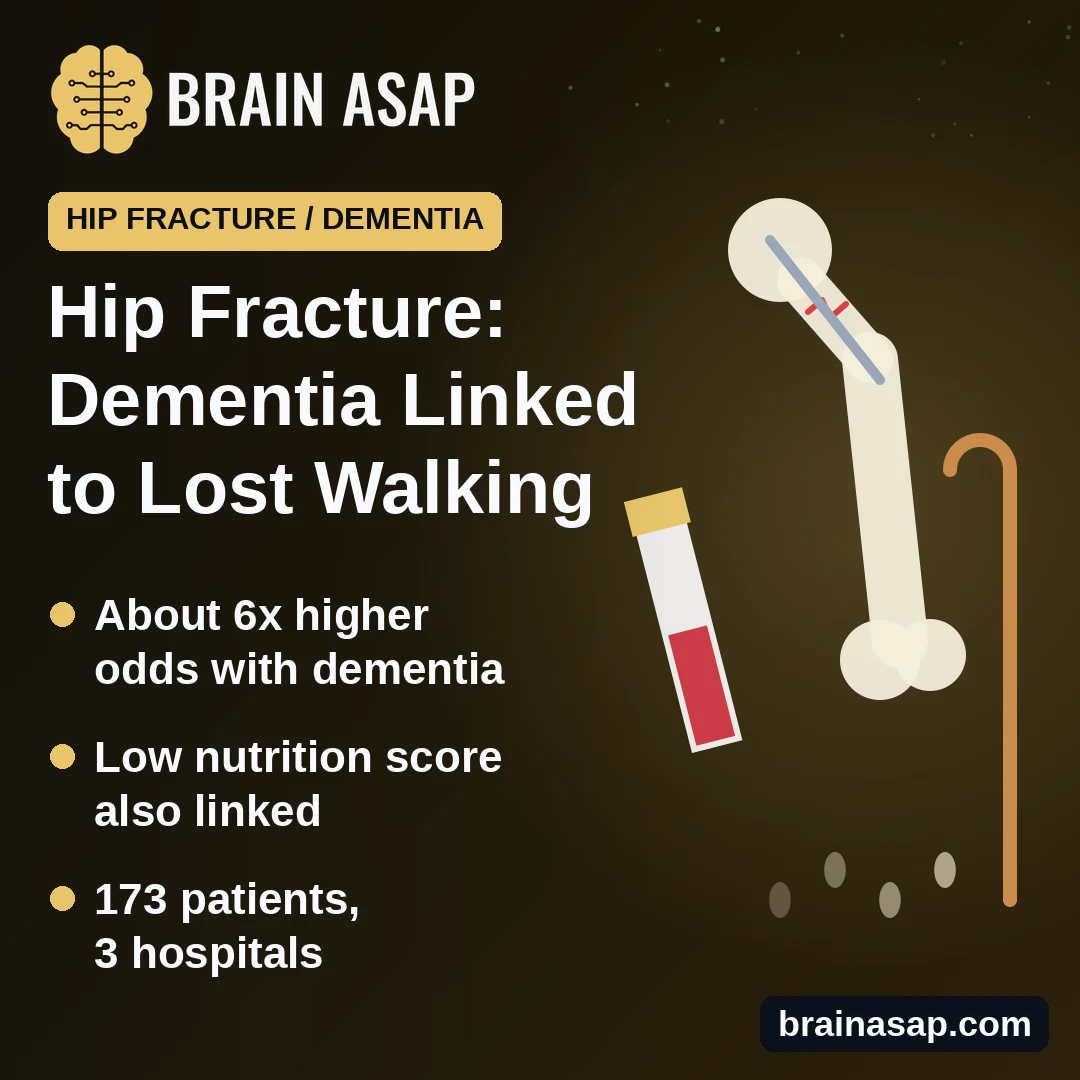
TL;DR: Among older adults who walked on their own before breaking a hip, those with dementia or a low blood-based nutrition score a week after surgery were less likely to be walking independently when they left the hospital. The nutrition score alone was only…
Read article ↗
TL;DR: In a German study of 34 people recovering from LGI1 encephalitis, a rare autoimmune brain disease, brain scans showed changes well beyond the memory centers usually blamed. People with more of these changes had poorer thinking scores and recovered less.…
Read article ↗
TL;DR: In a phase III trial of 34 children with a rare inherited energy disorder, the drug dichloroacetate did not improve parent-rated movement problems more than placebo over 4 months. It did lower a harmful blood acid, lactate, and was well tolerated. Key F…
Read article ↗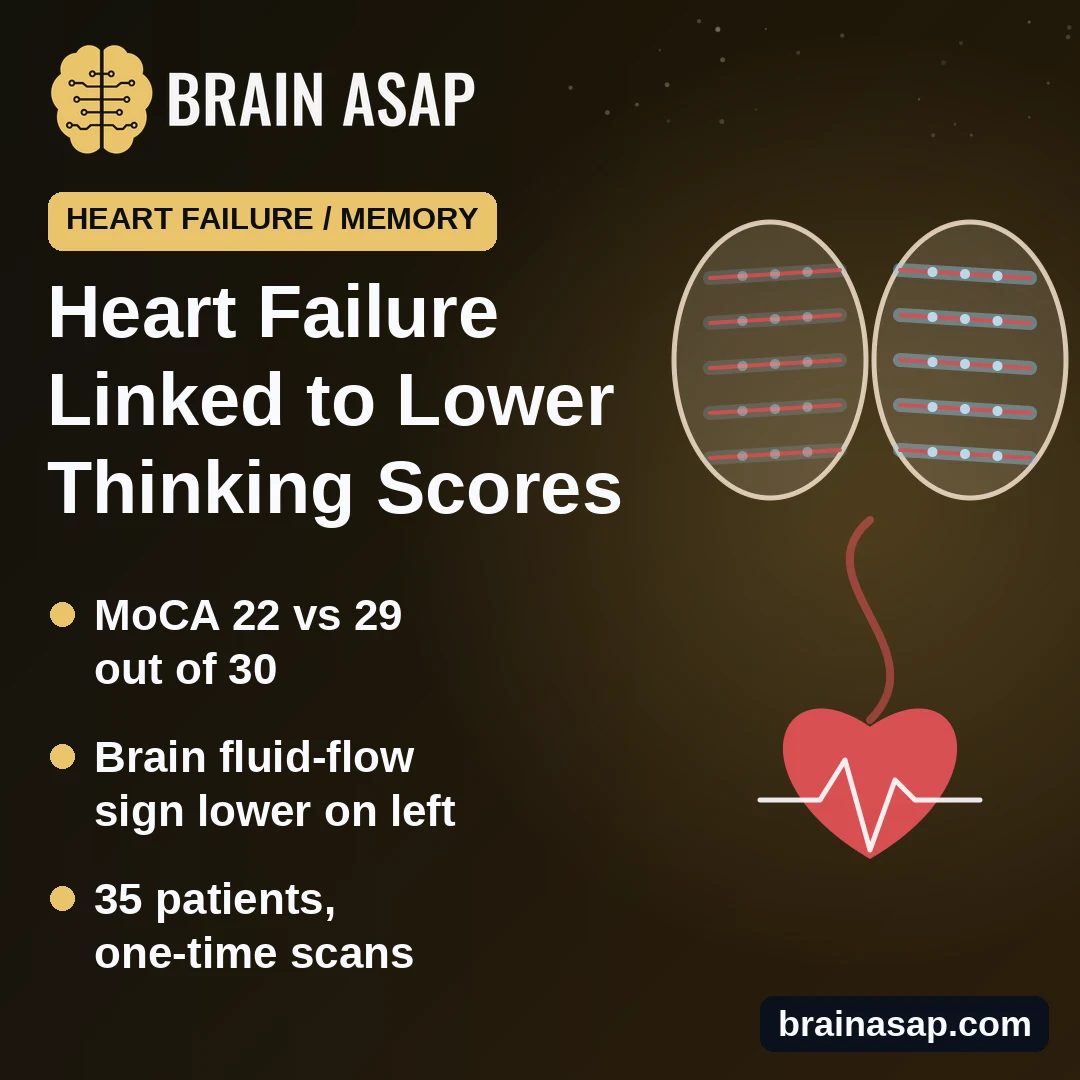
TL;DR: People with a common type of heart failure scored lower on thinking tests than healthy people of similar age, and an MRI sign of the brain’s fluid-clearing system was lower on the left side of their brains. Lower values of that sign went with lower thin…
Read article ↗
TL;DR: In rats given the chemotherapy drug doxorubicin, which caused memory problems, adding the antipsychotic lurasidone protected memory on maze and object tests. This was a prevention study in male rats, not a treatment for people with “chemo brain.” Key Fi…
Read article ↗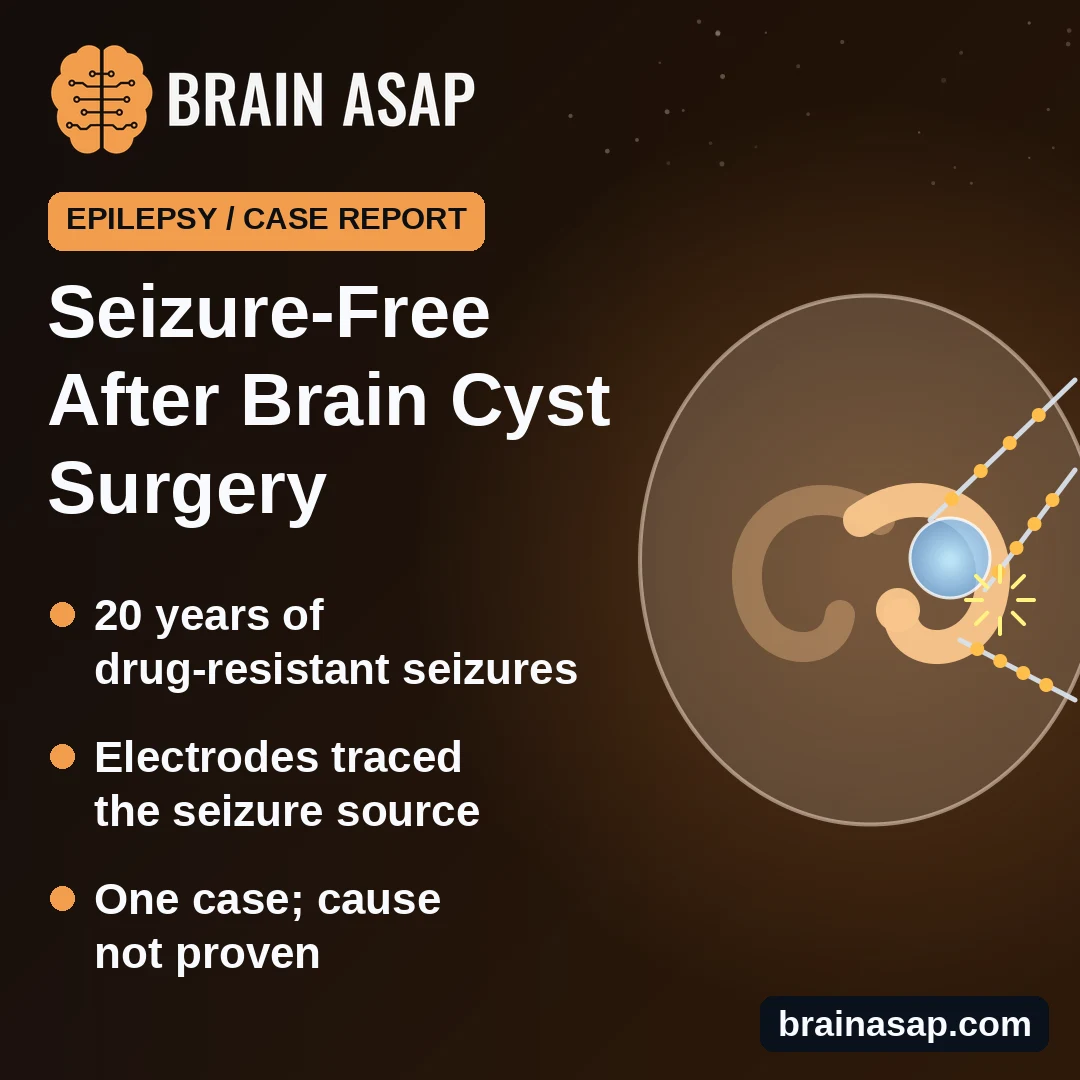
TL;DR: A 35-year-old woman with 20 years of seizures that medicines could not control became seizure-free after surgery removed a small fluid-filled cyst and the nearby part of her brain where seizures started. It is one case, so it cannot prove the cyst cause…
Read article ↗