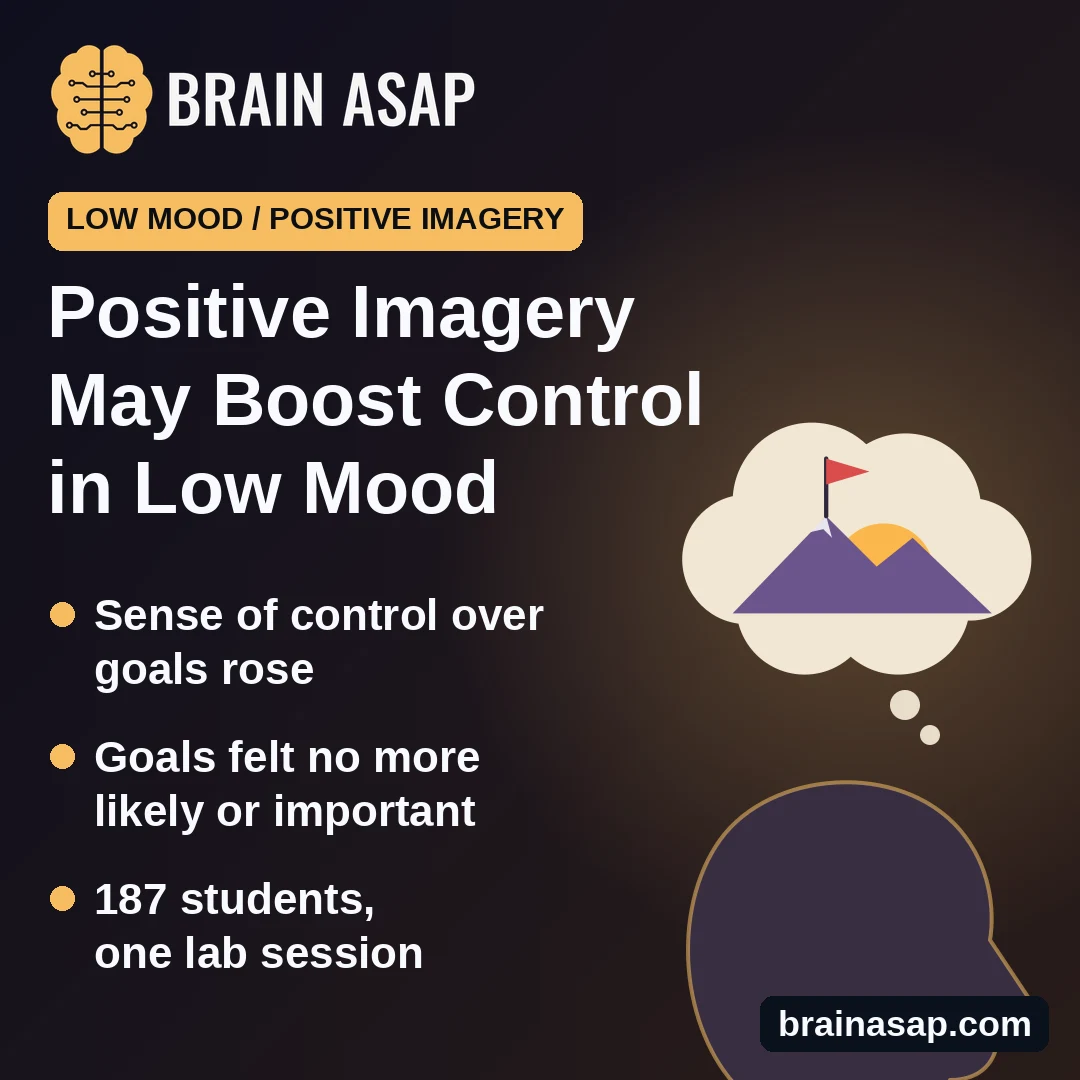
TL;DR: In a lab study of 187 UK students, a few minutes spent vividly imagining good future events made those with more low-mood symptoms feel more in control of their goals. It did not make anyone feel their goals were more likely or more important. Key Findi…
Read article ↗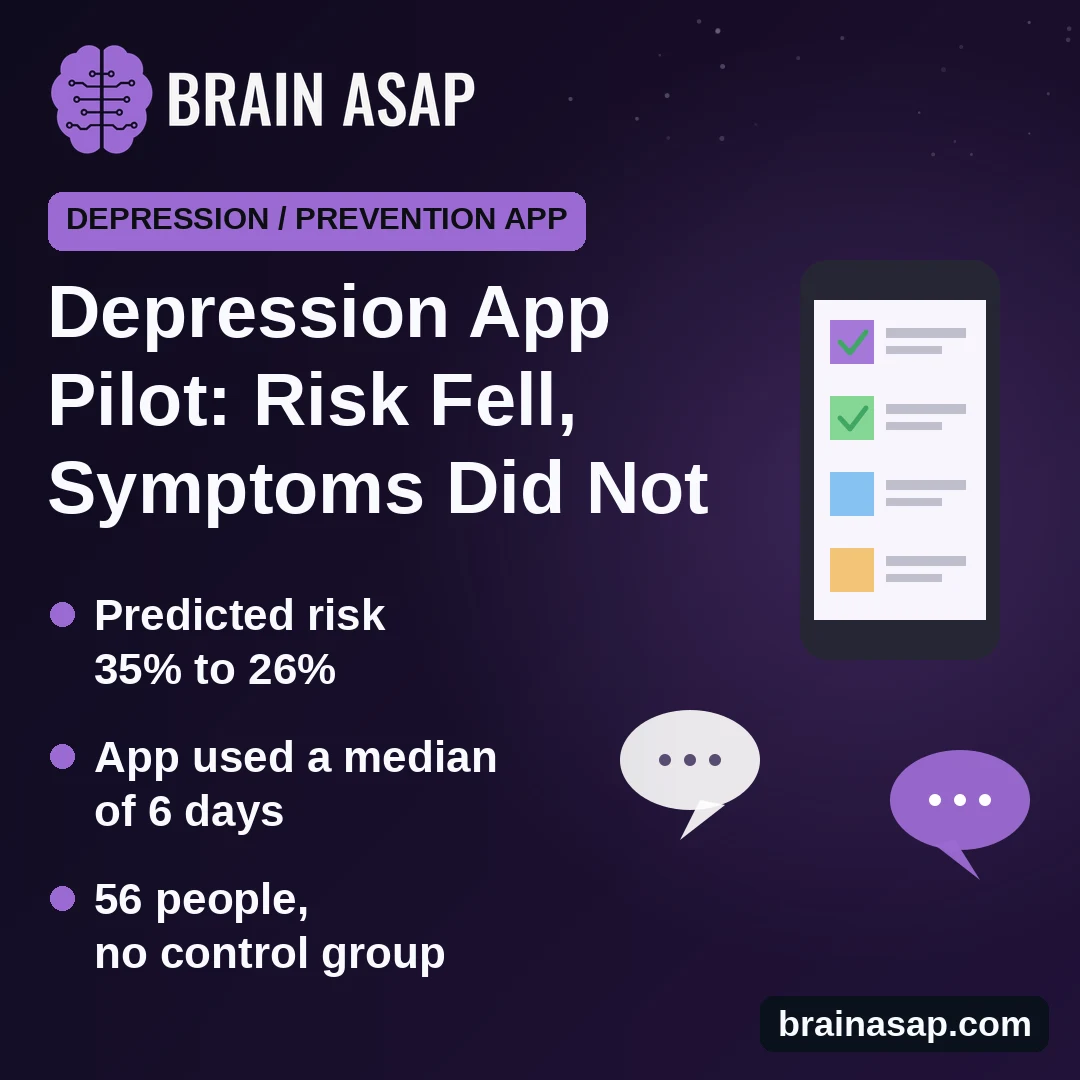
TL;DR: In a small Spanish pilot, adults at high risk of depression got a personalized prevention plan from their family doctor plus an app. After 3 months their predicted depression risk and anxiety scores fell, but depression symptoms did not, most people bar…
Read article ↗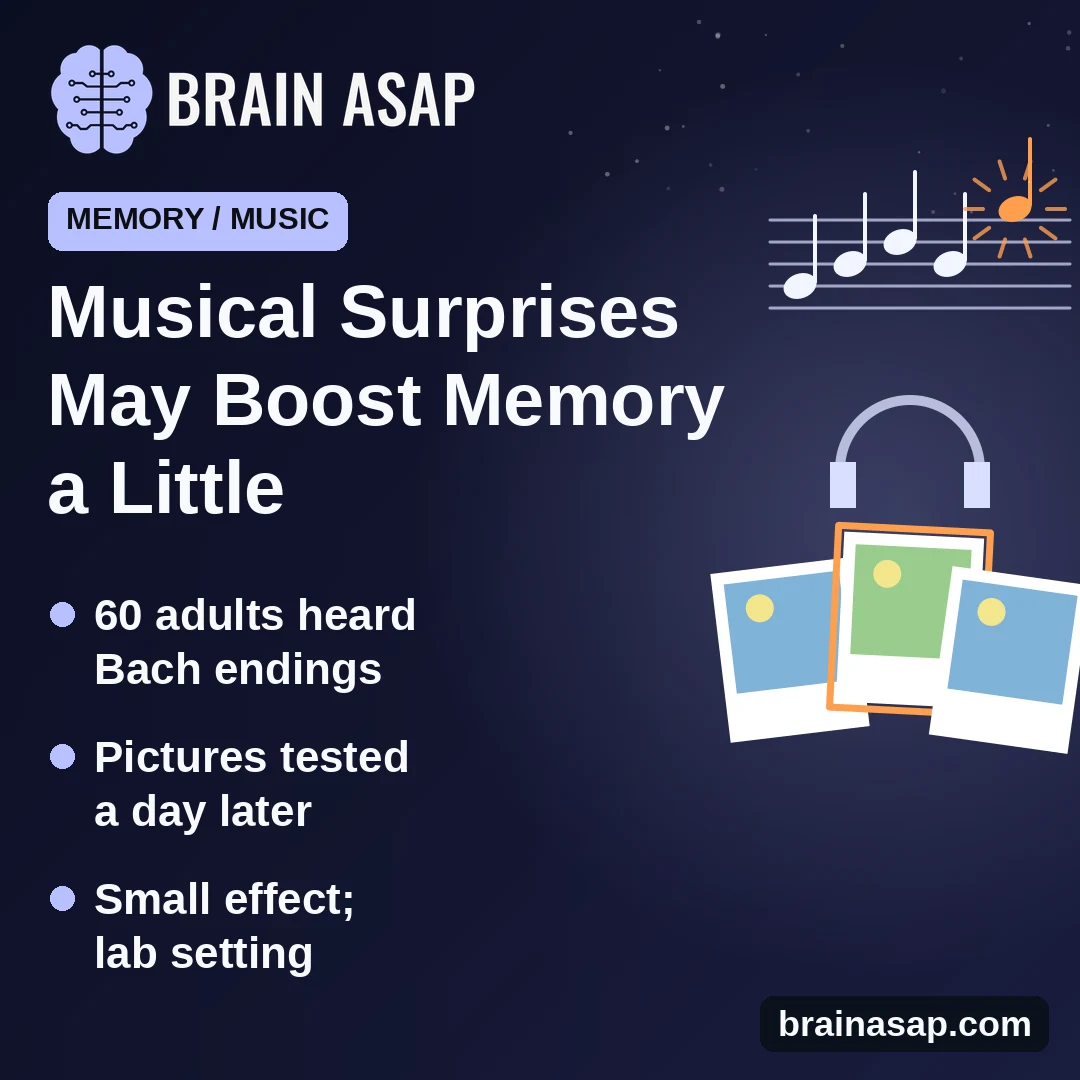
TL;DR: When a piece of music ended differently than people expected, they were a bit more likely to remember pictures they saw around that moment a day later. The effect was small and showed up in trial-by-trial analyses, not in simple group averages. Key Find…
Read article ↗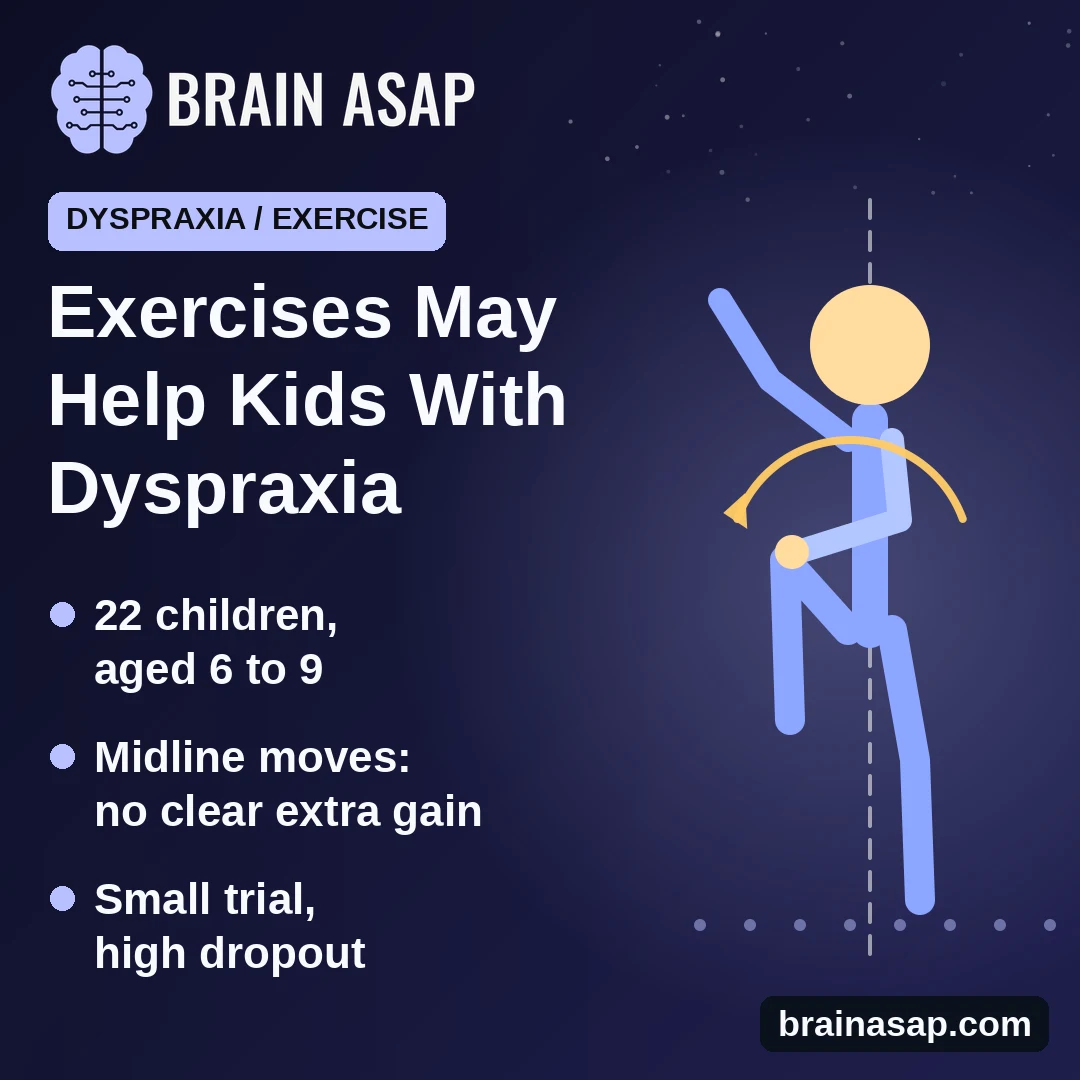
TL;DR: In a small Polish trial of 22 children aged 6 to 9 with coordination problems, coordination exercises with and without moves that cross the body’s center line both improved movement planning and two-sided coordination. Final scores were about the same i…
Read article ↗
TL;DR: In 159 young adults, people whose eyes were drawn to reward cues rather than to the rewards themselves glanced first at alcohol images slightly more often than one comparison group, but not the other. They did not drink more, contrary to an earlier stud…
Read article ↗
TL;DR: In 144 Norwegian tinnitus patients, an online program of retraining therapy and CBT was linked to less tinnitus distress after 6 months, most in severe cases. With no comparison group, the program can’t take full credit. Key Findings 144 patients: A 6-h…
Read article ↗
TL;DR: In four online experiments with Chinese university students, a study-app assistant with a friendly face or chatty wording led to more positive feelings than a plain version. The boost was bigger in students who felt lonelier. Key Findings 4 experiments,…
Read article ↗
TL;DR: During Parkinson’s surgery, 19 people played a game where they accepted or rejected money splits. Dopamine-like neurons deep in their brains fired more when an offer beat what the person expected, and this signal was stronger when the offer seemed to co…
Read article ↗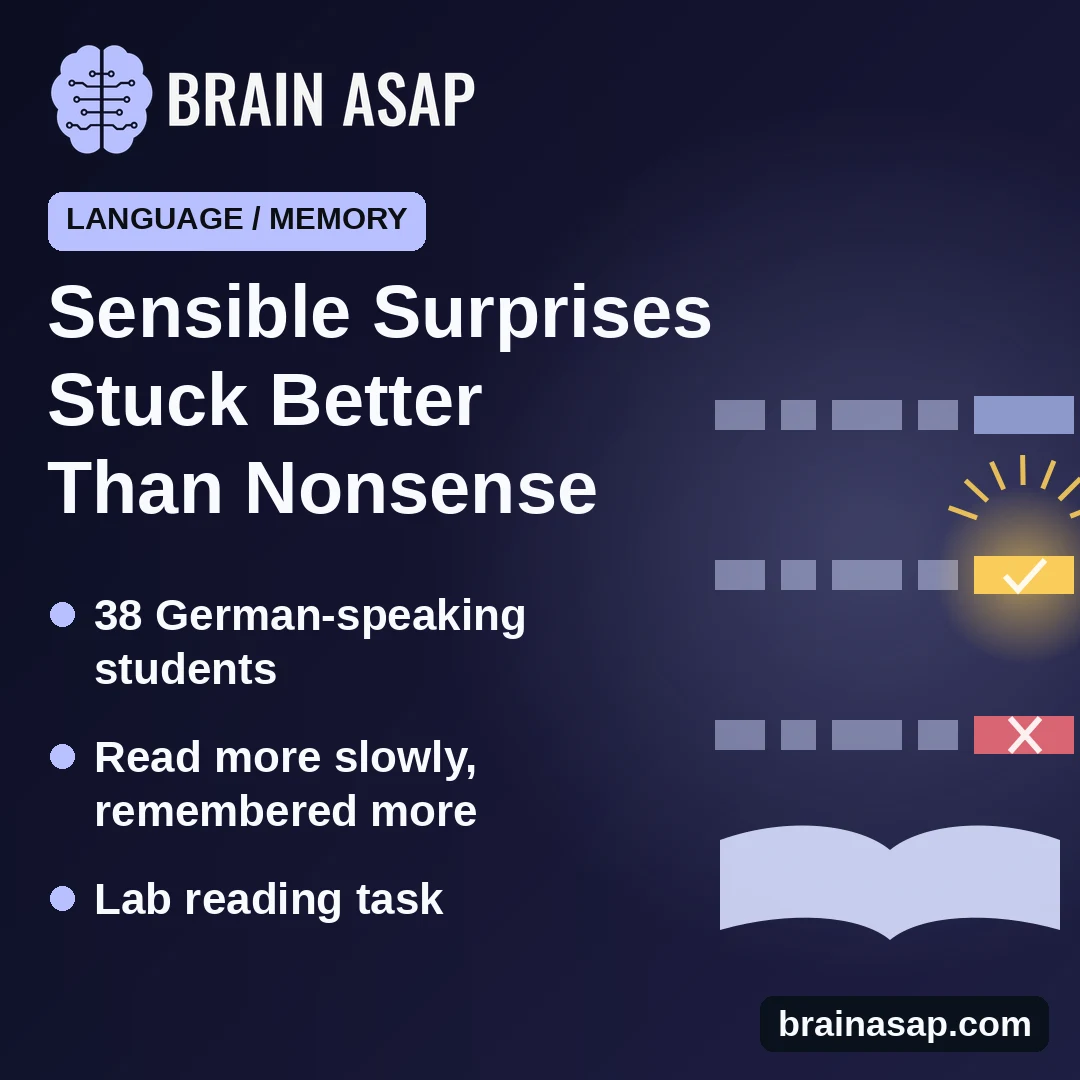
TL;DR: Readers slowed down more for surprising but sensible sentence endings than for impossible ones, and remembered those surprising words better. When people expect some nonsense, they seem to brush it off quickly. Key Findings 38 German-speaking students r…
Read article ↗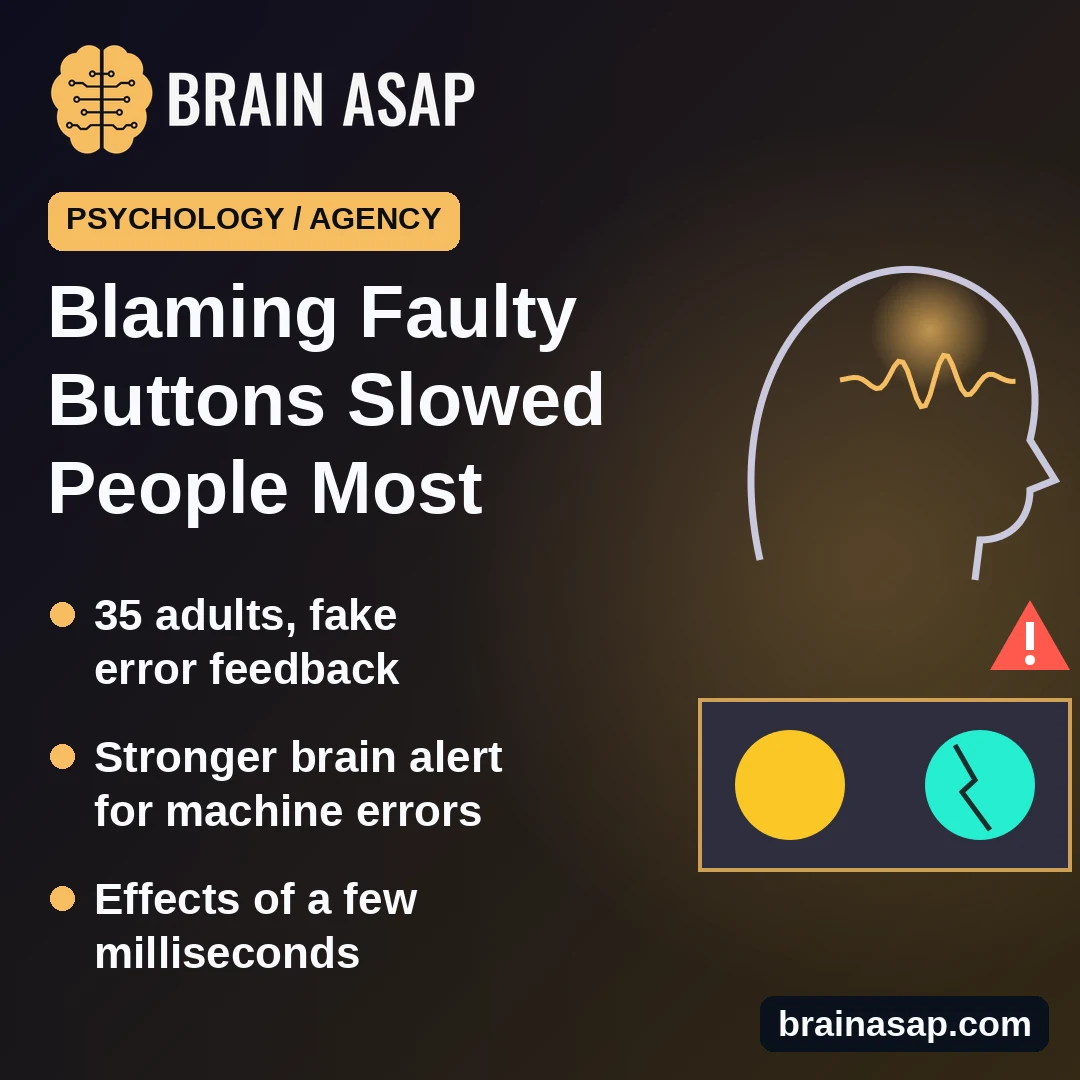
TL;DR: When 35 adults got fake feedback saying they were making more mistakes, they slowed down slightly, and they slowed most when told the buttons were faulty. Errors blamed on the machine also triggered a stronger brain “alert” signal than errors blamed on…
Read article ↗