Low-Level Drinking Was Not Invisible to the Aging Cortex TL;DR: Even drinking within low-risk guidelines was linked to lower cortical blood flow and thinner cortex when lifetime exposure met advancing age. Key Findings All participants stayed under 60 drinks p…
Read article ↗
Lifetime Cognitive Enrichment Delayed Alzheimer’s Dementia TL;DR: In 1,939 Rush Memory and Aging Project participants, higher lifetime cognitive enrichment was linked to 38% lower Alzheimer’s dementia hazard and about 5 years later dementia onset. Key Findings…
Read article ↗
Mediterranean Diet Linked Mitochondrial Microproteins TL;DR: Mediterranean diet adherence tracked with higher mitochondrial microproteins Humanin and SHMOOSE in older adults, pointing to a possible mitochondrial route for healthy-aging benefits. Key Findings H…
Read article ↗
Caffeinated Coffee Linked to Lower Dementia Risk Over 43 Years TL;DR: Caffeinated coffee drinkers had 141 vs 330 dementia cases per 100,000 person-years in the highest versus lowest intake quartiles — across 131,821 adults followed up to 43 years. Decaf showed…
Read article ↗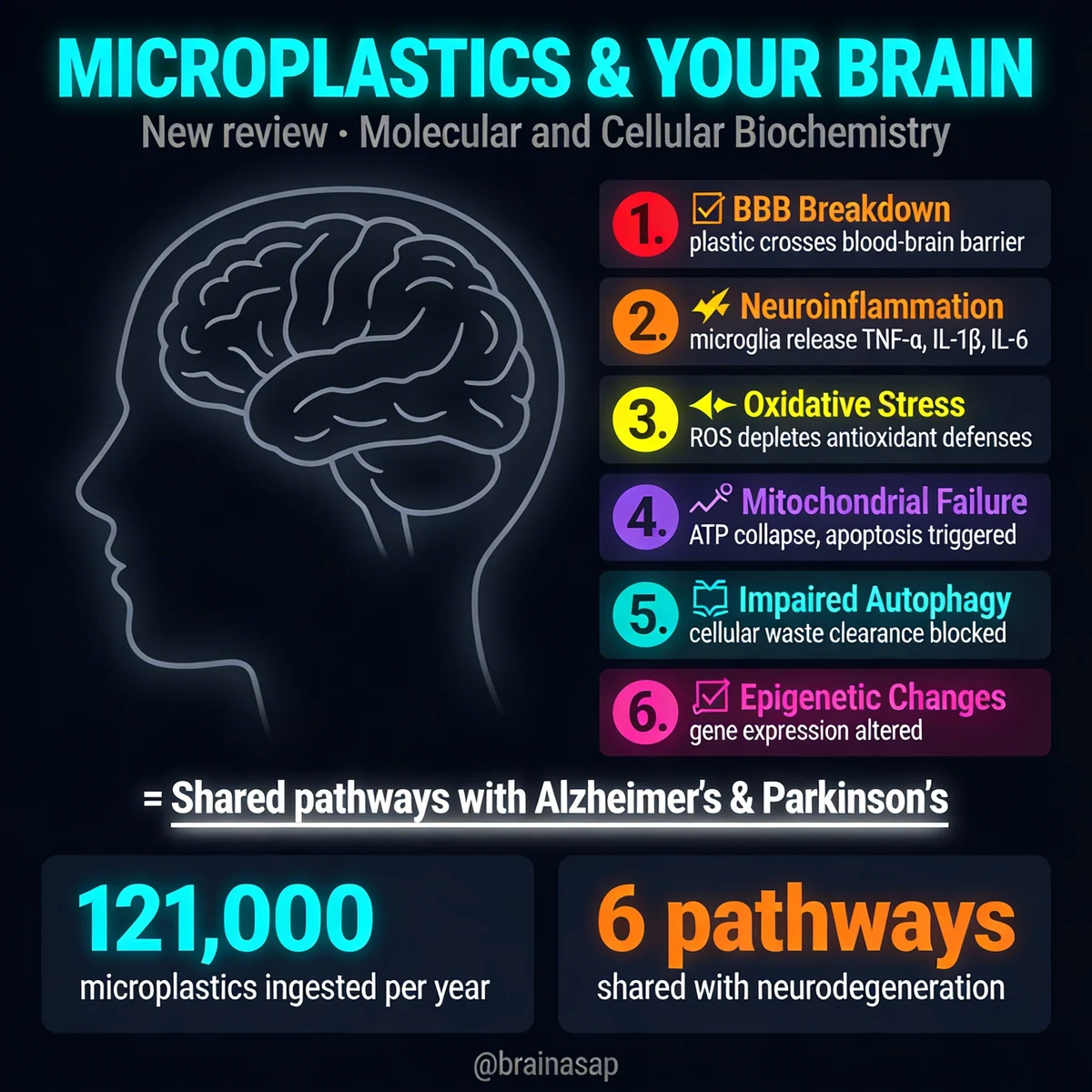
Microplastics and Brain Damage: The Hidden Link TL;DR: Microplastics circulating in your blood may accelerate Alzheimer’s and Parkinson’s disease through six shared pathways—including blood-brain barrier breakdown, chronic inflammation, and oxidative stress. Y…
Read article ↗
Blood Test Predicts Alzheimer’s 3-4 Years Early TL;DR: A blood test measuring phosphorylated tau-217 can predict when cognitively normal people will develop Alzheimer’s symptoms with a 3.0-3.7 year margin of error, potentially transforming how researchers iden…
Read article ↗
Blood Test Detects Alzheimer’s with 83% Accuracy TL;DR: A new blood test using three misfolded plasma proteins can identify Alzheimer’s disease with 83.44% accuracy, outperforming conventional biomarkers and offering a non-invasive screening tool years before…
Read article ↗
Researchers reviewed the potential impacts of physical exercise on the glymphatic system and its implications for neurodegenerative diseases, focusing on the mechanisms involved and the interplay between exercise and sleep quality. Highlights: The glymphatic s…
Read article ↗
Hypertension in older adults leads to poorer cognitive and walking performance due to the need for more brain resources to manage dual tasks. Highlights: Older adults with hypertension show higher brain activation in motor and sensory areas when performing dua…
Read article ↗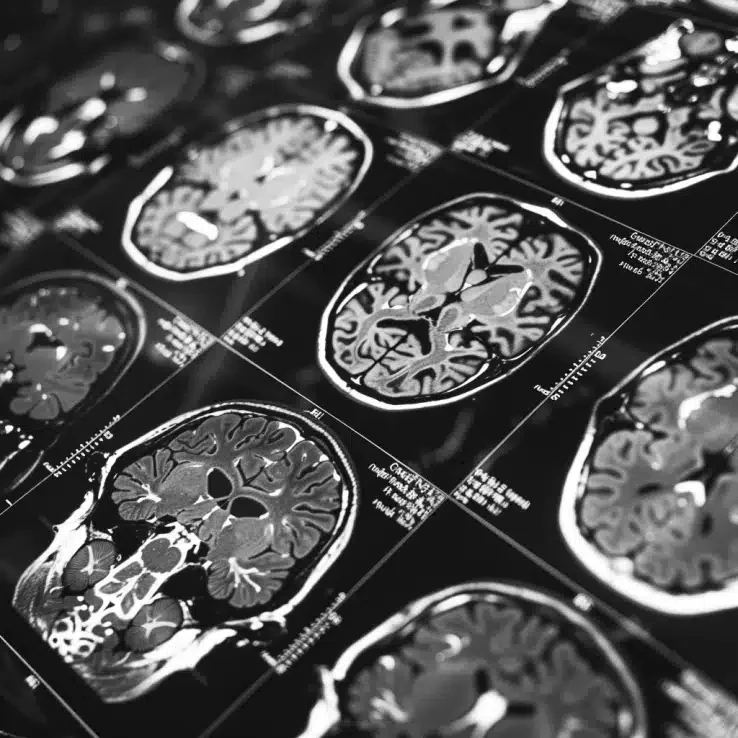
Normal aging leads to a decrease in brain volume, with gray and white matter shrinking and cerebrospinal fluid increasing, as measured by synthetic MRI. Highlights: Study Sample: 300 healthy adults (141 males, median age 48; 159 females, median age 50) were an…
Read article ↗