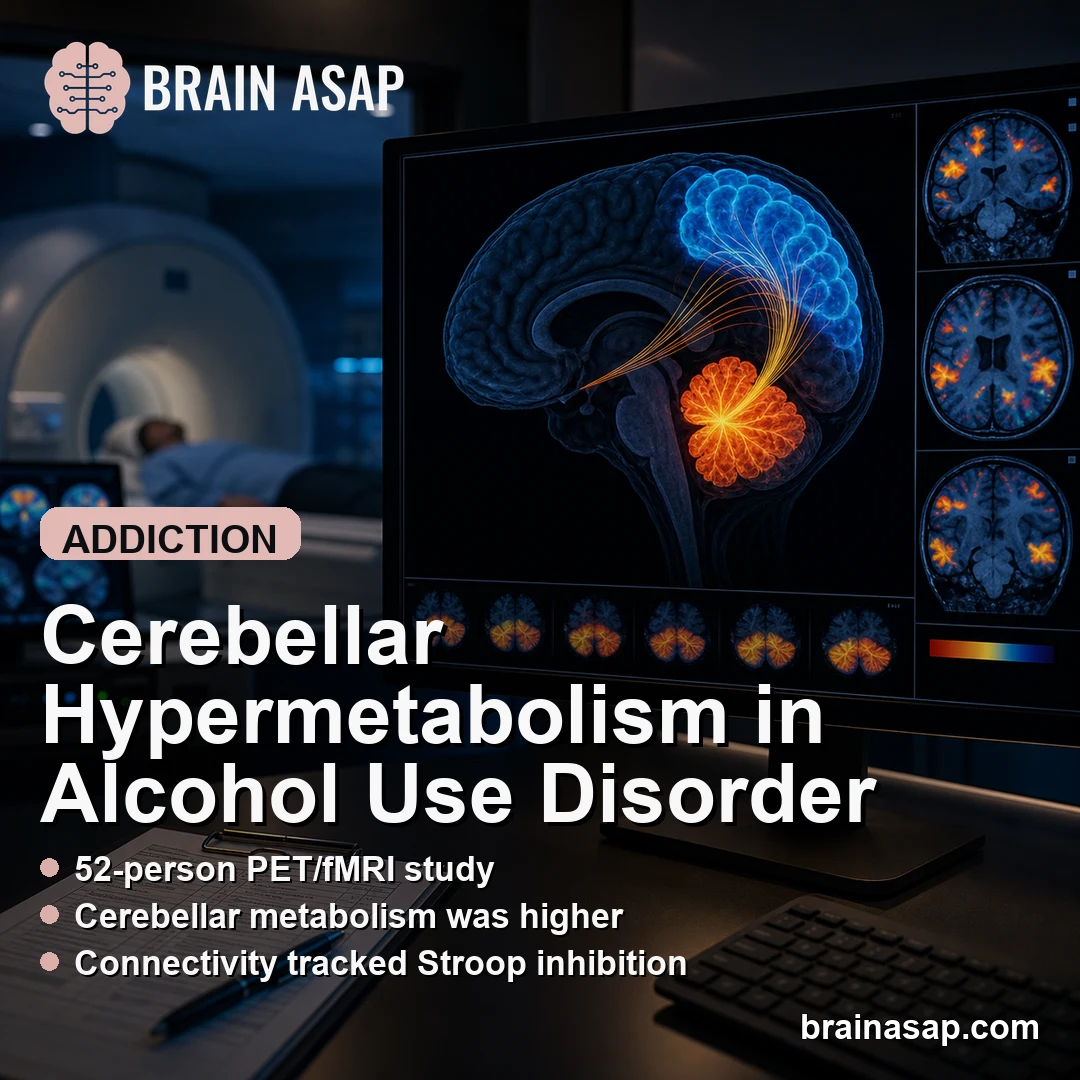
TL;DR: A 2026 study in Translational Psychiatry combined positron emission tomography (PET) and functional MRI (fMRI) in alcohol use disorder and linked cerebellar hypermetabolism to disrupted fronto-cerebellar connectivity and poorer inhibition performance. K…
Read article ↗
TL;DR: A 2026 systematic review and meta-analysis in Bipolar Disorders found that poor medication adherence in bipolar disorder was linked to substance use, psychotic features, lower insight, poorer functioning, and several markers of more severe illness, but…
Read article ↗
TL;DR: A 2026 systematic review and meta-analysis in Molecular Psychiatry found that CB-1 receptor blockade and cannabidiol reduced alcohol intake in animal models, but human alcohol-use-disorder evidence remained inconsistent and too thin to support a treatme…
Read article ↗
TL;DR: A 2026 mouse study in Alcohol: Clinical and Experimental Research found that chronic intermittent ethanol plus repeated forced-swim stress left mice drinking more alcohol months later and impaired reversal learning in midlife, alongside locus coeruleus…
Read article ↗
TL;DR: A 2026 Journal of Global Health analysis of Global Burden of Disease 2021 data estimated that 162.86 million people had substance use disorders in 2021, with age-standardized rates down since 1990 but major inequality across sex, age, region, and develo…
Read article ↗
TL;DR: A 2026 study in Behavior Genetics found that combining major depressive disorder and alcohol use disorder polygenic scores improved prediction of their comorbidity in 7,965 Add Health participants, but added little for either condition alone. Key Findin…
Read article ↗
TL;DR: A 2026 exploratory study in Translational Psychiatry found blood DNA methylation changes after 25 mg psilocybin in detoxified alcohol use disorder patients, including findings near TLE4 and RASGRP4, but the small trial did not establish a definitive AUD…
Read article ↗
TL;DR: A 2026 study in Population Health Metrics used Global Burden of Disease 2019 estimates and found that U.S. substance-use-disorder health loss rose sharply from 1990 to 2019, with opioid use disorders driving the largest increase. Key Findings 19.5 milli…
Read article ↗
TL;DR: A 2026 medRxiv preprint found that ex-smokers had higher fMRI blood oxygen level dependent (BOLD) responses to high-energy food pictures than adults with obesity or abstinent alcohol dependence, suggesting a brain reward route for post-quitting weight g…
Read article ↗
Alcohol use disorder (AUD) is associated with impairments in dopamine (DA) neurotransmission, with significant differences in DA release, receptor availability, and transporter density observed across different levels of alcohol consumption and stages of AUD.…
Read article ↗