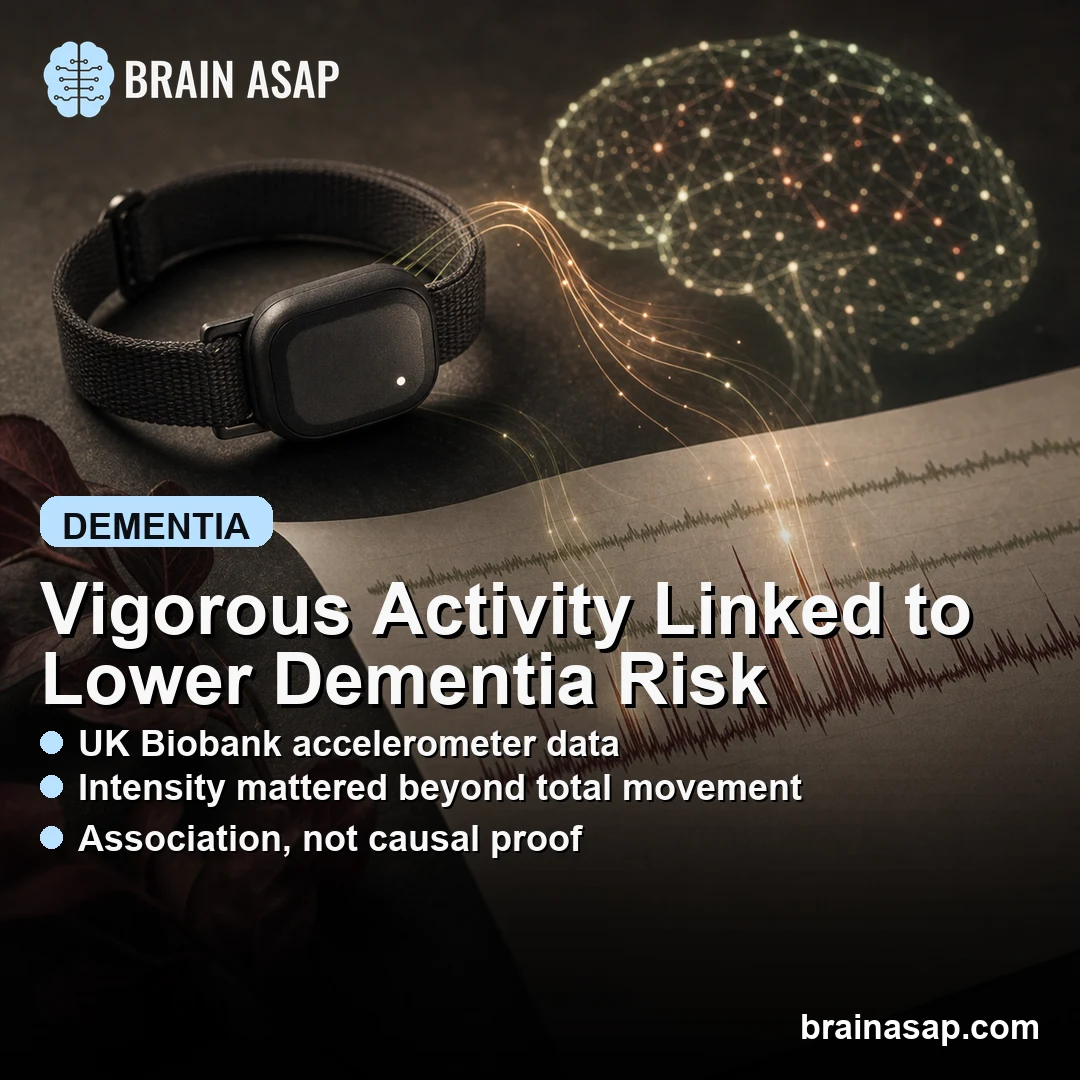
Vigorous Activity Linked to Lower Dementia Risk in UK Biobank TL;DR: In UK Biobank accelerometer data, the vigorous share of daily movement accounted for 32% of dementia’s population-attributable fraction versus just 8% for total activity volume — suggesting b…
Read article ↗
Egypt’s 1,530-Person Alzheimer’s Cohort Captures Risks Western Studies Miss TL;DR: A DAC-Egypt cohort enrolled 1,530 adults aged 55 to 98, collected blood from 98%, and captured a rural, low-literacy, metabolically burdened population that most dementia datase…
Read article ↗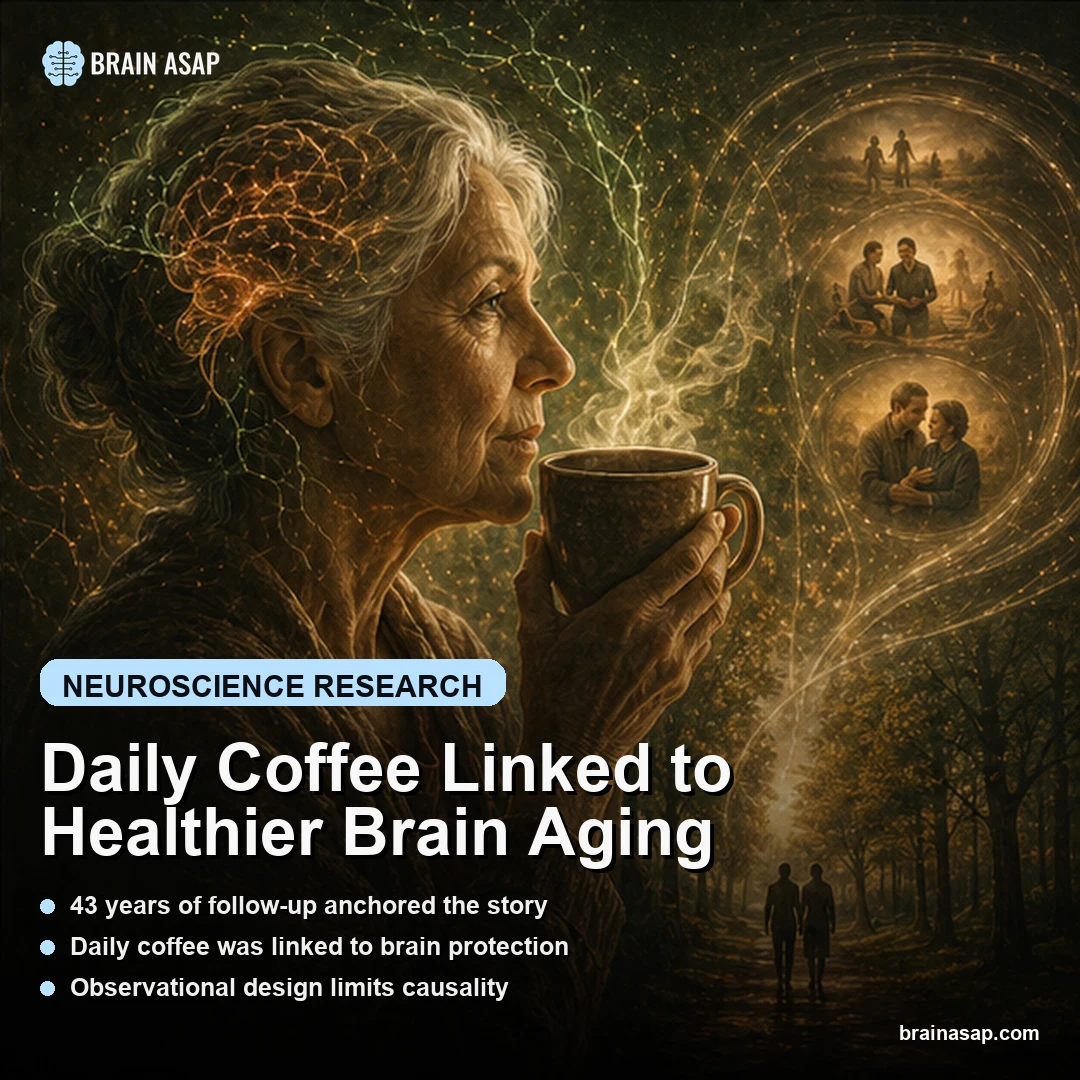
Caffeinated Coffee Linked to Lower Dementia Risk Over 43 Years TL;DR: Caffeinated coffee drinkers had 141 vs 330 dementia cases per 100,000 person-years in the highest versus lowest intake quartiles — across 131,821 adults followed up to 43 years. Decaf showed…
Read article ↗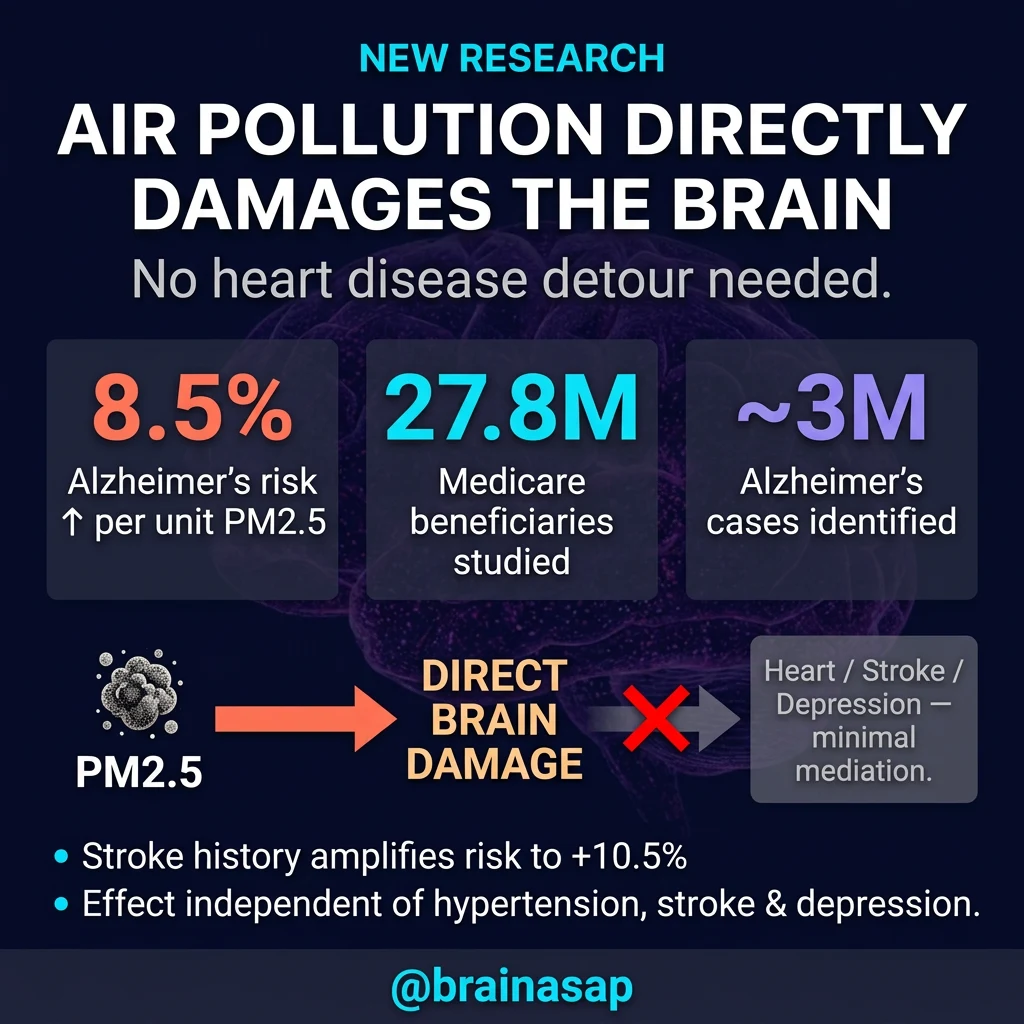
Dirty Air, Fragile Brain: PM2.5’s Direct Link to Alzheimer’s TL;DR: A massive study of 27.8 million Medicare beneficiaries found that exposure to fine air pollution (PM2.5) increases Alzheimer’s risk by 8.5% per unit increase—and this effect operates largely t…
Read article ↗
TLDR: GLP-1 agonists were found to significantly reduce the risk of dementia in older individuals with type 2 diabetes mellitus (T2DM) compared to DPP-4 inhibitors and sulfonylureas. Highlights: A sequential trial emulation was conducted using data from Swedis…
Read article ↗
TLDR: This study provides evidence that high salt intake is causally associated with an increased risk of developing dementia, including Alzheimer’s disease (AD) and undefined dementia. Highlights: Causal Association: High salt intake is significantly associat…
Read article ↗
A new large genetics study has discovered new clues into how levels of a protein called apolipoprotein E (ApoE) in the blood may influence a person’s risk of developing Alzheimer’s disease. Key facts: Researchers found 9 new genetic variants that influence Apo…
Read article ↗