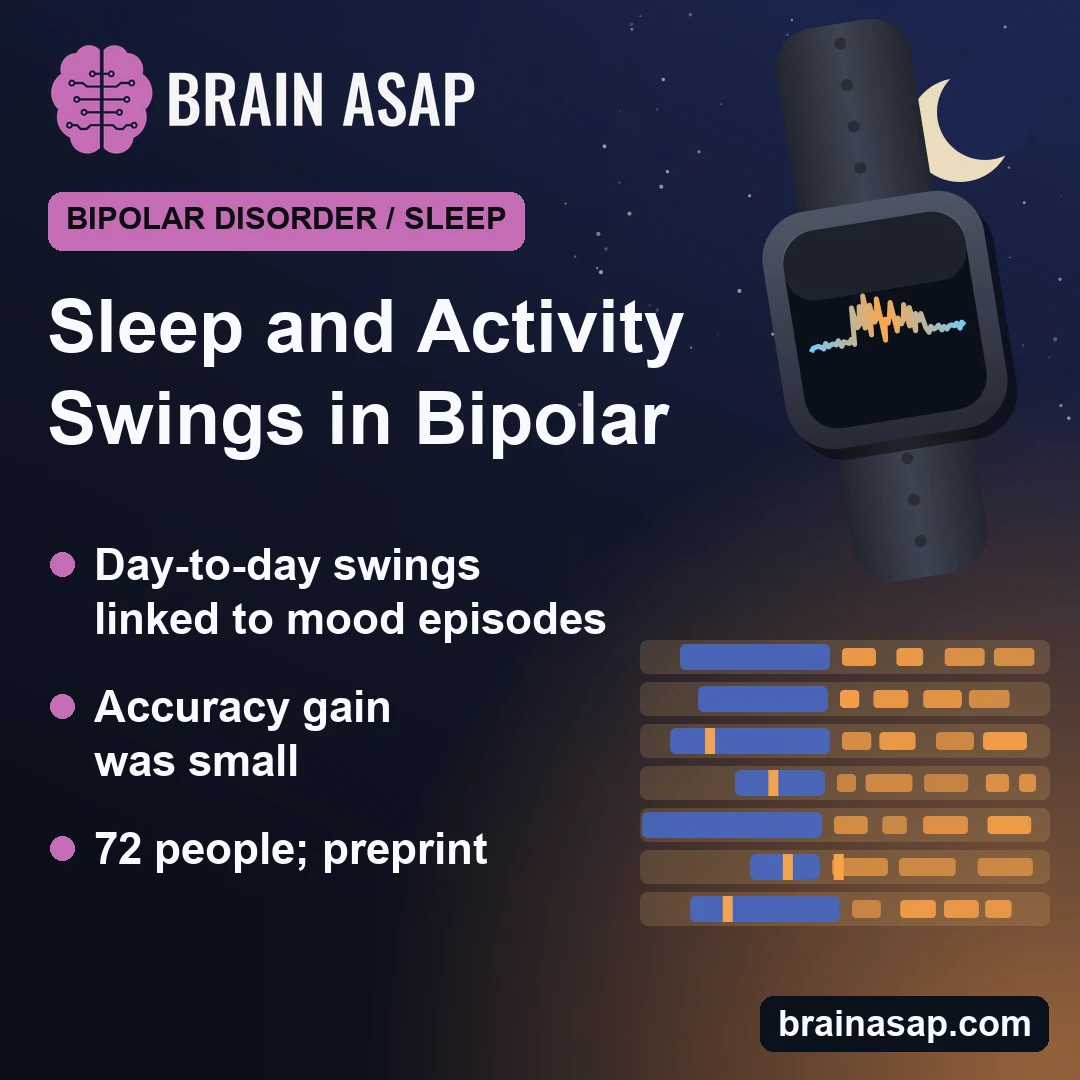
TL;DR: A 2026 preprint on medRxiv followed 72 people with bipolar disorder who wore wrist activity monitors and asked whether day-to-day swings in sleep and activity carry information about mood episodes beyond weekly averages. They did — the swings were linke…
Read article ↗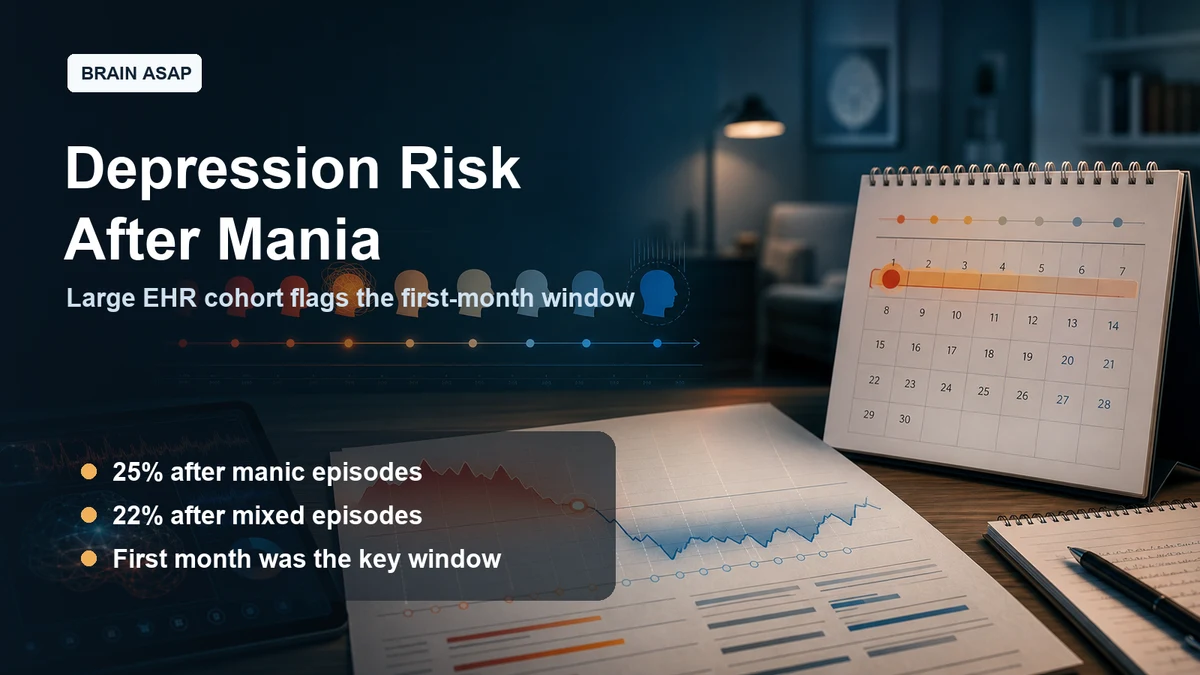
TL;DR: A 2026 medRxiv retrospective cohort study found that depression often followed bipolar manic or mixed episodes quickly, with 25% of manic episodes and 22% of mixed episodes transitioning to depression within 1 month. Key Findings First-month risk window…
Read article ↗
Different psychiatric conditions exhibit varied sleep problems, with insomnia and fatigue being the most common issues. Highlights: Worst Sleep Profiles: Traits related to affect disorders, generalized anxiety, and ADHD show the worst sleep problems, including…
Read article ↗
A new Mayo Clinic study is the first to clinically investigate whether antidepressants that impact mitochondrial function differently are associated with varying rates of treatment-emergent mania in bipolar disorder. The study found that antidepressants that i…
Read article ↗
Mania is characterized by emotional dysregulation, sleep disturbances, and impaired judgment. Understanding its underlying brain circuitry could lead to improved diagnosis and treatment. Key Facts: Mania involves decreased activity in the right ventral prefron…
Read article ↗
Bipolar disorder is a mental illness characterized by extreme mood swings between depression and mania. While antidepressants are commonly prescribed to treat the depressive symptoms, they can also trigger manic episodes in some patients. New research suggests…
Read article ↗