Paternal Postpartum Depression Peaks at 10-12 Months, Not at Birth

TL;DR: Fathers experience a protective period early postpartum (depression drops by 26%), but depression and stress surge at months 10-11, creating a 30-36% elevated risk when no one is screening for it. Perinatal psychiatry has a crisis of attention. Mothers are screened relentlessly. Fathers are largely invisible. Yet a groundbreaking Swedish national study reveals something …

Read more

Vivid Dreams Make Sleep Feel Deeper, Not Lighter (Even as Your Brain Gets Busier)

TL;DR: Vivid, immersive dreaming makes sleep feel just as deep as complete unconsciousness—both rate identically—while the dim awareness of merely existing feels the shallowest, revealing that sleep depth depends on what’s happening in your mind, not just your brain’s electrical silence. There’s a paradox buried in every night of sleep you’ve ever had. As the …

Read more

How Insomnia Fragments REM Sleep and Causes Depression: The Neuroscience Explained

TL;DR: Chronic insomnia fragments REM sleep through persistent hyperarousal, preventing emotional memory consolidation and creating a vicious cycle that breeds depression—but cognitive-behavioral therapy for insomnia can break the cycle faster than antidepressants alone. Insomnia has a hidden mechanism. You lie awake for hours, but the real problem isn’t the wakefulness—it’s what happens to REM sleep, …

Read more

Sleep Patterns vs. Risk of Psychiatric Disorders: Depression, Schizophrenia, ADHD (2024 Study)

Insomnia and daytime napping are causally associated with an increased risk of major depressive disorder (MDD), while sleep duration influences the risk of schizophrenia and attention-deficit/hyperactivity disorder (ADHD). Highlights: Major Depressive Disorder (MDD): Insomnia and napping during the day significantly increase the risk of MDD. Schizophrenia: Longer sleep duration is associated with a higher risk …

Read more

Sleep Profiles of Different Psychiatric Traits (2024 Study)

Different psychiatric conditions exhibit varied sleep problems, with insomnia and fatigue being the most common issues. Highlights: Worst Sleep Profiles: Traits related to affect disorders, generalized anxiety, and ADHD show the worst sleep problems, including insomnia and fatigue. Milder Sleep Issues: Autism, eating disorders, and impulsivity traits are linked to milder sleep disturbances. Mania and …

Read more

Ketamine Alters Sleep Architecture in Depression: Delta Waves, Alpha Waves, Beta Waves (2024 Study)

A study examined the effects of ketamine on sleep arousal metrics in individuals with treatment-resistant depression (TRD) vs. healthy volunteers, finding that ketamine increases certain sleep-related brain activities but does not significantly mediate its antidepressant effects through these sleep changes. Highlights: Individuals with TRD had lower total sleep time and shorter REM latency compared to …

Read more

Effects of REM Sleep Deprivation on Brain Connectivity (2024 Study)

A study found that REM sleep deprivation significantly impacts brain connectivity, particularly within the default mode network (DMN) and between the DMN and other brain networks, highlighting the importance of REM sleep for maintaining optimal brain function. Highlights: Connectivity Patterns: REM sleep deprivation resulted in stronger connectivity within the default mode network (DMN) and between …

Read more

Alpha Closed-Loop Auditory Stimulation Increases Alpha Brain Waves & Alters Sleep (2024 Study)

TLDR: A new method using sound to influence brain waves can help manage brain activity and affect how we fall asleep. Highlights: How It Works: This method, called Alpha Closed-Loop Auditory Stimulation (αCLAS), uses sound pulses timed precisely to brain waves to change brain activity. Phase Matters: The timing of the sound pulses is crucial; …

Read more

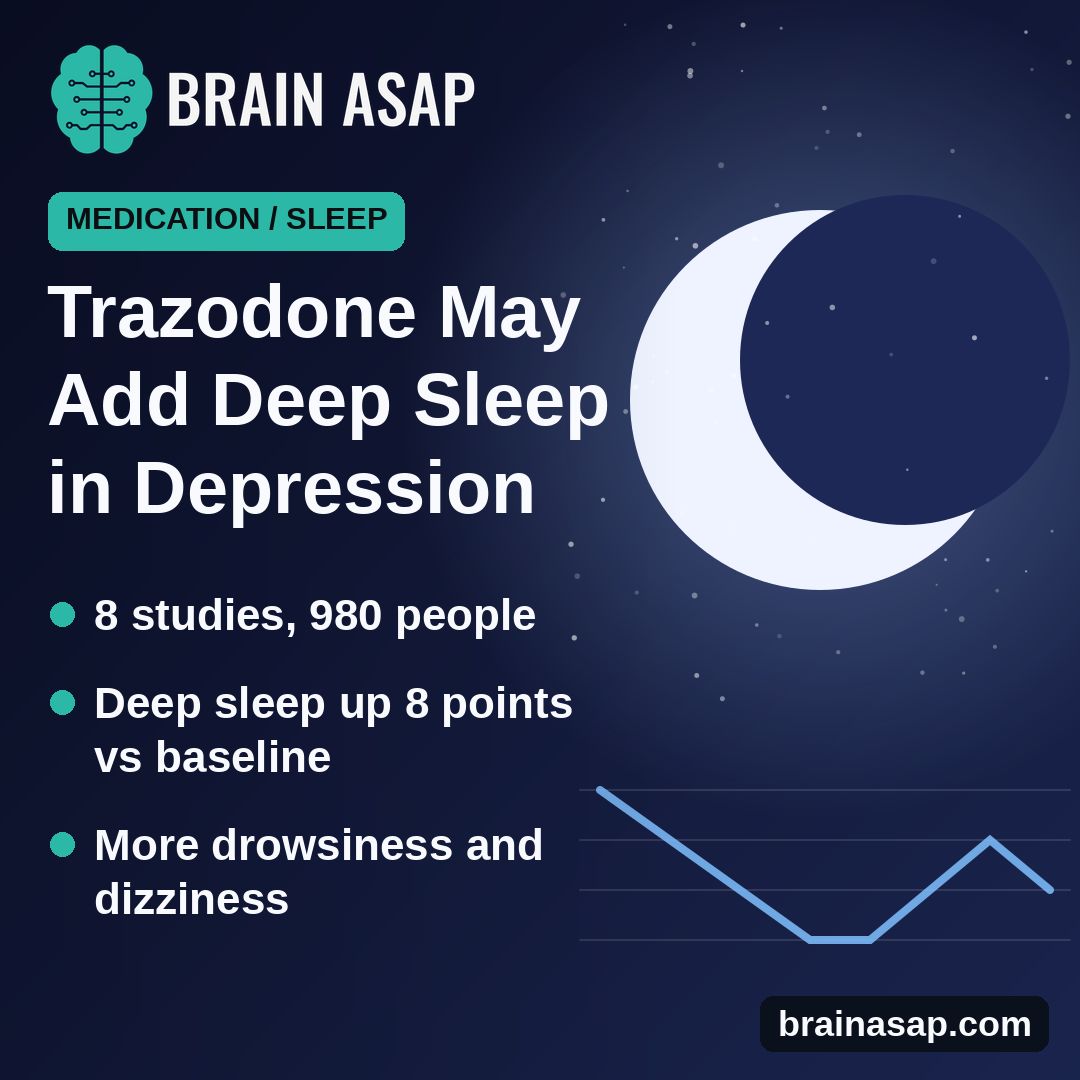
Antidepressants for Insomnia Treatment in Adults: Are They Effective? (Cochrane Review Findings)

Insomnia is a common sleep disorder affecting up to 15% of adults. While sedative medications are often prescribed, their long-term use can lead to dependence. As an alternative, antidepressants are widely used in clinical practice despite limited evidence supporting their efficacy and safety for insomnia. Key Facts: Insomnia affects up to 15% of adults, causing …

Read more

Sleep Disturbances in 22q11.2 Deletion Syndrome: What You Should Know

22q11.2 deletion syndrome (22q11.2DS) is a genetic condition caused by a missing chunk of chromosome 22. It comes with high rates of neurodevelopmental and psychiatric problems. Sleep issues are very common in 22q11.2DS across the lifespan. Key Facts: Sleep problems occur in up to 91% of those with 22q11.2DS and involve difficulties falling asleep, staying …

Read more