TL;DR: A 2026 preprint in medRxiv found that head-impact-related magnetoencephalography (MEG) changes in high-school football players were strongest in cortical regions matching specific neurotransmitter and gene-expression maps, especially norepinephrine, nic…
Read article ↗
TL;DR: A 2026 preprint in medRxiv reported that REDDI, an interpretable AI pipeline using resting-state magnetoencephalography (MEG), classified four neurodegenerative diseases with mean balanced accuracy of 0.81. Key Findings The dataset covered four disease…
Read article ↗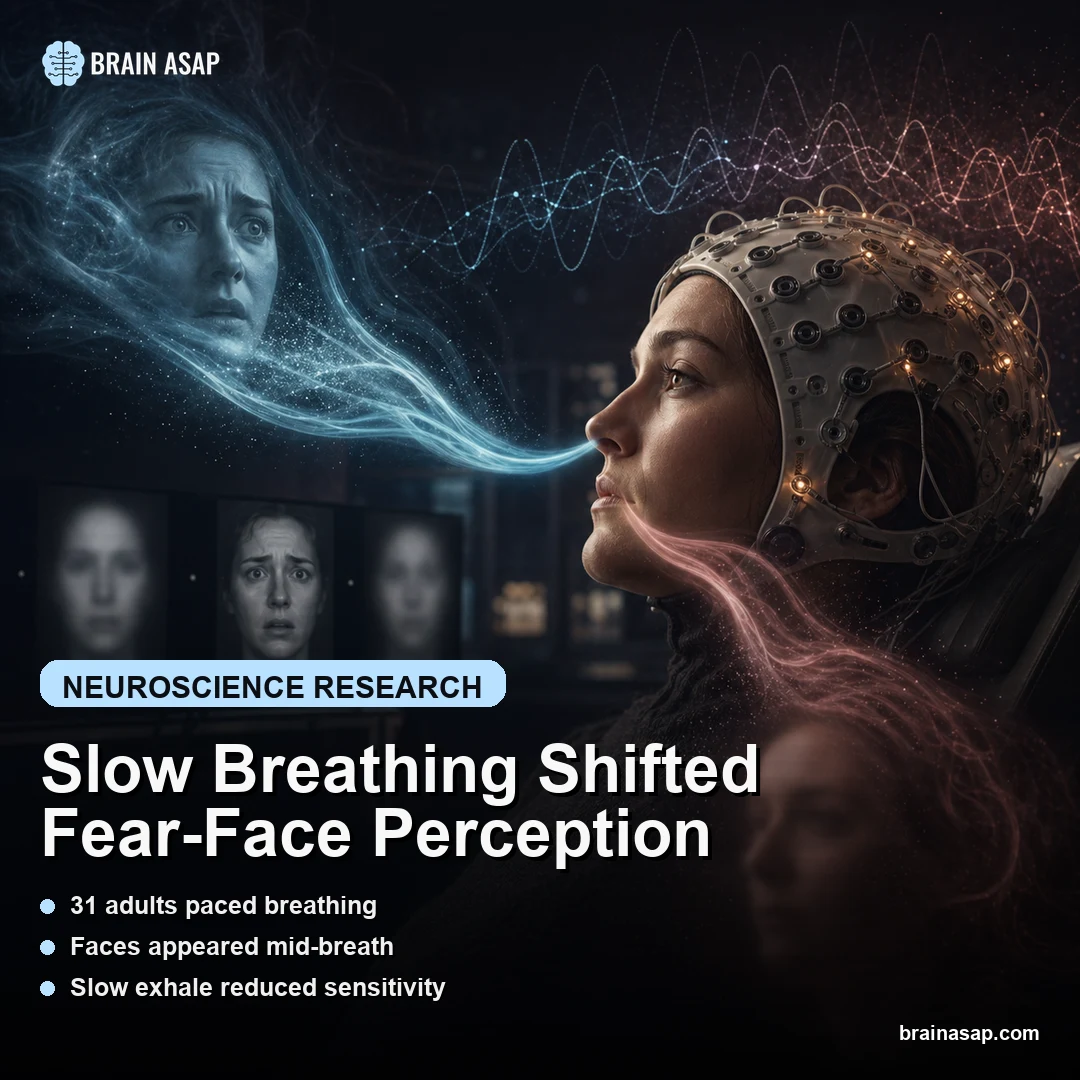
TL;DR: A 2025 study in European Journal of Neuroscience found that slow breathing sharpened fearful-face perception during inhalation but weakened it during exhalation, with magnetoencephalography showing brain-timing changes before the face appeared. Key Find…
Read article ↗