Betrayal Biased Social Inference Through Selective Observation
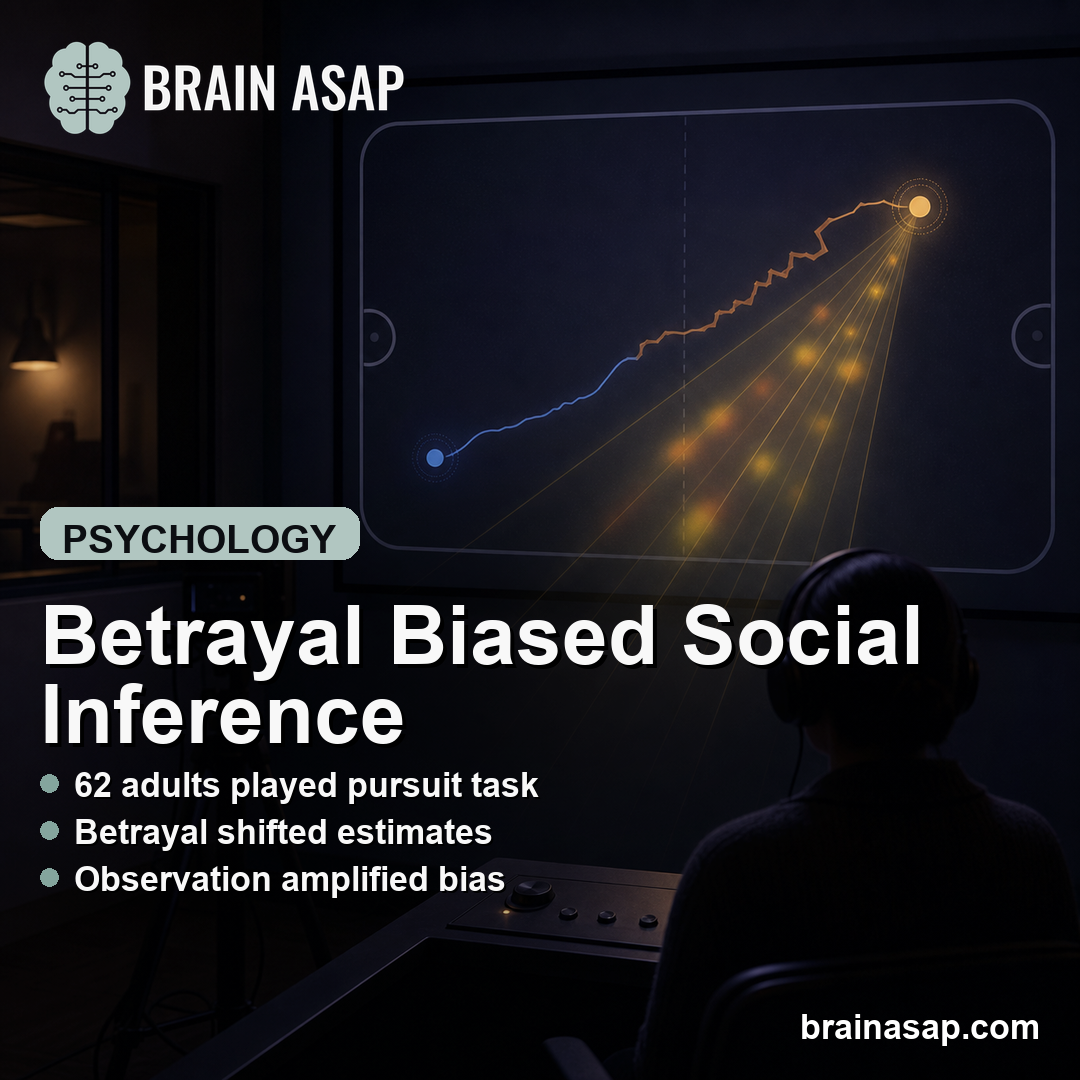
Betrayal Biased Social Inference Through Selective Observation

TL;DR: A 2026 study in PLOS Computational Biology found that people overestimated an opponent’s competitiveness after betrayal, especially when they chose to watch the opponent instead of controlling their own avatar. Key Findings 62-person social task: 62 adults played a 2D prey-pursuit game with a computerized opponent whose hidden friendliness changed over time. Betrayal shifted …
Read more

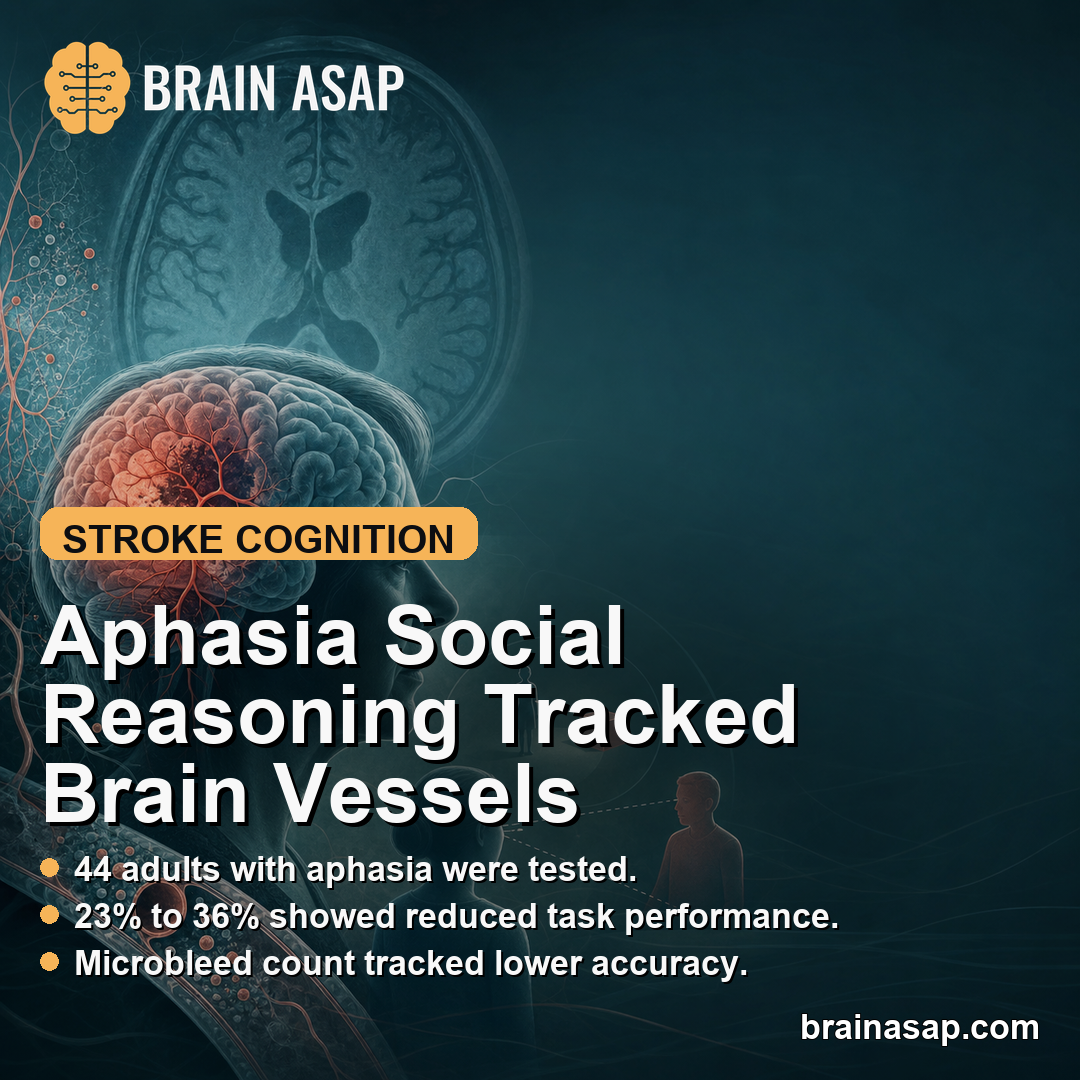
Post-Stroke Aphasia Theory of Mind Performance Tracked Vascular Brain Health

Post-Stroke Aphasia Theory of Mind Performance Tracked Vascular Brain Health

TL;DR: A 2026 medRxiv preprint found that nonverbal Theory of Mind (ToM), the ability to infer another person’s beliefs or perspective, varied in 44 adults with post-stroke aphasia and was more closely tied to vascular brain-health markers than to aphasia severity. Key Findings Study group: 44 adults with aphasia after mostly left-hemisphere stroke completed 2 …

Read more

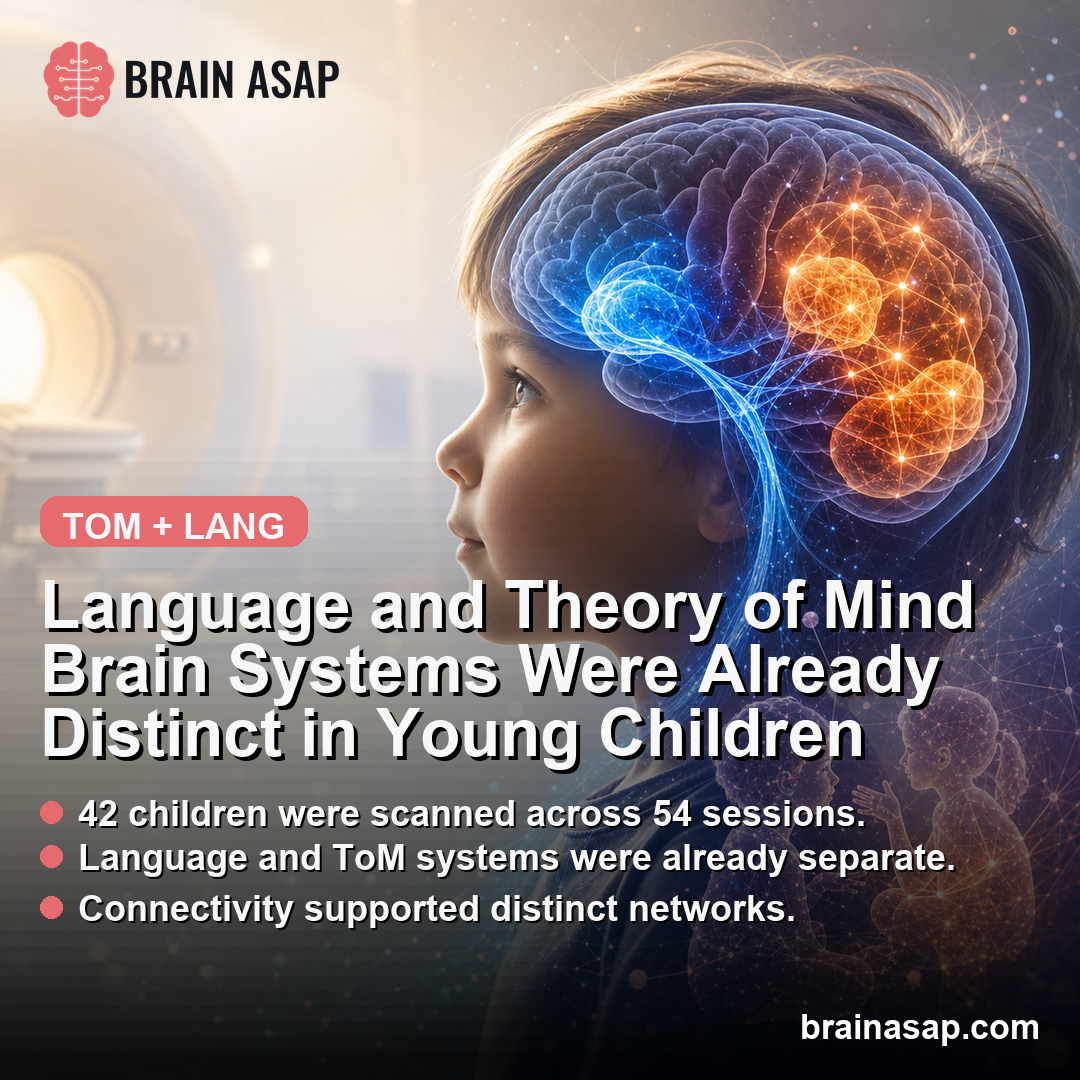
Language and Theory of Mind Brain Systems Were Already Distinct in 3- to 9-Year-Old Children

Language and Theory of Mind Brain Systems Were Already Distinct in 3- to 9-Year-Old Children

TL;DR: A 2026 Communications Biology fMRI study found that language and theory of mind, the ability to infer other people’s mental states, were already neurally distinct in children aged 3-9 rather than slowly separating during development. Key Findings Children show distinct neural specificity for language and theory of mind in superior temporal lobe — just …

Read more

Borderline Personality Disorder (BPD) & Low Empathy: Brain Scans Reveal Deficits

Borderline personality disorder (BPD) is a complex mental health condition characterized by difficulties with emotional regulation, impulsivity, and unstable relationships. A key feature of BPD is impaired empathy, which contributes to the interpersonal dysfunction seen in these patients. A new review analyzes 45 studies on empathy and related constructs like theory of mind in BPD, …

Read more