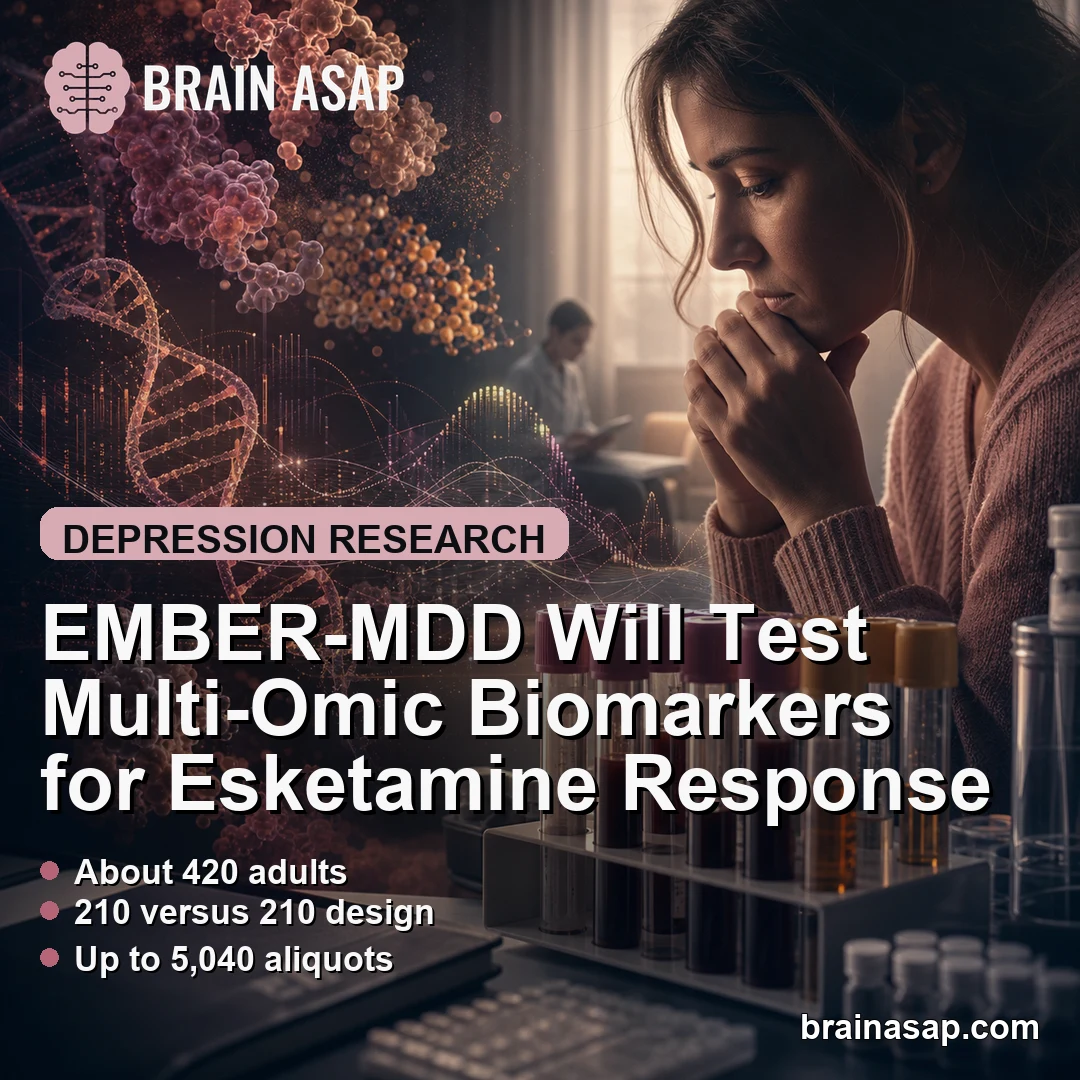
TL;DR: A 2026 methodology paper in European Archives of Psychiatry and Clinical Neuroscience describes EMBER-MDD, a research-only multi-omic study designed to find treatment-resistance and esketamine-response biomarkers in about 420 adults with major depressiv…
Read article ↗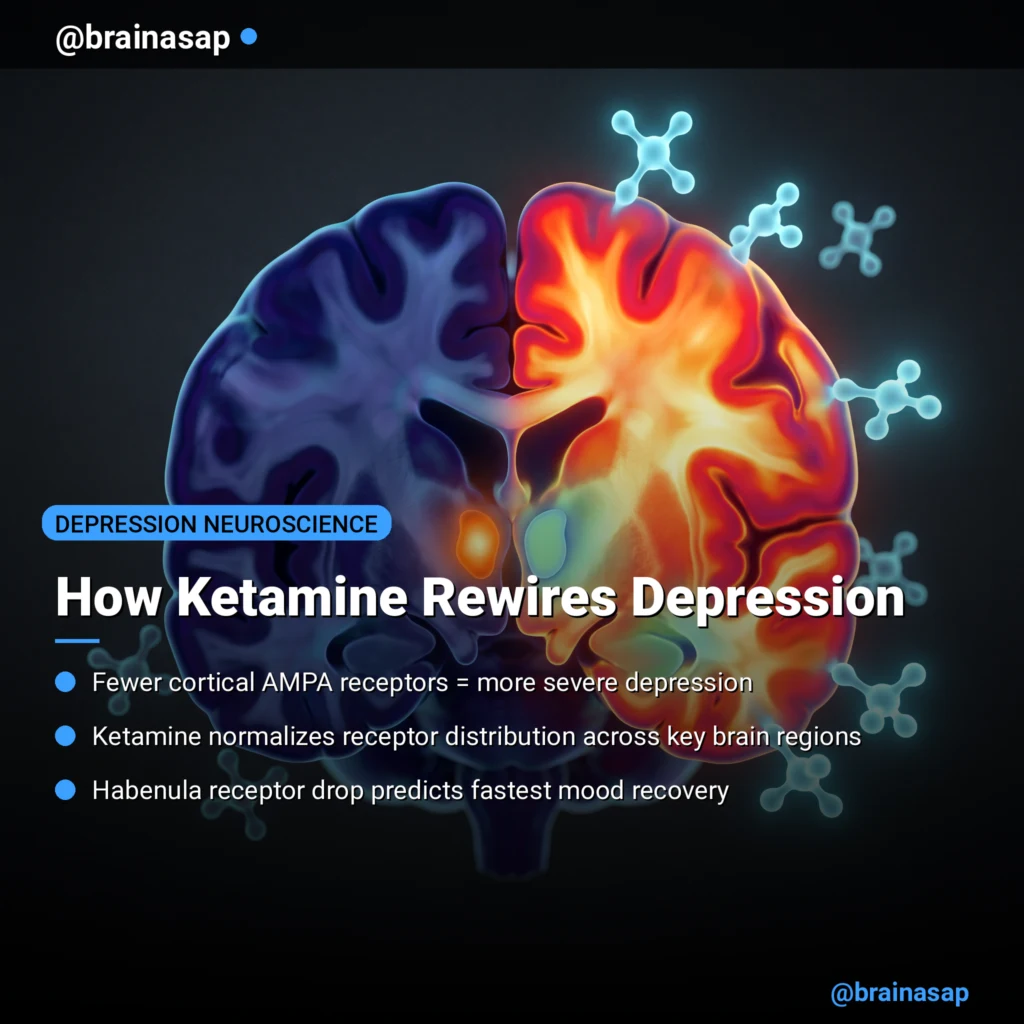
How Ketamine Rewires Receptors to Beat Depression TL;DR: Using PET imaging to directly visualize AMPA receptors in the living human brain, researchers discovered that ketamine’s rapid antidepressant effect works by reshuffling these receptors across specific b…
Read article ↗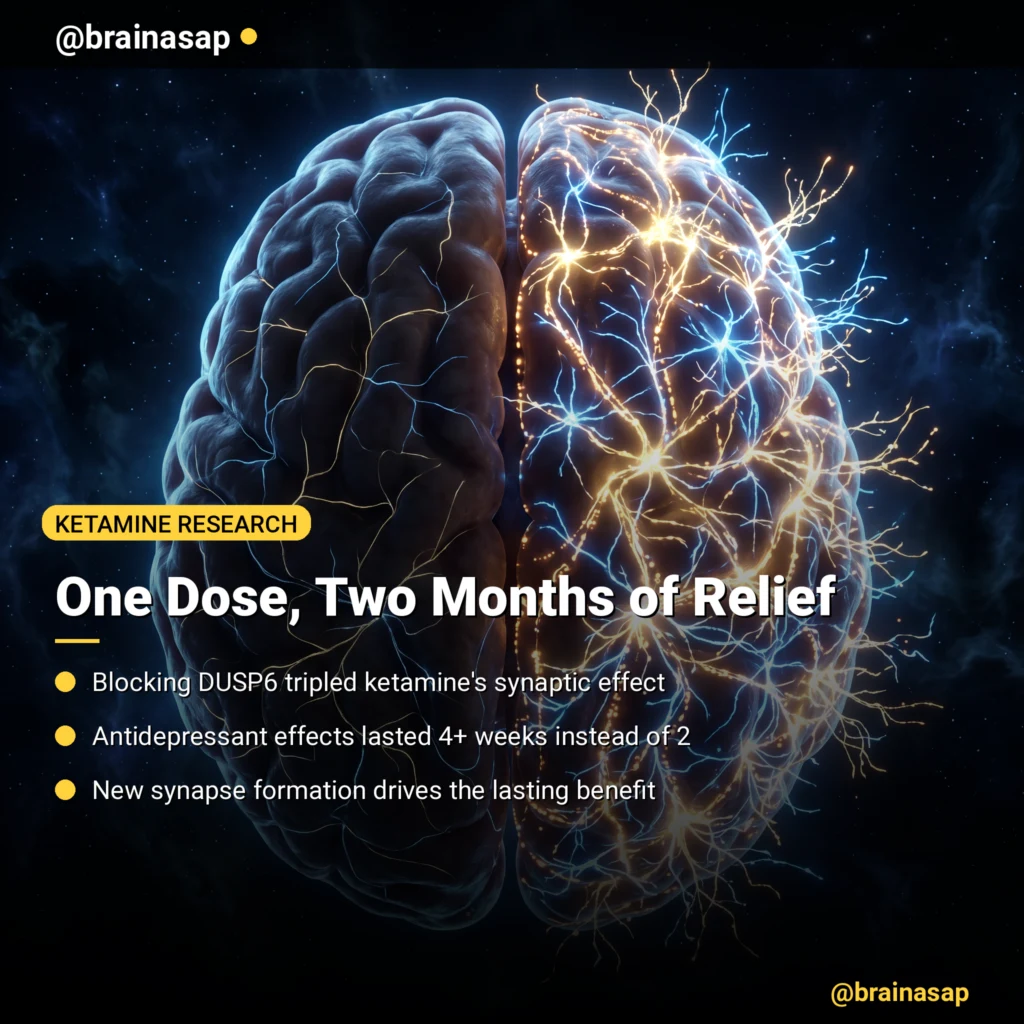
How Scientists Turned a Brief Ketamine High into a Two-Month Antidepressant Effect TL;DR: Blocking DUSP6 protein alongside ketamine extends antidepressant effects from 2 weeks to 4+ weeks in mice, potentially offering single-dose treatment instead of repeated…
Read article ↗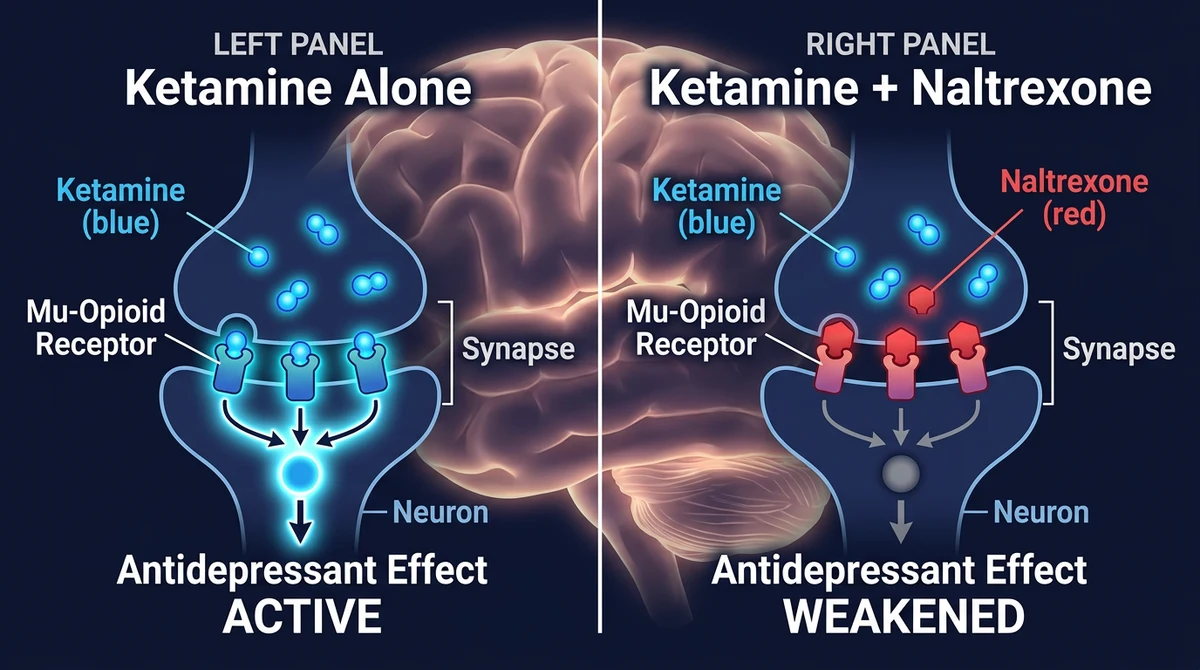
Opioid System Activation is Required for Ketamine’s Antidepressant Effects Ketamine is fast—a single subanesthetic infusion reduces severe depression symptoms within hours, not weeks. But the mechanism remains incompletely understood. For nearly two decades, r…
Read article ↗
Ketamine significantly reduces suicidal ideation in depressed patients, with rapid effects observed within the first day of treatment. Highlights: Rapid Reduction: Ketamine shows a significant reduction in suicidal ideation within the first day of treatment (R…
Read article ↗
A study examined the effects of ketamine on sleep arousal metrics in individuals with treatment-resistant depression (TRD) vs. healthy volunteers, finding that ketamine increases certain sleep-related brain activities but does not significantly mediate its ant…
Read article ↗
The European Medicines Agency (EMA) has updated its guidance on clinical trials for new depression treatments, with the goals of harmonizing standards across the EU and facilitating development of improved therapies. Key Facts: Depression is a highly disabling…
Read article ↗
Depression affects over 300 million people globally. Current treatments have limited efficacy for many patients. Exciting new research highlights the potential of allopregnanolone agonists like brexanolone and zuranolone as more targeted, rapid-acting antidepr…
Read article ↗
Major depressive disorder affects over 17 million American adults each year. For up to 30% of these patients, standard antidepressant medications fail to provide adequate symptom relief – a condition known as treatment-resistant depression (TRD). Now, new rese…
Read article ↗
Vagus nerve stimulation (VNS) is an emerging form of brain stimulation showing promise for treating depression. Though still considered experimental, VNS has a long history dating back over 100 years. Recent advances are unlocking its potential as a new tool f…
Read article ↗