TL;DR: A 2026 secondary analysis in Addiction found that adults switched to very-low-nicotine cigarettes often used alternative nicotine products and maintained much higher nicotine intake than cigarette-only users. Key Findings 438 smokers: The parent randomi…
Read article ↗
TL;DR: A 2026 Journal of Global Health analysis of Global Burden of Disease 2021 data estimated that 162.86 million people had substance use disorders in 2021, with age-standardized rates down since 1990 but major inequality across sex, age, region, and develo…
Read article ↗
TL;DR: A 2026 study in Population Health Metrics used Global Burden of Disease 2019 estimates and found that U.S. substance-use-disorder health loss rose sharply from 1990 to 2019, with opioid use disorders driving the largest increase. Key Findings 19.5 milli…
Read article ↗
TL;DR: A 2026 meta-analysis in European Journal of Psychotraumatology found that trauma cues increased substance craving in trauma-exposed people who use substances, and the strongest pathway ran through cue-triggered negative affect. Key Findings 32 studies:…
Read article ↗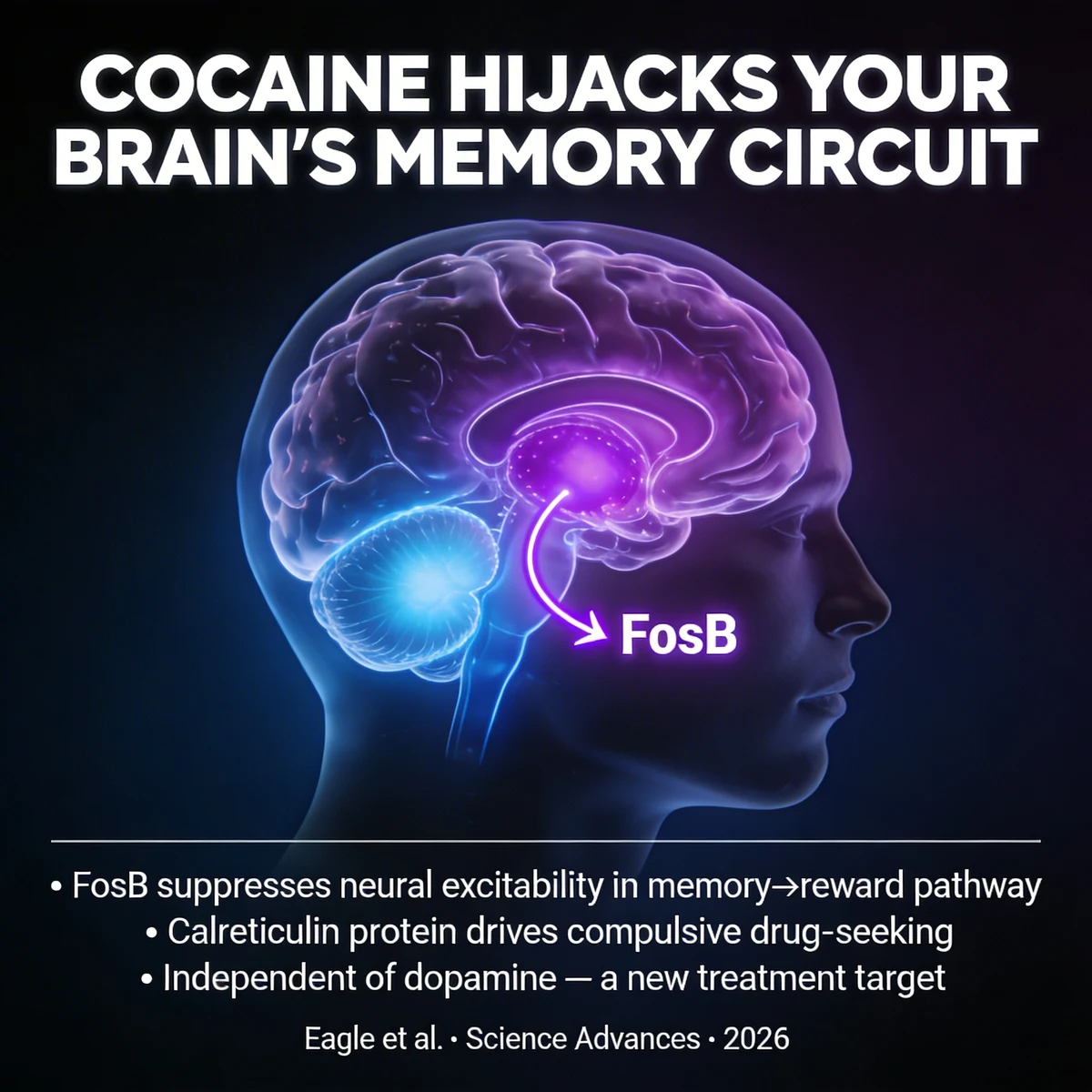
How Cocaine Rewires the Brain’s Reward Circuit TL;DR: Cocaine hijacks a transcription factor called FosB in a brain circuit connecting the hippocampus to the nucleus accumbens, suppressing neural excitability and driving compulsive drug-seeking behavior—a mech…
Read article ↗
Video game addiction (VGA) is associated with significant deficits in response inhibition and preparatory processes, reflected by more commission errors and reduced N2 amplitudes in the cued Go/NoGo task. Highlights: Increased Commission Errors: Individuals wi…
Read article ↗
Repetitive transcranial magnetic stimulation (rTMS) on the left dorsolateral prefrontal cortex (dlPFC) improves decision-making and reduces cravings in individuals with methamphetamine use disorder (MUD). Highlights: Improved Decision-Making: rTMS treatment en…
Read article ↗
People struggling with substance use disorders often have difficulties with memory, attention, planning, and decision-making. New research explores how these cognitive deficits relate to treatment outcomes and whether targeting them could improve addiction rec…
Read article ↗
Researchers have found that repeated low doses of amphetamine can alter reward and motivation circuits in the human brain. The changes mirror what is seen in addiction and schizophrenia. Key Facts: Healthy volunteers received 4 doses of a low 20mg dose of amph…
Read article ↗
Kratom is a plant gaining popularity as an alternative painkiller and recreational drug. But how much do we really know about its risks and benefits? About Kratom: Kratom is a tropical tree in the coffee family, native to Southeast Asia. People ingest its leav…
Read article ↗