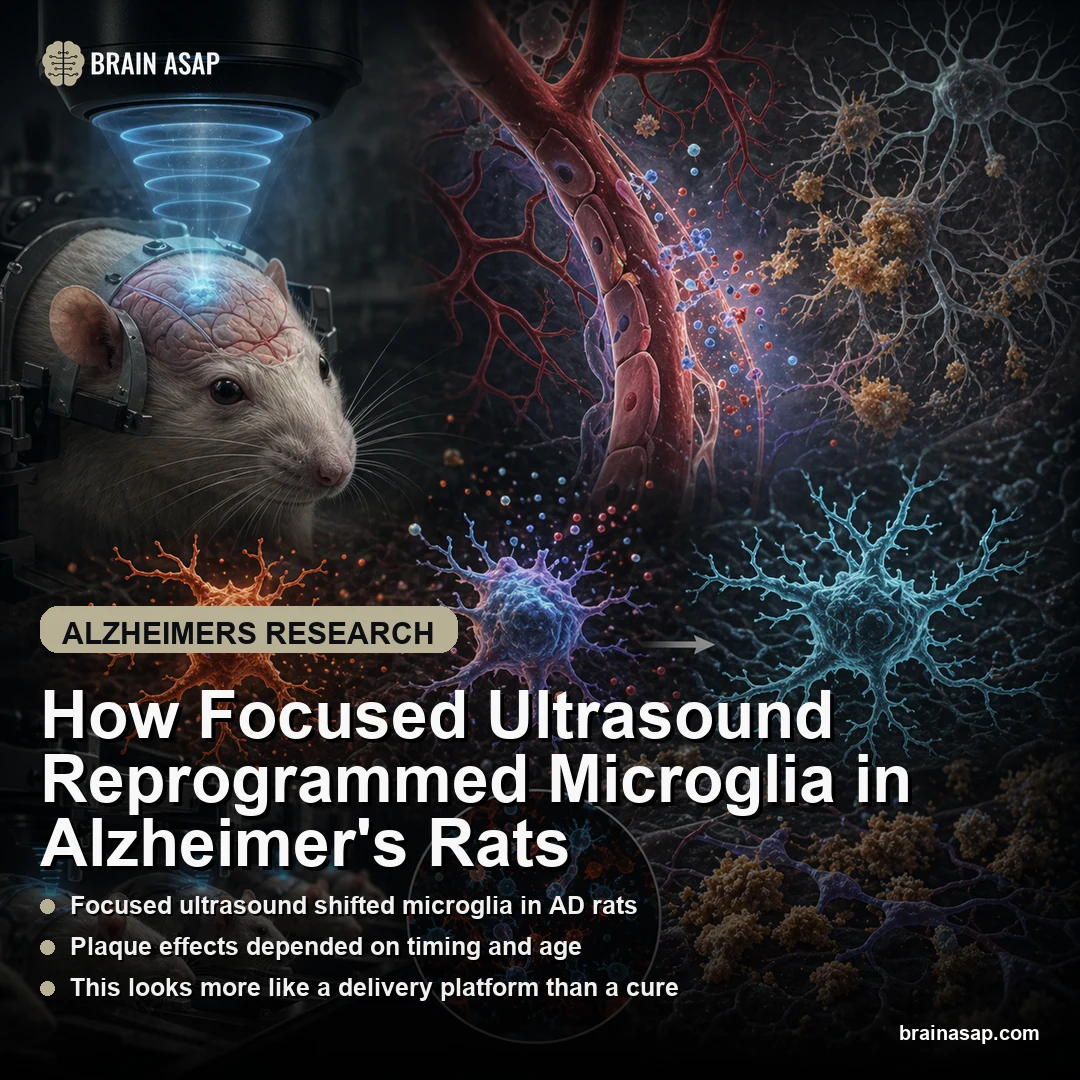
How Focused Ultrasound Reprogrammed Microglia in Alzheimer’s Rats TL;DR: In TgF344-AD rats, repeated low-intensity focused ultrasound triggered a short-lived inflammatory response, then left behind a more durable microglial metabolic shift in early disease wit…
Read article ↗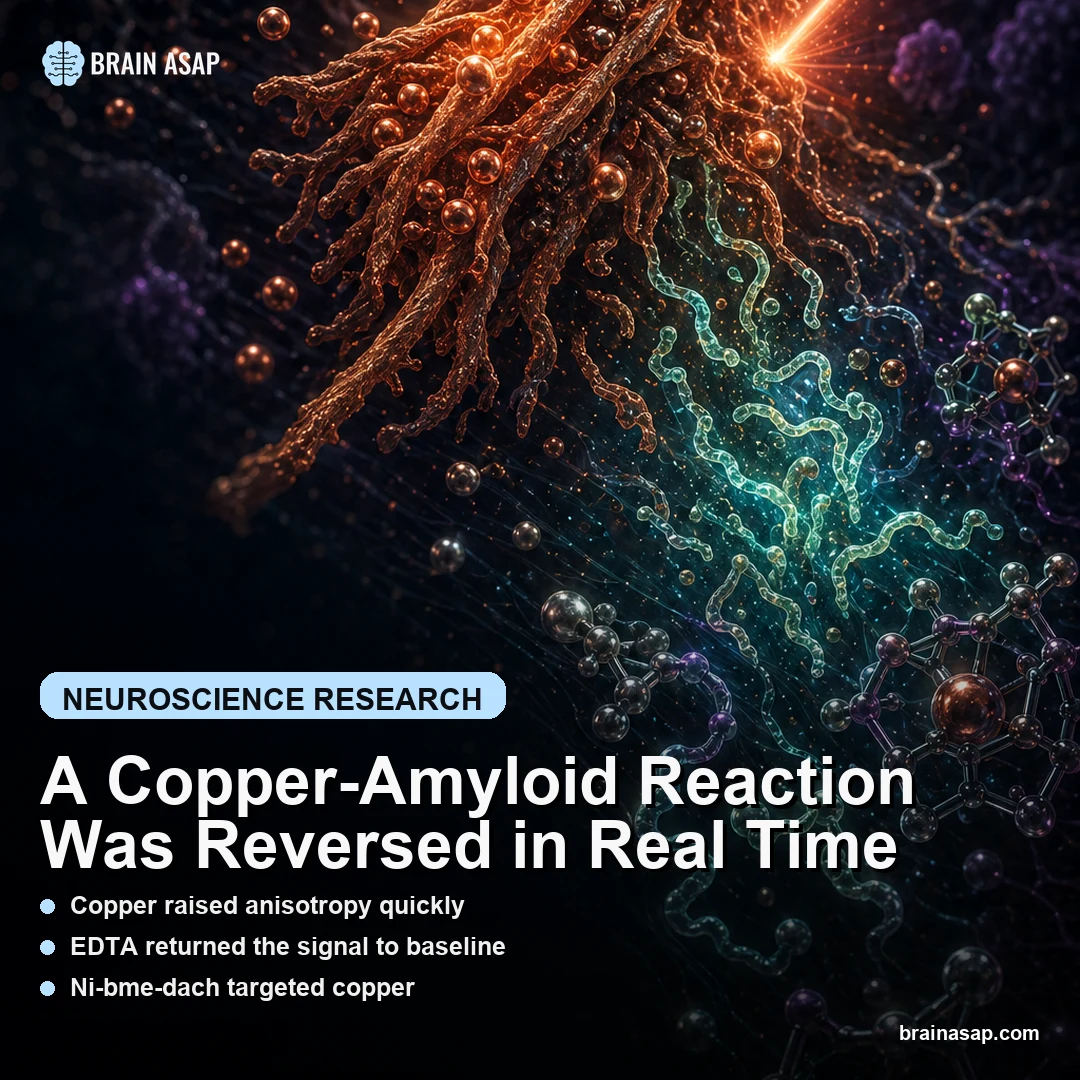
A Copper-Amyloid Reaction Was Reversed in Real Time TL;DR: Fluorescence anisotropy let researchers watch copper-driven amyloid-beta aggregation form and reverse, with Ni-bme-dach selectively restoring monomer-like behavior while EDTA acted broadly. Key Finding…
Read article ↗
Alzheimer’s Treatment Needs More Than Amyloid TL;DR: A 2026 review in Science China Life Sciences argues that amyloid-beta antibodies such as lecanemab and donanemab are important progress, but Alzheimer’s treatment cannot stop at amyloid. The disease also inv…
Read article ↗
The Death Complex Fueling Alzheimer’s (And How to Stop It) TL;DR: Researchers discovered a toxic interaction between two brain proteins—NMDAR and TRPM4—that drives neurodegeneration in Alzheimer’s disease, and a small molecule called FP802 that blocks this “de…
Read article ↗
Omega-3 supplements and Souvenaid® show potential in slowing cognitive decline in Alzheimer’s patients, though the evidence remains inconclusive. Highlights: Cognitive Decline Reduction: The CDR scale showed a significant reduction in cognitive decline progres…
Read article ↗
ACOT7 shows promise as a non-invasive serum biomarker for Alzheimer’s disease (AD) with high diagnostic accuracy. Highlights: Increased Expression: ACOT7 levels were significantly elevated in AD patients and animal models compared to controls. Correlation with…
Read article ↗
Researchers reviewed the potential impacts of physical exercise on the glymphatic system and its implications for neurodegenerative diseases, focusing on the mechanisms involved and the interplay between exercise and sleep quality. Highlights: The glymphatic s…
Read article ↗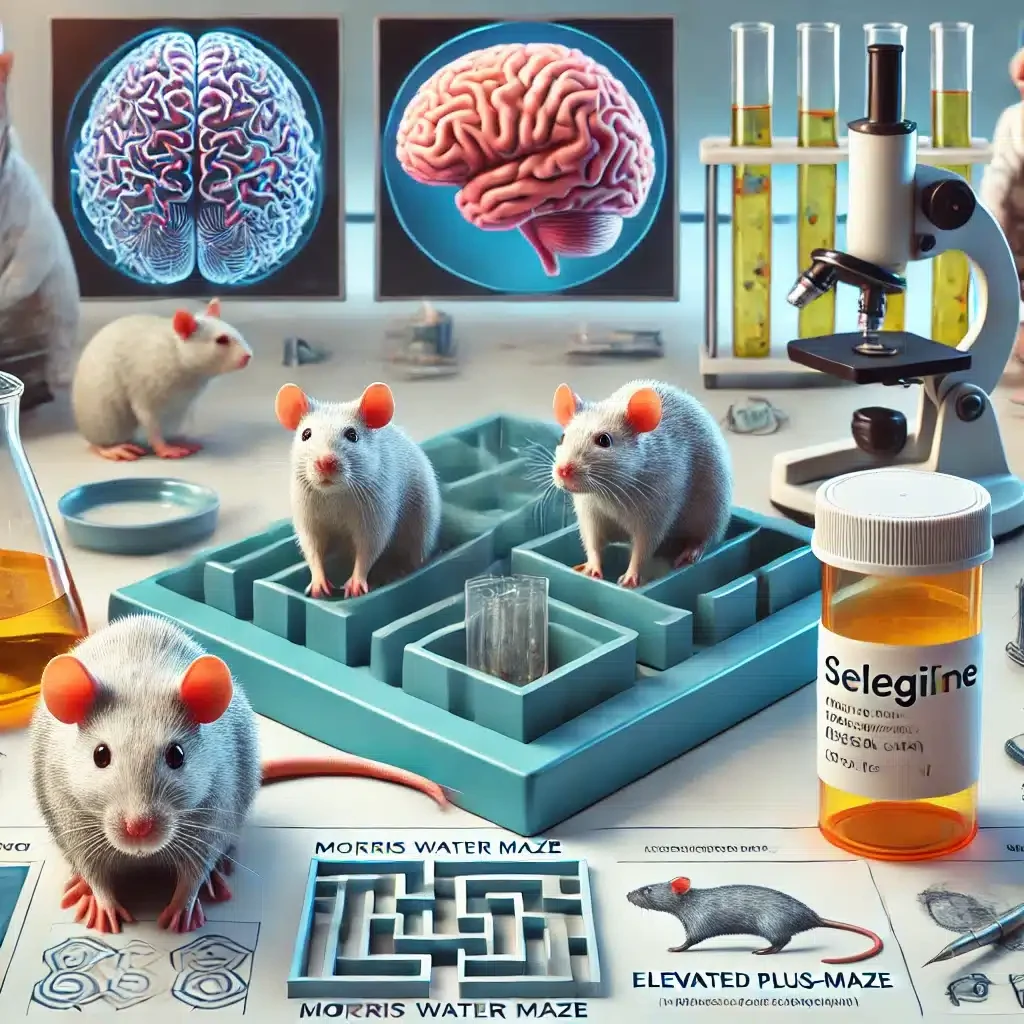
The study demonstrated that selegiline (SEL) improves memory performance, reduces anxiety, and modulates oxidative stress in an Alzheimer’s disease (AD) rat model. Highlights: Memory Improvements: SEL administration improved recognition memory, spatial memory,…
Read article ↗
TLDR: GLP-1 agonists were found to significantly reduce the risk of dementia in older individuals with type 2 diabetes mellitus (T2DM) compared to DPP-4 inhibitors and sulfonylureas. Highlights: A sequential trial emulation was conducted using data from Swedis…
Read article ↗
Alzheimer’s disease continues to destroy minds, but new gene editing techniques like CRISPR offer hope for better understanding and treating this devastating illness. Key Facts: Alzheimer’s disease is a complex, poorly understood neurodegenerative disorder aff…
Read article ↗