
TL;DR: A 2026 real-world cohort study in The Journal of Prevention of Alzheimer’s Disease found that lecanemab-treated Alzheimer’s patients had lower Neuropsychiatric Inventory scores over follow-up, and 6-month symptom reductions were associated with regional…
Read article ↗
TL;DR: A 2026 open-label study in Communications Medicine found that Bacillus Calmette-Guerin (BCG) immunotherapy changed cerebrospinal-fluid immune-cell responses and Alzheimer-related biomarkers in 23 older adults. Key Findings Small trial context: 2 related…
Read article ↗
TL;DR: A 2025 human proteomics study in Molecular Metabolism found that about 10 days of medically supervised water-only fasting caused weight loss and lower circulating amyloid beta proteins, but also increased inflammatory and platelet-activation markers. Ke…
Read article ↗
TL;DR: A 2026 preprint in medRxiv used amyloid positron-emission tomography, tau molecular imaging, and structural MRI to build individualized Alzheimer’s disease biomarker axes from ADNI and validate them in OASIS. Key Findings 12,430 ADNI images: The pipelin…
Read article ↗
TL;DR: A 2026 study in Alzheimer’s & Dementia: Translational Research & Clinical Interventions used lecanemab pharmacokinetic/pharmacodynamic modeling in early Alzheimer’s disease and found that blood biomarkers worsened after treatment stopped, while monthly…
Read article ↗
TL;DR: A 2026 mouse study in iScience found that blocking Itch, an E3 ubiquitin ligase involved in protein tagging, improved several memory-test readouts in an Alzheimer’s disease mouse model and reduced neuronal apoptosis, including when researchers used the…
Read article ↗
TL;DR: A 2026 Nature Communications paper found that late-stage amyloid beta plaques in APP23 mice recruited CD8 T cells with a type I interferon program, linking Alzheimer-like amyloid pathology to a more adaptive immune response around plaques. Key Findings…
Read article ↗
TL;DR: A 2026 mouse study in Proceedings of the National Academy of Sciences found that deleting or inhibiting PTP1B improved memory behavior, reduced amyloid-beta burden, and pushed microglia toward an amyloid-clearing state. Key Findings Memory behavior impr…
Read article ↗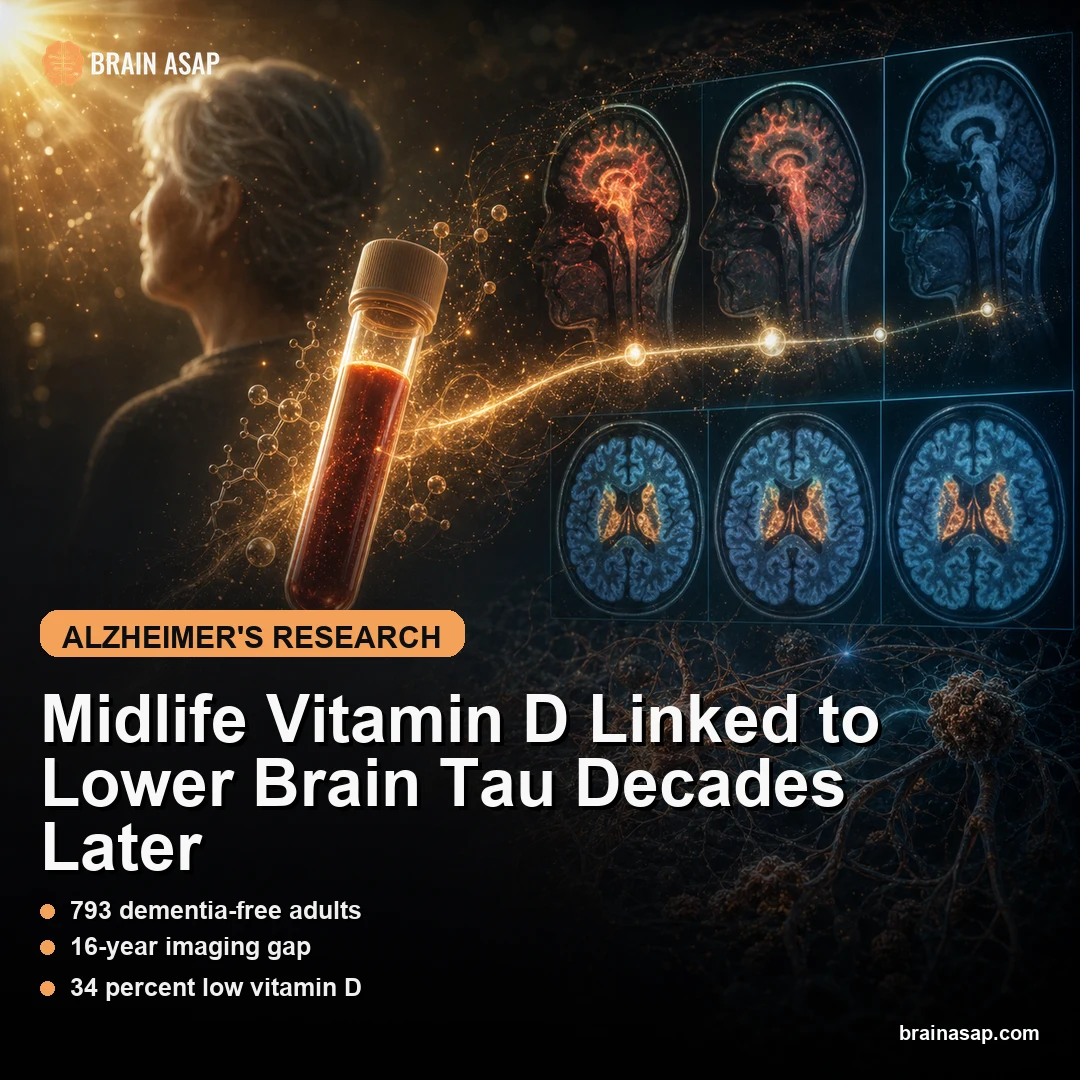
TL;DR: A 2026 study in Neurology Open Access found that in 793 dementia-free adults, higher vitamin D levels around age 39 were associated with less tau readout on PET brain imaging about 16 years later, while amyloid beta did not show the same relationship. K…
Read article ↗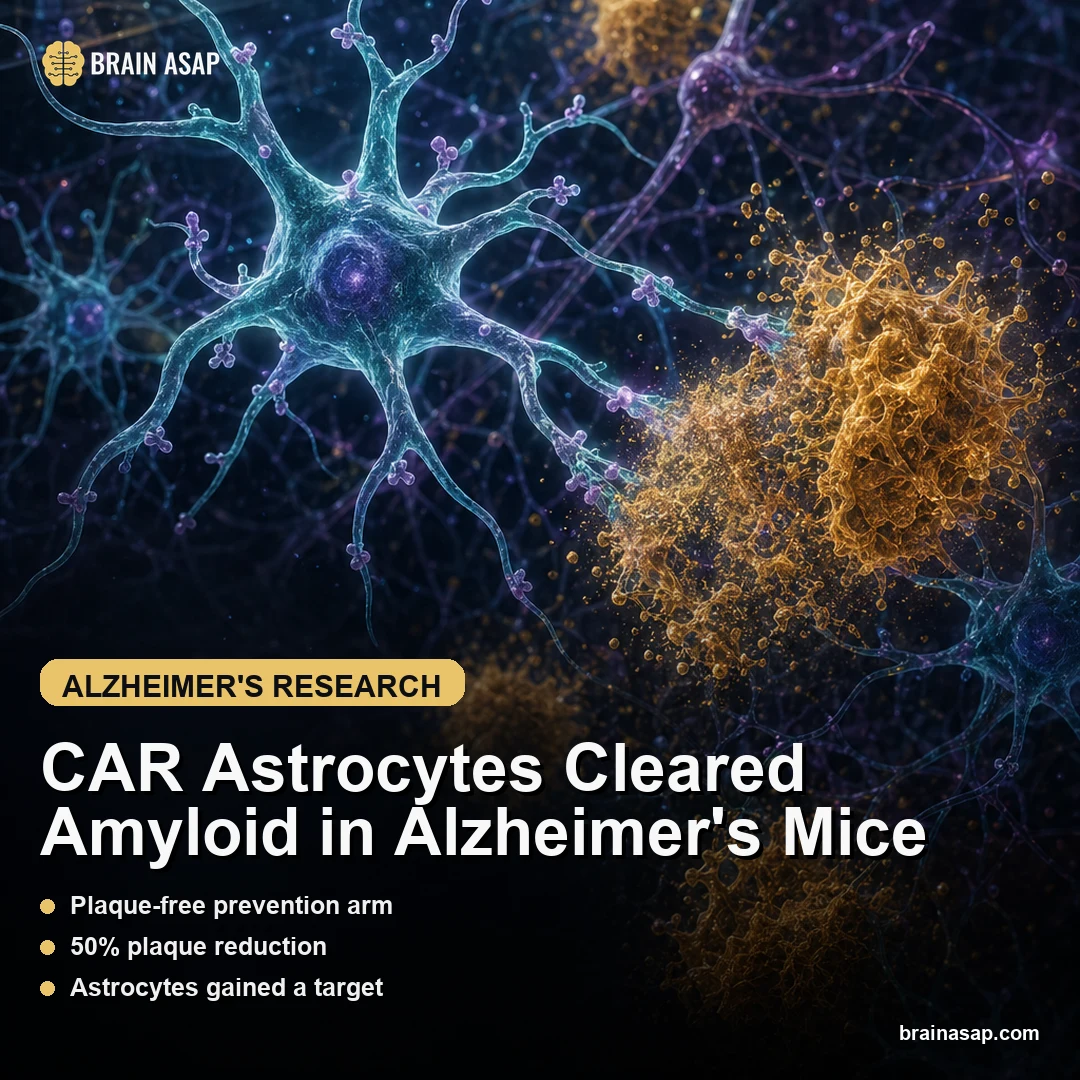
TL;DR: A CAR-style therapy aimed at astrocytes turned brain support cells into amyloid cleaners, preventing plaque development and cutting existing plaque burden by about half in mice. Key Findings Plaque-free prevention arm: Young mice treated before plaques…
Read article ↗