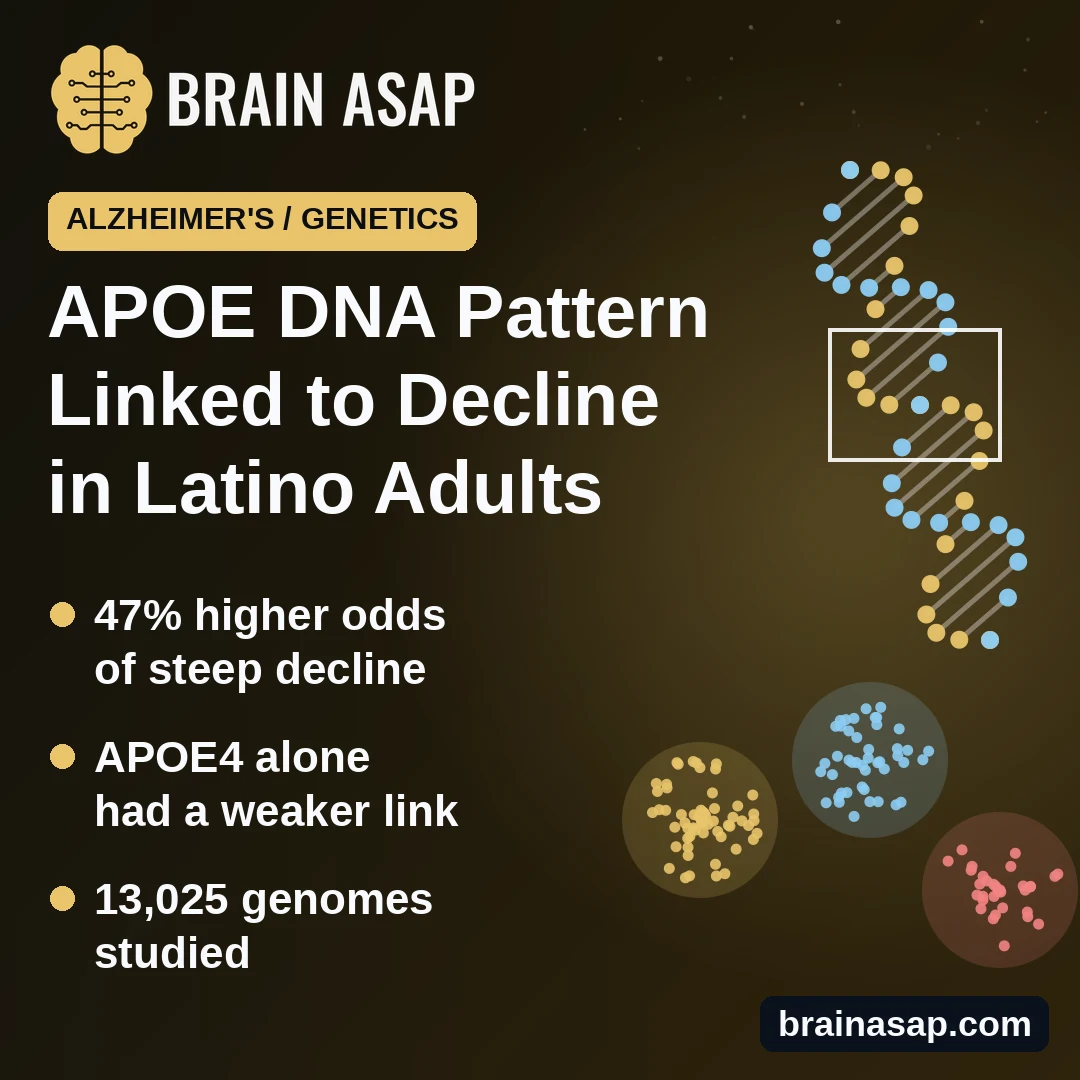
TL;DR: Among Hispanic and Latino adults in the U.S., people with one particular DNA pattern around the APOE gene were more likely to show steep thinking decline over about 7 years. The well-known APOE4 risk version had a weaker link in the same group. Key Find…
Read article ↗
TL;DR: Young mice carrying the human APOE4 gene, the biggest genetic risk factor for Alzheimer’s, had overexcited memory circuits months before any memory trouble showed up. Removing APOE4 from their neurons returned those cells to normal. Key Findings Early w…
Read article ↗
TL;DR: A 2026 review in Journal of Neuroinflammation proposed that Alzheimer microglial dysfunction can be understood as checkpoint collapse, where failed regulatory controls feed three interacting lipid, iron/ferroptosis, and inflammation/complement axes. Key…
Read article ↗
TL;DR: A 2026 Molecular Psychiatry study tested Regional Vulnerability Index for Alzheimer’s disease (RVI-AD), a structural-MRI score of how closely a person’s brain pattern resembles amyloid-positive Alzheimer’s disease, and found that higher RVI-AD predicted…
Read article ↗
Meat Intake Linked to Lower Dementia Risk in APOE4 Carriers TL;DR: In APOE4 carriers, higher total meat intake tracked with lower observed dementia risk over 15 years, while a higher processed-to-total meat ratio moved in the unfavorable direction. Key Finding…
Read article ↗
Alzheimer’s disease continues to destroy minds, but new gene editing techniques like CRISPR offer hope for better understanding and treating this devastating illness. Key Facts: Alzheimer’s disease is a complex, poorly understood neurodegenerative disorder aff…
Read article ↗
A new drug recently approved for Alzheimer’s disease aims to treat the underlying cause of the condition by removing amyloid plaques in the brain. Though promising, the drug called aducanumab also comes with potential side effects that require careful monitori…
Read article ↗