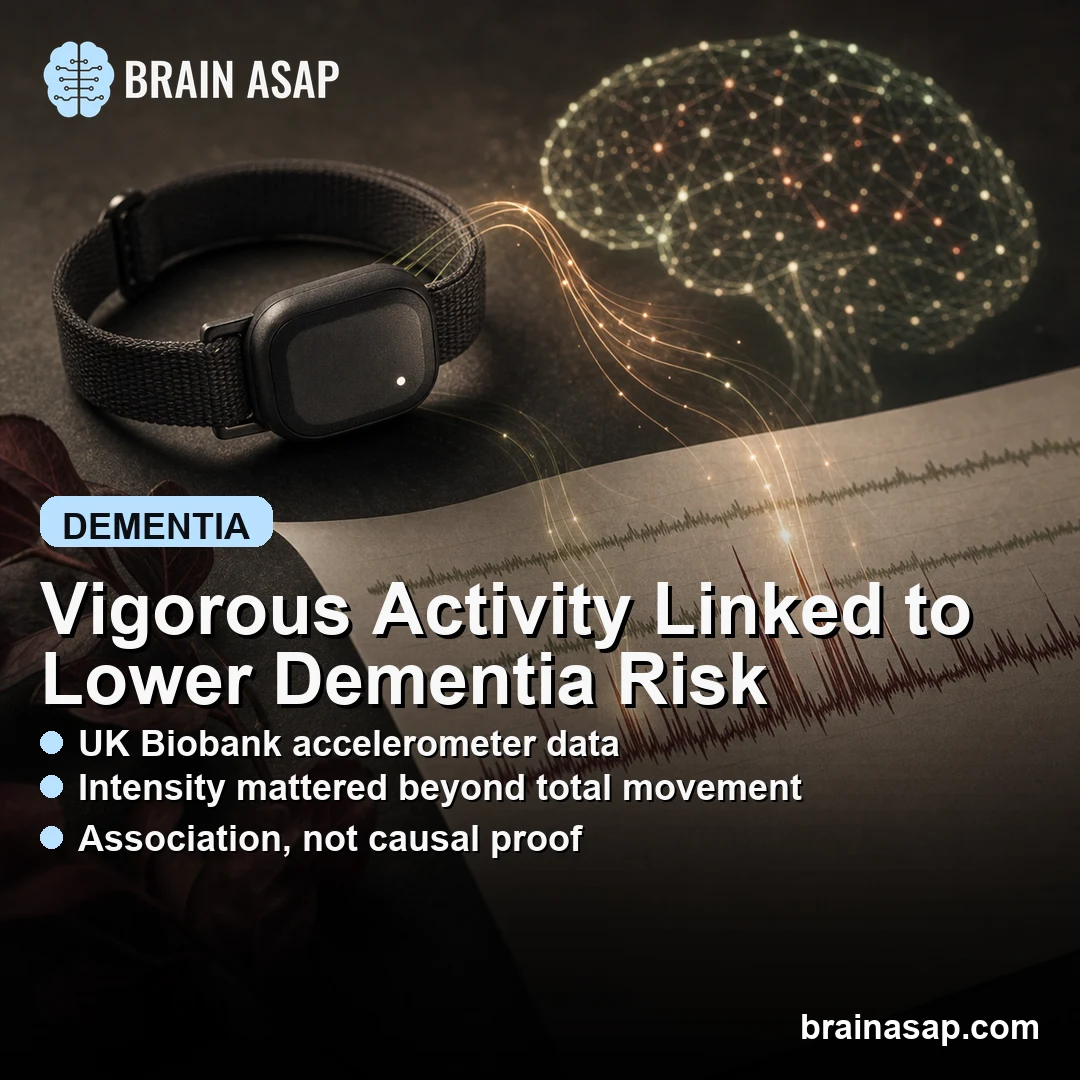
Vigorous Activity Linked to Lower Dementia Risk in UK Biobank TL;DR: In UK Biobank accelerometer data, the vigorous share of daily movement accounted for 32% of dementia’s population-attributable fraction versus just 8% for total activity volume — suggesting b…
Read article ↗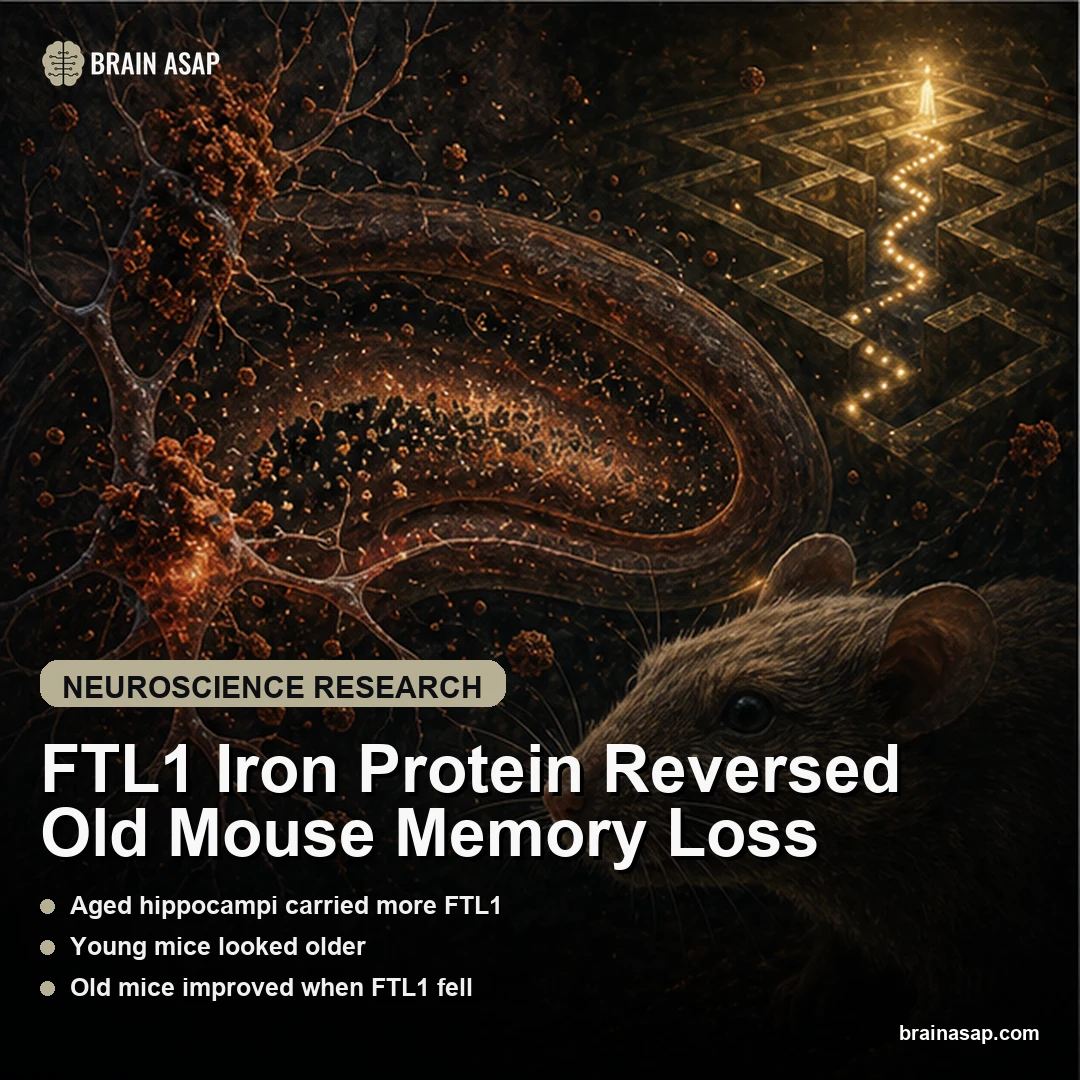
FTL1 Iron Protein Reversed Old Mouse Memory Loss TL;DR: In old mice, an iron-associated hippocampal protein called FTL1 rose with cognitive decline, made young brains look older when boosted, and improved old-mouse cognition when targeted. Key Findings Aged hi…
Read article ↗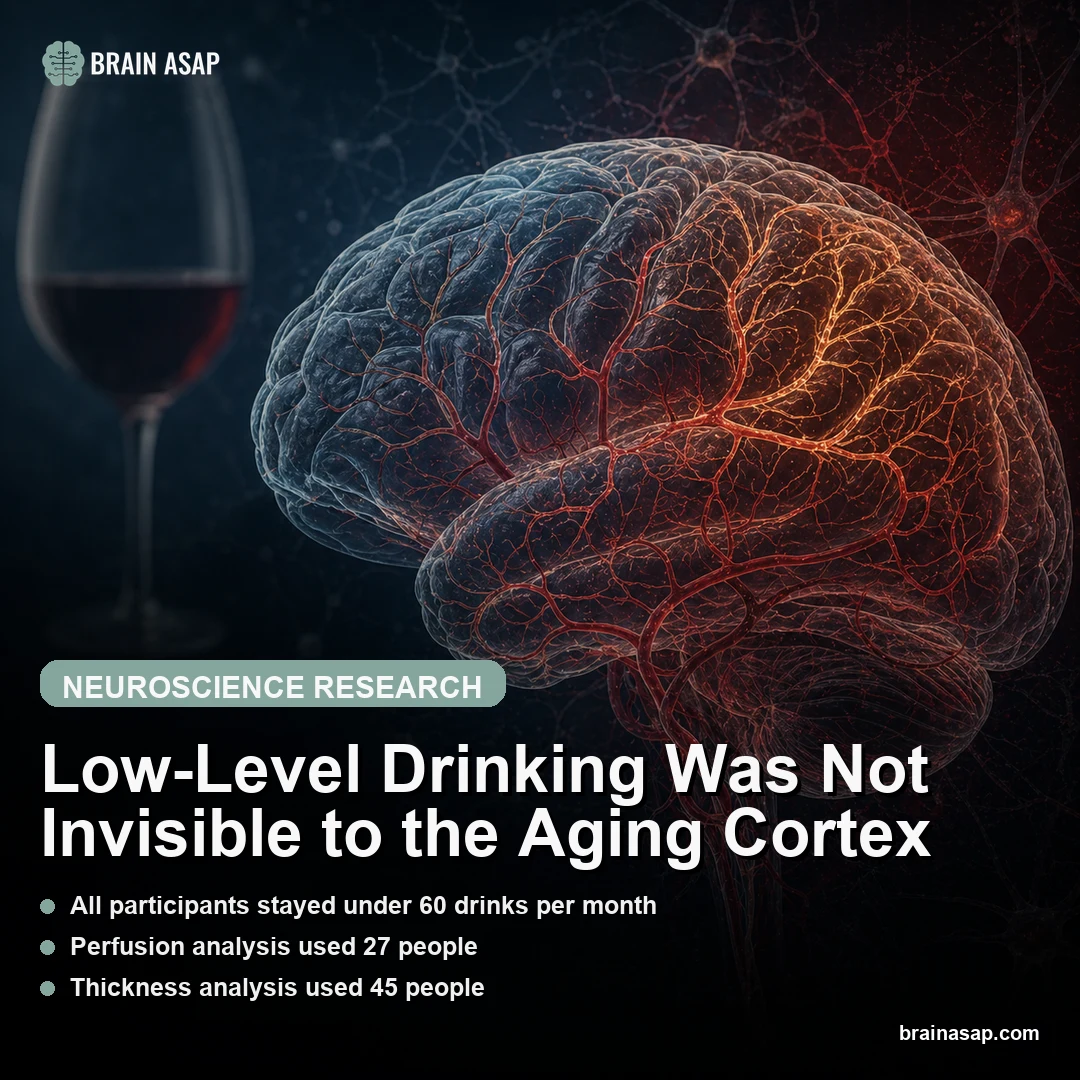
Low-Level Drinking Was Not Invisible to the Aging Cortex TL;DR: Even drinking within low-risk guidelines was linked to lower cortical blood flow and thinner cortex when lifetime exposure met advancing age. Key Findings All participants stayed under 60 drinks p…
Read article ↗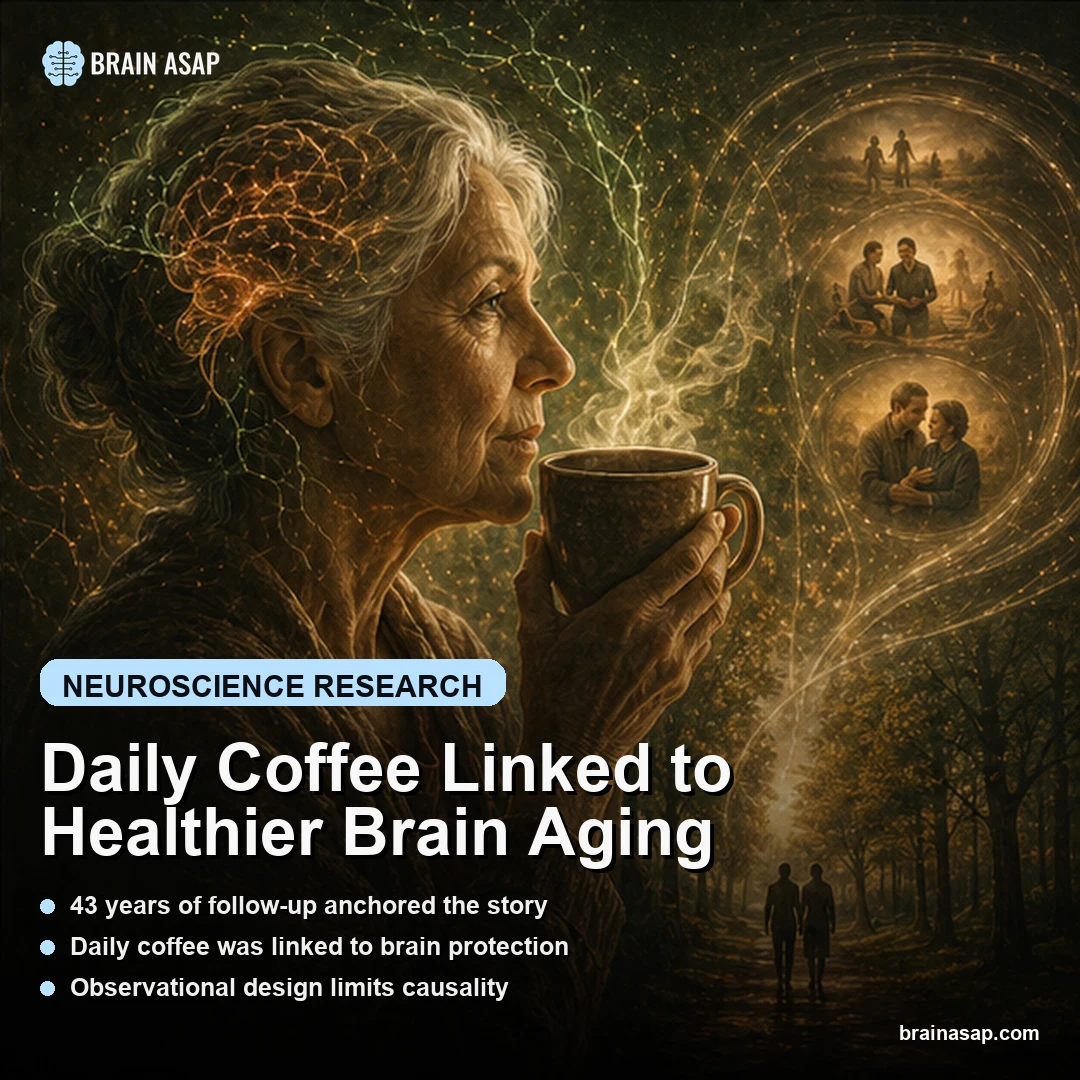
Caffeinated Coffee Linked to Lower Dementia Risk Over 43 Years TL;DR: Caffeinated coffee drinkers had 141 vs 330 dementia cases per 100,000 person-years in the highest versus lowest intake quartiles — across 131,821 adults followed up to 43 years. Decaf showed…
Read article ↗
Researchers reviewed the potential impacts of physical exercise on the glymphatic system and its implications for neurodegenerative diseases, focusing on the mechanisms involved and the interplay between exercise and sleep quality. Highlights: The glymphatic s…
Read article ↗
The pineal gland is a pea-sized organ located in the center of the brain that has recently garnered attention for its potential role in brain health and aging. New research suggests that calcification of the pineal gland may contribute to neurodegenerative dis…
Read article ↗
Cocaine use can lead to significant structural changes and accelerated aging of the brain, according to a new study. Key findings include: Cocaine users showed widespread gray matter loss in areas involved in emotions, language, cognition and decision-making.…
Read article ↗
A new systematic review published in BMC Geriatrics suggests that supplementing with medium-chain triglycerides (MCTs) may provide cognitive benefits for older adults without dementia. MCTs are a type of fatty acid found in foods like coconut oil and palm kern…
Read article ↗
Obesity has been linked to faster brain aging, but can losing weight turn back the clock? A new study provides compelling evidence that shedding pounds through lifestyle changes may attenuate brain aging. Key facts: Participants lost an average of 5% of body w…
Read article ↗