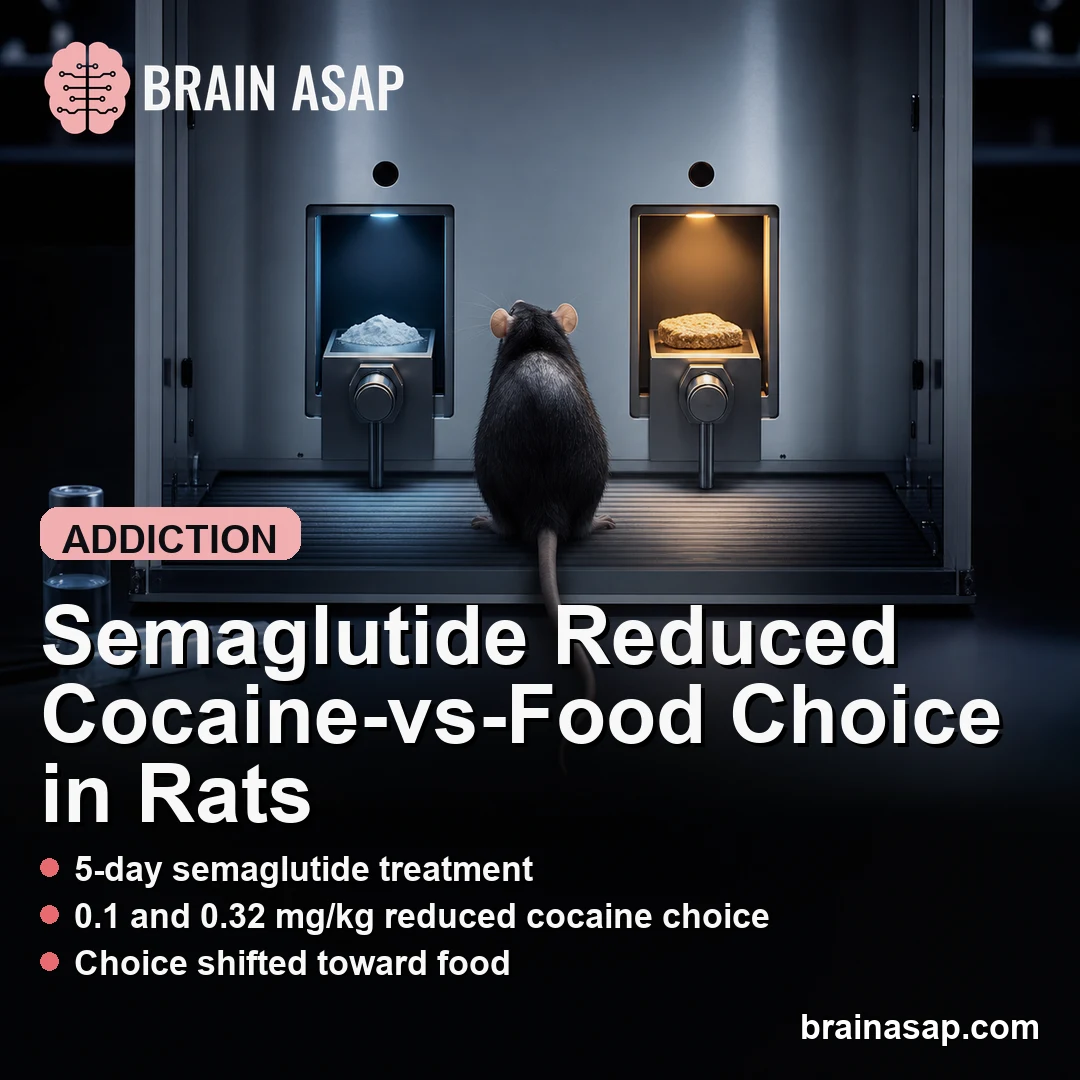
TL;DR: A 2026 rat study in Neuropsychopharmacology reported that repeated semaglutide treatment reduced cocaine-vs-food choice in male and female rats, supporting further clinical testing for cocaine use disorder rather than proving human benefit. Key Findings…
Read article ↗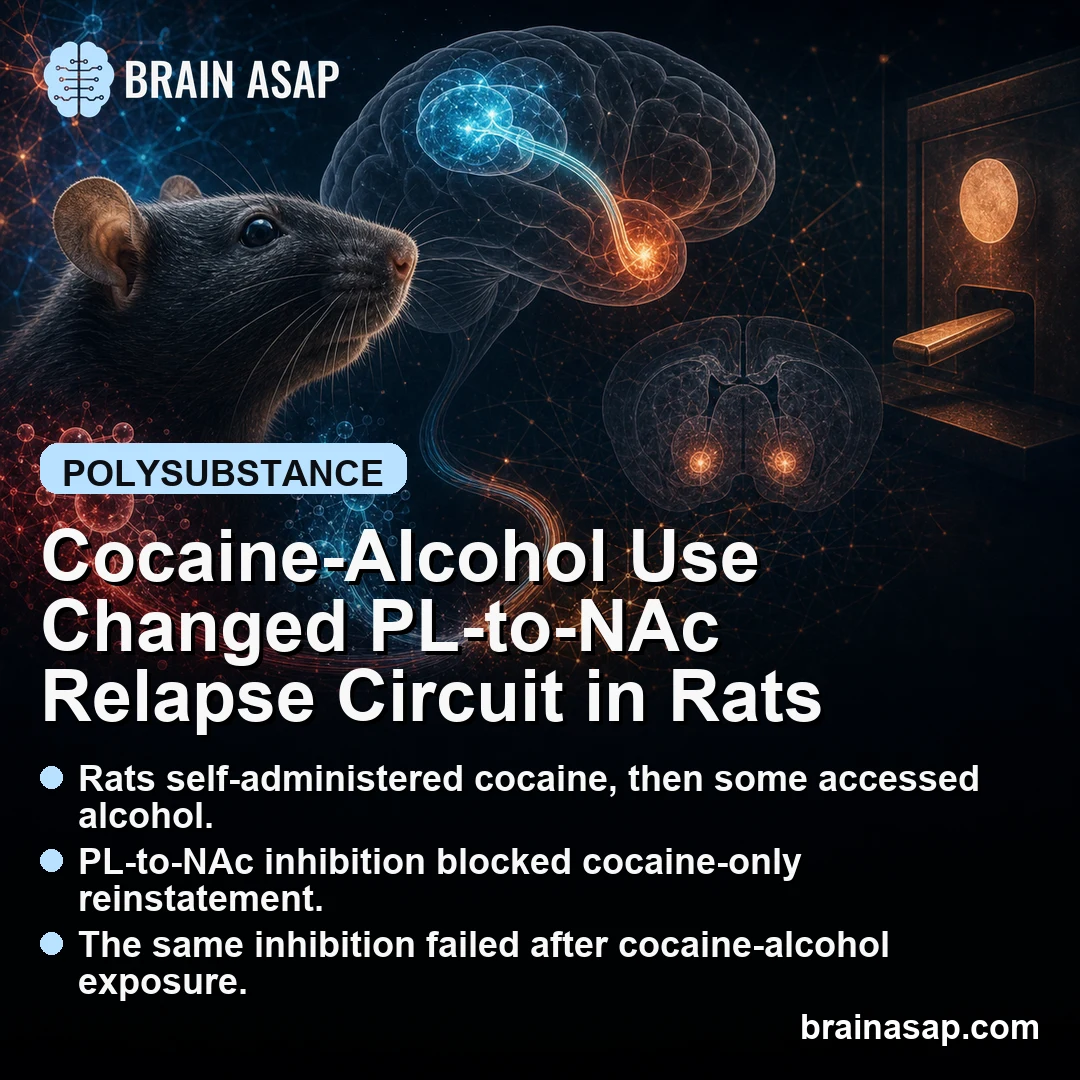
TL;DR: A 2026 rat study in Neuropsychopharmacology found that chemogenetically inhibiting a prelimbic cortex to nucleus accumbens core pathway blocked cue-triggered cocaine seeking after cocaine alone, but did not block relapse-like behavior after sequential c…
Read article ↗
Cocaine Use Disorder (CUD) patients exhibit widespread gray matter atrophy, with specific brain volume deficits associated with crack-cocaine use and relapse outcomes. Highlights: Widespread Gray Matter Atrophy: CUD patients show significant gray matter volume…
Read article ↗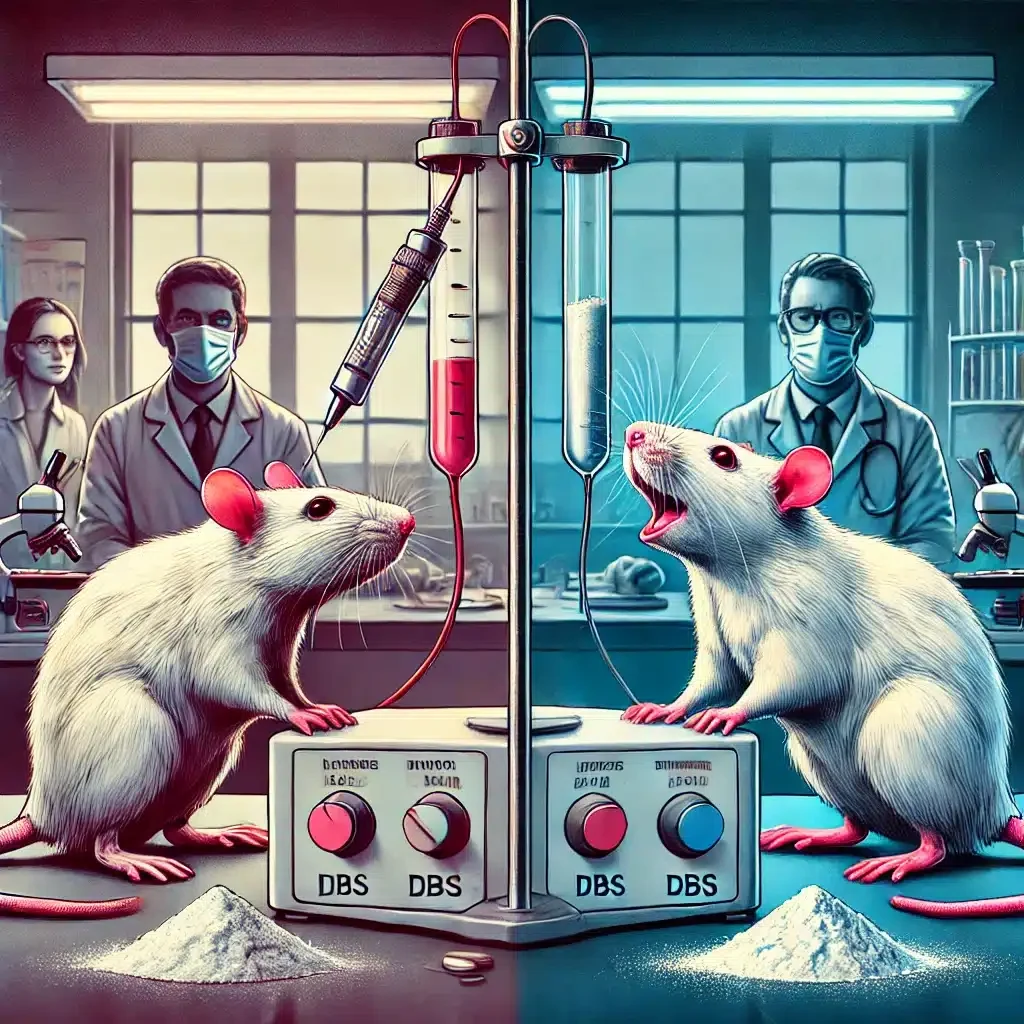
Deep brain stimulation (DBS) in the nucleus accumbens reduces cocaine seeking in male rats but is ineffective in female rats, regardless of their estrous cycle phase. Highlights: No FDA-Approved Treatments: There are currently no FDA-approved treatments for co…
Read article ↗
Researchers have tested an existing medication, modafinil, for treating cocaine addiction. The results show that modafinil can significantly reduce cocaine use, but its effectiveness depends on the situation and circumstances when cocaine is used. Key facts: M…
Read article ↗