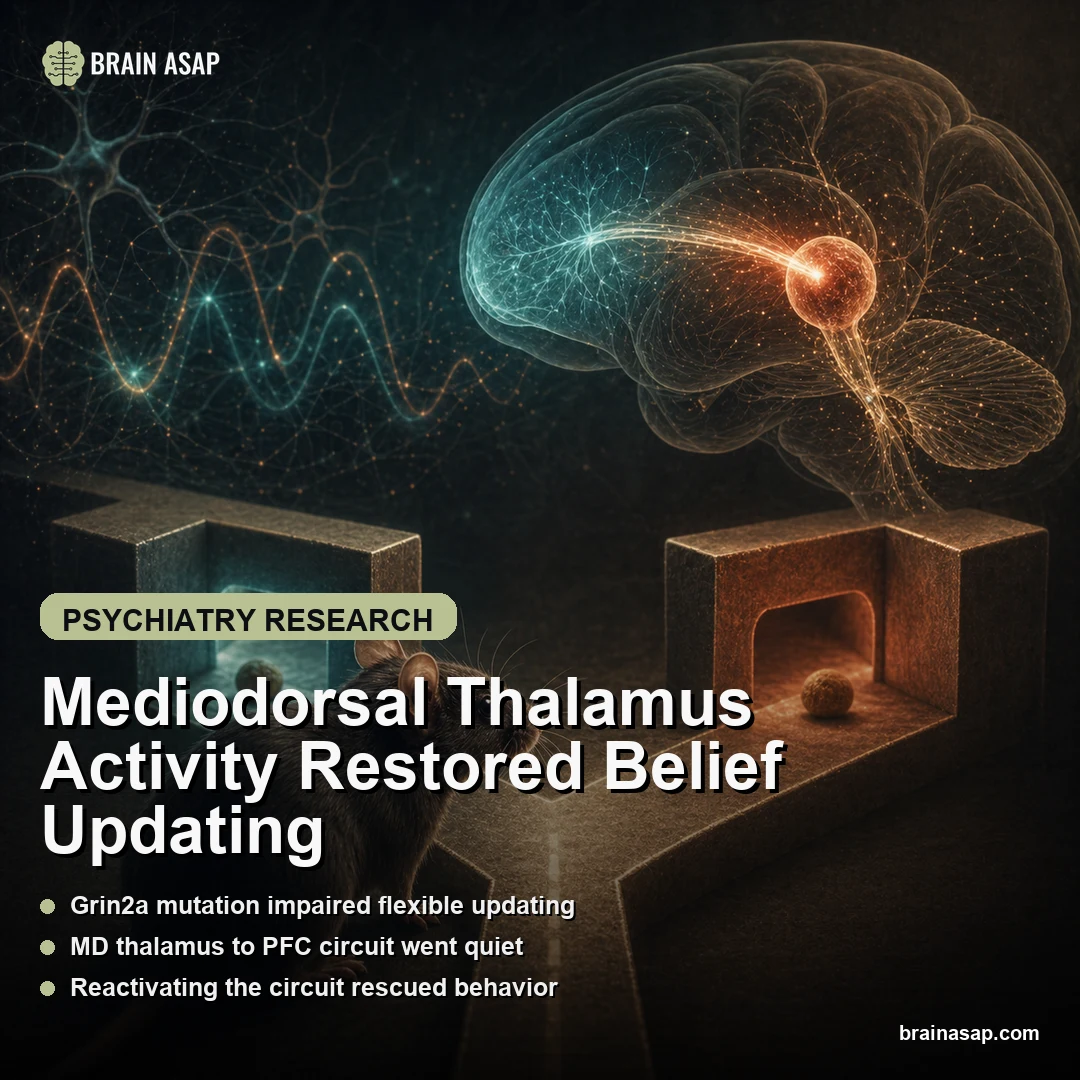
Mediodorsal Thalamus Activity Restored Belief Updating TL;DR: A Nature Neuroscience mouse study linked a schizophrenia-risk Grin2a mutation to weaker mediodorsal thalamus activity, impaired belief updating, and behavioral rescue when researchers reactivated th…
Read article ↗
This study found that individuals with the AG/GG genotype of the A118G SNP in the OPRM1 gene experienced more pleasant and fewer unpleasant effects from hydromorphone compared to those with the AA genotype, suggesting genotype-based differences in opioid sensi…
Read article ↗
Insomnia and daytime napping are causally associated with an increased risk of major depressive disorder (MDD), while sleep duration influences the risk of schizophrenia and attention-deficit/hyperactivity disorder (ADHD). Highlights: Major Depressive Disorder…
Read article ↗
A study found significant overlaps between various environmental pollutants and dyslexia susceptibility genes, identifying associations with 35 out of 95 chemicals. This suggests that these chemicals may contribute to the development of dyslexia through intera…
Read article ↗
Zinc levels were found to have a causal effect on the risk of Parkinson’s disease, while other oxidative stress biomarkers showed no significant association. Highlights: A study identified a significant causal relationship between higher zinc levels and increa…
Read article ↗
CYP2C19 poor metabolizers showed a nominally higher antidepressant remission rate compared to normal metabolizers, but overall genetic variations in CYP2C19 and CYP2D6 were not significantly associated with antidepressant response. Highlights: Higher Remission…
Read article ↗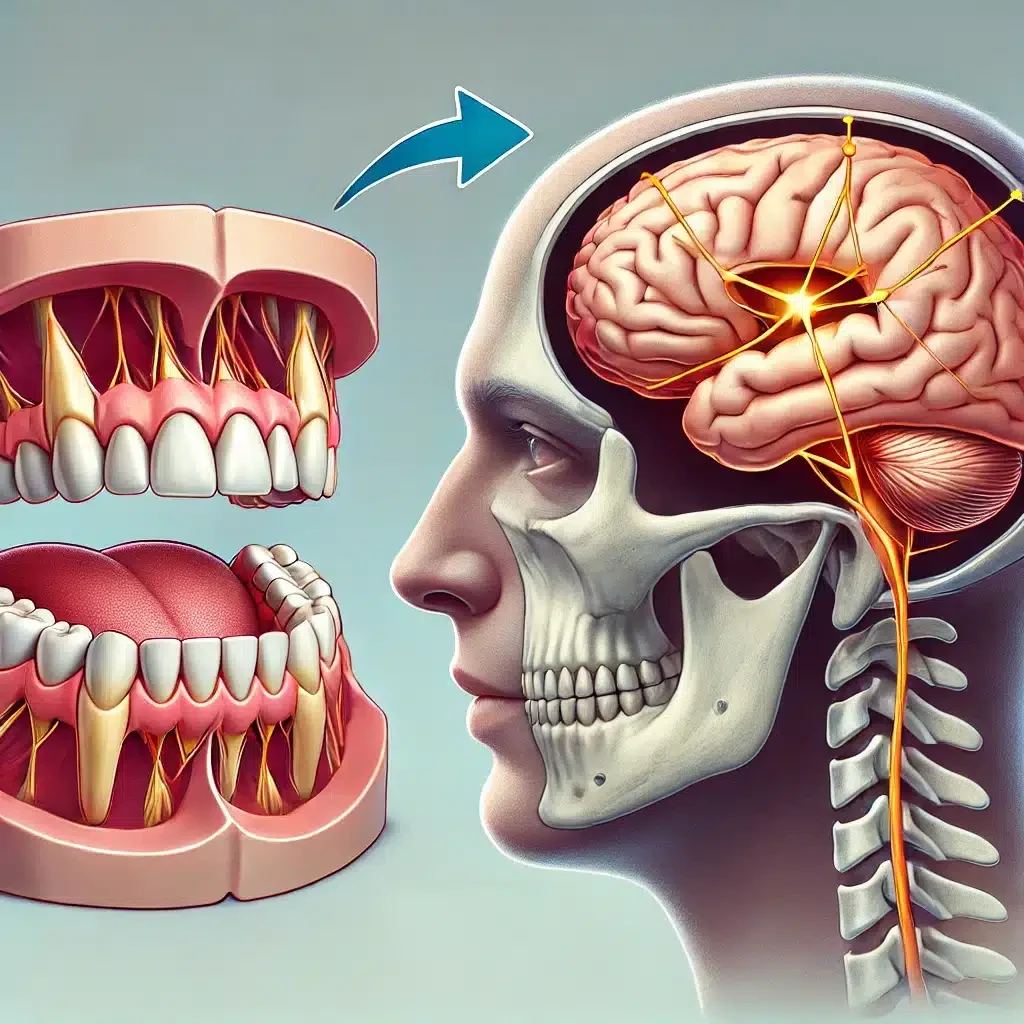
Occlusion dysfunction (OD) is causally linked to an increased risk of Alzheimer’s disease (AD), while dentures restoration can mitigate this risk. Highlights: Periodontal disease (PD) and Alzheimer’s do not have a direct causal relationship (P = 0.395). Loose…
Read article ↗
A study found shared brain-specific mechanisms between Alzheimer’s disease (AD) and depression, particularly involving synaptic signaling and immune system pathways in the hippocampus, but no direct genetic overlap. Highlights: Six brain-specific eQTL genes (S…
Read article ↗
A study found a strong link between mitochondrial disorders and conditions like autism, ADHD, and various psychiatric issues. Highlights: Common Link: Mitochondrial disorders are frequently found in people with autism, ADHD, and intellectual disabilities. ASD…
Read article ↗
A study on Tibetans living at high altitudes identified novel risk genes for schizophrenia (SCZ) related to hypoxia, suggesting a unique genetic signature for SCZ in this population. Highlights: Whole-exome sequencing of 47 SCZ cases and 53 controls in Tibetan…
Read article ↗