TL;DR: Among 112 older adults in Spain with mild cognitive impairment, those who reported more physical activity and felt more supported by family and friends scored better on several thinking tests. The study took one snapshot, so it cannot show that activity…
Read article ↗
TL;DR: In 86 people from one hospital in China, those with Parkinson’s and mild thinking problems showed changes in how water moves through parts of the hippocampus, a memory center. The hippocampus was not measurably smaller, suggesting a diffusion scan may p…
Read article ↗
TL;DR: Across 27 trials in older adults with mild memory and thinking problems, tai chi and qigong classes lifted overall thinking scores by a moderate amount compared with no exercise. More weekly minutes were not always better, and the dosing patterns still…
Read article ↗
TL;DR: A 2026 medRxiv preprint found that pupil dilation measured inside a virtual reality (VR) headset increased as working-memory load rose in healthy adults, was reproducible 60–90 days later in 33 returnees, and was smaller under the highest load in cognit…
Read article ↗
TL;DR: A 2026 preprint in medRxiv analyzed plasma proteomics in Alzheimer’s disease and mild cognitive impairment and found that four continuous molecular axes described the data better than hard subtype labels. Key Findings 5,895-person AD/MCI sample: The dis…
Read article ↗
TL;DR: A 2026 preprint in medRxiv warned that a standard Alzheimer’s disease biomarker-clock analysis can create a countdown paradox, where later biomarker-clock ages appear linked to faster mild cognitive impairment onset because of the way remaining time is…
Read article ↗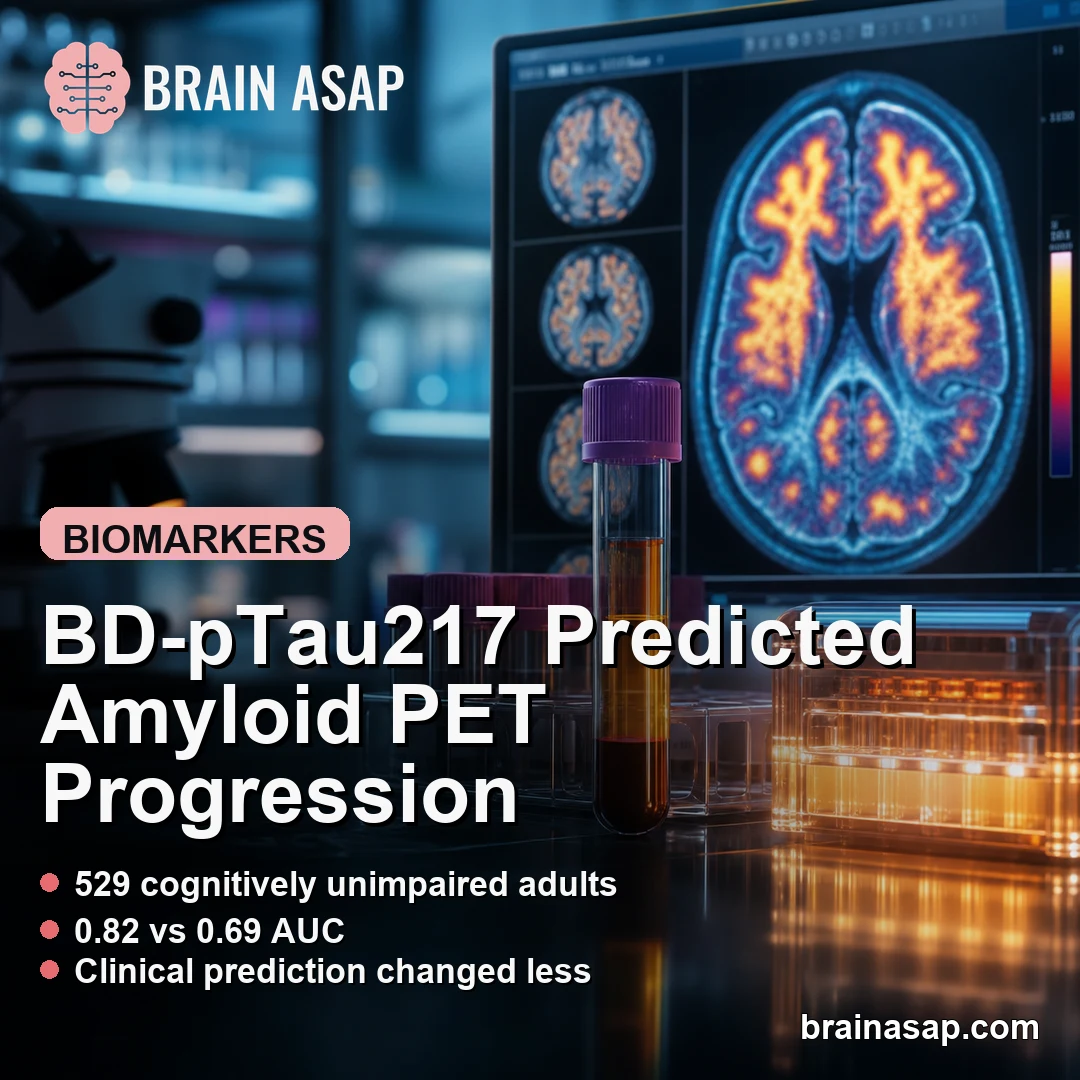
TL;DR: A 2026 ADNI analysis posted to medRxiv found that brain-derived plasma pTau217 better predicted near-term amyloid positron emission tomography (PET) positivity than total plasma pTau217 in cognitively unimpaired amyloid-negative participants. Key Findin…
Read article ↗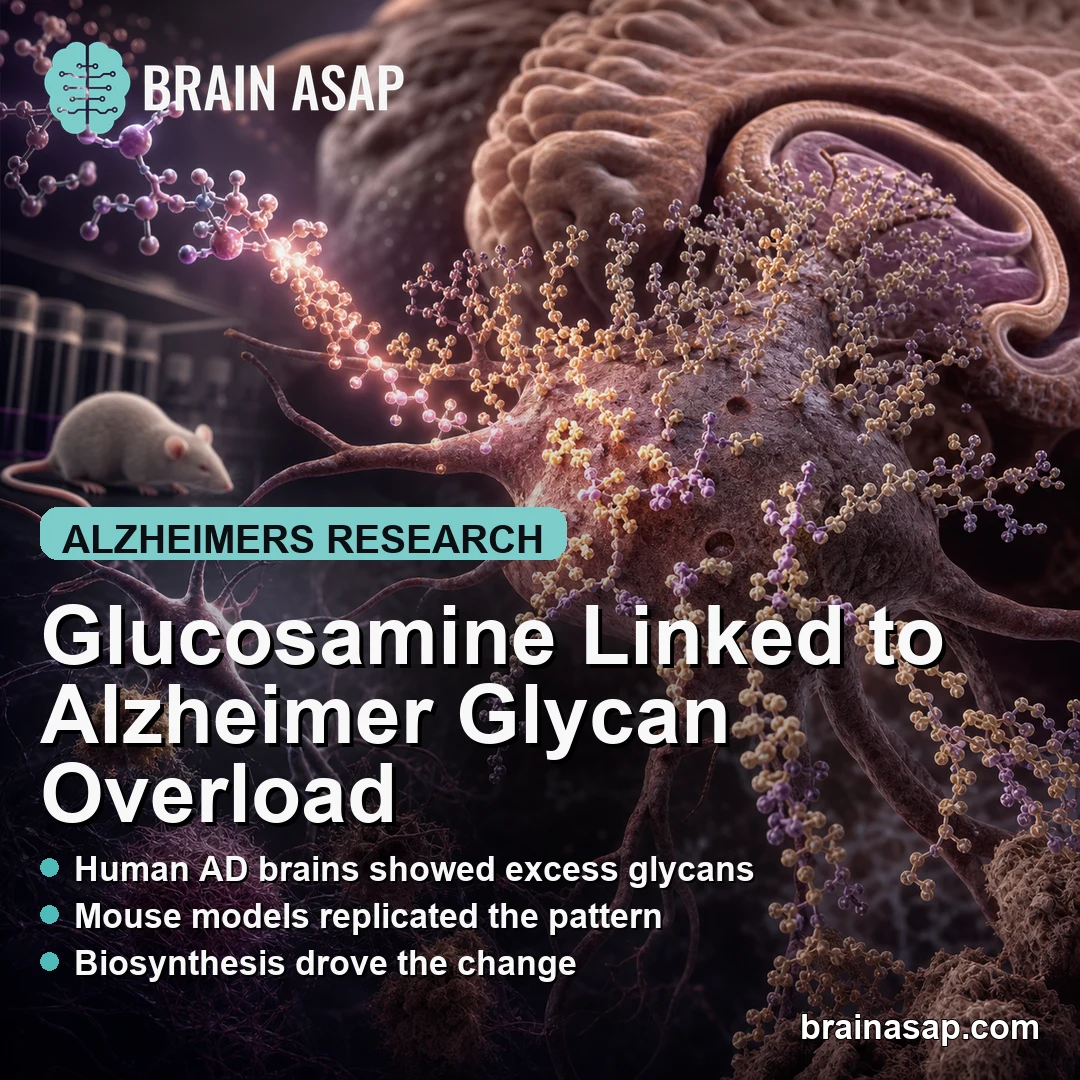
TL;DR: A 2026 study in Nature Metabolism identified brain hyperglycosylation as a metabolic driver of Alzheimer disease in human tissue and mouse models, while glucosamine exposure was linked to worse outcomes in Alzheimer-related dementia records. Key Finding…
Read article ↗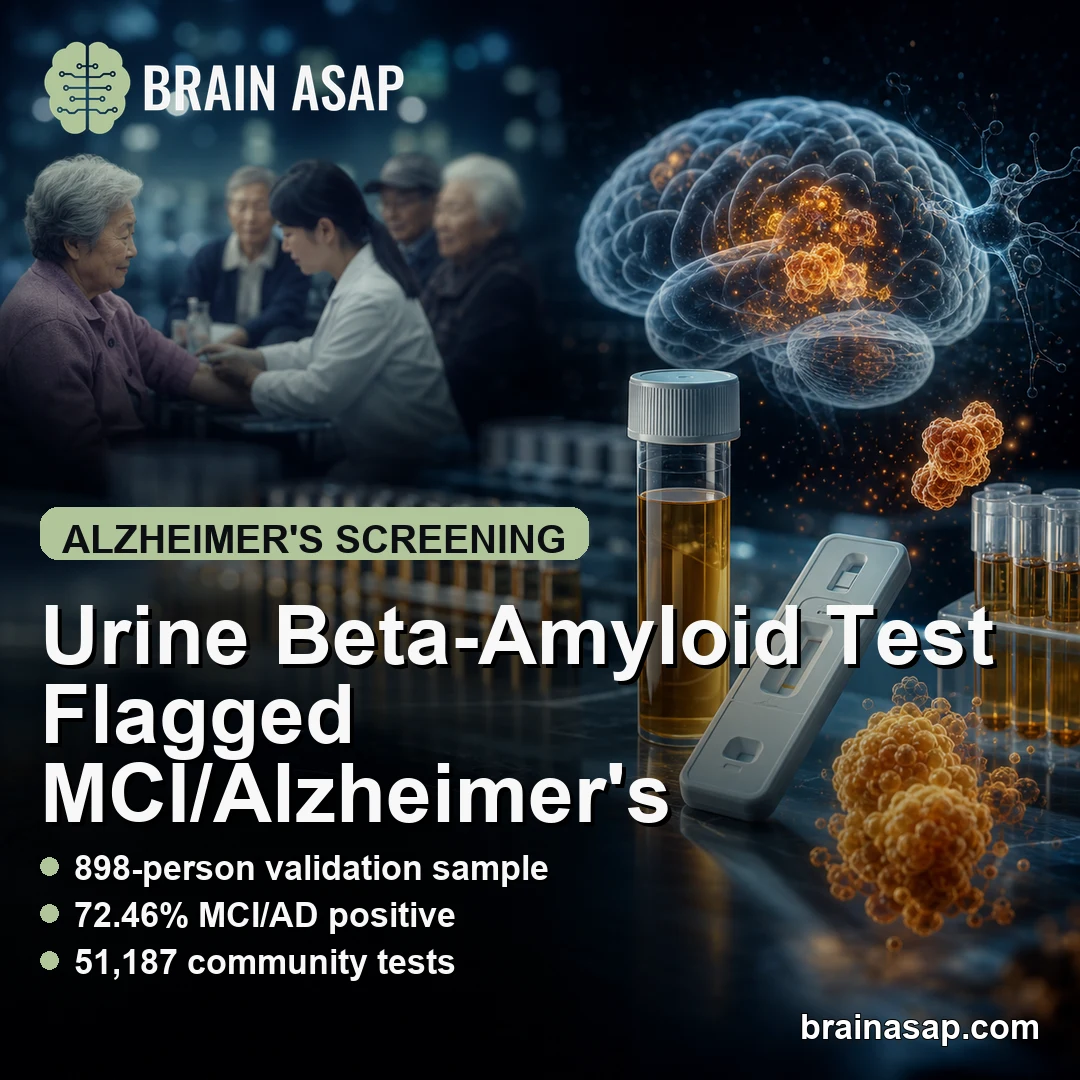
TL;DR: A 2026 preprint in medRxiv reported that a urine beta-amyloid protein test kit separated mild cognitive impairment or Alzheimer’s disease from healthy controls in a multicenter Chinese sample, while a 51,187-person community screen showed age-related po…
Read article ↗
TL;DR: A 2026 preprint on medRxiv found that older adults with mild-cognitive-impairment-level scores showed different resting facial action patterns than healthy controls, especially upper lip raiser, lip tightener, and lip suck measures. Key Findings MCI-lev…
Read article ↗