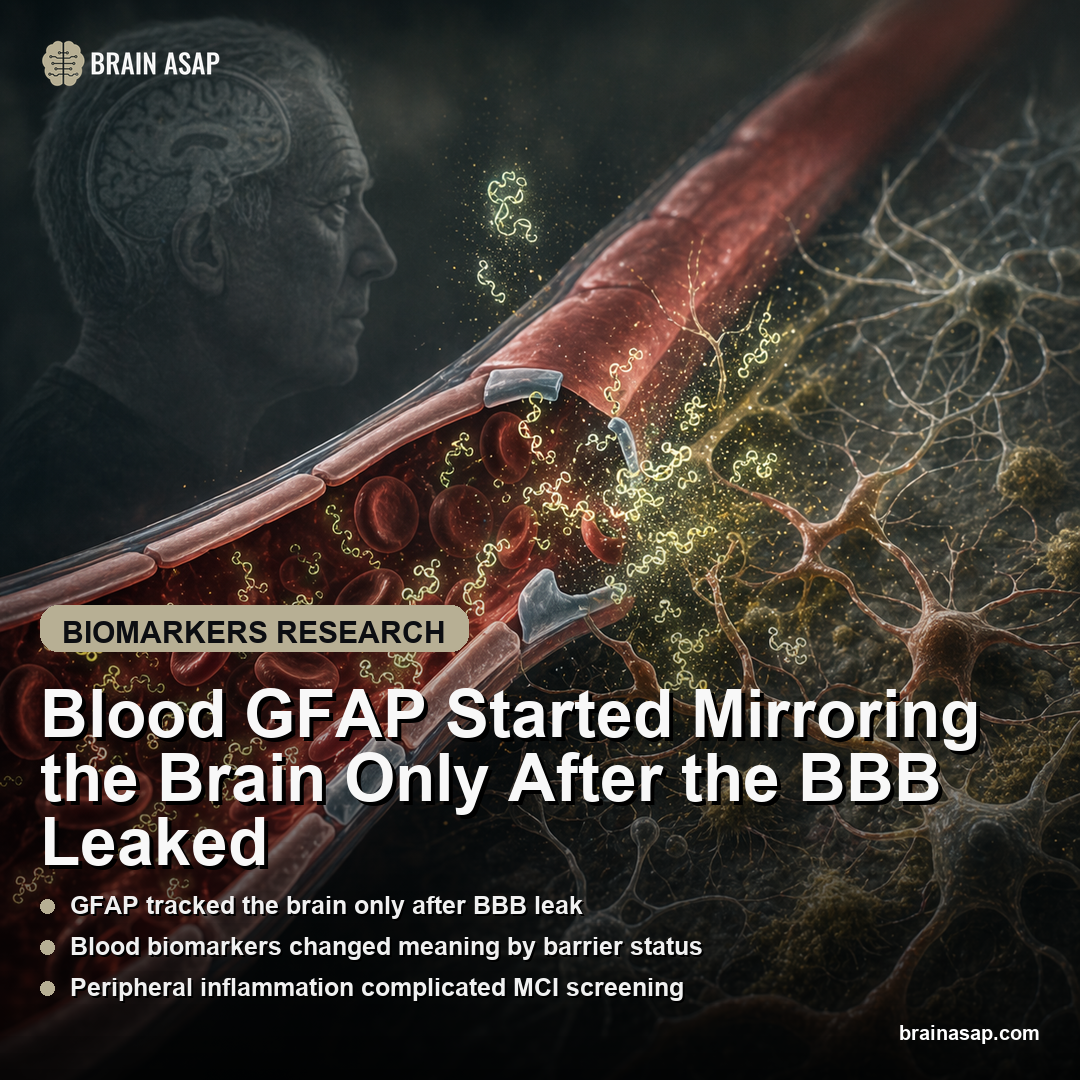
Blood GFAP Tracked Brain GFAP After Blood-Brain Barrier Leak

Blood GFAP Started Mirroring the Brain Only After the BBB Leaked

Blood GFAP Started Mirroring the Brain Only After the BBB Leaked TL;DR: Blood biomarkers mostly failed to mirror the brain while the blood-brain barrier stayed intact; once the barrier leaked, glial fibrillary acidic protein (GFAP), an astrocyte injury protein, and inflammatory signals started lining up across blood and cerebrospinal fluid (CSF), the fluid surrounding the …

Read more

Cannabis via Vaporized THC (20-40 mg) Caused Memory Impairment

Cannabis Did Not Just Blur Word Lists. It Hit Everyday Memory Too

Cannabis Did Not Just Blur Word Lists. It Hit Everyday Memory Too TL;DR: A randomized vaporized-THC trial found broad acute memory impairment, including false memories, prospective memory, source memory, and temporal order memory, with no meaningful dose split between 20 and 40 mg. Key Findings 120 regular cannabis users randomized: Participants vaporized placebo cannabis, 20 …

Read more

New Blood Test Detects Alzheimer’s Disease with 83% Accuracy Years Before Symptoms

Blood Test Detects Alzheimer’s with 83% Accuracy TL;DR: A new blood test using three misfolded plasma proteins can identify Alzheimer’s disease with 83.44% accuracy, outperforming conventional biomarkers and offering a non-invasive screening tool years before cognitive symptoms appear. The holy grail of Alzheimer’s research isn’t a cure—yet. It’s catching the disease before memory starts to …

Read more

Intranasal Insulin for Mild Cognitive Impairment: Enhancing Social Skills, Memory, Grey Matter Volume (2024 Case Report)

Extended intra-nasal insulin (INI) treatment in an insulin-resistant early Mild Cognitive Impairment (MCI) patient improved grey matter volume, reduced beta-amyloid levels, and enhanced cognitive and pragmatic capacities, suggesting potential to slow neurodegenerative disease progression. Highlights: Grey Matter Volume: After 9 months of INI treatment, the patient experienced an increase in grey matter volume. Beta-Amyloid Levels: …

Read more

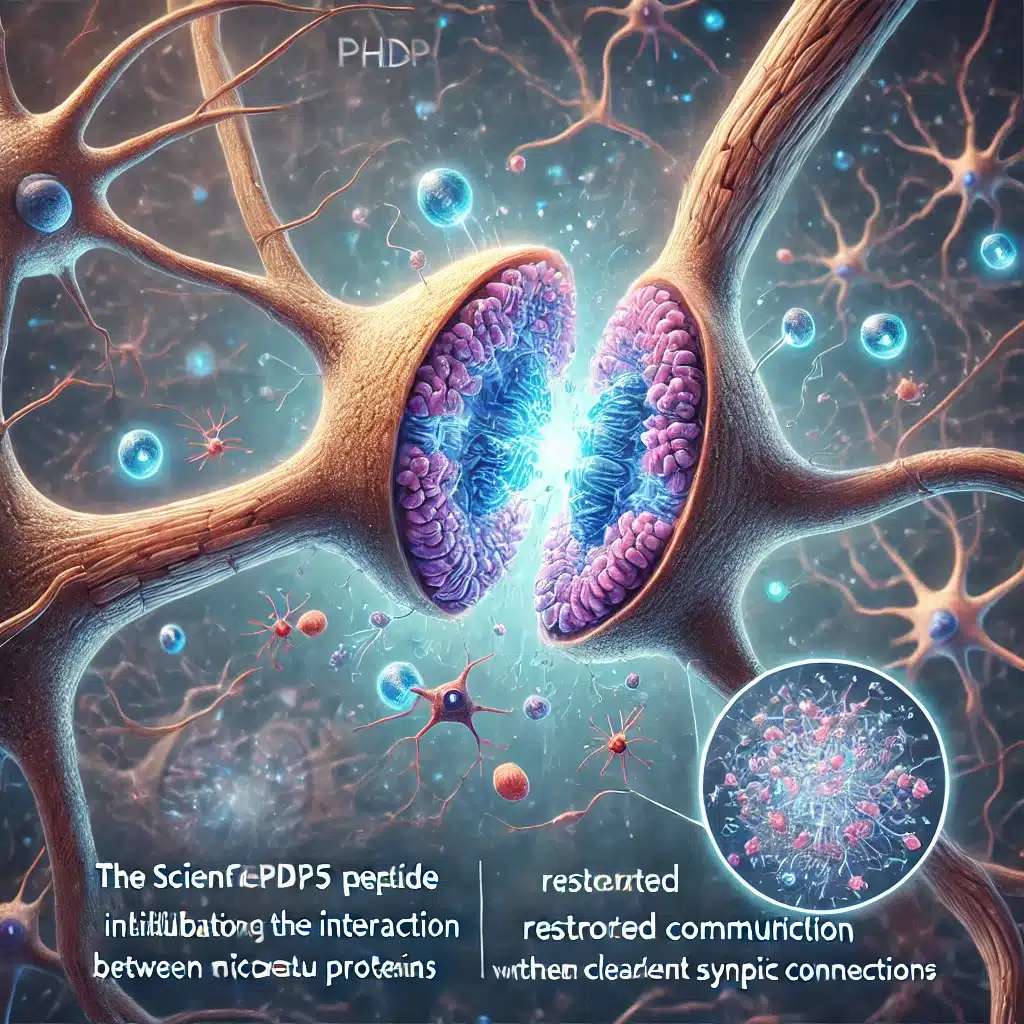
Peptide PHDP5 May Reverse Cognitive Impairment in Alzheimers Disease (2024 Research)

TLDR: Researchers demonstrated that intranasal administration of the peptide FITC-PHDP5-CPP reverses early cognitive impairment in Alzheimer’s disease (AD) model mice, showing potential as a treatment for AD-associated cognitive decline. Highlights: PHDP5, derived from the pleckstrin homology domain of dynamin 1, inhibits the interaction between dynamin and microtubules, rescuing synaptic dysfunction caused by tau accumulation. The …

Read more

Improving Addiction Treatment by Targeting Cognitive Deficits

People struggling with substance use disorders often have difficulties with memory, attention, planning, and decision-making. New research explores how these cognitive deficits relate to treatment outcomes and whether targeting them could improve addiction recovery. Key Facts: Cognitive deficits are common in people with substance use disorders, especially relating to memory, attention, self-control, and reward-based decision-making. …

Read more

Neurotoxicity of Pesticides: Brain Damage & Atrophy from Exposure

Pesticides are chemicals commonly used worldwide to control unwanted organisms and disease vectors. However, research shows that chronic pesticide exposure may impair brain health and contribute to neurodegenerative diseases like Parkinson’s and Alzheimer’s. Key facts: Pesticides like organochlorines, organophosphates, pyrethroids, and mitochondrial complex I inhibitors can damage neurons and brain cell function through mechanisms like …

Read more

Medium Chain Triglycerides (MCTs) for Alzheimers Disease: Benefits for APOE e4(-) Patients?

Alzheimer’s disease (AD) is a growing global health concern, but current drug therapies have shown limited effectiveness for symptom management and disease modification. Medium chain triglycerides (MCTs) have emerged as a potential nutritional therapy, but evidence remains inconclusive. Key Facts: MCTs may provide an alternative brain fuel source and reduce AD biomarkers like amyloid-beta. Small …

Read more

New Alzheimer’s Drug Aducanumab Promising But “ARIA” Side Effects Require Careful Monitoring

A new drug recently approved for Alzheimer’s disease aims to treat the underlying cause of the condition by removing amyloid plaques in the brain. Though promising, the drug called aducanumab also comes with potential side effects that require careful monitoring. Key facts: Aducanumab is the first drug that targets and removes amyloid plaques, sticky buildups …

Read more

Chronic Stress & Drug Abuse: Overlapping Epigenetic Effects in the Brain

Experiencing chronic stress or taking addictive drugs like cocaine can change your brain and behavior in similar ways, making you prone to anxiety or addiction. Key Facts: Chronic stress and chronic drug abuse both impair the striatum, which can make people become rigid in their thinking and unable to update information. This can promote anxiety, …

Read more