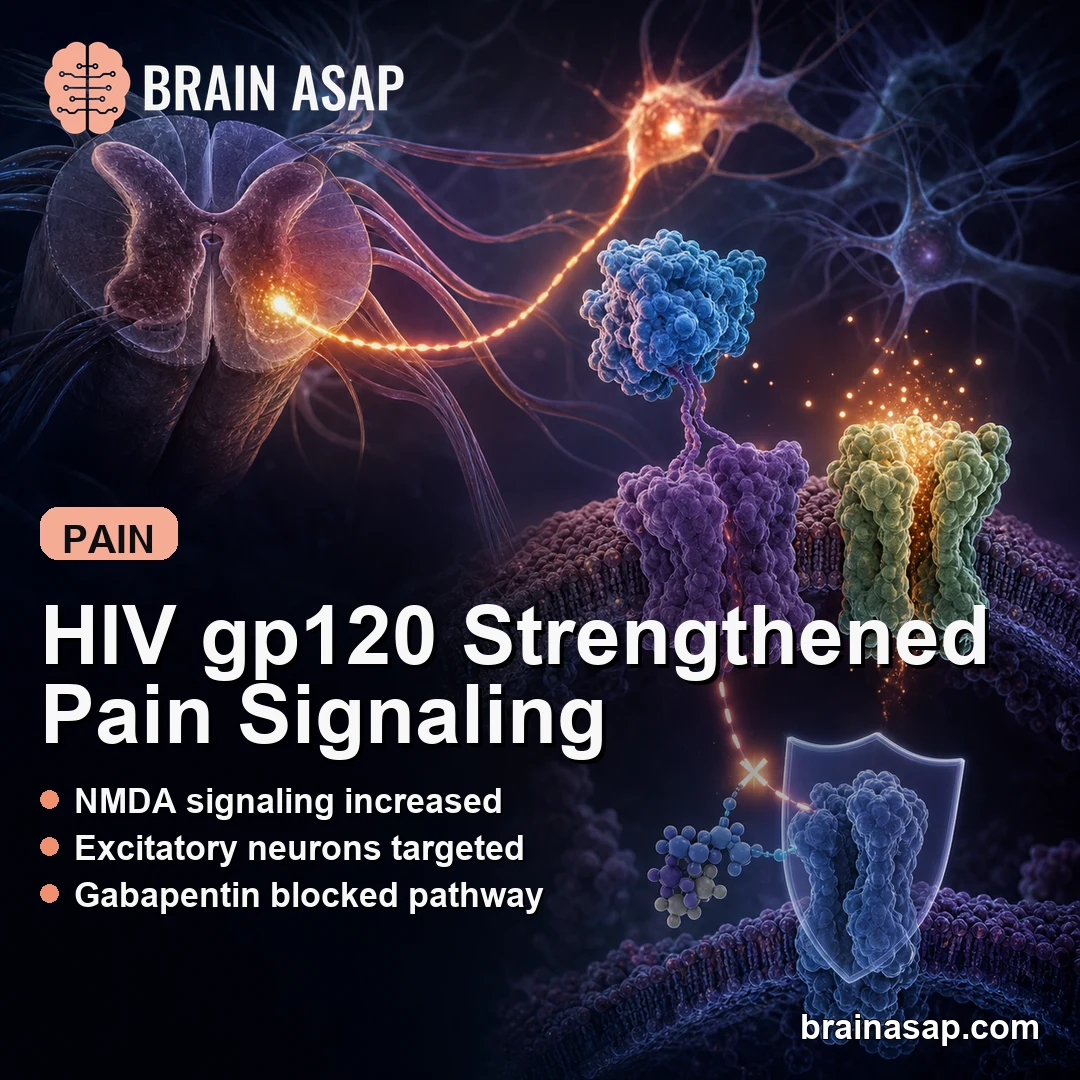
TL;DR: A 2026 mouse study in The Journal of Neuroscience found that the HIV-1 protein gp120 amplified pain signaling through α2δ-1-bound NMDA receptors in spinal excitatory neurons, and blocking that receptor coupling reversed pain-like hypersensitivity. Key F…
Read article ↗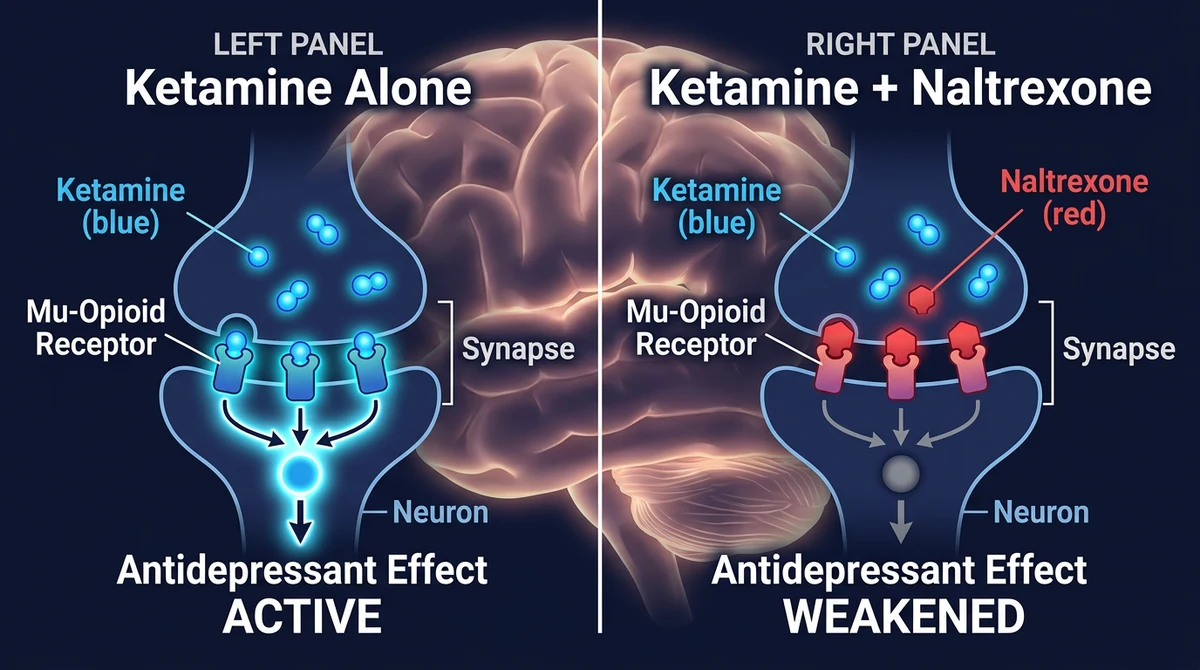
Opioid System Activation is Required for Ketamine’s Antidepressant Effects Ketamine is fast—a single subanesthetic infusion reduces severe depression symptoms within hours, not weeks. But the mechanism remains incompletely understood. For nearly two decades, r…
Read article ↗
Researchers uncover a surprising molecular mechanism that explains ketamine’s exceptionally long-lasting antidepressant effects. Key Facts: Ketamine’s antidepressant effects last for days after its concentration drops to low, ineffective levels only an hour af…
Read article ↗
Major depressive disorder (MDD) is a global health crisis affecting over 300 million people. While available antidepressants help some patients, treatment is far from satisfactory for many. Exciting research into rapid-acting agents like ketamine and psilocybi…
Read article ↗
Schizophrenia is a mental disorder that affects how people think, feel, and behave. It involves problems with hallucinations, delusions, disorganized thinking, lack of motivation, and impaired functioning. Schizophrenia affects about 1% of the population and t…
Read article ↗
Groundbreaking new research challenges decades of accepted neuroscience dogma on how memories are formed in the brain. The study provides strong evidence that the induction of long-term potentiation (LTP), widely believed to be the cellular mechanism underlyin…
Read article ↗
Researchers are gaining exciting new insights into how the drug ketamine can rapidly treat symptoms of depression, including in people who don’t respond to other antidepressants. Key facts about ketamine for depression: Ketamine is an FDA-approved anesthetic t…
Read article ↗