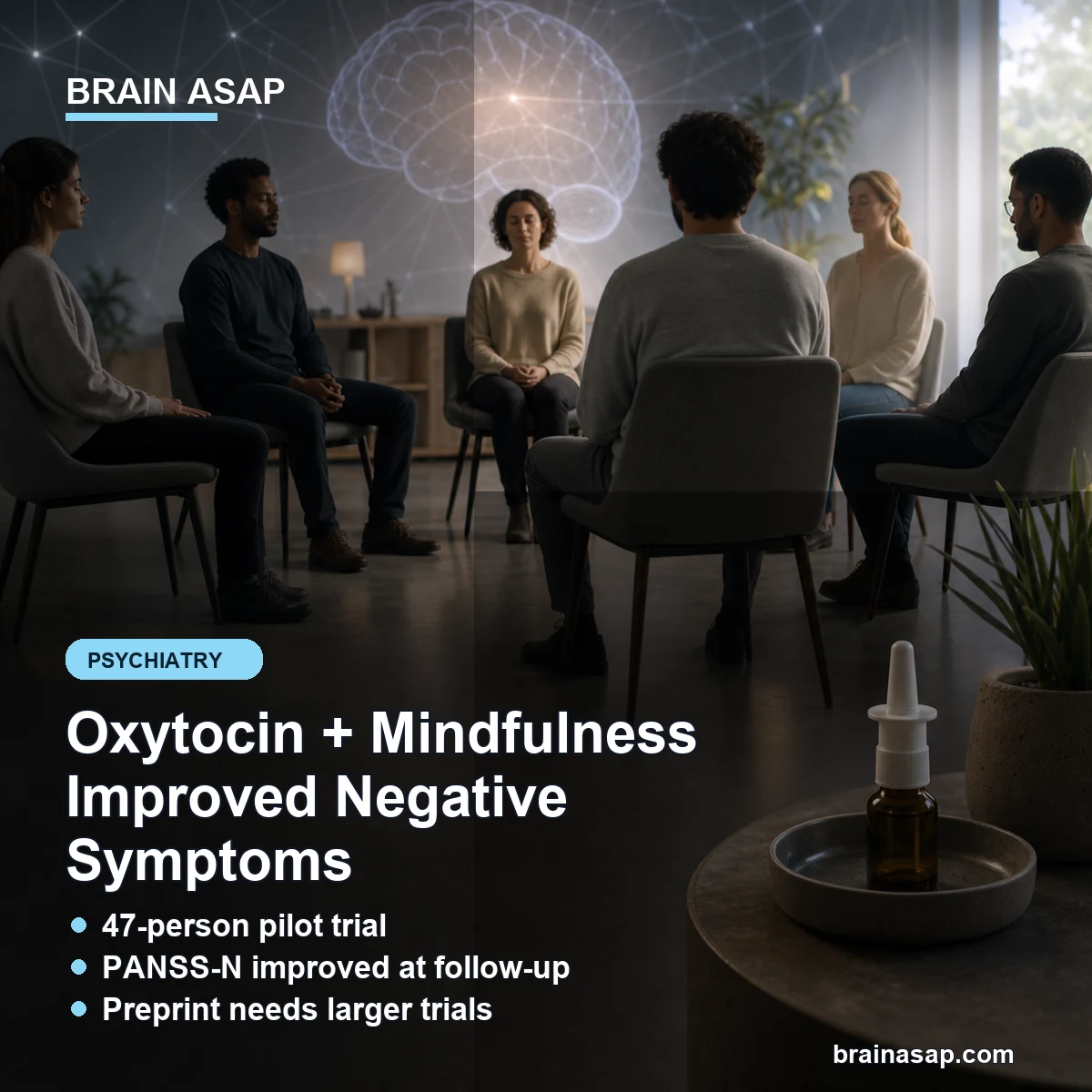
TL;DR: A 2026 preprint on medRxiv found that adding 24 IU intranasal oxytocin before 4 mindfulness-based group therapy sessions was linked to larger clinician-rated negative-symptom improvements in a small schizophrenia spectrum disorder pilot trial. Key Findi…
Read article ↗
TL;DR: A 2026 study in Neuropsychopharmacology found that 30 mg 2C-B produced acute subjective effects in healthy adults that were similar in overall intensity to 125 mg MDMA, shorter and less distressing than 25 mg psilocybin, and less cardiovascularly stimul…
Read article ↗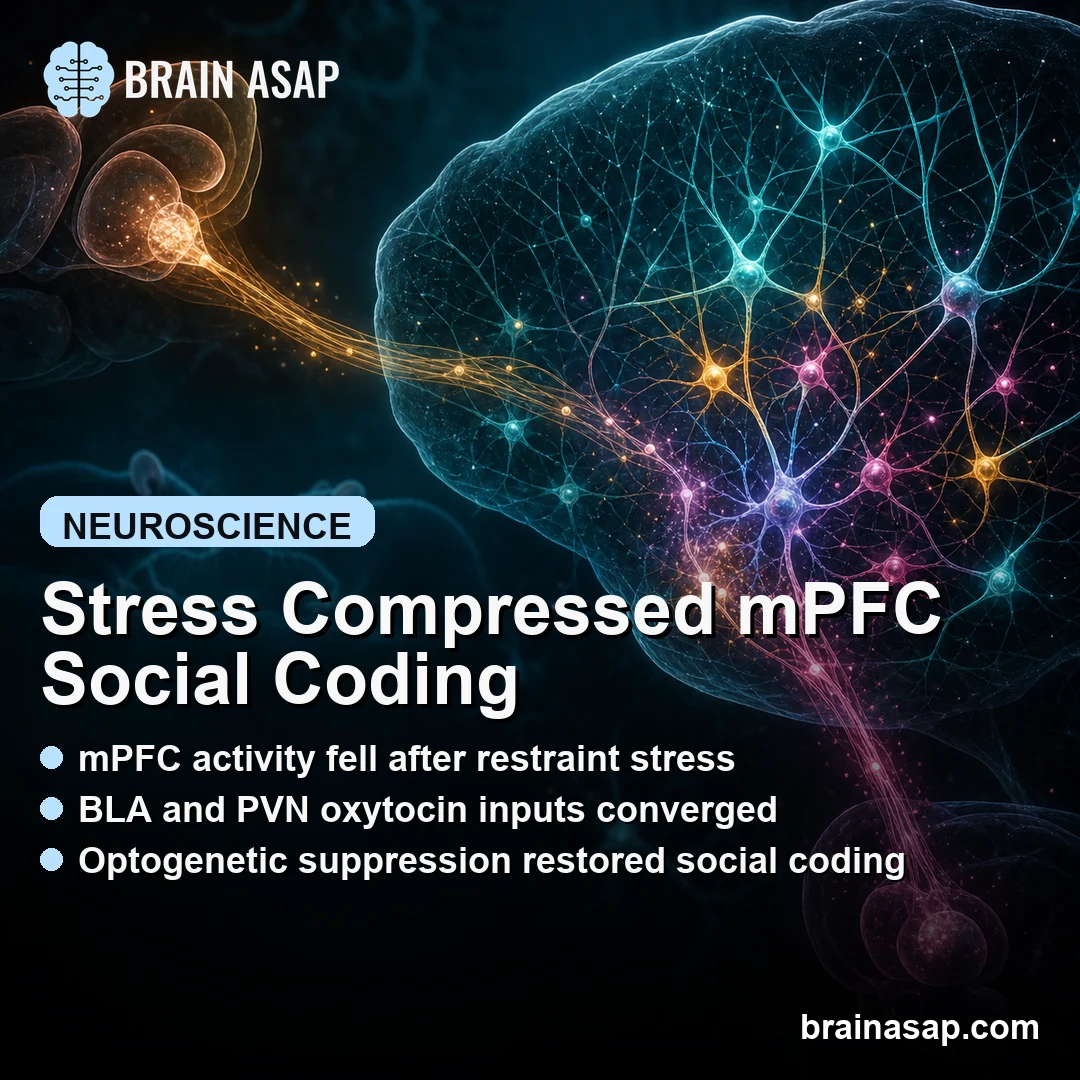
TL;DR: A 2026 study in Communications Biology found that restraint stress weakened medial prefrontal cortex (mPFC, a frontal brain region that helps organize social behavior) activity during social testing, while stress-activated amygdala and hypothalamic oxyt…
Read article ↗
A recent study identified that young autistic children with lower clinical severity and greater eye contact are more likely to respond positively to intranasal oxytocin treatment. Highlights: Response Rate: 61.5% of one identified autism subtype responded to o…
Read article ↗
A small-molecule oxytocin receptor-specific agonist, LIT-001, differentially affects the acquisition and expression of partner preference in prairie voles, enhancing bonding when administered before cohabitation but inhibiting it when given afterward. Highligh…
Read article ↗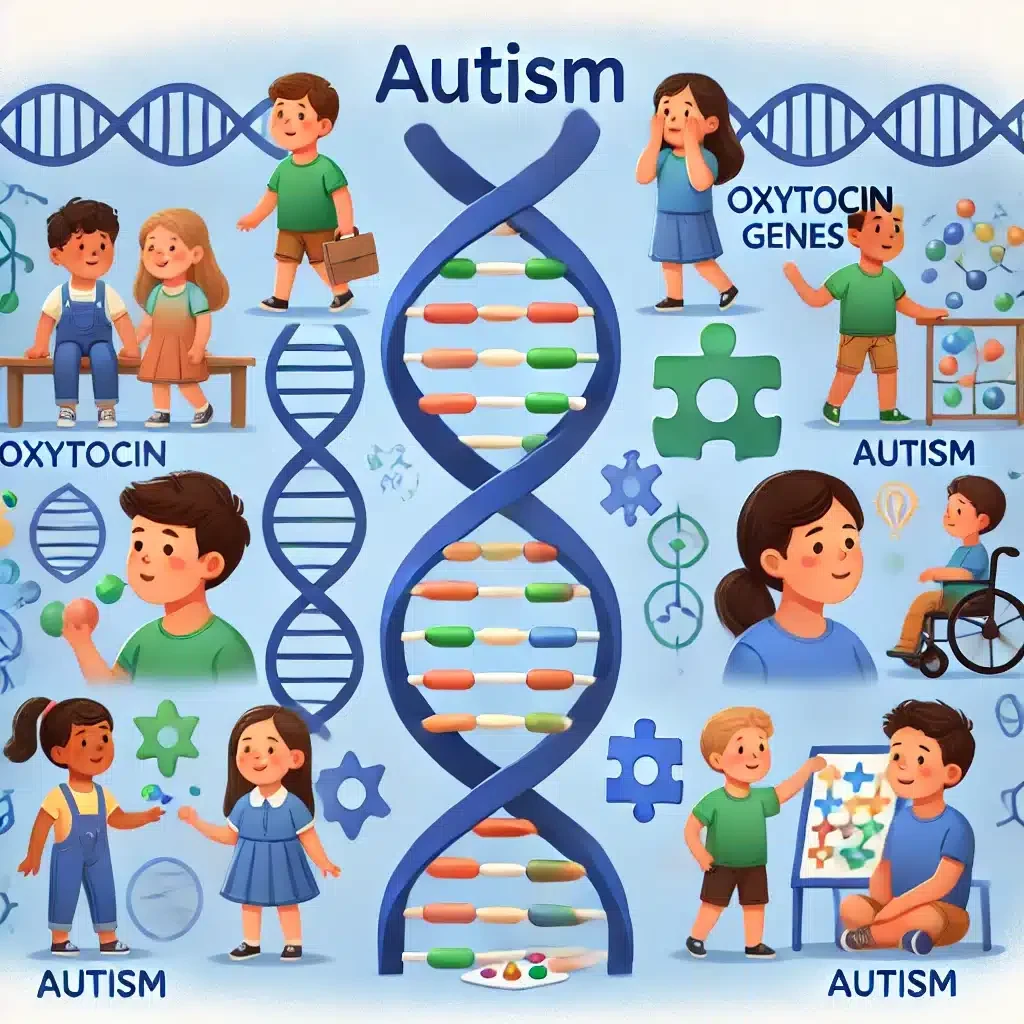
A study found that certain genetic variations in the oxytocin receptor gene (OXTR) were associated with different aspects of social understanding abilities in children with and without autism. Highlights: In typically developing children, one genetic variation…
Read article ↗
Post-traumatic stress disorder (PTSD) continues to afflict millions worldwide, necessitating more effective therapeutic options. Key Facts: PTSD involves dysfunctional fear processing and altered threat perception. Current treatments fail to comprehensively ad…
Read article ↗
A new study reveals that the recreational drugs MDMA (also known as ecstasy or molly) and methamphetamine can increase feelings of connection and closeness with strangers during conversations. Key Facts: MDMA and methamphetamine were tested on separate groups…
Read article ↗
Researchers explored how our brain’s reward system connects to depression and other common mental health problems like social anxiety and eating disorders. They found that a dampened reward response seems to follow, rather than precede, symptoms of depression…
Read article ↗