30 mg 2C-B Matched MDMA Drug Intensity but Lasted Less Than Psilocybin
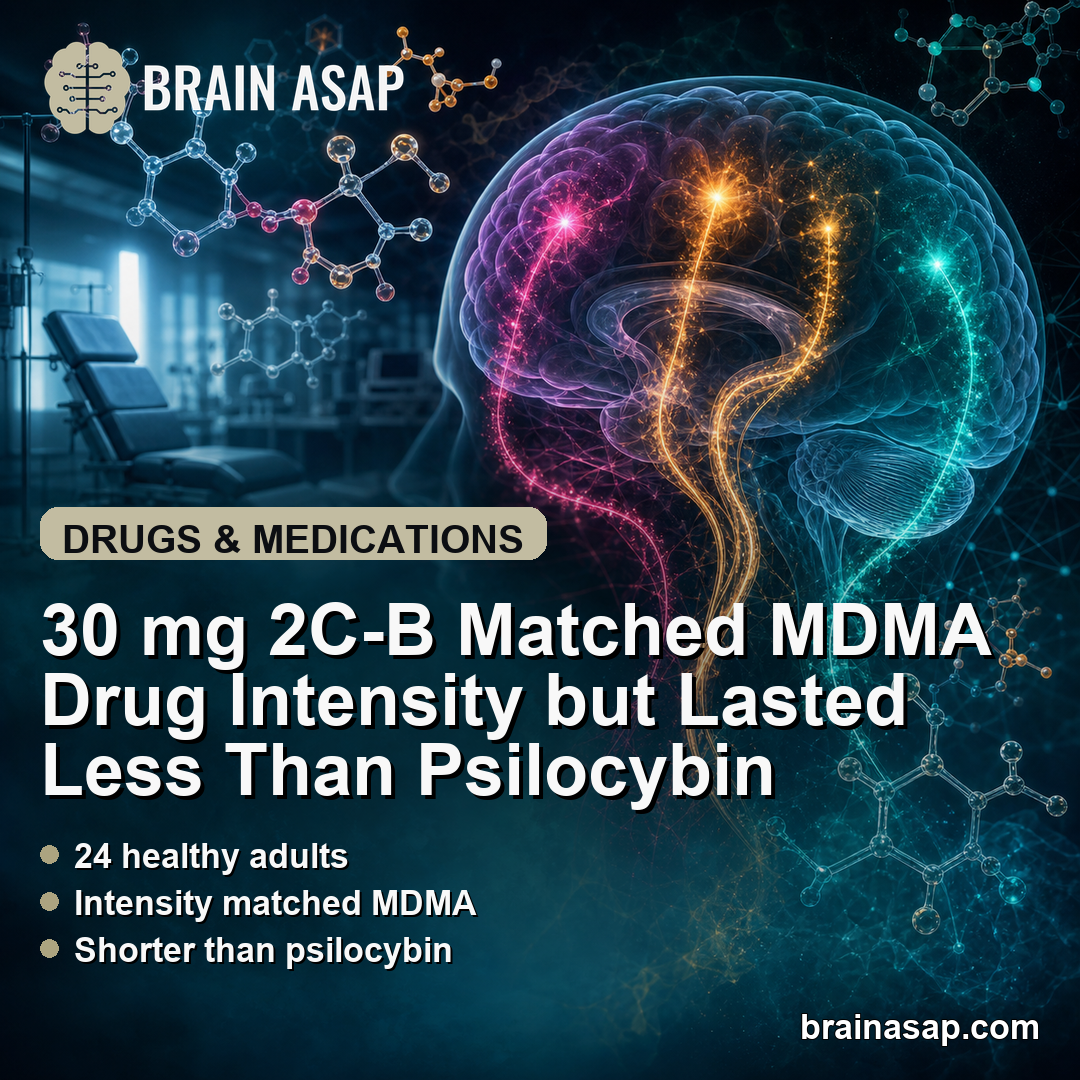
30 mg 2C-B Matched MDMA Drug Intensity but Lasted Less Than Psilocybin

TL;DR: A 2026 study in Neuropsychopharmacology found that 30 mg 2C-B produced acute subjective effects in healthy adults that were similar in overall intensity to 125 mg MDMA, shorter and less distressing than 25 mg psilocybin, and less cardiovascularly stimulating than MDMA. Key Findings Crossover comparison: The double-blind study tested 10, 20, and 30 mg …
Read more

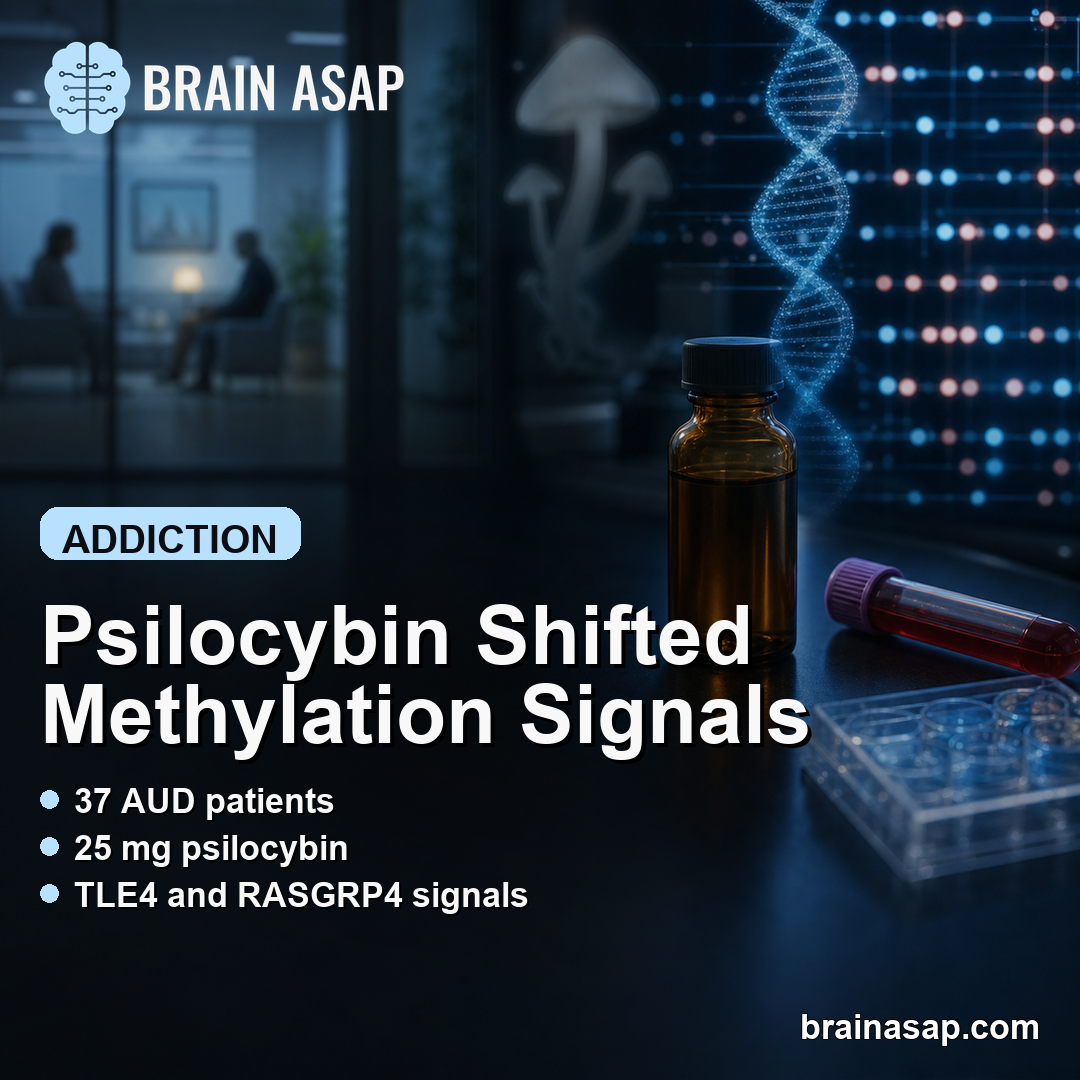
Psilocybin AUD Trial Found Exploratory TLE4 and RASGRP4 Methylation Signals

Psilocybin AUD Trial Found Exploratory TLE4 and RASGRP4 Methylation Signals

TL;DR: A 2026 exploratory study in Translational Psychiatry found blood DNA methylation changes after 25 mg psilocybin in detoxified alcohol use disorder patients, including findings near TLE4 and RASGRP4, but the small trial did not establish a definitive AUD biomarker. Key Findings 37 AUD patients: The methylation analysis used a randomized, double-blind psilocybin trial completed …

Read more

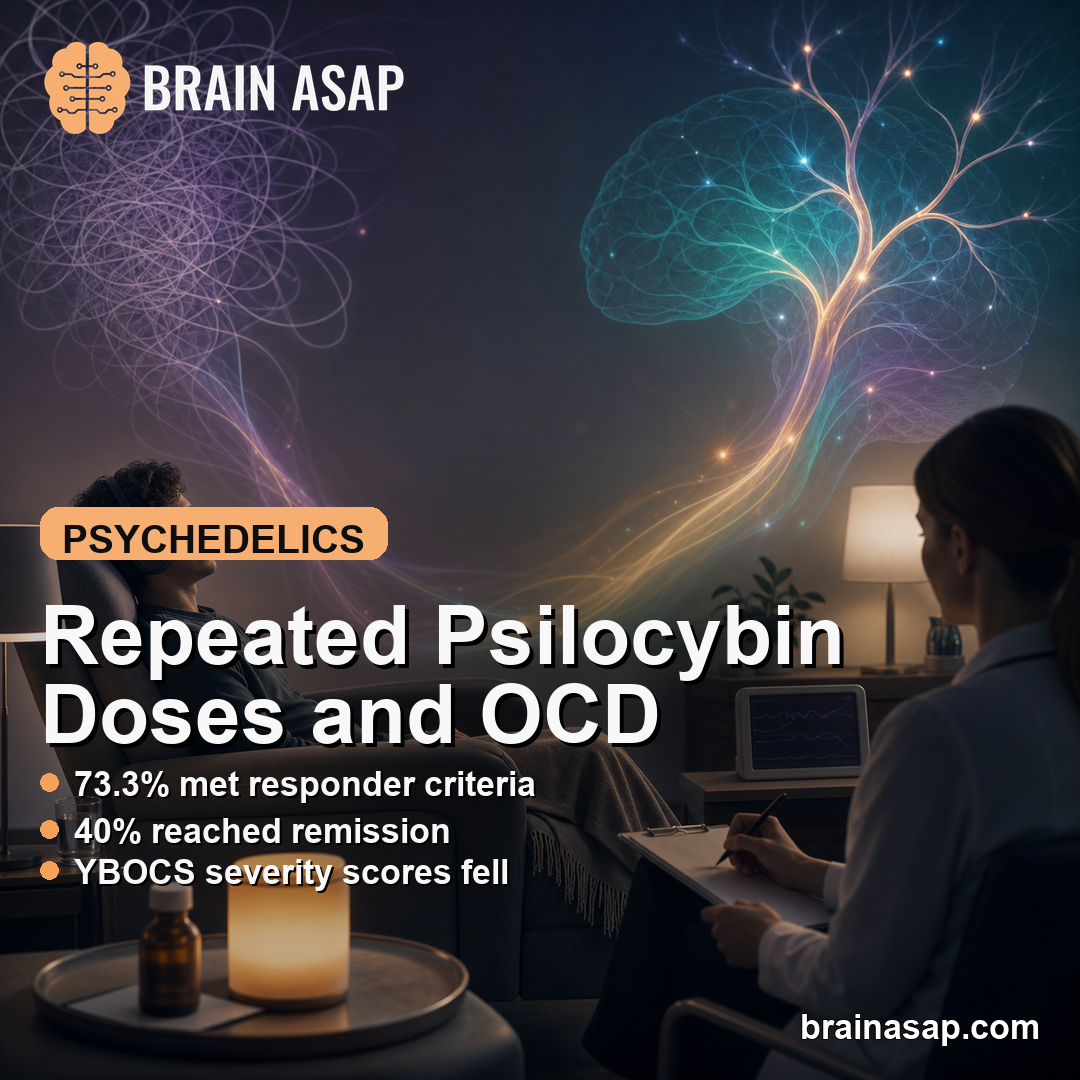
Repeated Psilocybin Doses Reduced OCD Severity

Repeated Psilocybin Doses Reduced OCD Severity

TL;DR: A 2026 trial in Journal of Psychopharmacology found that repeated supervised psilocybin sessions reduced Yale-Brown Obsessive Compulsive Scale (YBOCS) scores, a standard measure of obsession and compulsion severity, in 15 adults with OCD. Key Findings 73.3% met responder criteria: At the end of the 8-week treatment, 11 of 15 participants had at least a …

Read more

Psychedelic Treatment Media Coverage Used More Positive Tone

Psychedelic Treatment Media Coverage Used More Positive Tone

TL;DR: A 2026 Scientific Reports study of 6,805 English-language media reports found that psychedelic-treatment coverage for depression and PTSD used more positive tone than antidepressant coverage, while antidepressant coverage used more risk and negative-emotion language. Key Findings 6,805 media reports: Researchers analyzed English-language newspaper coverage from 2017 to 2024 using LexisNexis and natural language processing. …

Read more

Psilocybin Increased 6-Month Smoking Abstinence to 40% vs 10% on Nicotine Patch

Psilocybin Increased 6-Month Smoking Abstinence to 40% vs 10% on Nicotine Patch

TL;DR: A 2026 randomized clinical trial in JAMA Network Open found that one supervised 30 mg/70 kg psilocybin dose plus cognitive behavioral therapy produced 40.5% six-month smoking abstinence versus 10.0% with a nicotine patch plus the same therapy. Key Findings 40.5% vs. 10% prolonged abstinence at 6 months: 17 of 42 psilocybin participants stayed biochemically …

Read more

Psilocybin Suppressed SST Interneurons Through 5-HT1A Signaling

Psilocybin Suppressed SST Interneurons Through 5-HT1A Signaling

TL;DR: A 2026 mouse preprint in bioRxiv found that psilocybin reduced firing in somatostatin (SST) interneurons, inhibitory cortical cells that gate dendritic input, while increasing parvalbumin (PV) interneuron firing in the medial frontal cortex. Key Findings SST firing decreased: Opto-tagged SST interneurons fell from 5.5 to 3.7 Hz after psilocybin, while saline did not produce …

Read more

First 25 mg Psilocybin Dose Increased EEG Entropy and Predicted Well-Being

First 25 mg Psilocybin Dose Increased EEG Entropy and Predicted Well-Being

TL;DR: A 2026 exploratory study in Nature Communications found that a first 25 mg psilocybin dose in 28 psychedelic-naive adults increased electroencephalography (EEG), a scalp recording of brain electrical activity, entropy during the acute session and that entropy predicted one-month well-being change. Key Findings 28 psychedelic-naive adults: Participants received 1 mg psilocybin as a low-dose …

Read more

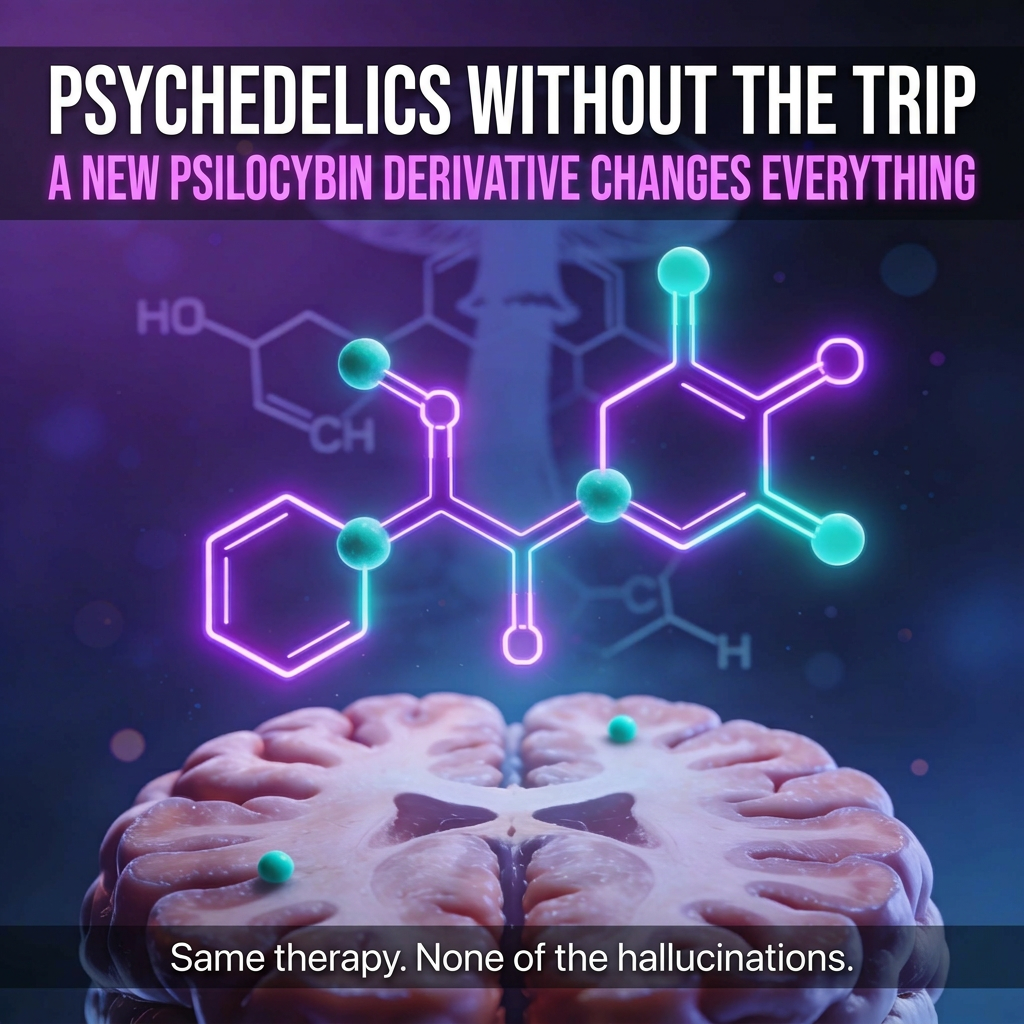
Fluorinated Psilocin Derivative Cuts Psychedelic Effects 75% While Preserving Antidepressant Activity

Fluorinated Psilocin: The Sub-Hallucinogenic Breakthrough TL;DR: Chemists designed a new psilocin derivative with fluorine modifications that induces sub-hallucinogenic effects in mice, sidestepping the acute psychological effects of classic psychedelics while retaining therapeutic serotonin receptor activity. Psilocybin has emerged as a clinical darling—mounting evidence shows rapid relief for depression, anxiety, and cluster headaches. But there’s a …

Read more

Revolutionizing Depression Treatment: Novel Rapid-Acting Antidepressants & Emerging Drug Targets

Major depressive disorder (MDD) is a global health crisis affecting over 300 million people. While available antidepressants help some patients, treatment is far from satisfactory for many. Exciting research into rapid-acting agents like ketamine and psilocybin combined with exploration of novel drug targets finally offers real hope for transformational change in how depression is treated. …

Read more

Psychedelics Linked to Nonconformist Beliefs & Alternative Facts

Classical psychedelics like LSD and psilocybin have recently re-entered mainstream discussions surrounding mental health. Small clinical trials have shown promising results for their therapeutic potential in treating conditions like depression, anxiety and addiction. However, beyond their clinical utility, many questions remain regarding the impact of these substances on psychological aspects like personality and belief systems. …

Read more