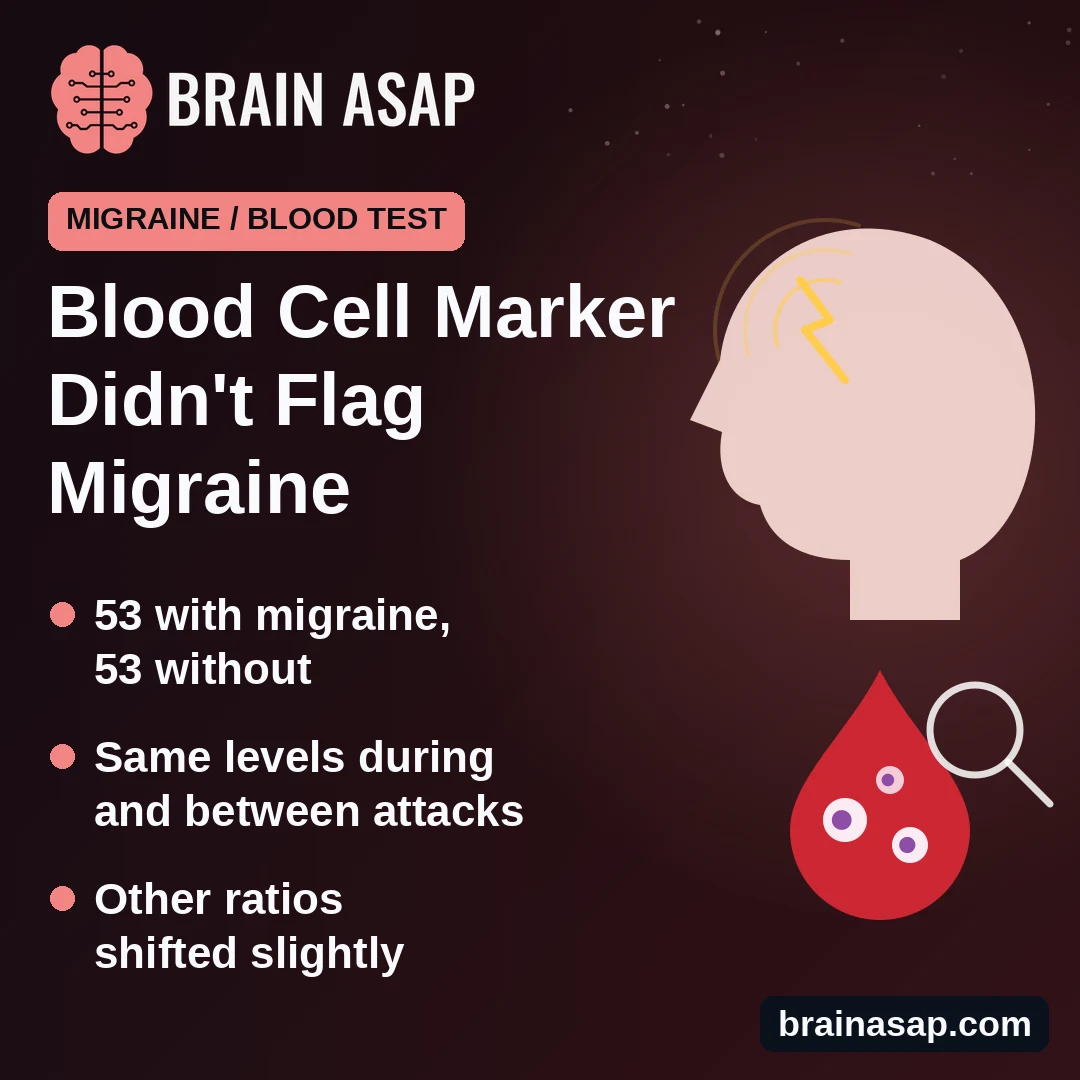
TL;DR: Levels of immature white blood cells, proposed as a simple blood marker of inflammation in migraine, were the same in people with migraine, during or between attacks, as in people without it. Two other blood ratios shifted slightly during attacks. Key F…
Read article ↗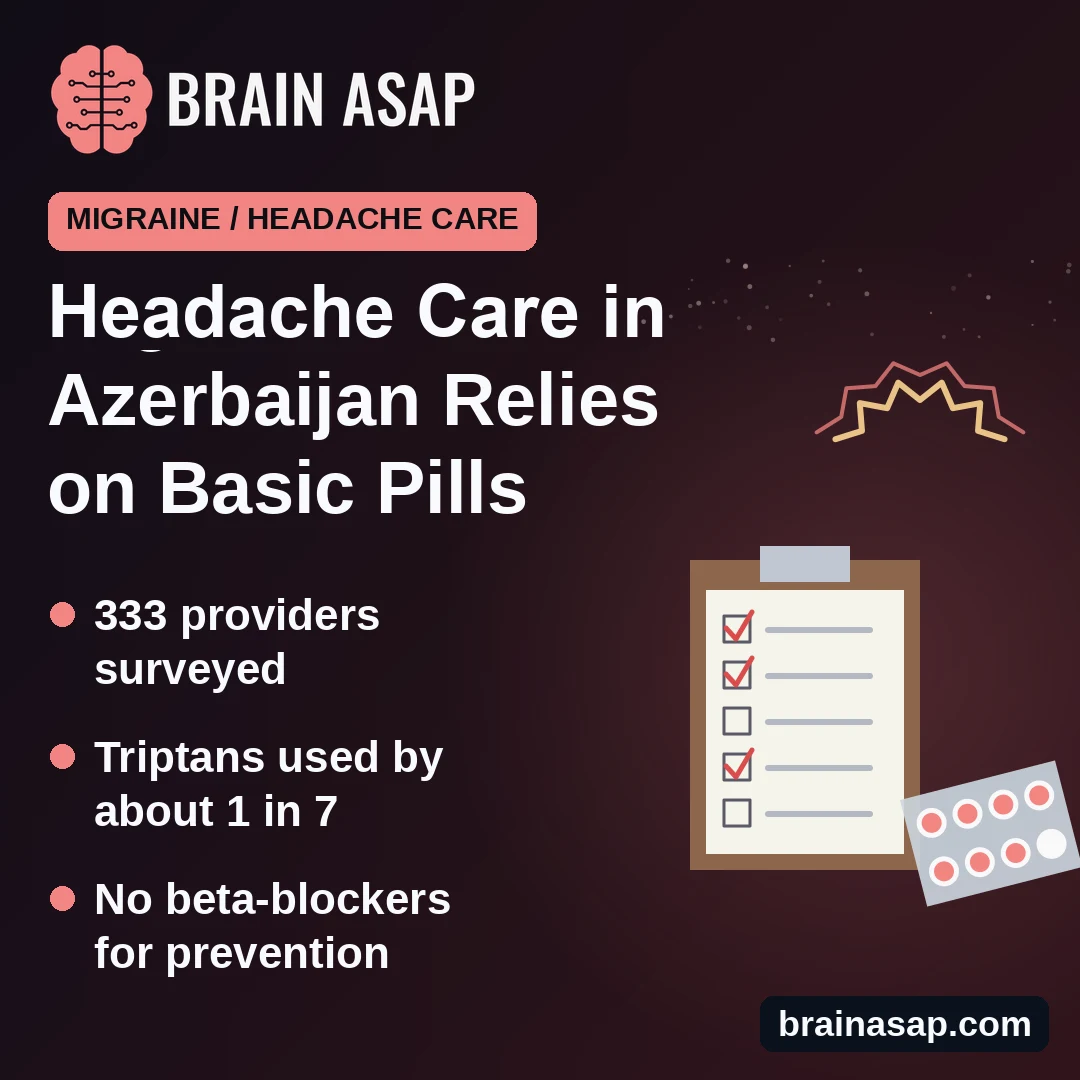
TL;DR: In a survey of 333 doctors, pediatricians and pharmacists in Azerbaijan, most said they routinely use general painkillers and the antidepressant amitriptyline for headaches. Only about 1 in 7 routinely prescribe triptans, and none reported using beta-bl…
Read article ↗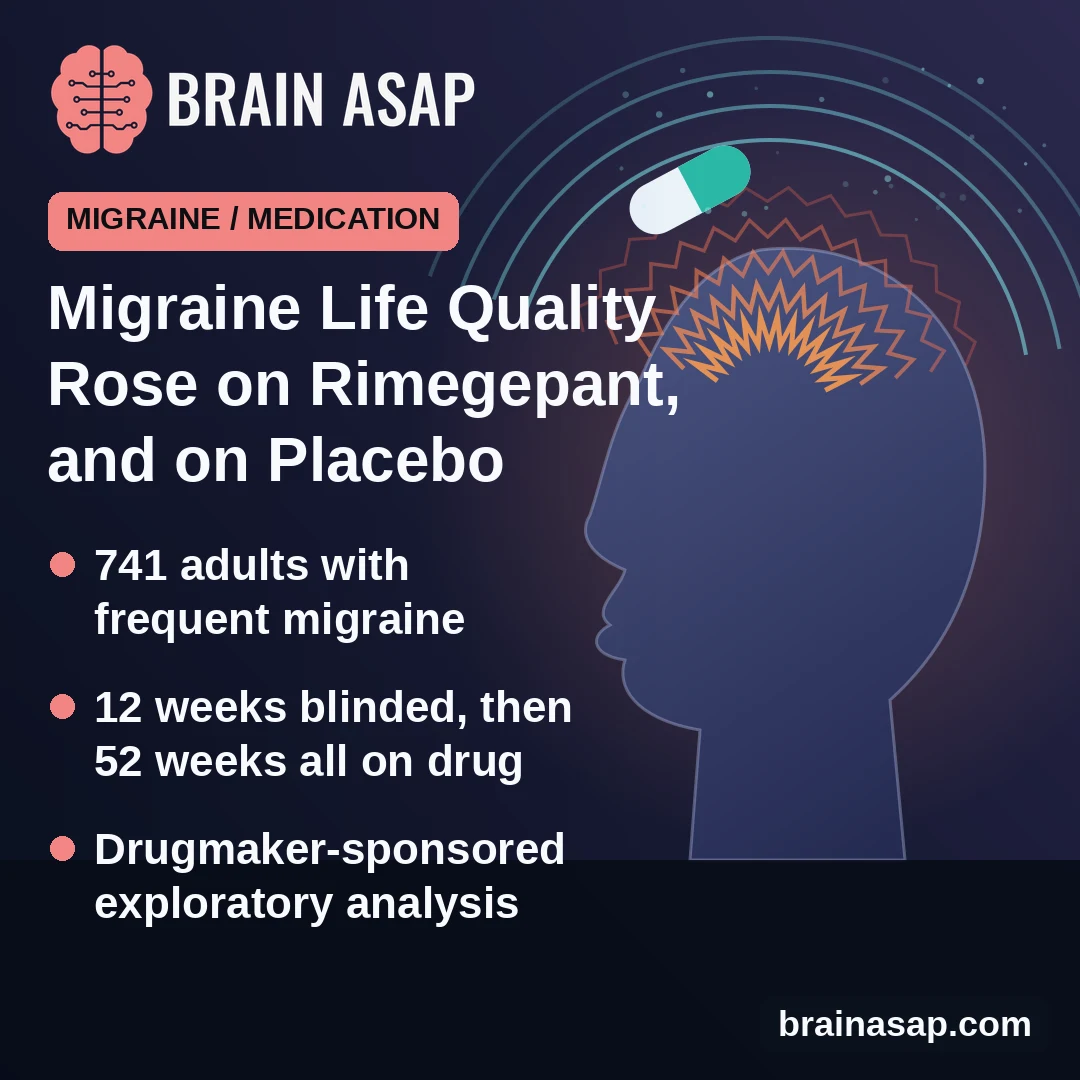
TL;DR: In 741 adults with frequent migraine, quality of life rose a bit more on rimegepant than placebo at 12 weeks (18.6 vs 15.0). The next year had no comparison group, so it can't show the drug helped. Key Findings Quality of life at 12 weeks: 0–100 scale o…
Read article ↗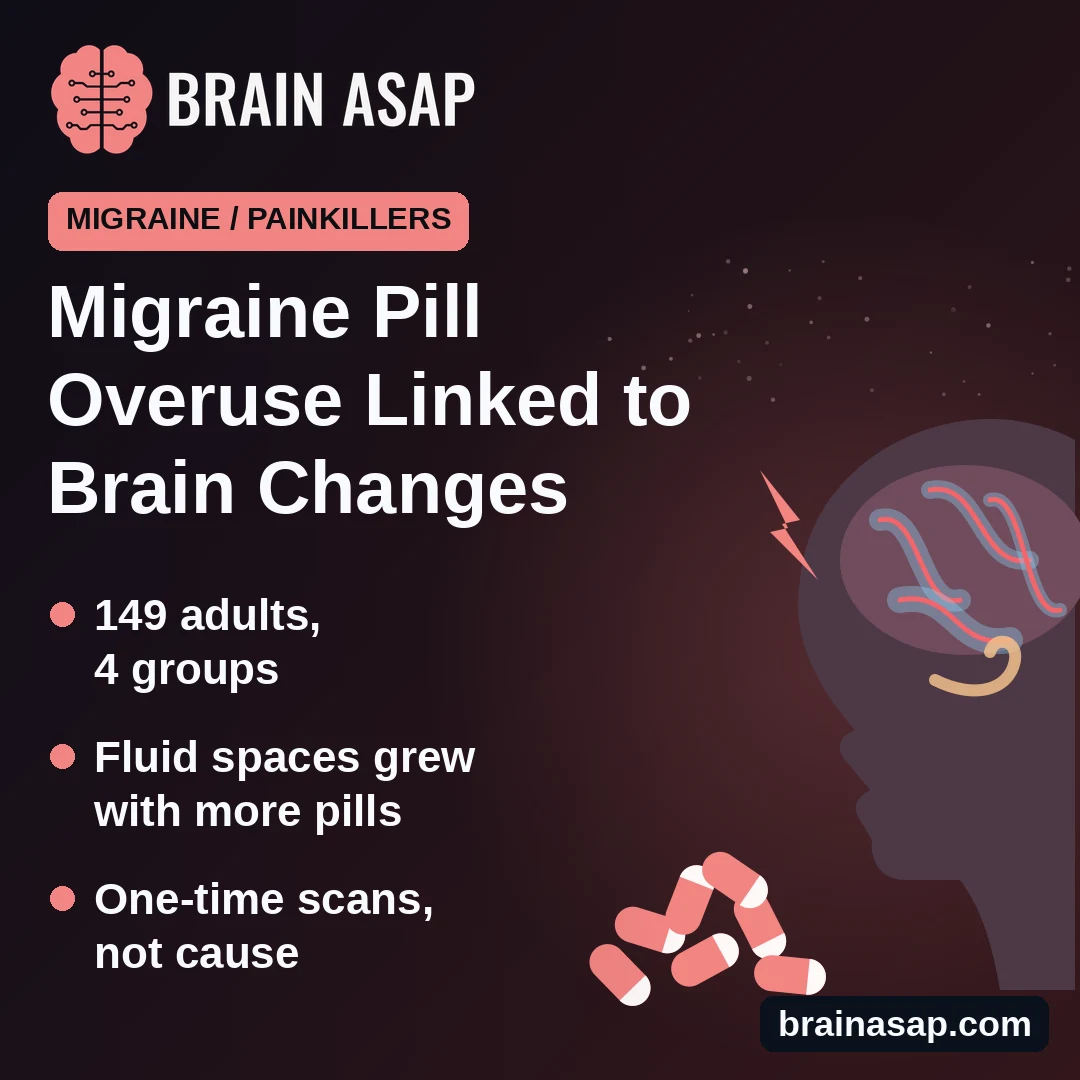
TL;DR: In brain scans of 149 adults, people whose migraine had turned into near-daily headaches from overusing painkillers had larger fluid-filled spaces around small brain vessels and a smaller hippocampus than people without migraine. The scans were taken on…
Read article ↗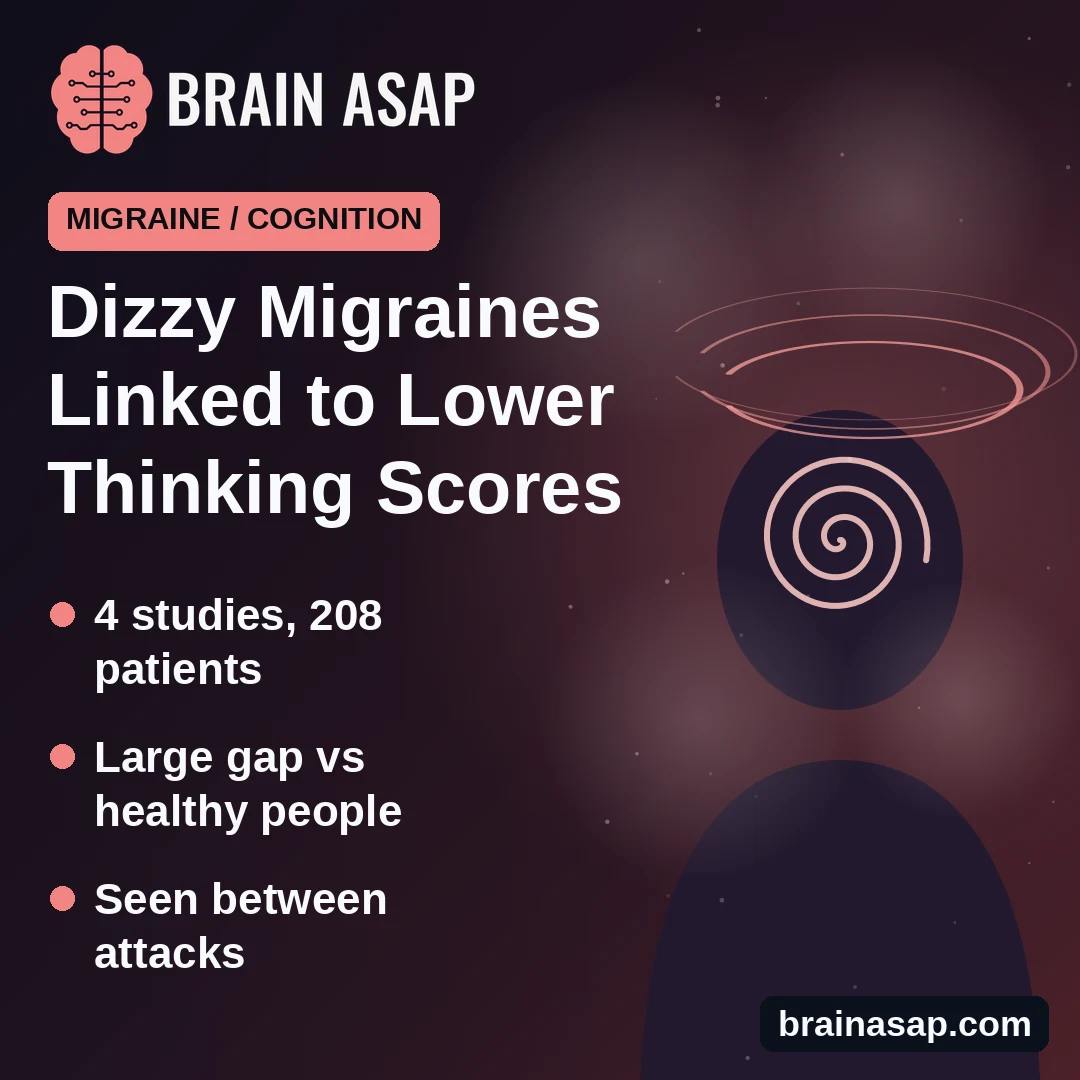
TL;DR: Across four small studies, adults with vestibular migraine, a type that causes dizzy spells, scored noticeably lower on thinking tests than healthy people, even between attacks. The review was small and could not rule out anxiety, poor sleep or medicine…
Read article ↗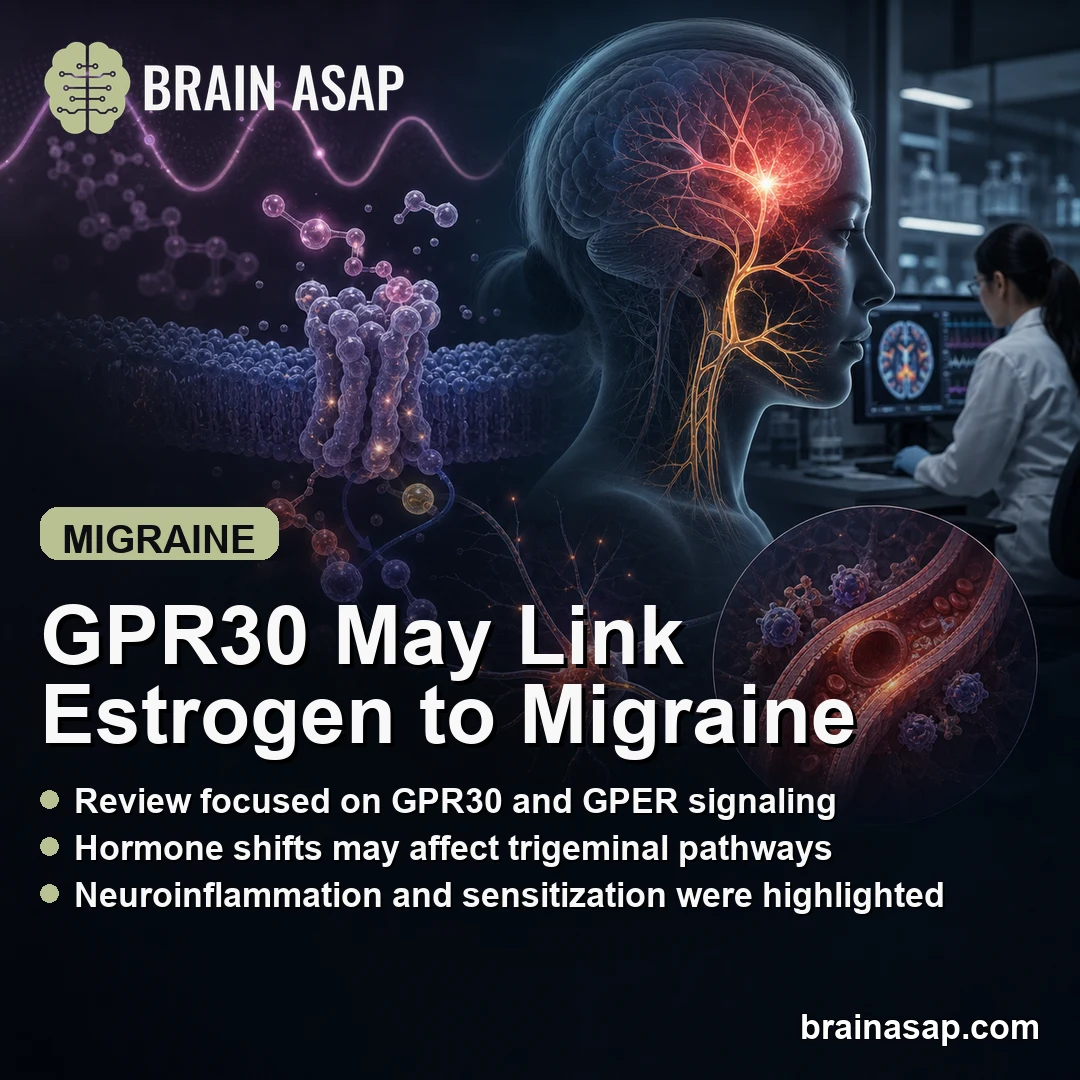
TL;DR: A 2026 review in Journal of Pain Research argued that G protein-coupled receptor 30 (GPR30/GPER), a membrane estrogen receptor, could help connect estrogen fluctuations with migraine biology. Key Findings Female-predominant migraine: The review notes a…
Read article ↗
Fluorinated Psilocin: The Sub-Hallucinogenic Breakthrough TL;DR: Chemists designed a new psilocin derivative with fluorine modifications that induces sub-hallucinogenic effects in mice, sidestepping the acute psychological effects of classic psychedelics while…
Read article ↗
Vestibular migraine is a disabling health condition characterized by severe, recurrent attacks of vertigo. A Cochrane review assessed the benefits and potential harms of medications used to try to prevent these attacks. Key Facts: Only 3 small studies, with 20…
Read article ↗
Cold stimulus headache, commonly known as “brain freeze”, is a curious and understudied phenomenon that many of us have experienced when eating or drinking something cold too quickly. Though brief and benign, these headaches provide insight into how the brain…
Read article ↗
A new network meta-analysis published in Frontiers in Pharmacology provides important insights into the relative efficacy and safety of monoclonal antibodies targeting calcitonin gene-related peptide (CGRP) for migraine prevention. This comprehensive analysis…
Read article ↗