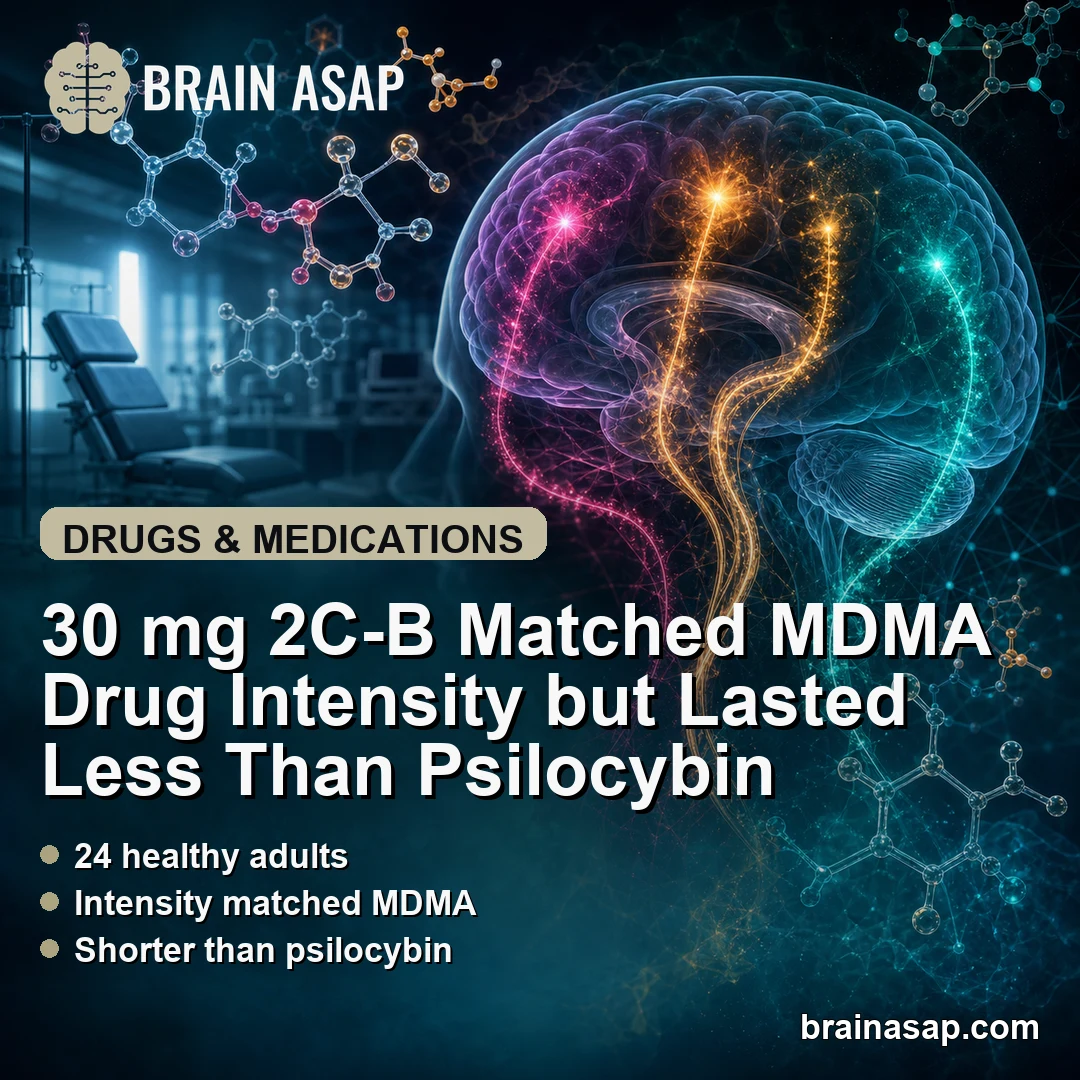
TL;DR: A 2026 study in Neuropsychopharmacology found that 30 mg 2C-B produced acute subjective effects in healthy adults that were similar in overall intensity to 125 mg MDMA, shorter and less distressing than 25 mg psilocybin, and less cardiovascularly stimul…
Read article ↗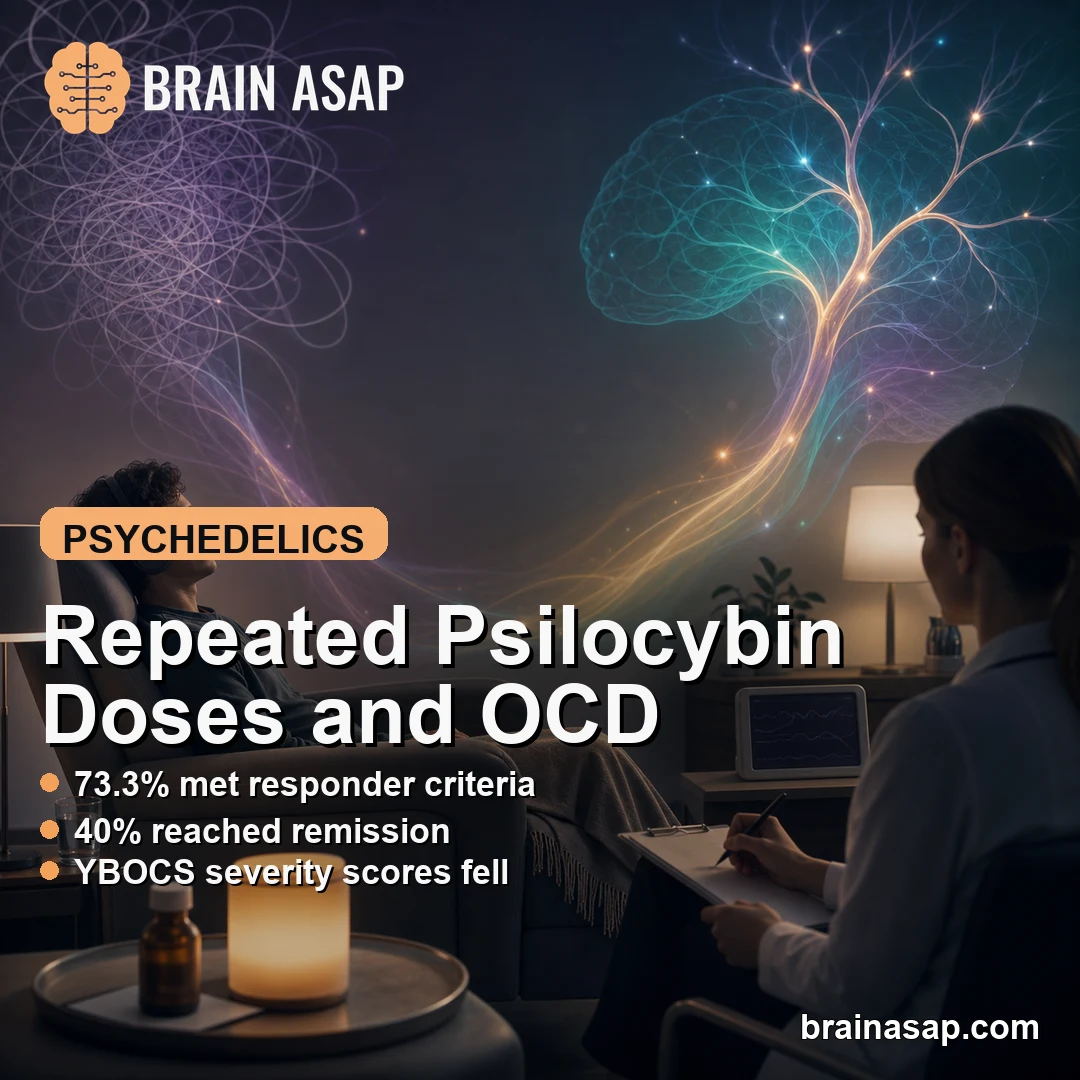
TL;DR: A 2026 trial in Journal of Psychopharmacology found that repeated supervised psilocybin sessions reduced Yale-Brown Obsessive Compulsive Scale (YBOCS) scores, a standard measure of obsession and compulsion severity, in 15 adults with OCD. Key Findings 7…
Read article ↗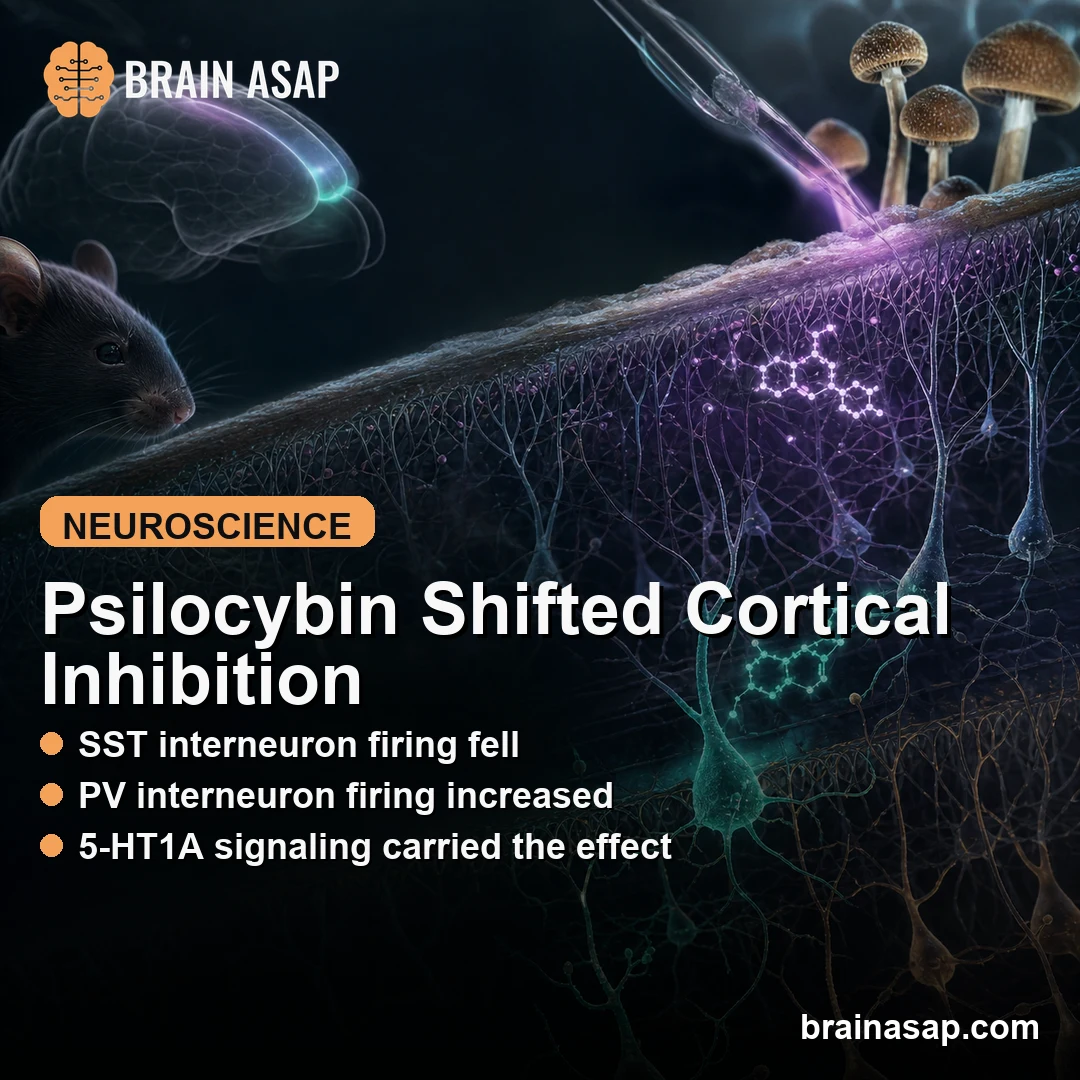
TL;DR: A 2026 mouse preprint in bioRxiv found that psilocybin reduced firing in somatostatin (SST) interneurons, inhibitory cortical cells that gate dendritic input, while increasing parvalbumin (PV) interneuron firing in the medial frontal cortex. Key Finding…
Read article ↗
How Psychedelics Hijack Brain Waves to Create Hallucinations TL;DR: A psychedelic drug that activates serotonin receptors dramatically amplifies slow 5-Hz brain oscillations in visual and memory regions, suggesting a mechanism for how hallucinogens distort per…
Read article ↗
TLDR: LSD does not provide psychological resilience during stressful experiences such as job loss – and may increase psychological distress. Highlights: The study analyzed data from 5,067,553 unemployed individuals seeking jobs. LSD users who had used the drug…
Read article ↗
Big picture: Psychoplastogens are a groundbreaking new class of psychoactive compounds that rapidly induce structural and functional changes in the brain, allowing pathological neural circuits to be rewired for therapeutic benefit. Key facts about psychoplasto…
Read article ↗
Ayahuasca is a traditional psychedelic brew from the Amazon that has been used for centuries in shamanic healing rituals. Research is now exploring its potential therapeutic benefits for mental health and addiction. Key Facts: Ayahuasca contains DMT, a halluci…
Read article ↗
Classical psychedelics like LSD and psilocybin have recently re-entered mainstream discussions surrounding mental health. Small clinical trials have shown promising results for their therapeutic potential in treating conditions like depression, anxiety and add…
Read article ↗
Researchers find similarities in brain activity induced by different psychedelic drugs in rats, providing clues to how they alter consciousness. Key facts: Psychedelic drugs like LSD and ketamine induce high-frequency brain waves that synchronize activity acro…
Read article ↗
Researchers have discovered that classic psychedelic drugs like LSD and psilocybin (‘magic mushrooms’) flatten the energy landscape of the brain. This effect makes it easier for the brain to transition between different states of activity and leads to more div…
Read article ↗