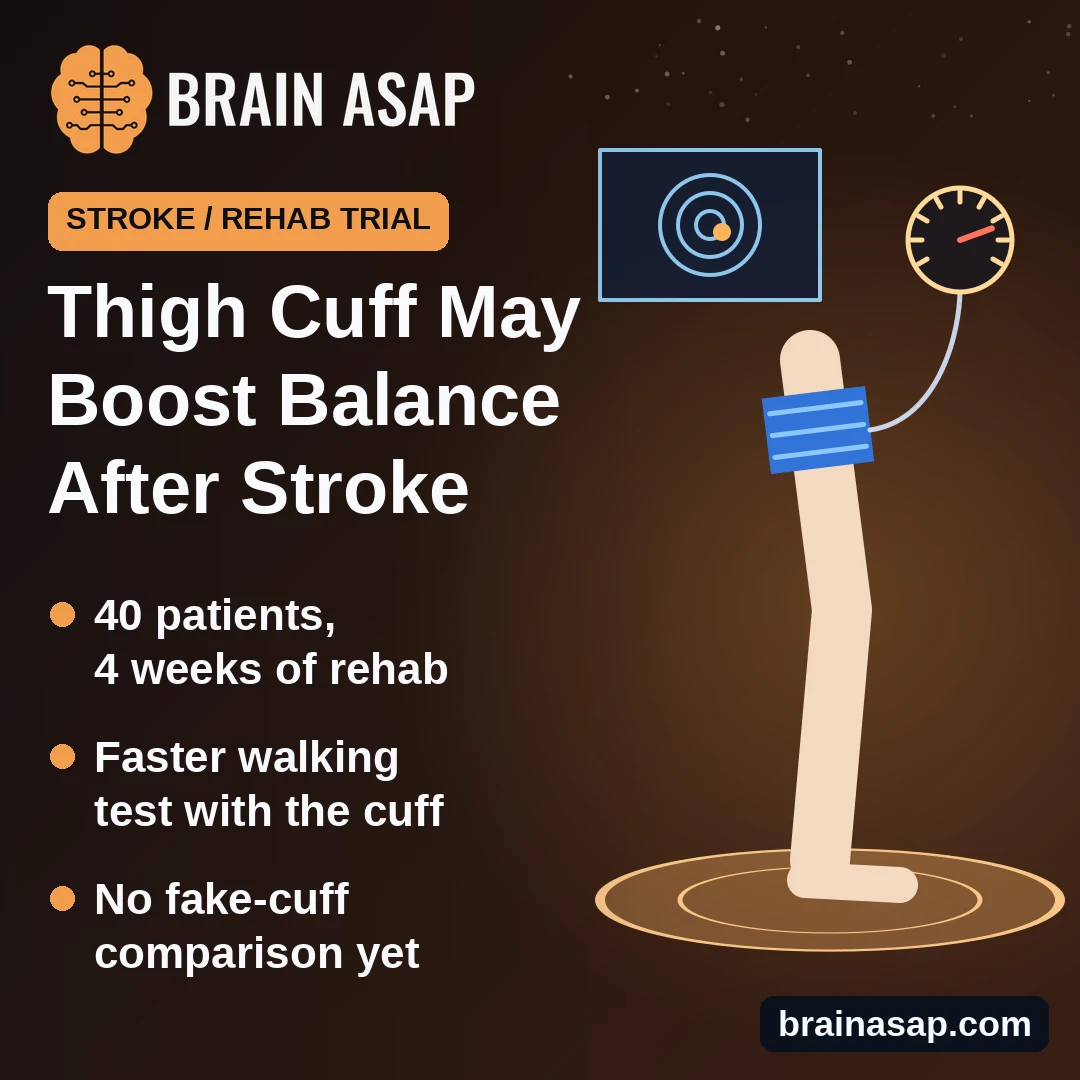
TL;DR: In a 40-person stroke rehab trial, people who did video-game balance training with a tight cuff on the weak thigh improved balance, walking and leg strength more over 4 weeks than people doing the same training without the cuff. The trial was small, sho…
Read article ↗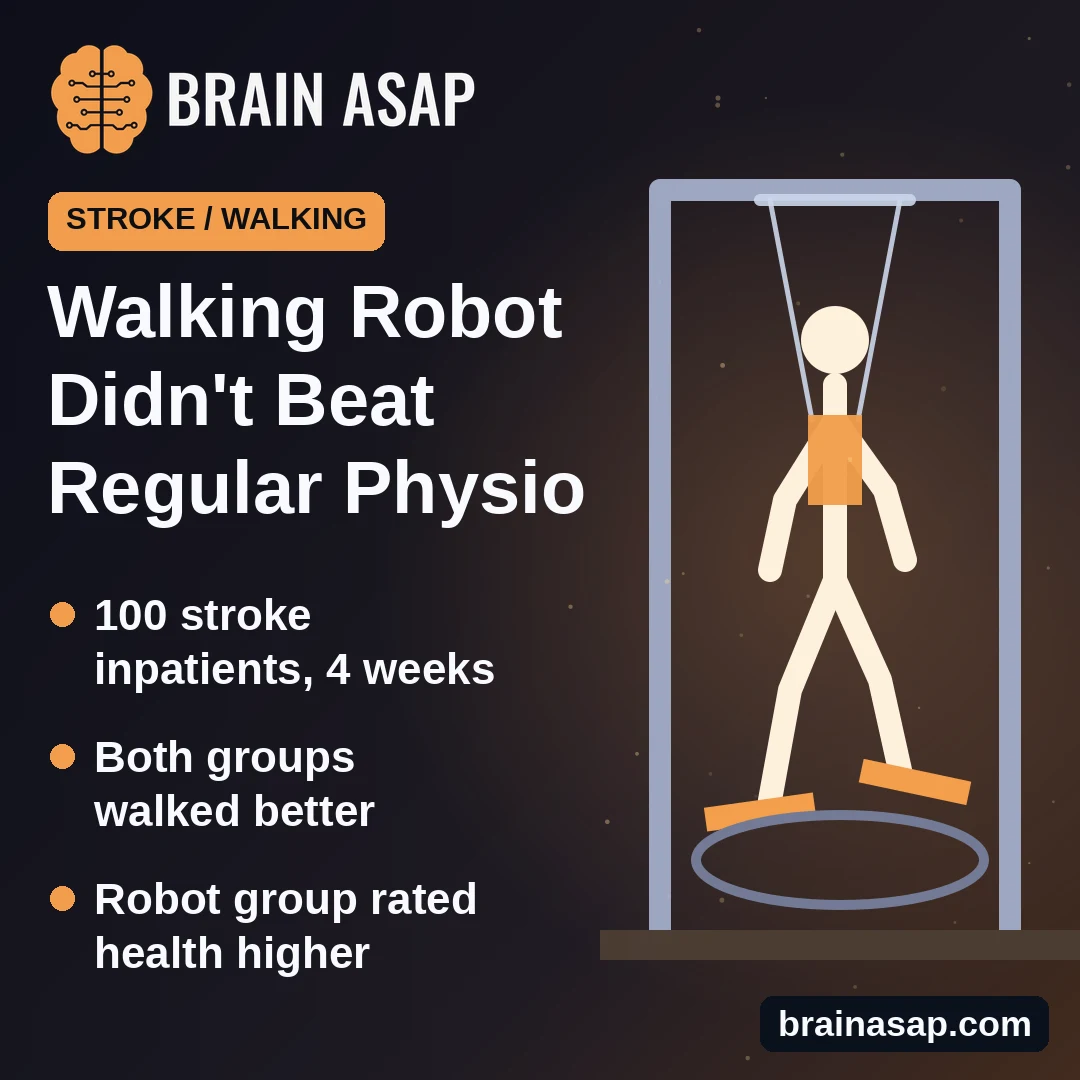
TL;DR: In a 4-week trial of 100 stroke rehab inpatients, walking practice on a robot showed no clear advantage over regular physiotherapy for walking independence or daily activities. Both groups improved, and the robot group rated their own health higher. Key…
Read article ↗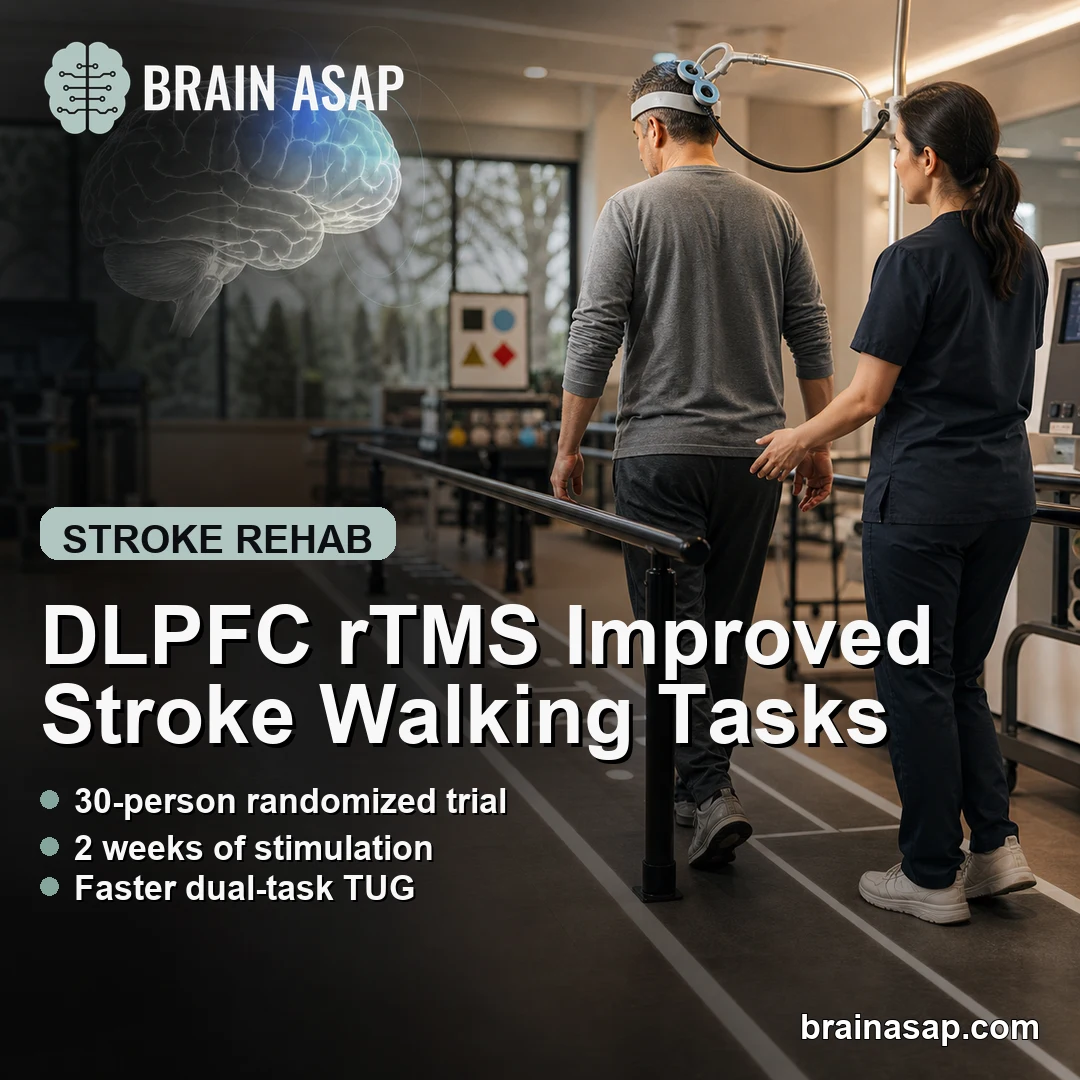
TL;DR: A 2026 randomized trial in Physiotherapy Research International found that adding active 5 Hz repetitive transcranial magnetic stimulation (rTMS) over the dorsolateral prefrontal cortex to dual-task stroke rehabilitation produced larger gains in Timed U…
Read article ↗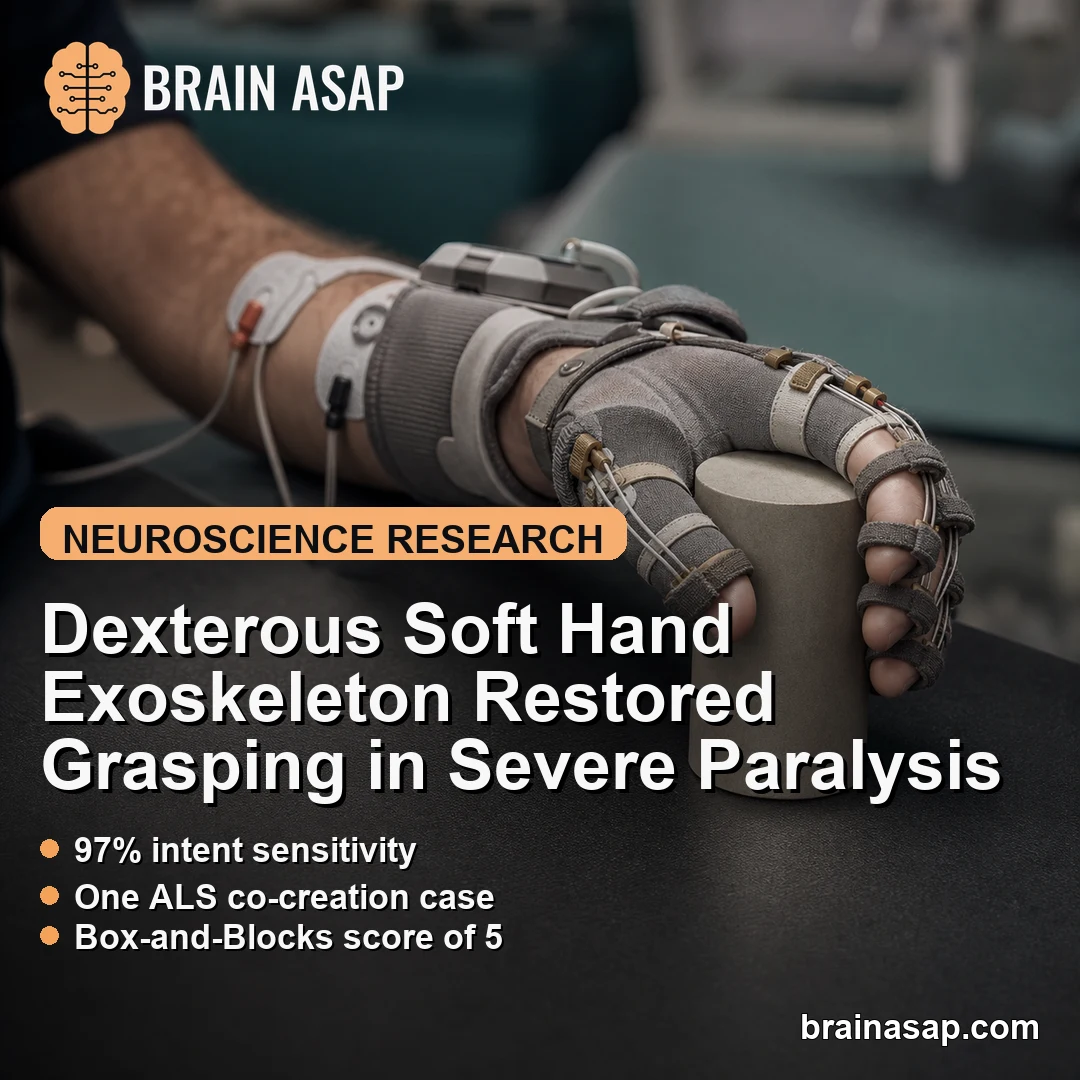
TL;DR: A 2026 study in Nature Machine Intelligence reported that a textile soft hand exoskeleton with thumb control and surface electromyography (sEMG) intent detection restored practical grasping in one person with severe ALS-related hand paralysis and helped…
Read article ↗
TL;DR: A 2026 secondary analysis in PLOS One found that low-intensity focused ultrasound and repetitive transcranial magnetic stimulation (rTMS) had similar short-term post-stroke motor endpoint scores, while change-from-baseline Fugl-Meyer gains were larger w…
Read article ↗
TL;DR: A 2026 study in Journal of Pain Research described 3 adults with type I complex regional pain syndrome (CRPS), a severe neuropathic pain condition with sensory, autonomic, motor, and skin changes, whose pain scores improved after pregabalin and who were…
Read article ↗