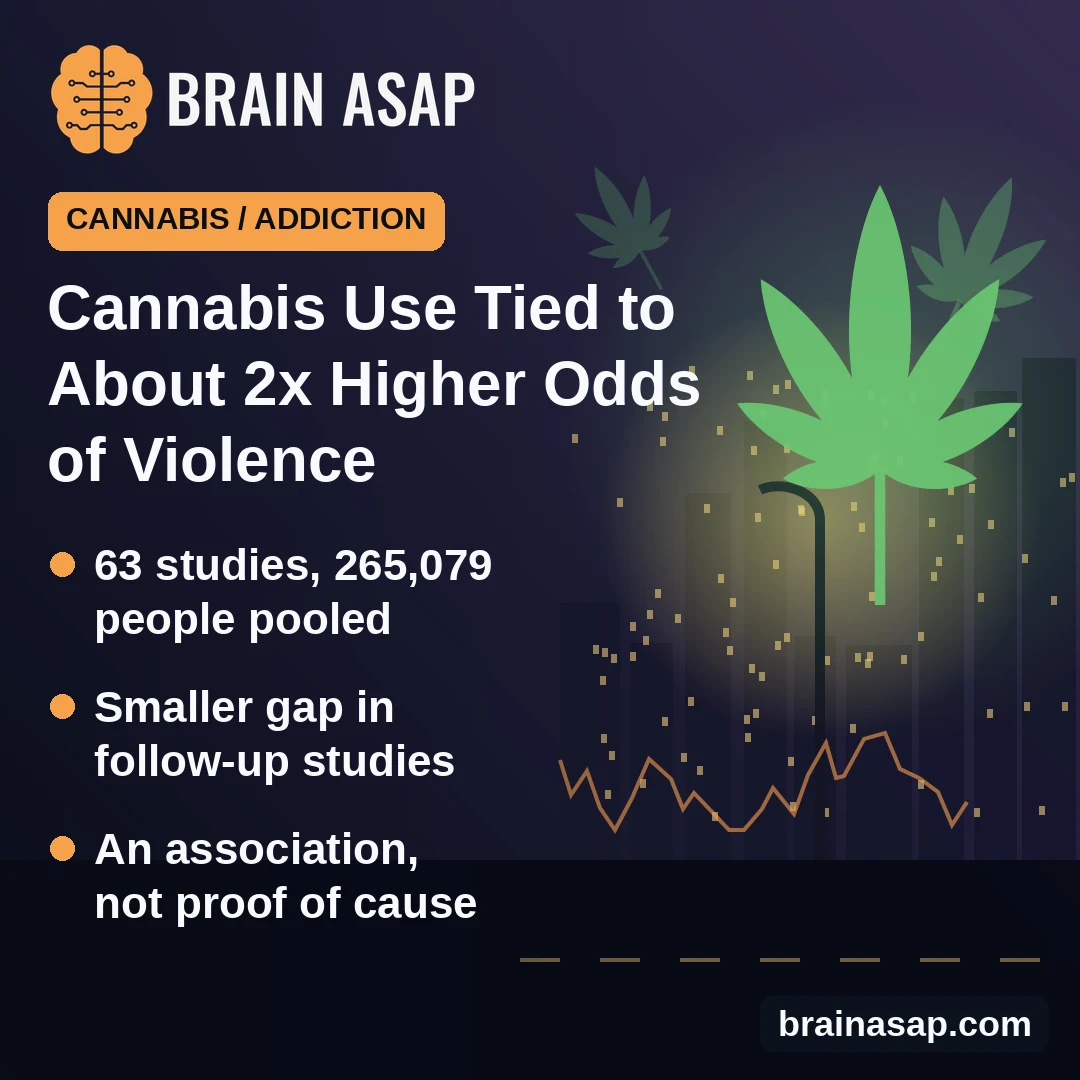
TL;DR: A meta-analysis pooling 63 studies and 265,079 people found that cannabis users had about twice the odds of committing violence as non-users (2.05 times in the general population, 2.49 times among psychiatric patients). The gap shrank to 1.17 times in s…
Read article ↗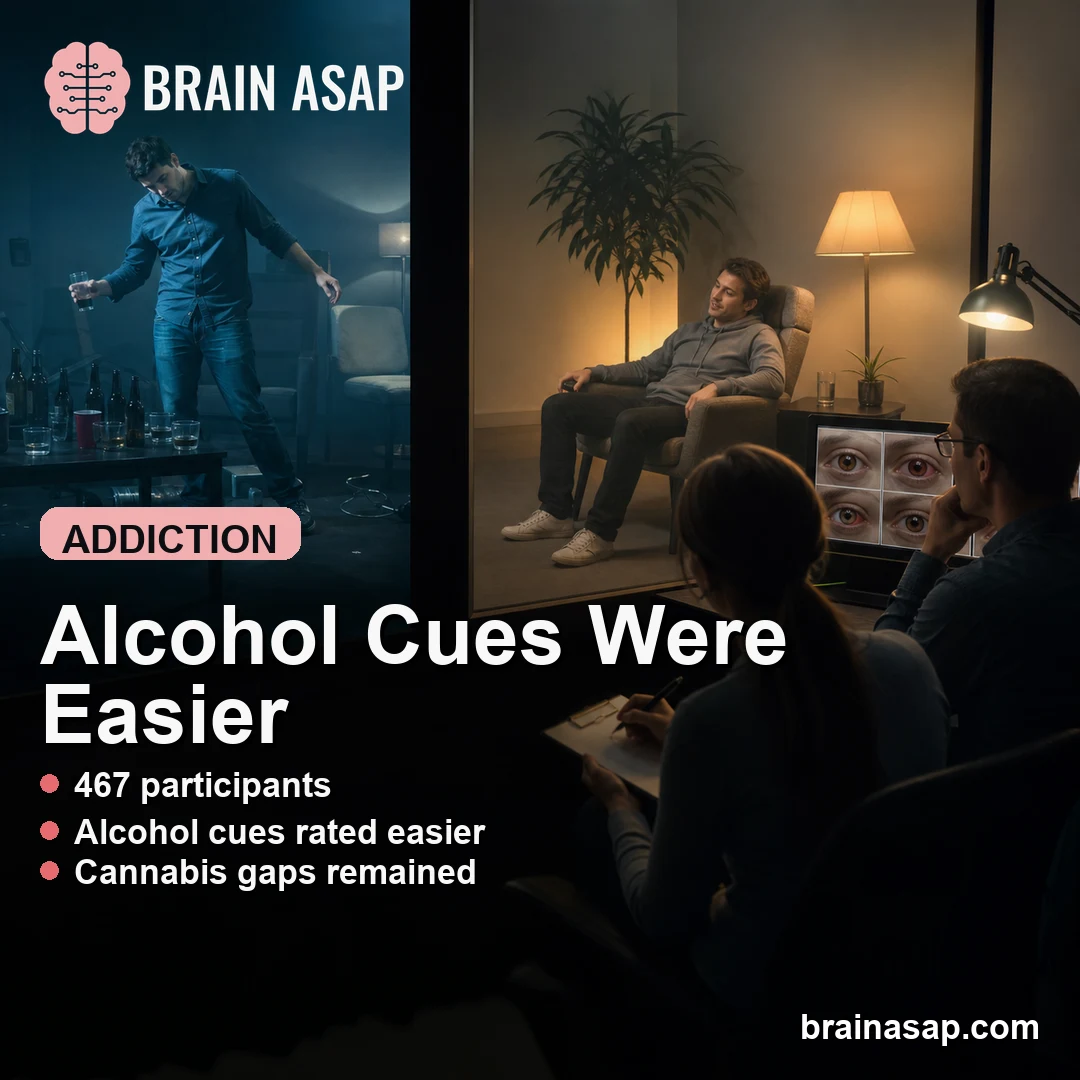
TL;DR: A 2026 study in Drug and Alcohol Review found that laypeople reported more and better-developed cues for alcohol intoxication than cannabis intoxication, even though most coded cues for both substances were accurate. Key Findings Intoxication-cue sample…
Read article ↗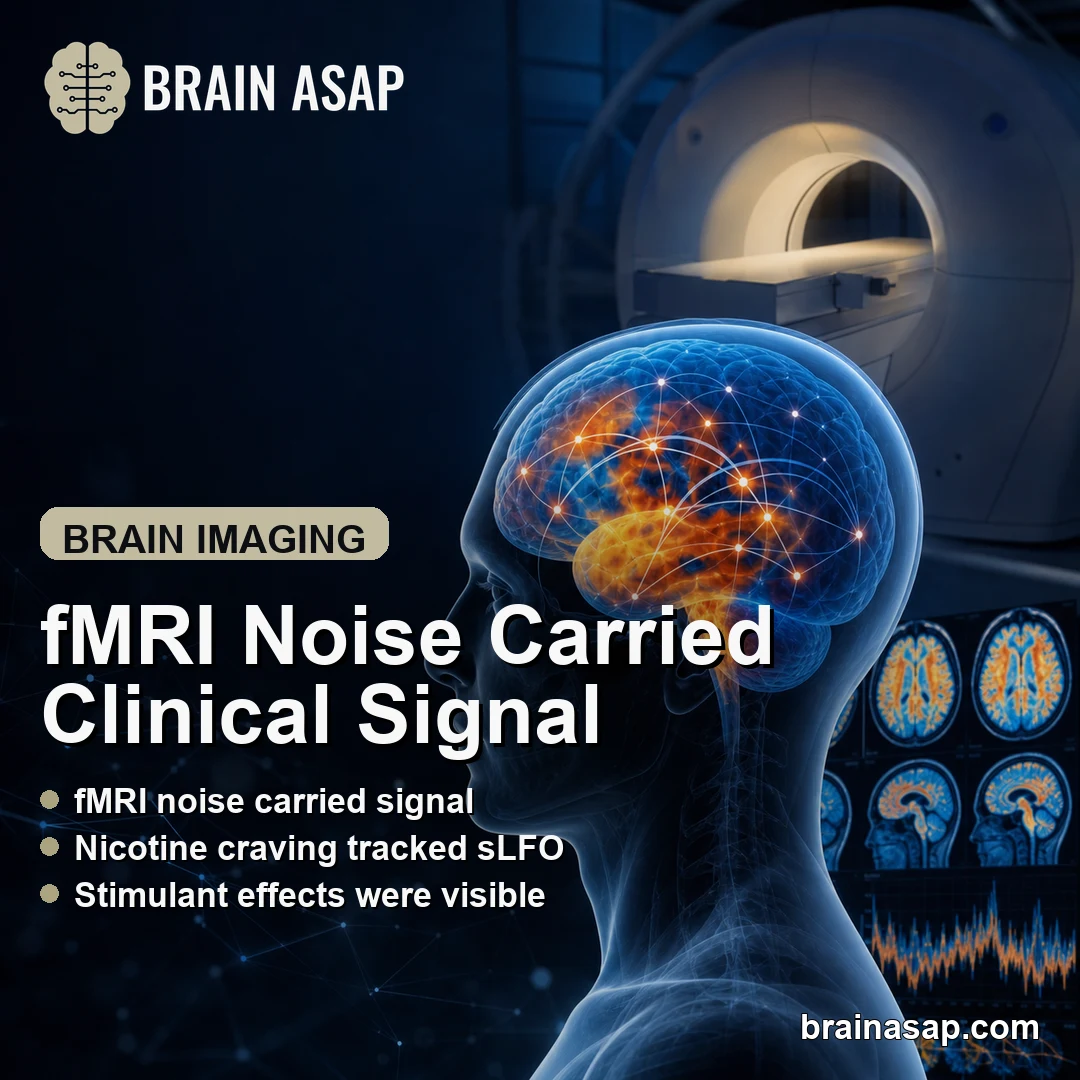
TL;DR: A 2026 study in Biological Psychiatry: Global Open Science found that systemic low-frequency oscillation (sLFO), a slow whole-body physiology readout usually treated as functional MRI noise, tracked nicotine dependence, cue-induced craving, abstinence,…
Read article ↗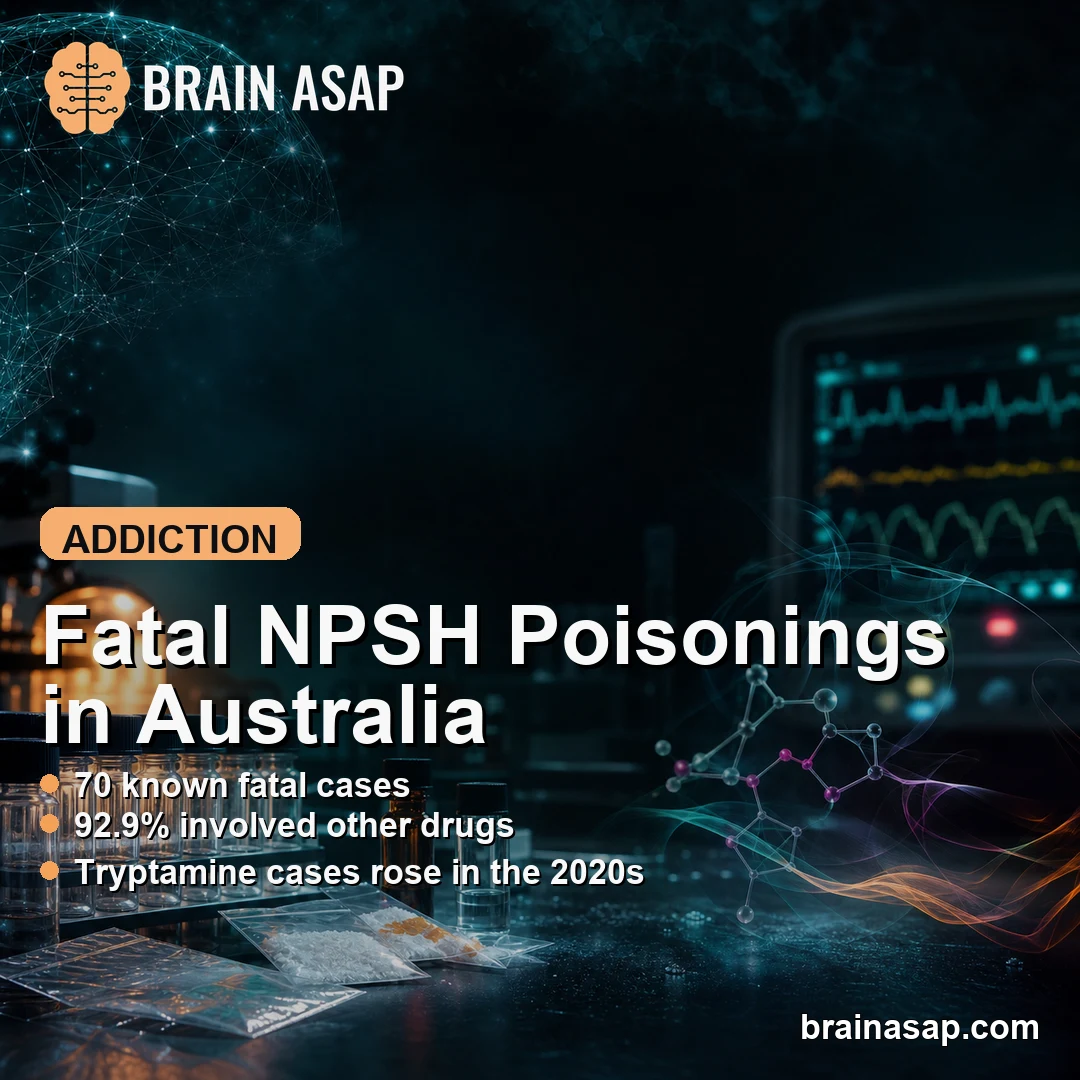
TL;DR: A 2026 study in Drug and Alcohol Dependence Reports found 70 known Australian fatal poisonings involving new psychoactive stimulants and hallucinogens (NPSH), a category of newer stimulant- or hallucinogen-like drugs that often appeared alongside other…
Read article ↗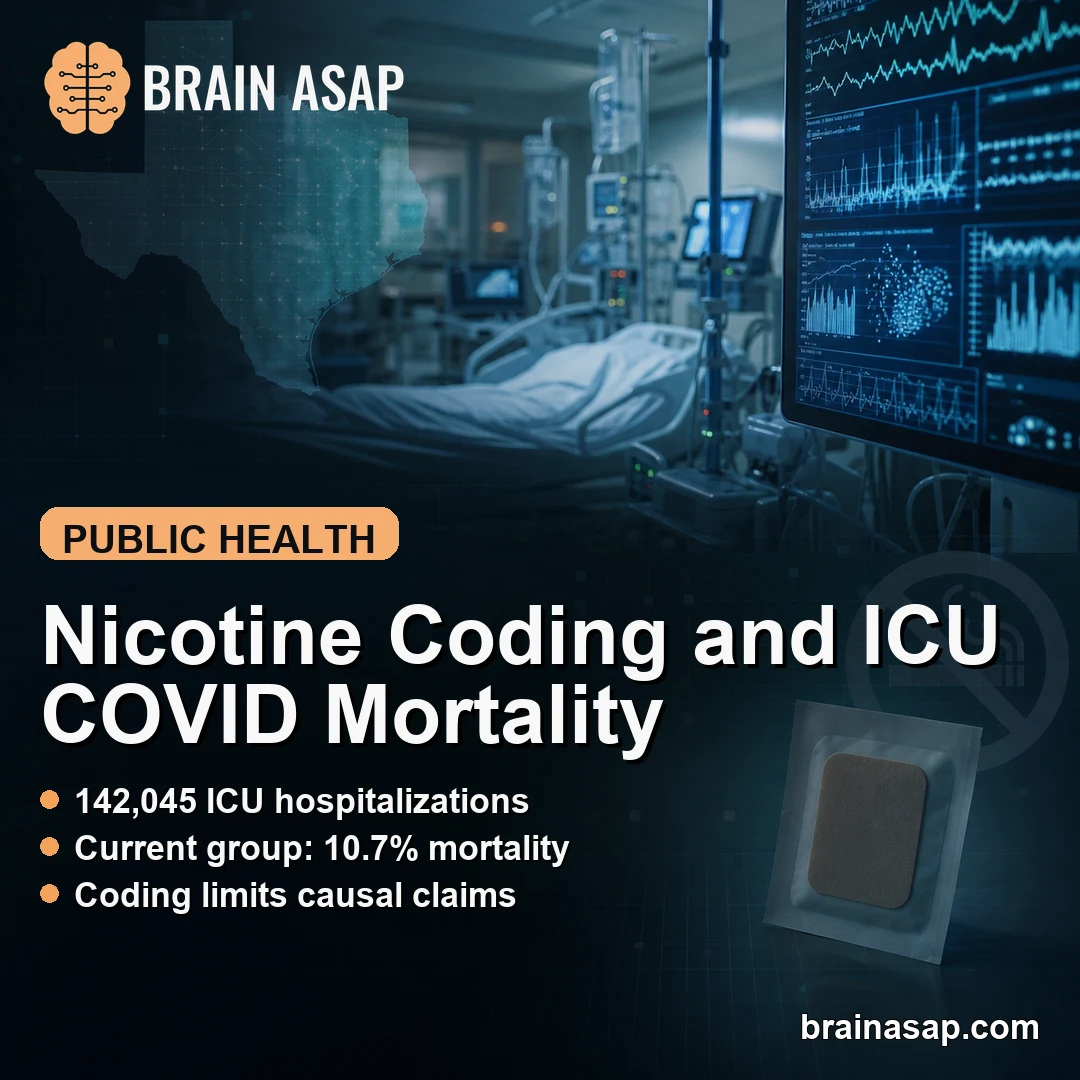
TL;DR: A 2026 study in PLOS One found that Texas ICU COVID-19 hospitalizations coded for current nicotine dependence had lower crude and adjusted mortality than hospitalizations coded as never nicotine dependent, but the administrative-data design means the re…
Read article ↗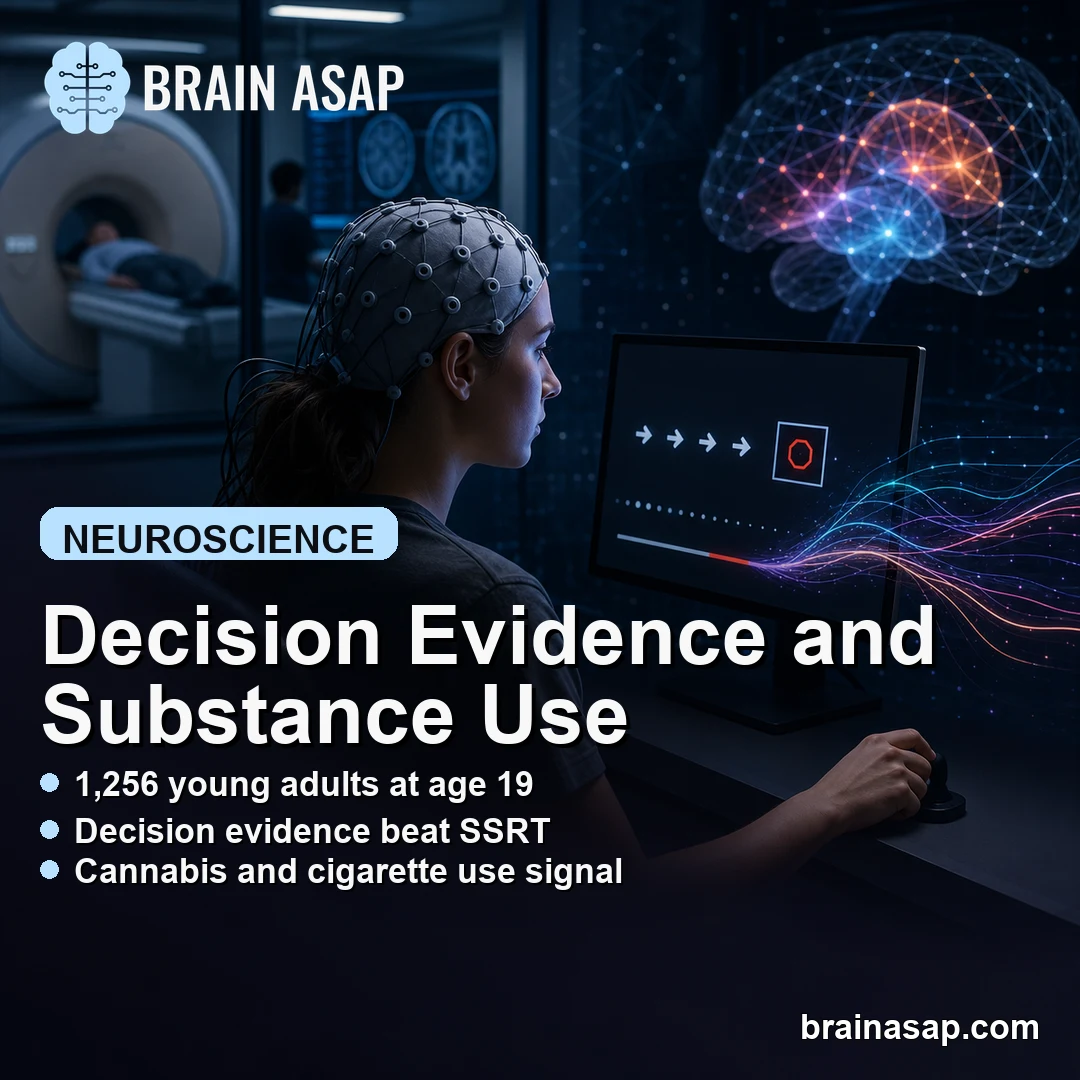
TL;DR: A 2026 study in Neuropsychopharmacology found that decision-making measures from a stop-signal task, especially evidence accumulation, predicted cigarette and cannabis use better than stop-signal reaction time (SSRT), a common estimate of response inhib…
Read article ↗