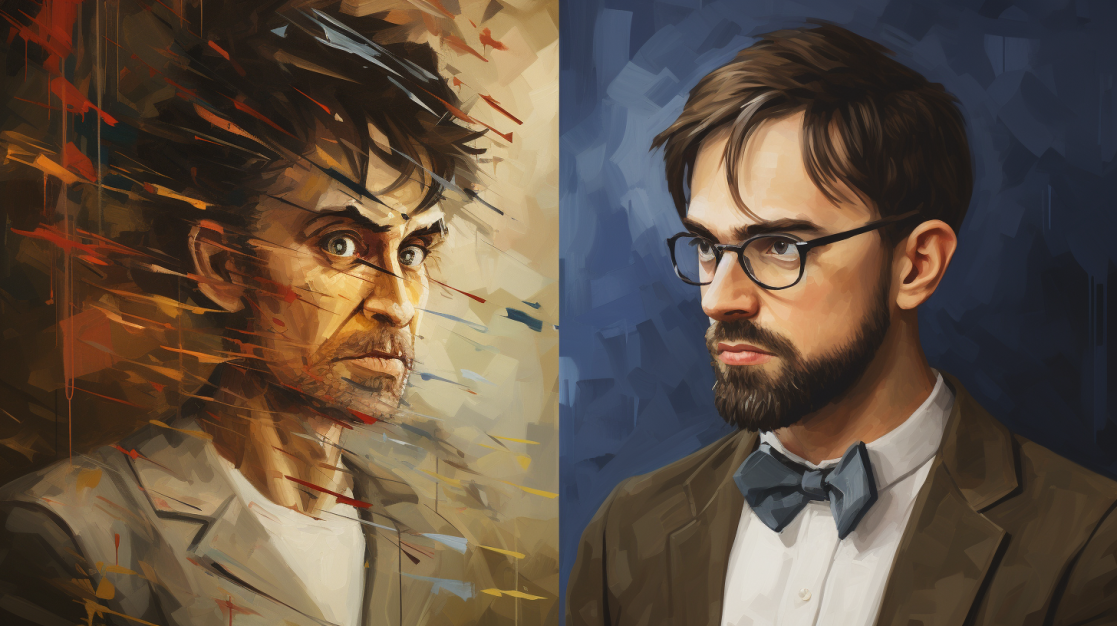
Digital Avatar Faces Appear Believable When Eyes Match Emotions
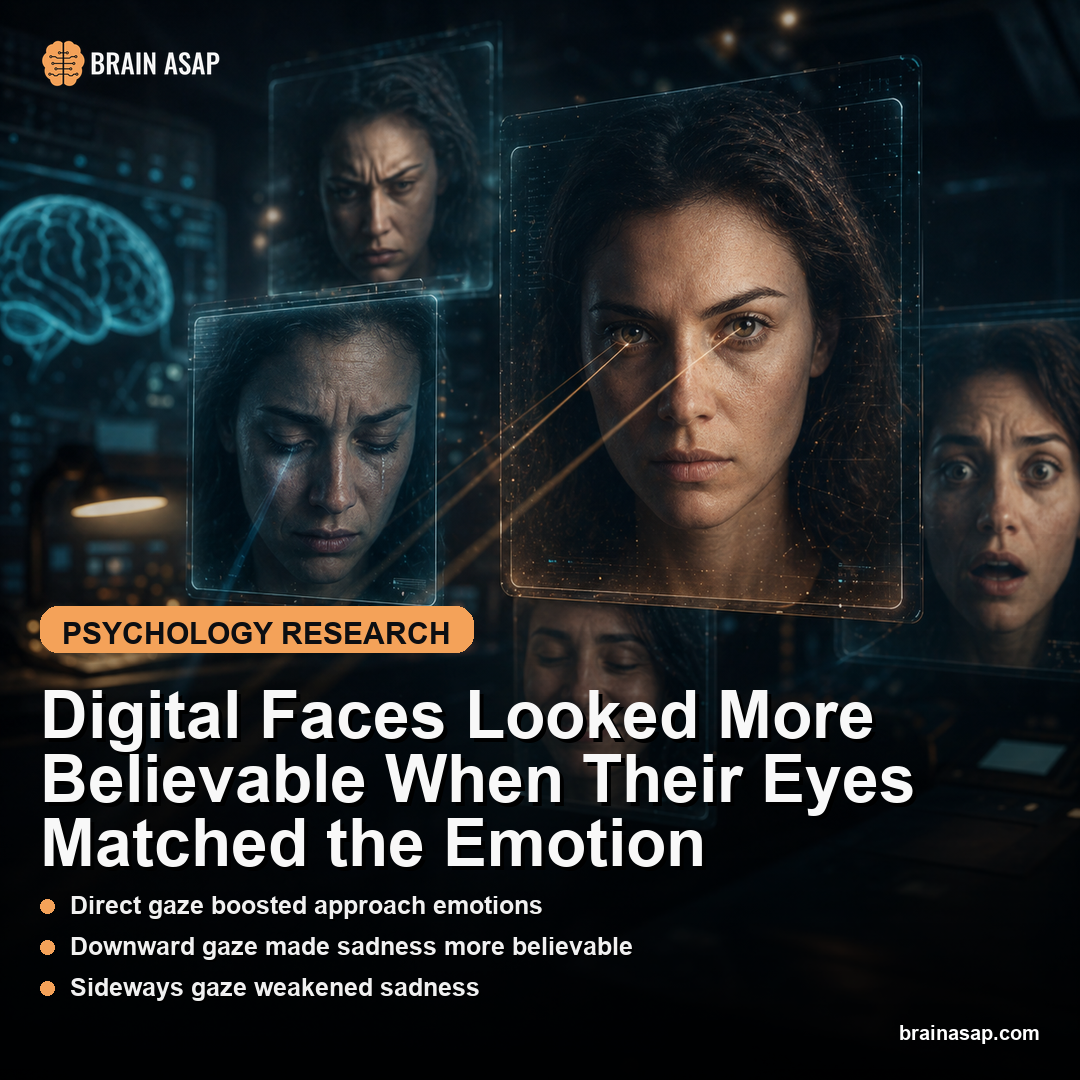
Digital Faces Looked More Believable When Their Eyes Matched the Emotion

Digital Faces Looked More Believable When Their Eyes Matched the Emotion TL;DR: A virtual smile or glare looked most believable with direct eye contact, while sadness became more believable when the digital face looked downward. Key Findings Direct gaze boosted approach emotions: Happy and angry avatar expressions looked most authentic when the eyes met the …
Read more

Psychedelics Double 5-Hz Brain Oscillations in Visual Cortex to Produce Hallucinations

How Psychedelics Hijack Brain Waves to Create Hallucinations TL;DR: A psychedelic drug that activates serotonin receptors dramatically amplifies slow 5-Hz brain oscillations in visual and memory regions, suggesting a mechanism for how hallucinogens distort perception by letting internal signals override external reality. Visual perception feels stable, seamless, continuous. But that stability is an illusion orchestrated …

Read more

The “Perception of Multitasking” May Improve Performance & Motivation

Research reveals that our perception of multitasking is often an illusion – most cognitive tasks cannot actually be done simultaneously. Surprisingly, this illusion of multitasking can improve performance on activities, even when the tasks remain unchanged. Key Facts: Although multitasking refers to doing multiple things concurrently, true multitasking is rare for cognitive tasks requiring attention. …

Read more

Perceived Intelligence in Psychopathy: Specific Traits Matter (Primary vs. Secondary)

A new study published in the Journal of Personality suggests that individuals exhibiting secondary psychopathic traits are perceived as less intelligent than those with primary psychopathic traits. The research examined how laypeople view the intelligence of others based on psychopathic traits. Here are some key findings: Individuals described as exhibiting high secondary psychopathy traits (impulsivity, …

Read more

Beyond Beer Goggles: Drinking Alcohol May Not Change Attractiveness

Researchers studied if drinking alcohol makes people rate others as more attractive, which is sometimes called the “beer goggles effect”. They had male friends who regularly drink together rate attractiveness of photos after drinking alcohol vs. a non-alcoholic drink. Drinking didn’t affect attractiveness ratings of the photos. But when asked to pick people from the …

Read more

Heartbeats Modify Time Perception

New research reveals that the timing of our heartbeats relative to external events distorts our perception of how much time has passed. The study provides evidence that cardiac signals directly impact time perception on a moment-to-moment basis. Key Facts: Time perception was shown to contract during heart systole (when the heart contracts) and expand during …

Read more

AI Reconstructs Pink Floyd Music from Auditory Cortex with Decoding Models

Researchers have reconstructed a recognizable version of the Pink Floyd song “Another Brick in the Wall” directly from recorded brain activity. Using advanced machine learning techniques, the team was able to extract enough acoustic information from listeners’ brain signals to identify the song and recreate an intelligible version. Key highlights: Researchers recorded brain activity via …

Read more

Decoding Fruit Fly Neural Networks: Unveiling the Secrets of Insect Brain Connectivity

Researchers have for the first time reconstructed all neurons and their connections in the brain of a fruit fly larva, revealing fundamental principles of brain organization. The study provides an important scaffold for understanding the neural basis of behavior in this model organism. Key Facts: The larval Drosophila brain contains around 3000 neurons. The full …

Read more