How Psychedelics Hijack Brain Waves to Create Hallucinations TL;DR: A psychedelic drug that activates serotonin receptors dramatically amplifies slow 5-Hz brain oscillations in visual and memory regions, suggesting a mechanism for how hallucinogens distort per…
Read article ↗
A study examined the effects of ketamine on sleep arousal metrics in individuals with treatment-resistant depression (TRD) vs. healthy volunteers, finding that ketamine increases certain sleep-related brain activities but does not significantly mediate its ant…
Read article ↗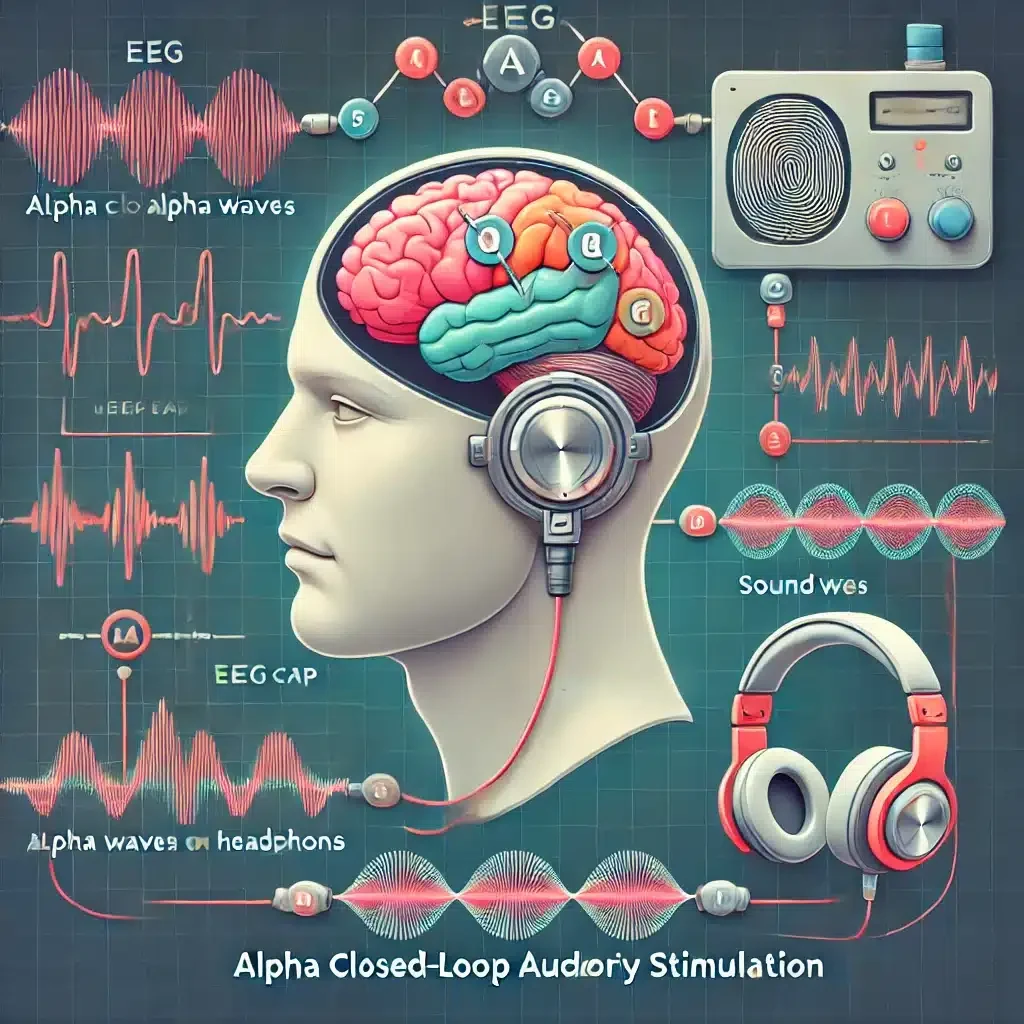
TLDR: A new method using sound to influence brain waves can help manage brain activity and affect how we fall asleep. Highlights: How It Works: This method, called Alpha Closed-Loop Auditory Stimulation (αCLAS), uses sound pulses timed precisely to brain waves…
Read article ↗
Neurofeedback is a promising technique that allows people to voluntarily control their own brain activity with the goal of improving cognitive functions or relieving symptoms. Key Facts: Neurofeedback provides real-time feedback on brain activity, allowing a p…
Read article ↗
Binaural beats are an auditory illusion that occurs when two tones of slightly different frequencies are played in each ear. Some claim that binaural beats can synchronize and entrain brainwaves to match the difference frequency. But does scientific evidence s…
Read article ↗
New research reveals that the wake-promoting drug modafinil affects markers of sleep homeostasis differently depending on a person’s genetics. Key facts: Modafinil improved sustained attention in people with a certain gene variant but not others after sleep de…
Read article ↗
New research provides further evidence that insomnia is characterized by brain hyperarousal, even when controlling for symptoms of depression and anxiety. The study used electroencephalography (EEG) to measure daytime brain activity in patients with insomnia d…
Read article ↗
The brain’s ability to inhibit unwanted thoughts and actions is crucial for self-control and mental health. New research provides fascinating insights into how low-frequency alpha brain waves and default mode networks are associated with individual differences…
Read article ↗
Transcranial alternating current stimulation (TACS) is an emerging non-invasive brain stimulation technique that shows promise for enhancing cognition and treating psychiatric conditions like depression and schizophrenia. Recent research indicates TACS may imp…
Read article ↗
Suicide is a major public health problem, with over 700,000 people dying by suicide every year globally. Identifying factors that may indicate risk for suicidal thoughts and behaviors is an important area of research, as this could aid prevention and intervent…
Read article ↗