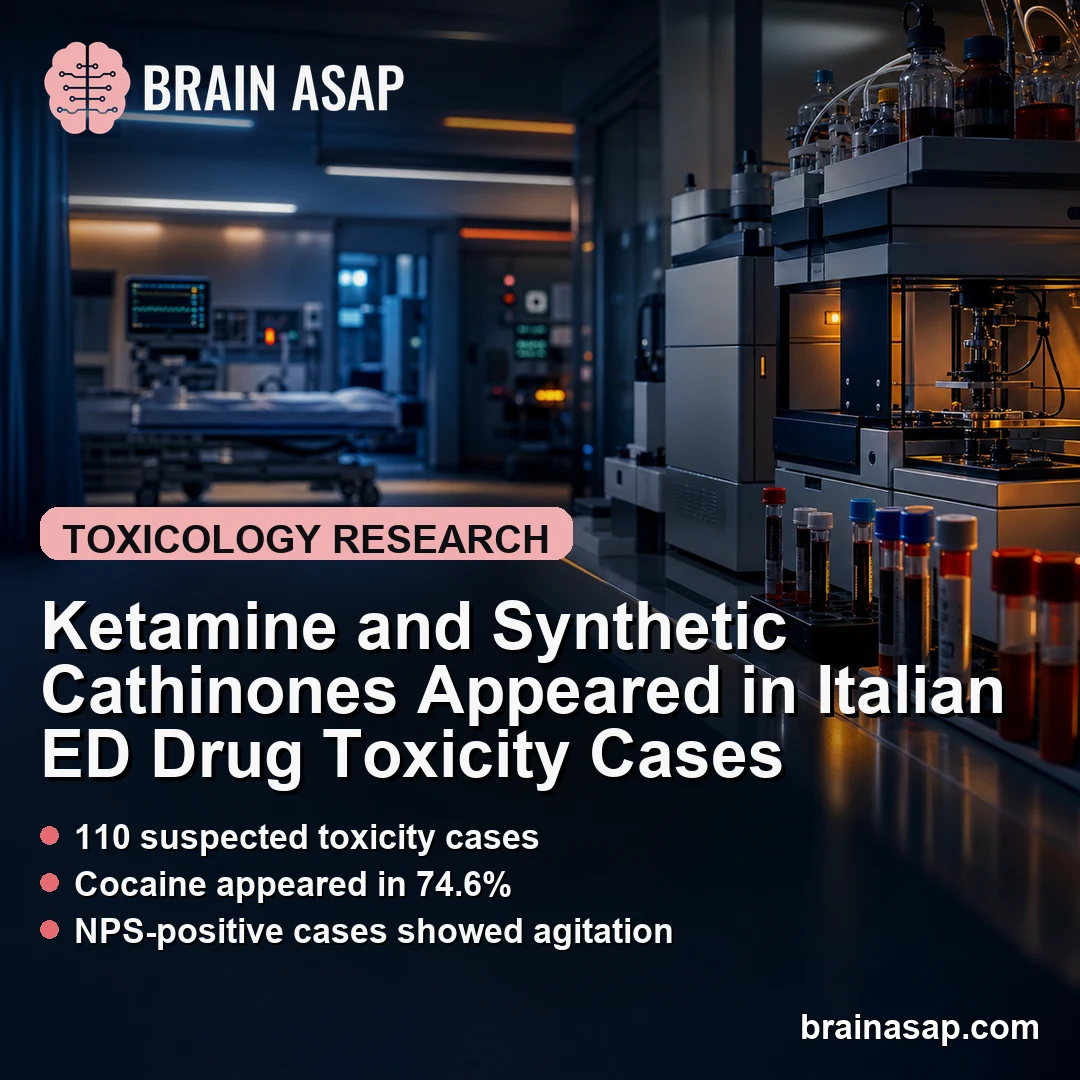
TL;DR: A 2026 observational study in International Journal of Legal Medicine found that cocaine dominated analytically confirmed recreational drug toxicity cases in one Bologna emergency department, while ketamine was common and all new-psychoactive-substance-…
Read article ↗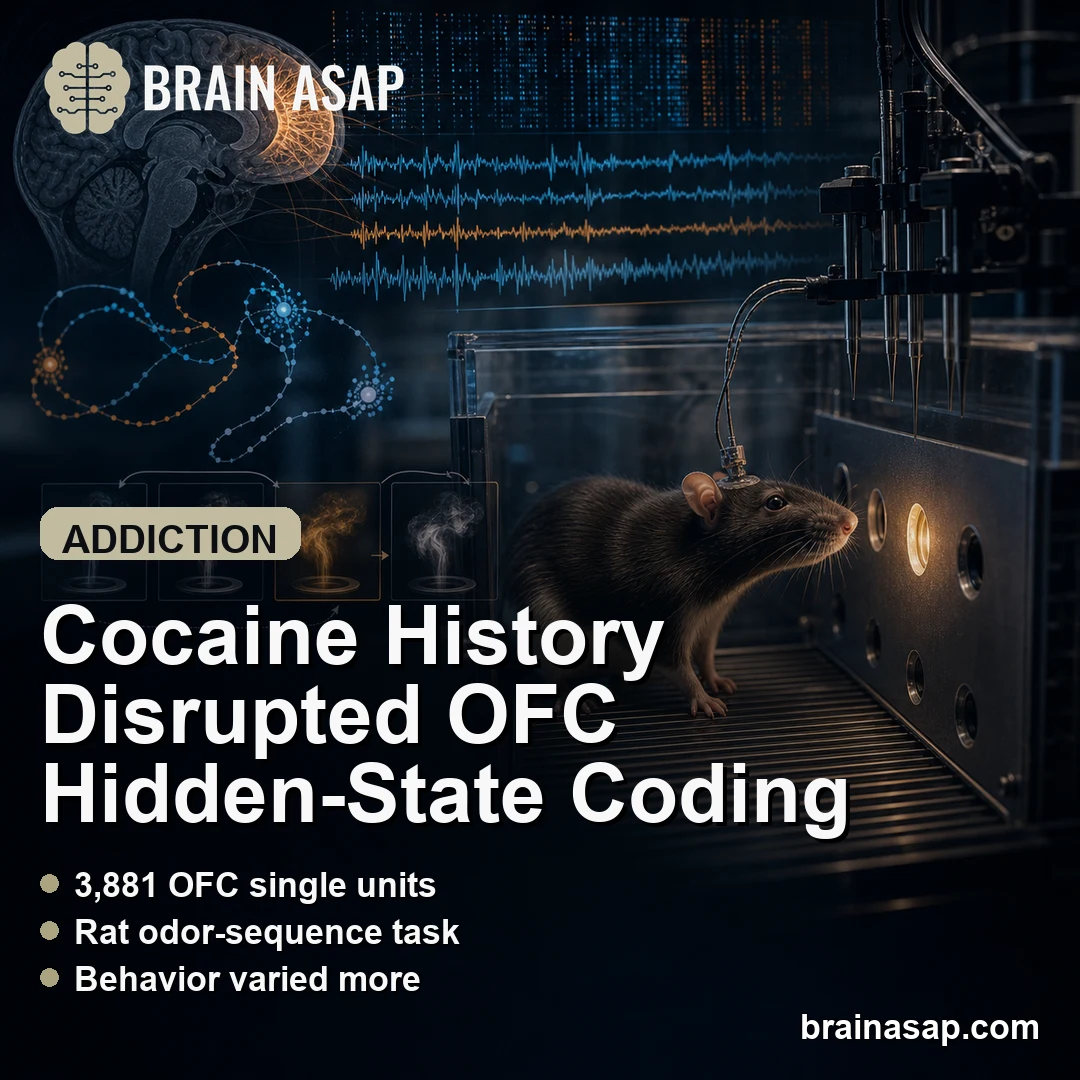
TL;DR: A 2026 study in eLife found that prior cocaine self-administration disrupted how rat orbitofrontal cortex (OFC), a frontal brain region involved in task structure and flexible behavior, encoded hidden states in an odor-sequence task. Key Findings 3,881…
Read article ↗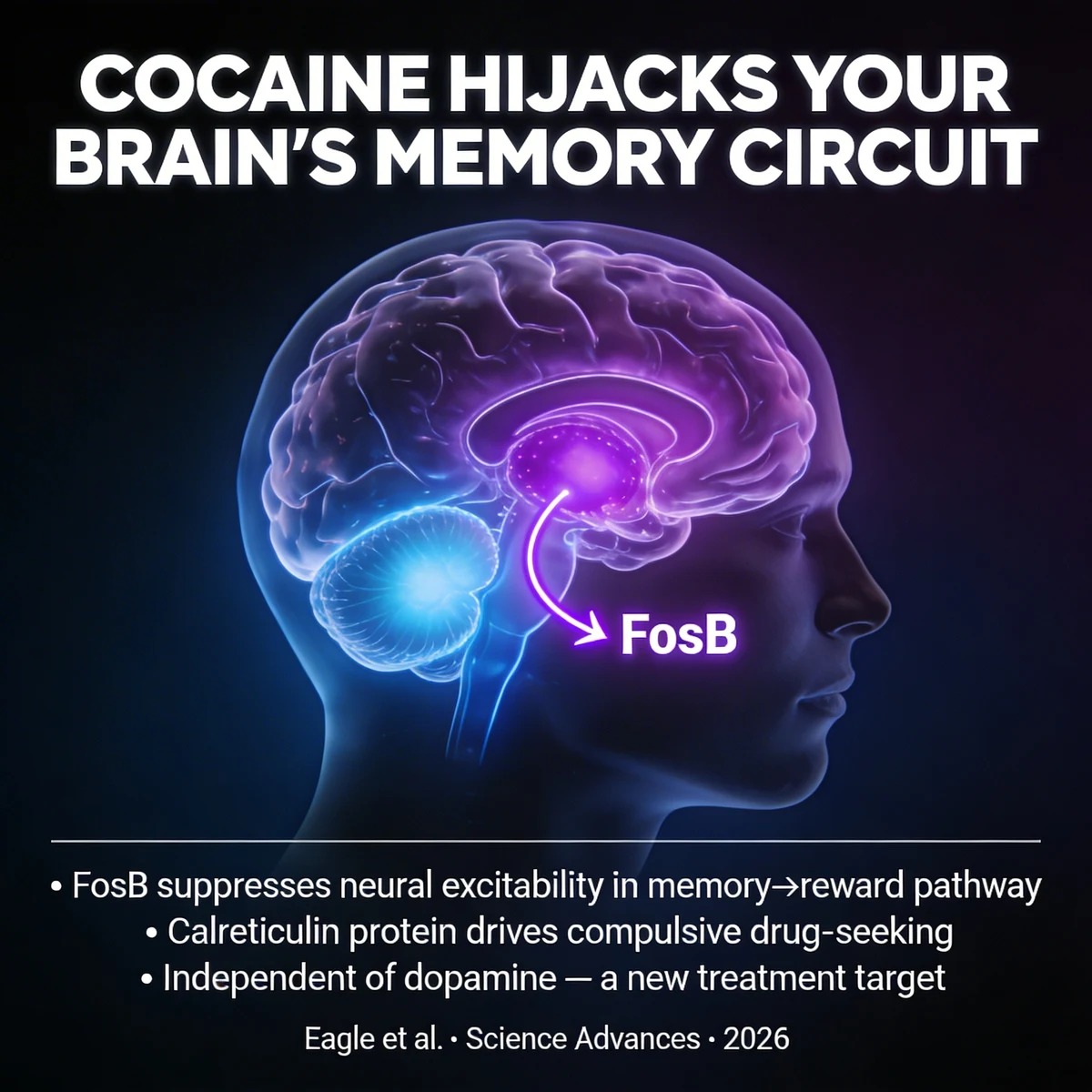
How Cocaine Rewires the Brain’s Reward Circuit TL;DR: Cocaine hijacks a transcription factor called FosB in a brain circuit connecting the hippocampus to the nucleus accumbens, suppressing neural excitability and driving compulsive drug-seeking behavior—a mech…
Read article ↗
Cocaine Use Disorder (CUD) patients exhibit widespread gray matter atrophy, with specific brain volume deficits associated with crack-cocaine use and relapse outcomes. Highlights: Widespread Gray Matter Atrophy: CUD patients show significant gray matter volume…
Read article ↗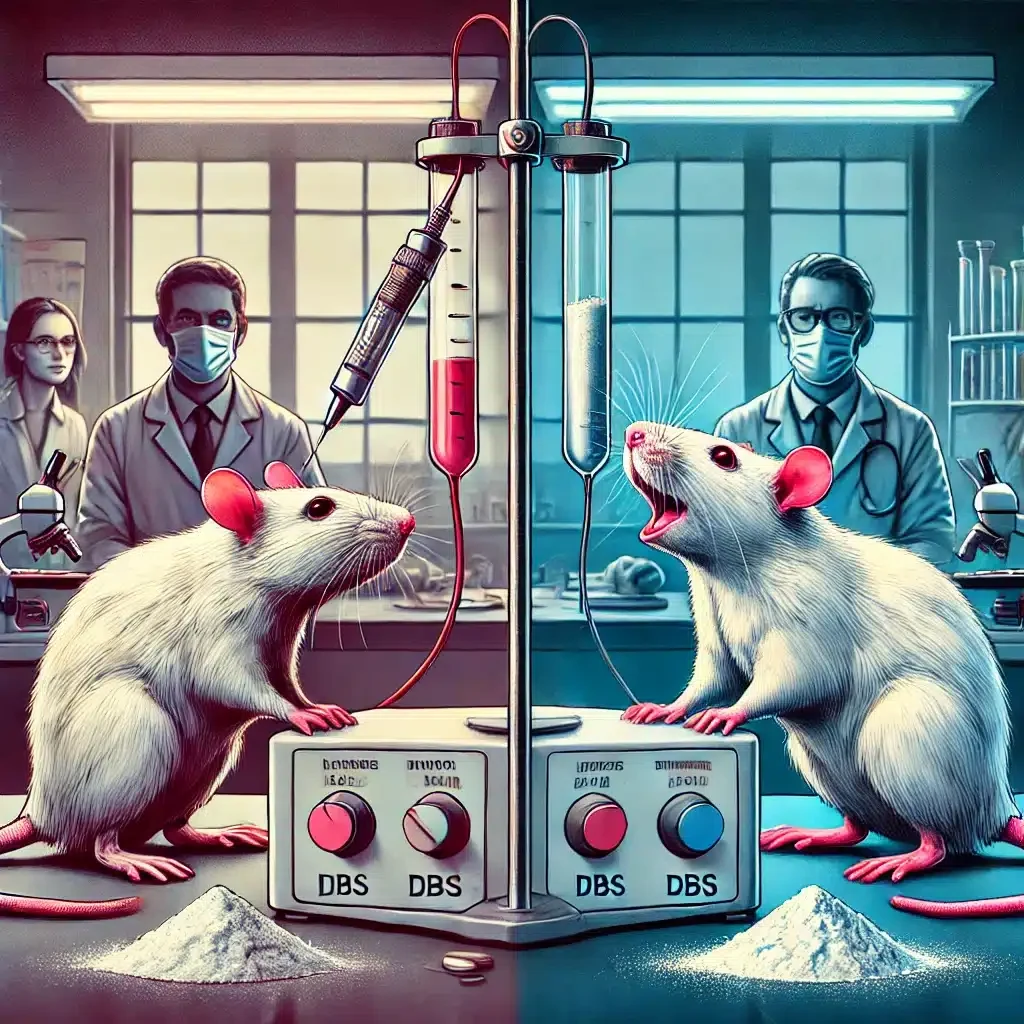
Deep brain stimulation (DBS) in the nucleus accumbens reduces cocaine seeking in male rats but is ineffective in female rats, regardless of their estrous cycle phase. Highlights: No FDA-Approved Treatments: There are currently no FDA-approved treatments for co…
Read article ↗
Cocaine abuse leads to dysfunction of brain dopamine systems and the development of addiction. New research identifies changes in the dopamine transporter as a driving force underlying cocaine addiction, and points to a novel way to reverse these detrimental e…
Read article ↗
A powerful, unregulated synthetic marijuana called “Tiburón” (Spanish for “shark”) has recently emerged in Honduras, posing severe risks to public health. Produced and sold by the notorious MS-13 street gang, this altered cannabis strain is designed to be even…
Read article ↗
Cocaine use can lead to significant structural changes and accelerated aging of the brain, according to a new study. Key findings include: Cocaine users showed widespread gray matter loss in areas involved in emotions, language, cognition and decision-making.…
Read article ↗
Researchers have tested an existing medication, modafinil, for treating cocaine addiction. The results show that modafinil can significantly reduce cocaine use, but its effectiveness depends on the situation and circumstances when cocaine is used. Key facts: M…
Read article ↗
Experiencing chronic stress or taking addictive drugs like cocaine can change your brain and behavior in similar ways, making you prone to anxiety or addiction. Key Facts: Chronic stress and chronic drug abuse both impair the striatum, which can make people be…
Read article ↗