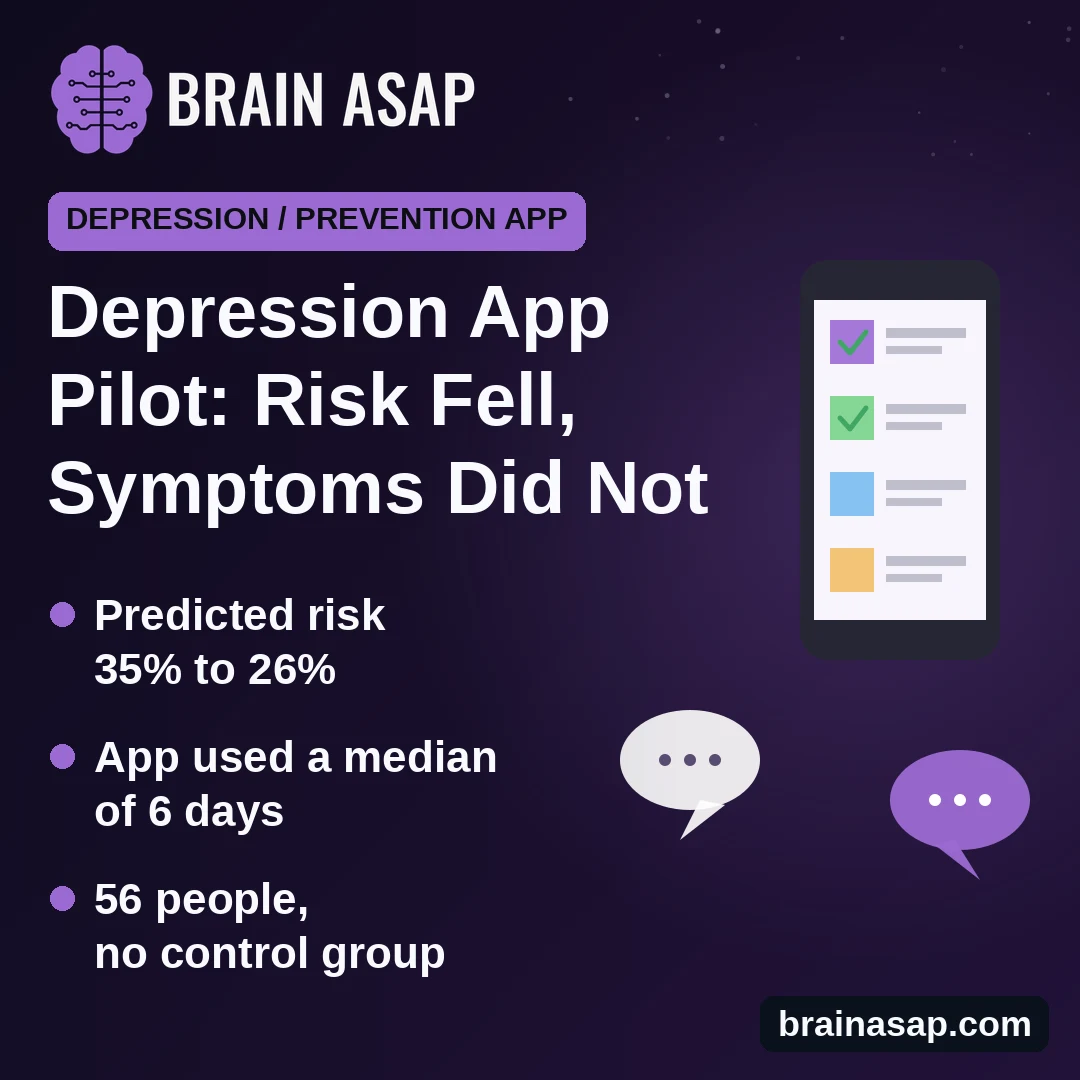
TL;DR: In a small Spanish pilot, adults at high risk of depression got a personalized prevention plan from their family doctor plus an app. After 3 months their predicted depression risk and anxiety scores fell, but depression symptoms did not, most people bar…
Read article ↗
TL;DR: A 2026 systematic review and meta-analysis in Journal of Medical Internet Research found that care robots showed a low-certainty reduction in neuropsychiatric symptoms, but six other pooled outcome domains did not reach statistical significance. Key Fin…
Read article ↗
TL;DR: A 2026 open-label feasibility trial in IBRO Neuroscience Reports tested an AI-guided variable levodopa schedule in 5 people with Parkinson’s disease and found 4 patients improved on UPDRS, but the study was far too small and uncontrolled to prove effica…
Read article ↗
TL;DR: A 2026 preprint posted on medRxiv found that iSupport-Malaysia, a culturally adapted multimedia dementia-caregiver platform, scored above the usual usability benchmark and was viewed as culturally appropriate by caregivers and healthcare professionals.…
Read article ↗
TL;DR: A 2026 medRxiv preprint enrolled 177 adults with migraine in a 30-day smartphone study and found that daily cognition and symptom check-ins were feasible, with 3,688 completed assessments and higher baseline burden in chronic migraine. Key Findings Migr…
Read article ↗
TL;DR: A 2026 study in Scientific Reports found that 300 high-risk pregnant women in Egypt reported much lower pregnancy anxiety and stress scores after 4 weeks of daily AI chatbot emotional support, although the pre-post design cannot prove the chatbot caused…
Read article ↗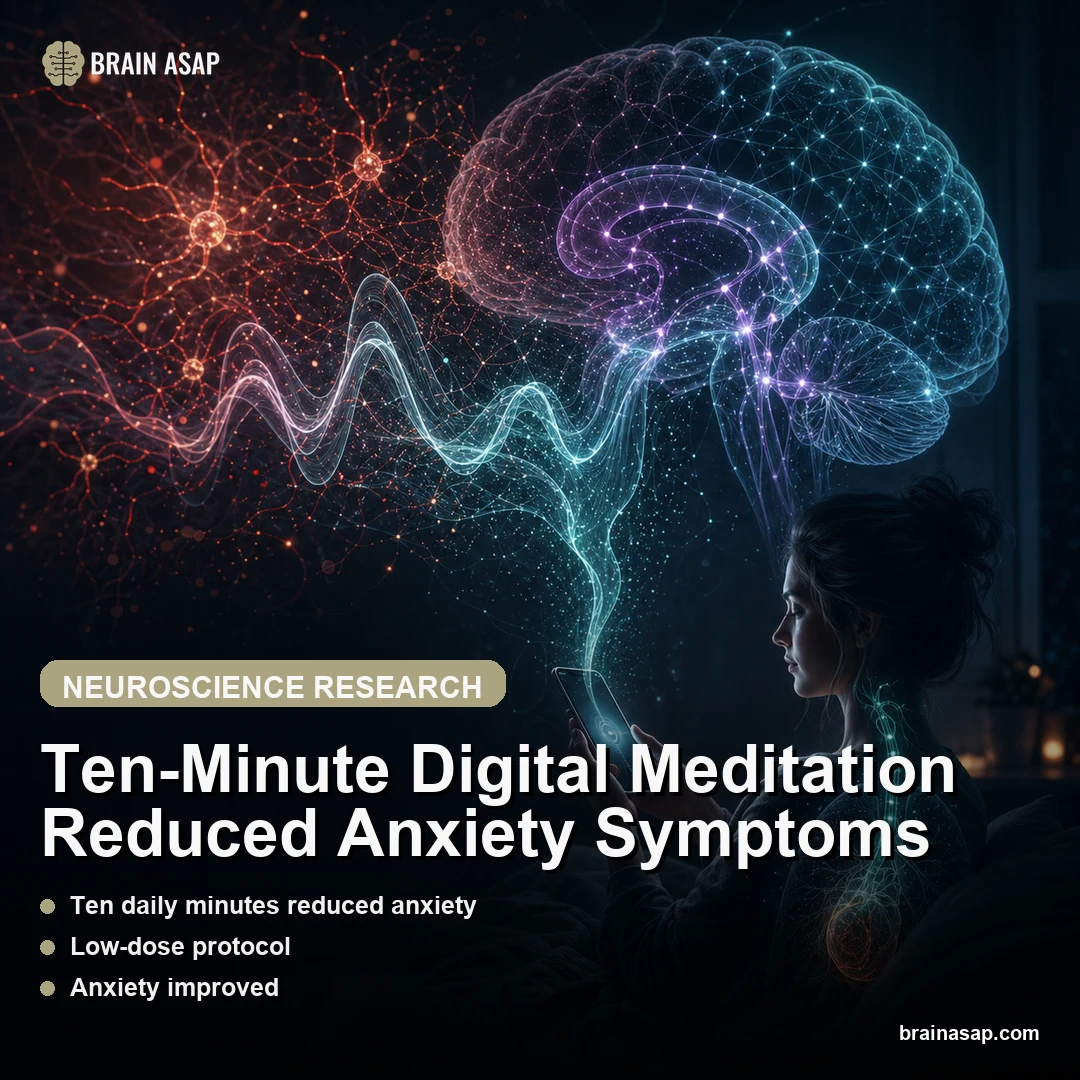
TL;DR: A 2026 randomized-trial preprint in medRxiv reported that 10 minutes of daily digital meditation reduced anxiety and mind wandering, with the largest gains in people who started with higher symptom burden. Key Findings Ten daily minutes reduced anxiety:…
Read article ↗