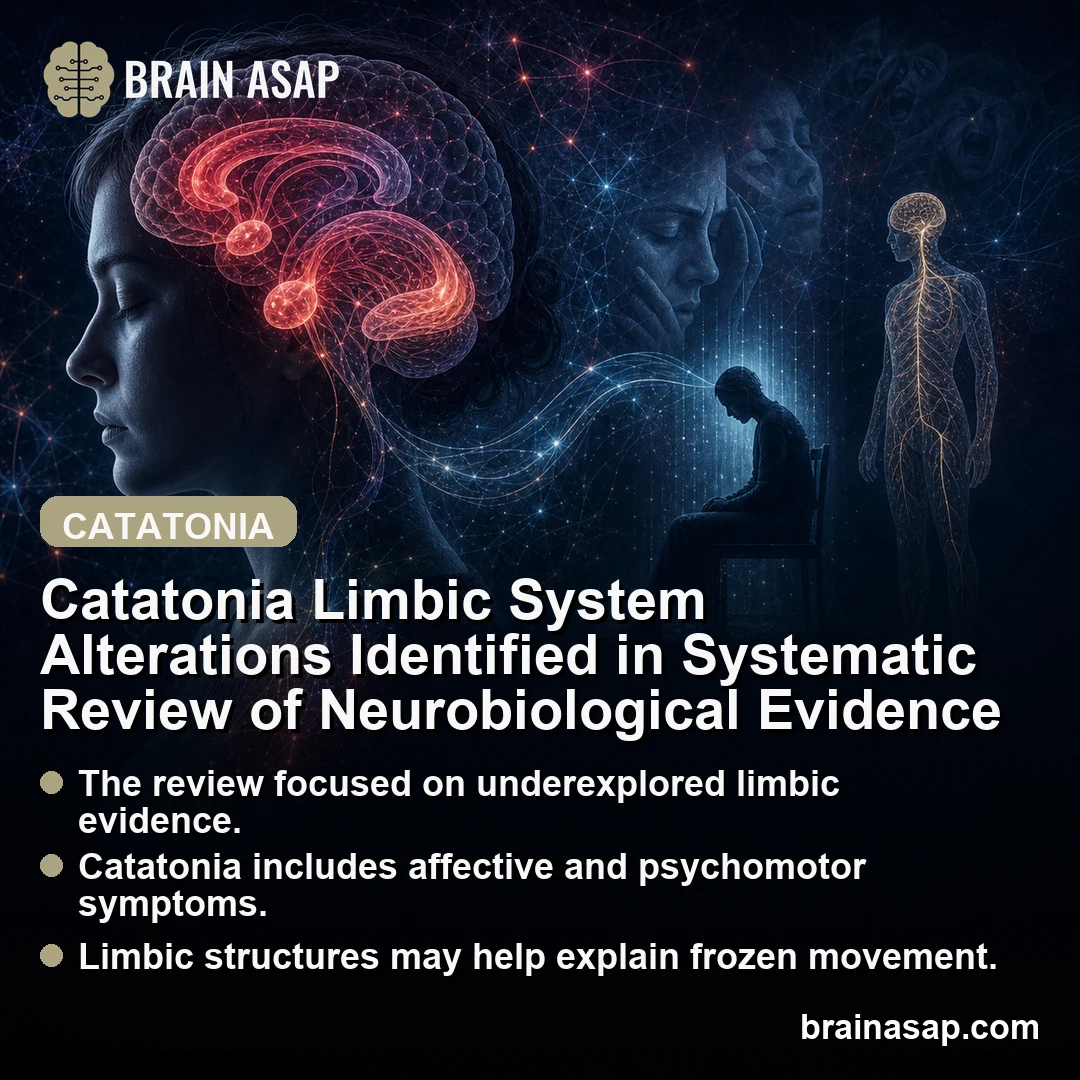
TL;DR: A 2026 systematic review in European Archives of Psychiatry and Clinical Neuroscience argues that catatonia, a syndrome of freezing, mutism, and abnormal movement, may involve underweighted limbic-system circuitry linking emotional regulation with motor…
Read article ↗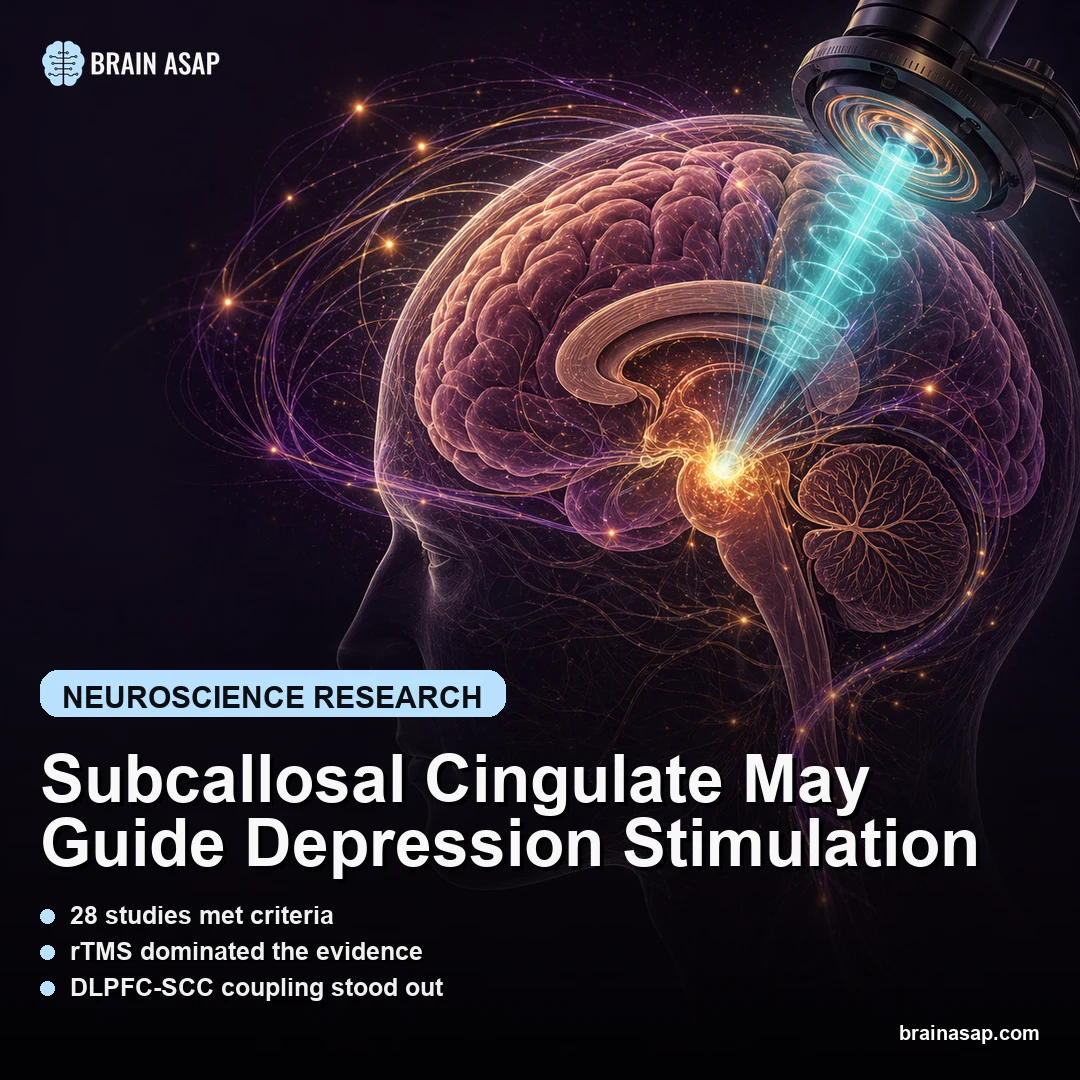
TL;DR: A 2026 systematic review in Translational Psychiatry found that depression brain-stimulation studies repeatedly linked treatment response to subcallosal cingulate connectivity, but inconsistent methods still limit its use as a treatment-selection biomar…
Read article ↗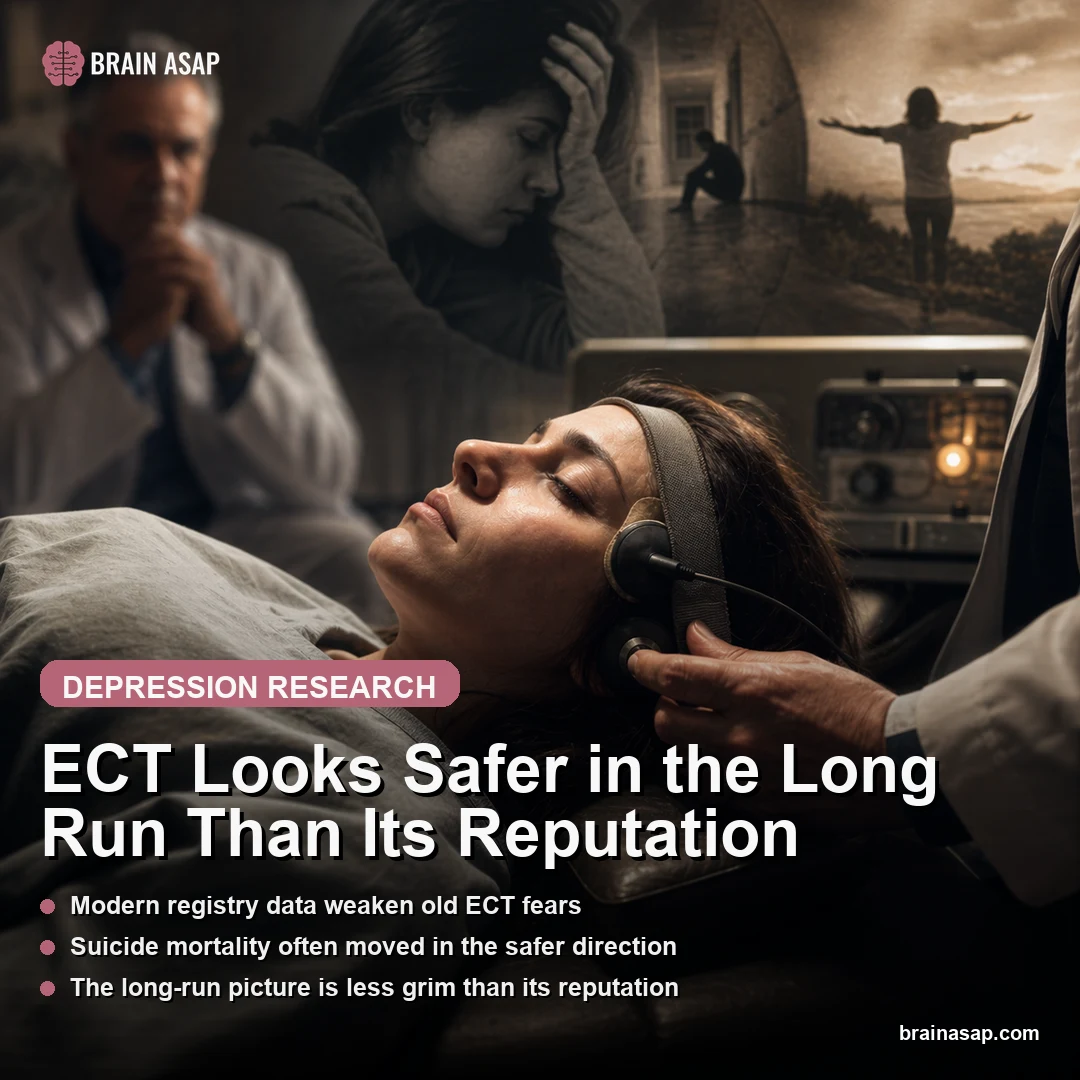
ECT Looks Safer in the Long Run Than Its Reputation TL;DR: A British Journal of Psychiatry review argues that modern population-level studies do not support a long-term increase in dementia or major cardiovascular risk after electroconvulsive therapy and inste…
Read article ↗
Esketamine Lost the Cost-Effectiveness Race in Hong Kong TL;DR: A 5-year Hong Kong model found esketamine plus an antidepressant bought only a small quality-adjusted survival gain at US$29,061 per patient, leaving it behind cheaper third-line options like comb…
Read article ↗
A new study tracked changes in brain volume in depressed patients after electroconvulsive therapy (ECT or “electroshock therapy”). The study found that ECT led to increases in gray matter (brain tissue), which then decreased substantially over the next 2 years…
Read article ↗