TL;DR: A 35-year-old woman with 20 years of seizures that medicines could not control became seizure-free after surgery removed a small fluid-filled cyst and the nearby part of her brain where seizures started. It is one case, so it cannot prove the cyst cause…
Read article ↗
TL;DR: In regions where the pork tapeworm is common, about 1 in 4 people with seizures had signs of tapeworm cysts in the brain, based on 35 well-defined studies. That share roughly halved in studies from after 2008, though it is unclear how much of the drop i…
Read article ↗
TL;DR: In 3 large birth studies covering 5.3 million children, kids whose mothers had type 1 or type 2 diabetes before pregnancy were about a third more likely to develop epilepsy. Diabetes that first appears during pregnancy showed no clear link, and none of…
Read article ↗
TL;DR: A 2026 systematic review in PLOS One found that ketogenic diet therapies were linked to more 50% seizure reductions in drug-resistant epilepsy, with clearer evidence in children and more uncertainty for near-complete seizure control, side effects, adher…
Read article ↗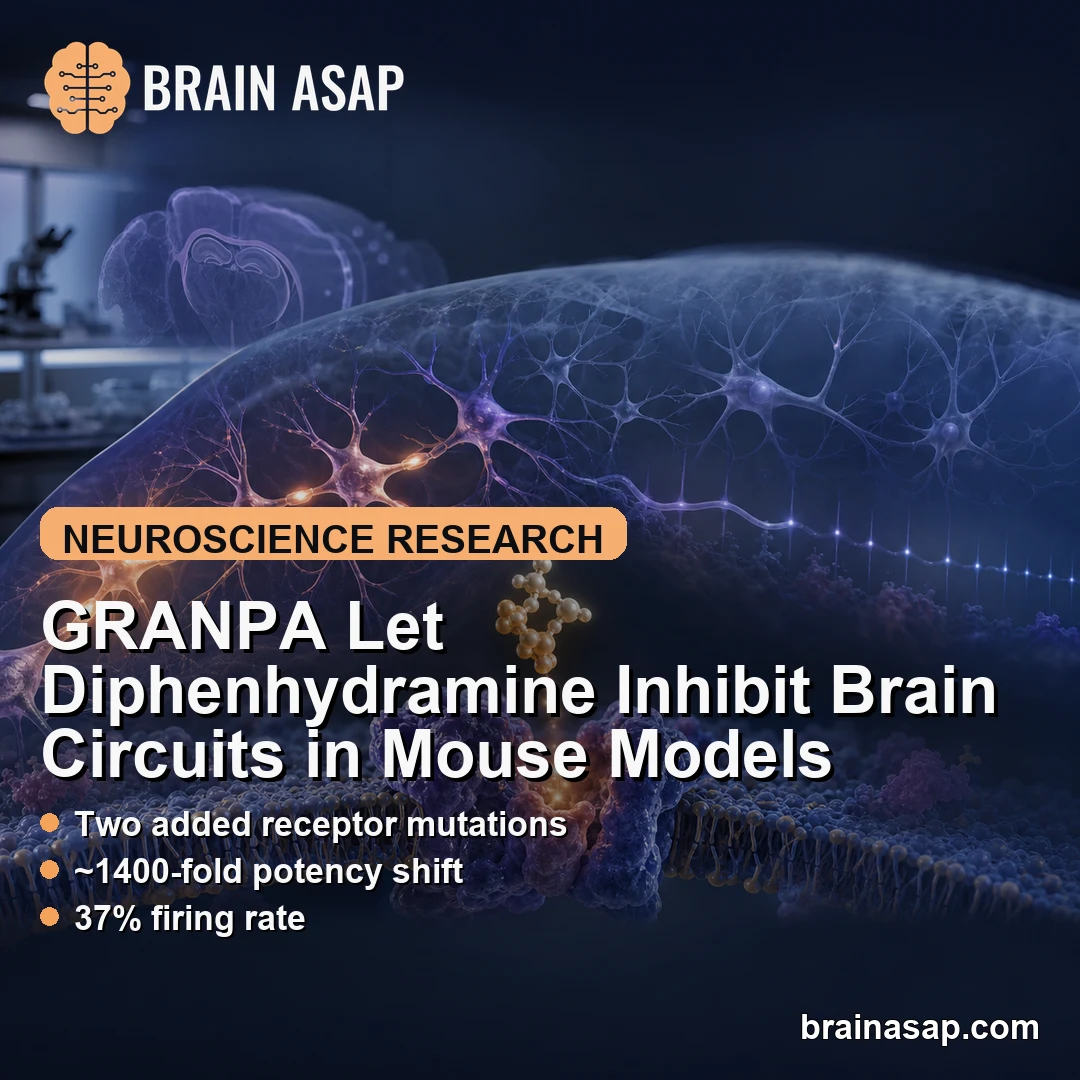
TL;DR: A 2026 study in Signal Transduction and Targeted Therapy engineered a modified inhibitory DREADD receptor called GRANPA so the over-the-counter antihistamine diphenhydramine could switch off targeted brain circuits and reduce seizure activity in mouse m…
Read article ↗
TL;DR: A 2026 review in CNS Drugs argues that seletracetam, an unapproved SV2A-targeting antiseizure drug, may deserve renewed development as a low-volume intranasal non-benzodiazepine rescue treatment for acute repetitive seizures. Key Findings SV2A racetam:…
Read article ↗
TL;DR: A 2026 preprint in medRxiv found that the ADAS-Cog-13 cognitive scale detected impairment in older adults with focal epilepsy, but a cutoff of 15 had only modest diagnostic accuracy against an epilepsy-specific neuropsychological standard. Key Findings…
Read article ↗
TL;DR: A 2026 review in Nature Reviews Neurology argued that neural extracellular matrix (ECM), the protein-and-glycan scaffold around central nervous system cells, is an active regulator of brain plasticity and neurological disease. Key Findings Multiple ECM…
Read article ↗
TL;DR: A 2026 medRxiv preprint found that multivariate resting-state electroencephalography (EEG) network markers separated non-lesional epilepsy from functional/dissociative seizures above chance, but the best model was stronger at identifying epilepsy than a…
Read article ↗
TL;DR: A 2026 paper in Neuropsychopharmacology argued that cannabidiol (CBD), a non-intoxicating cannabis compound, has plausible psychiatric and neurological uses, but clinical claims need standardized products, exposure tracking, and safety monitoring before…
Read article ↗