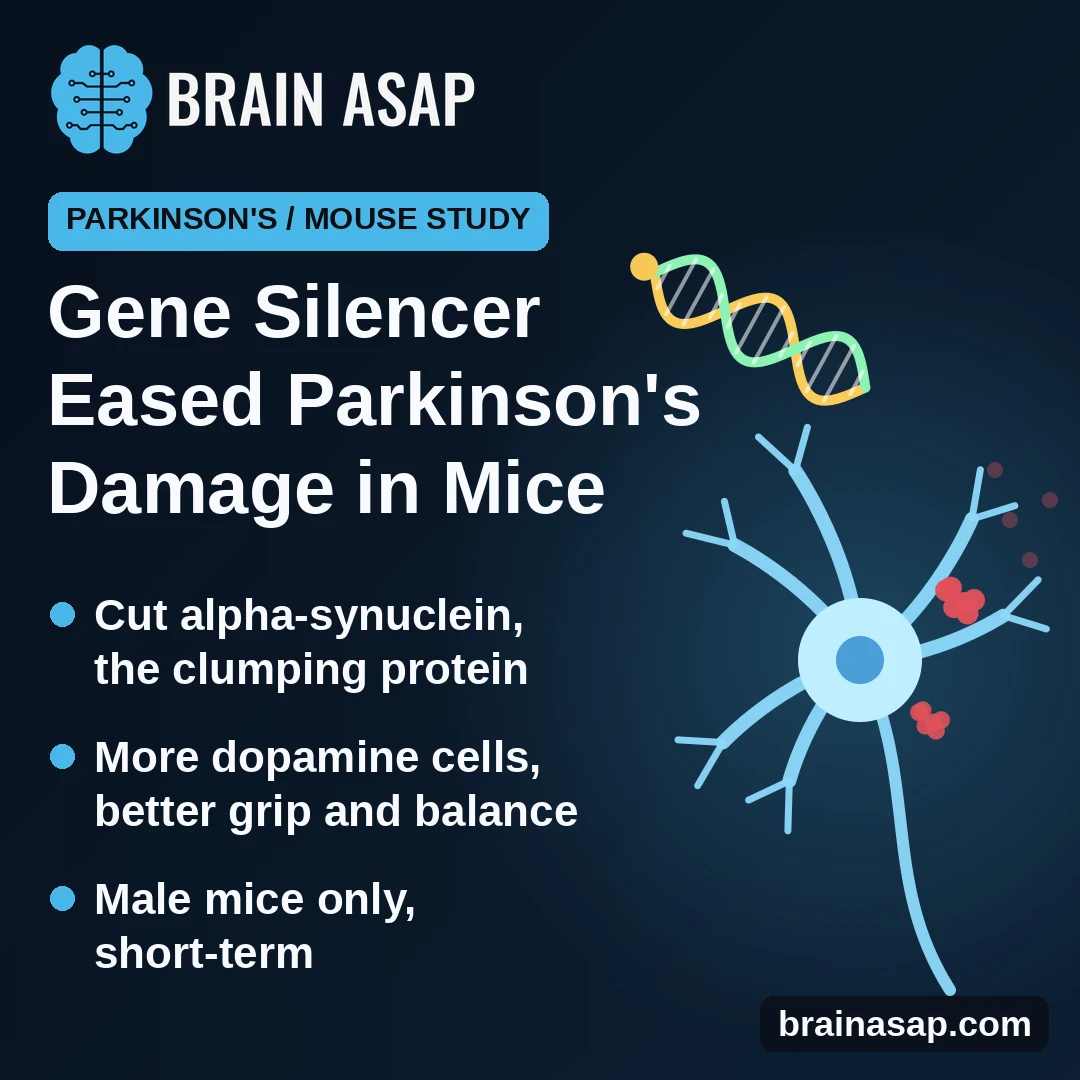
TL;DR: In mice, a new type of gene-silencing molecule lowered levels of alpha-synuclein, the protein that clumps in Parkinson’s. Mice given it kept more dopamine-making brain cells and did better on grip and balance tests than untreated mice with the same dise…
Read article ↗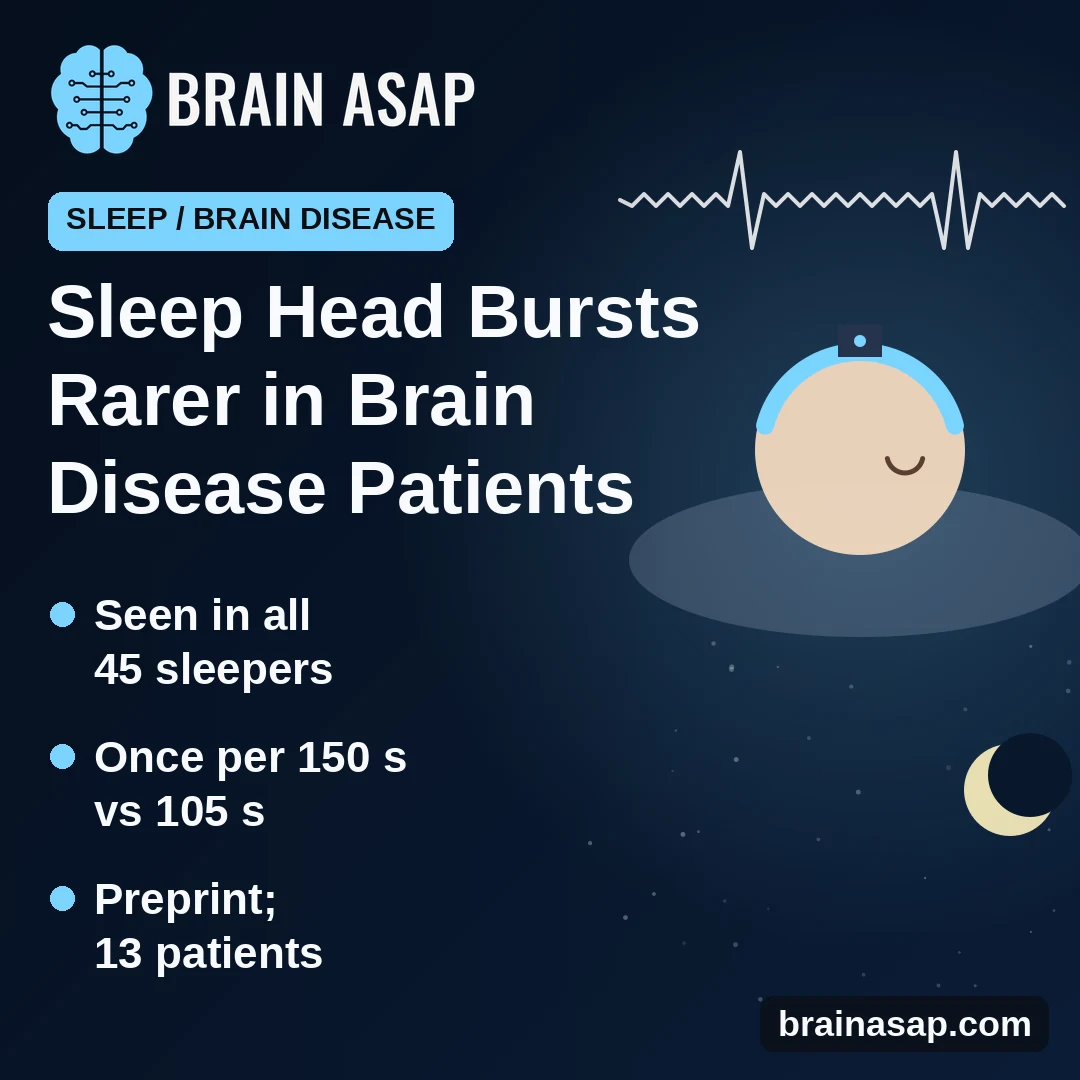
TL;DR: A headband sensor picked up brief bursts of force inside the head during sleep in all 45 people tested. People with neurodegenerative diseases had fewer bursts per minute than healthy volunteers, in an early, not yet peer-reviewed study. Key Findings A…
Read article ↗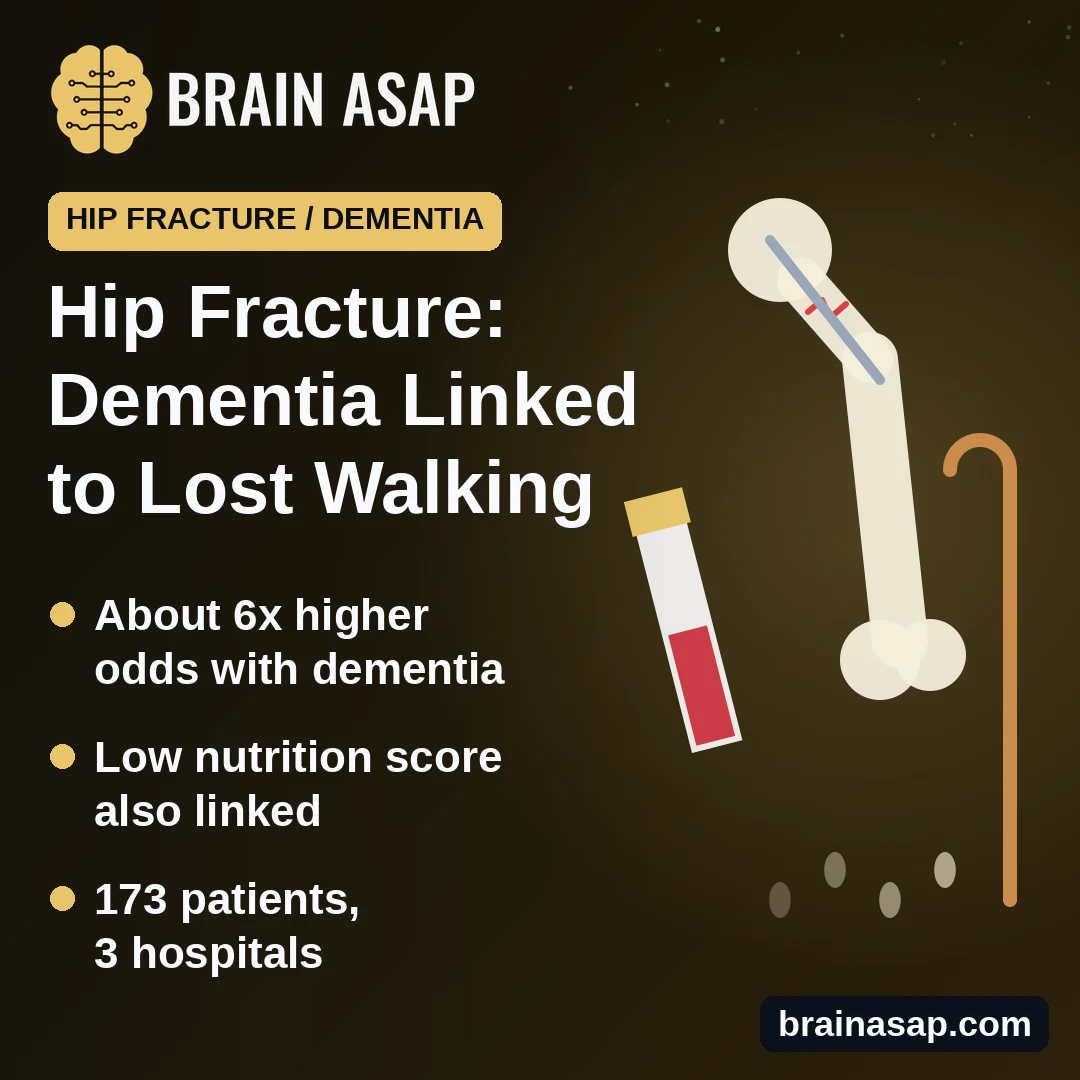
TL;DR: Among older adults who walked on their own before breaking a hip, those with dementia or a low blood-based nutrition score a week after surgery were less likely to be walking independently when they left the hospital. The nutrition score alone was only…
Read article ↗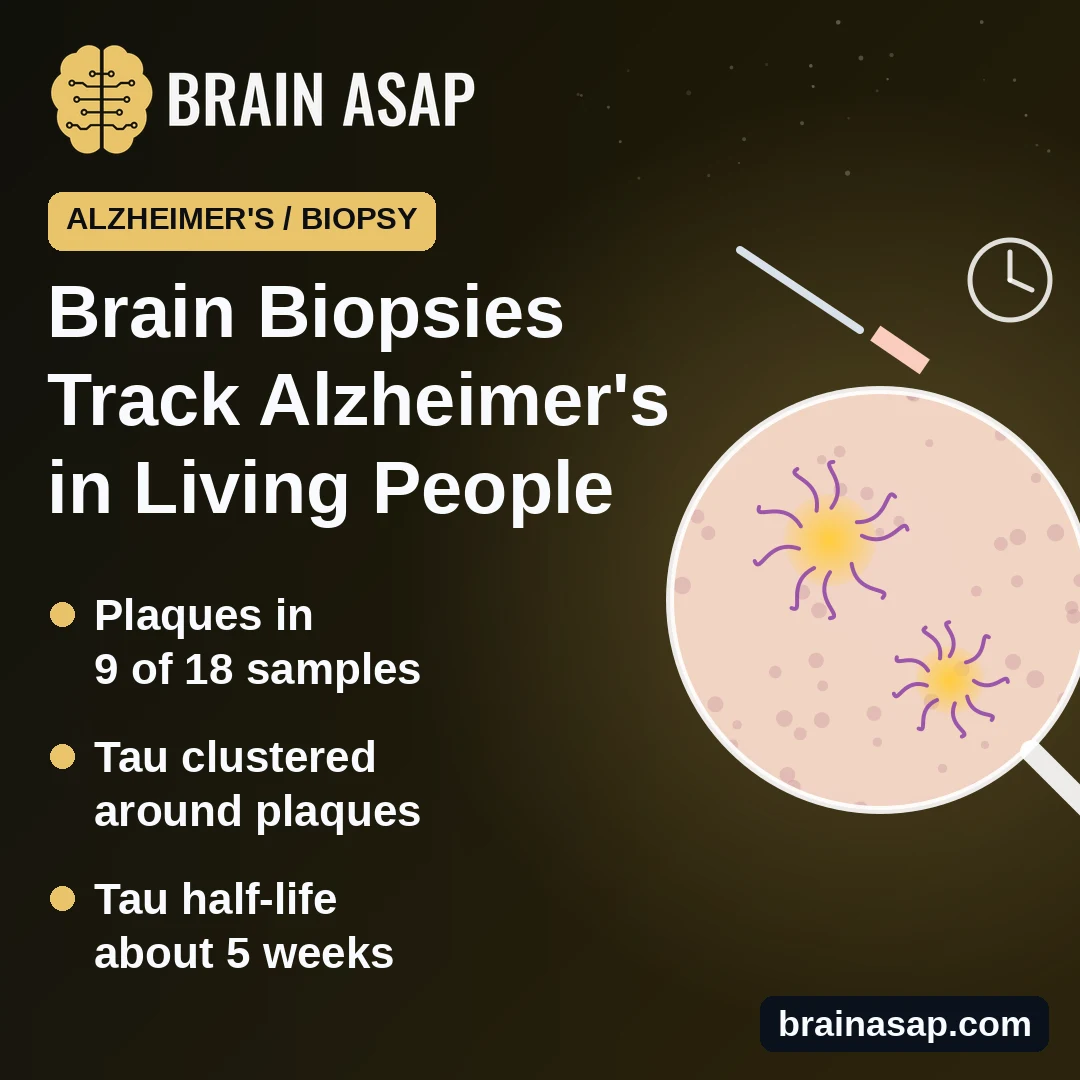
TL;DR: Tiny brain samples taken during routine shunt surgery let researchers study Alzheimer’s changes in living people. Half the samples had amyloid plaques, tau clustered around them, and brain tau had a half-life of about five weeks. Key Findings 18 living…
Read article ↗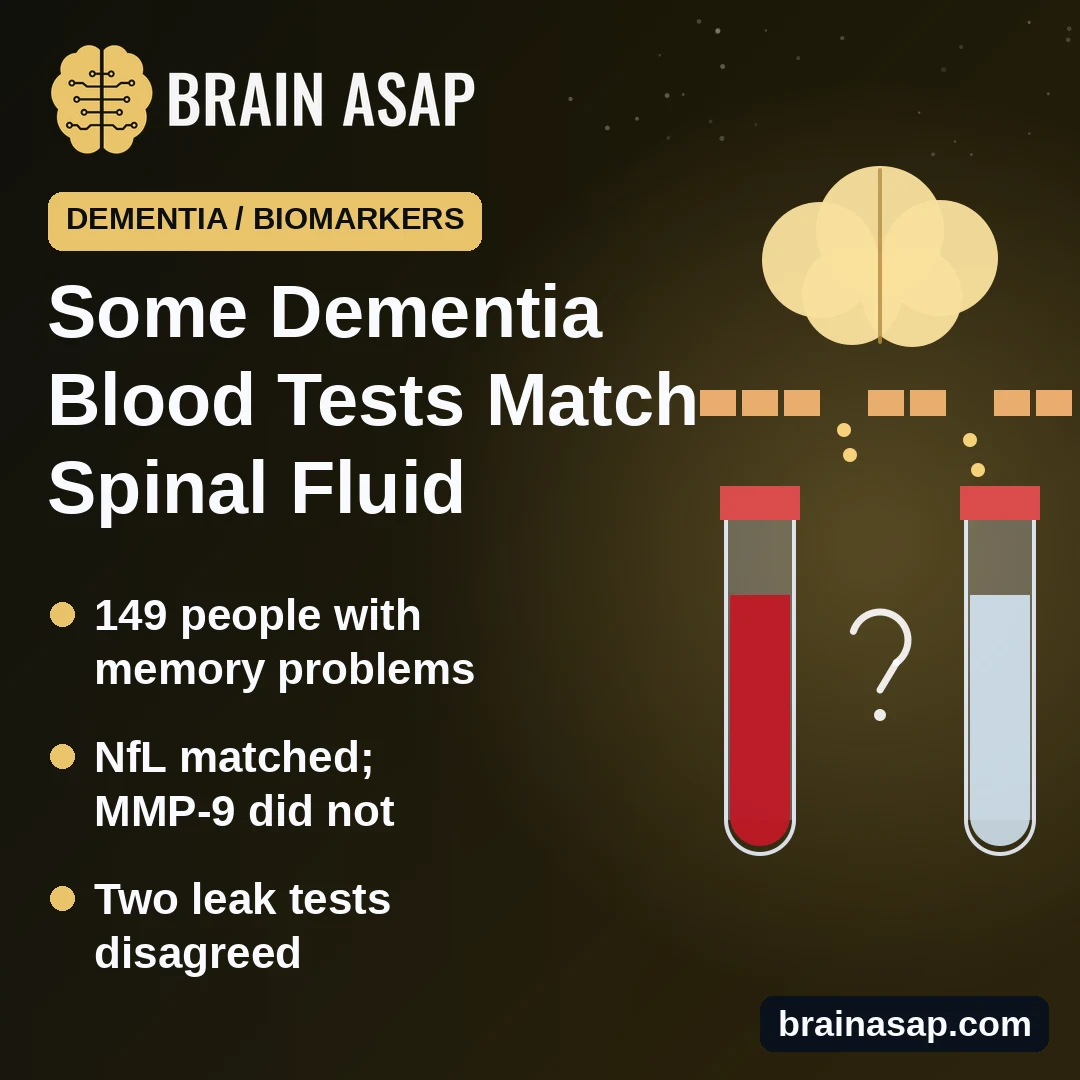
TL;DR: In 149 people with memory problems or dementia, blood levels of some brain markers tracked spinal fluid levels well, but others did not match at all. Two common measures of a leaky blood-brain barrier also did not agree with each other. Key Findings Blo…
Read article ↗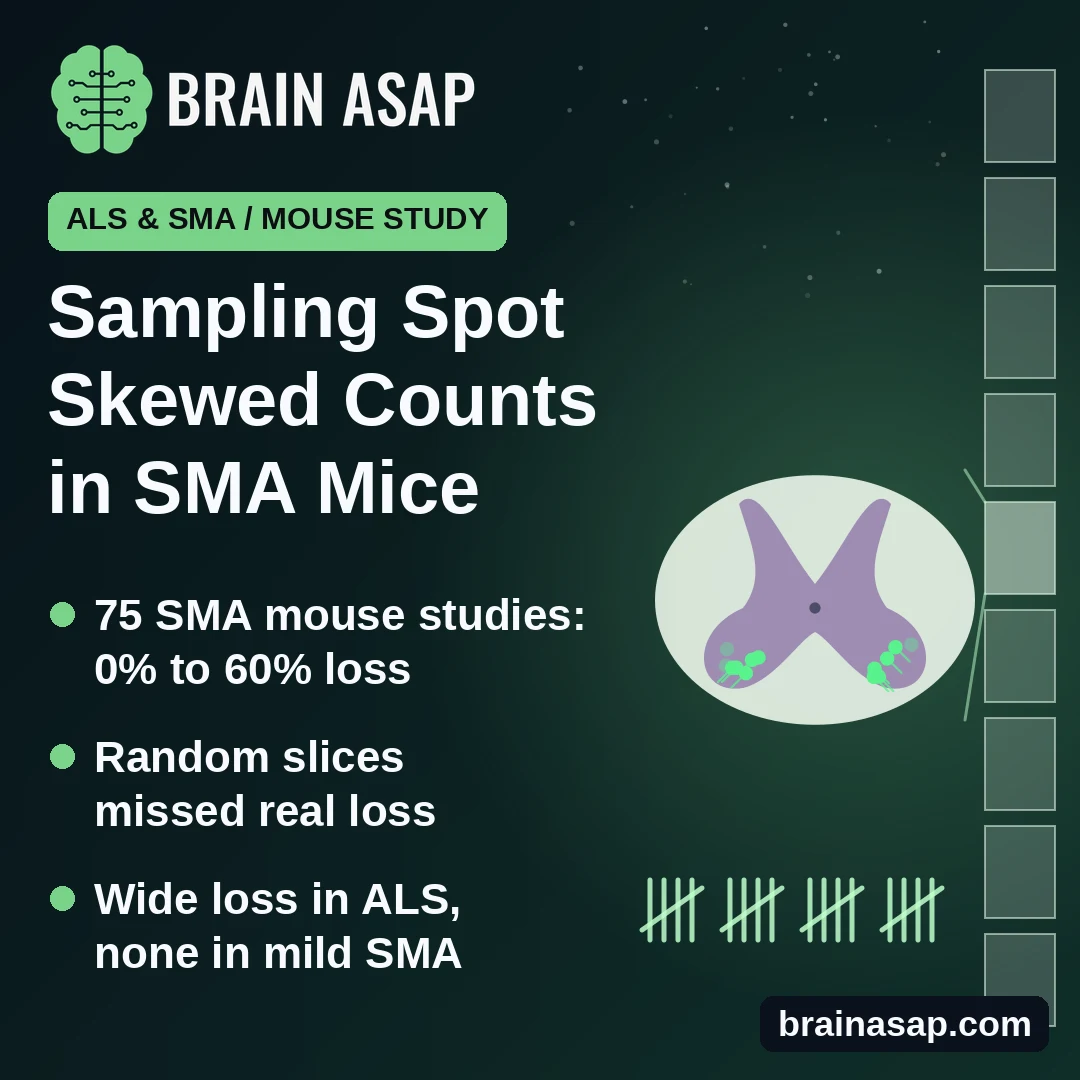
TL;DR: Mouse studies of spinal muscular atrophy have reported anywhere from no loss to 60% loss of motor neurons, and a German-American team found that which slice of spinal cord gets counted explains much of that spread. Counting the right segments with a rel…
Read article ↗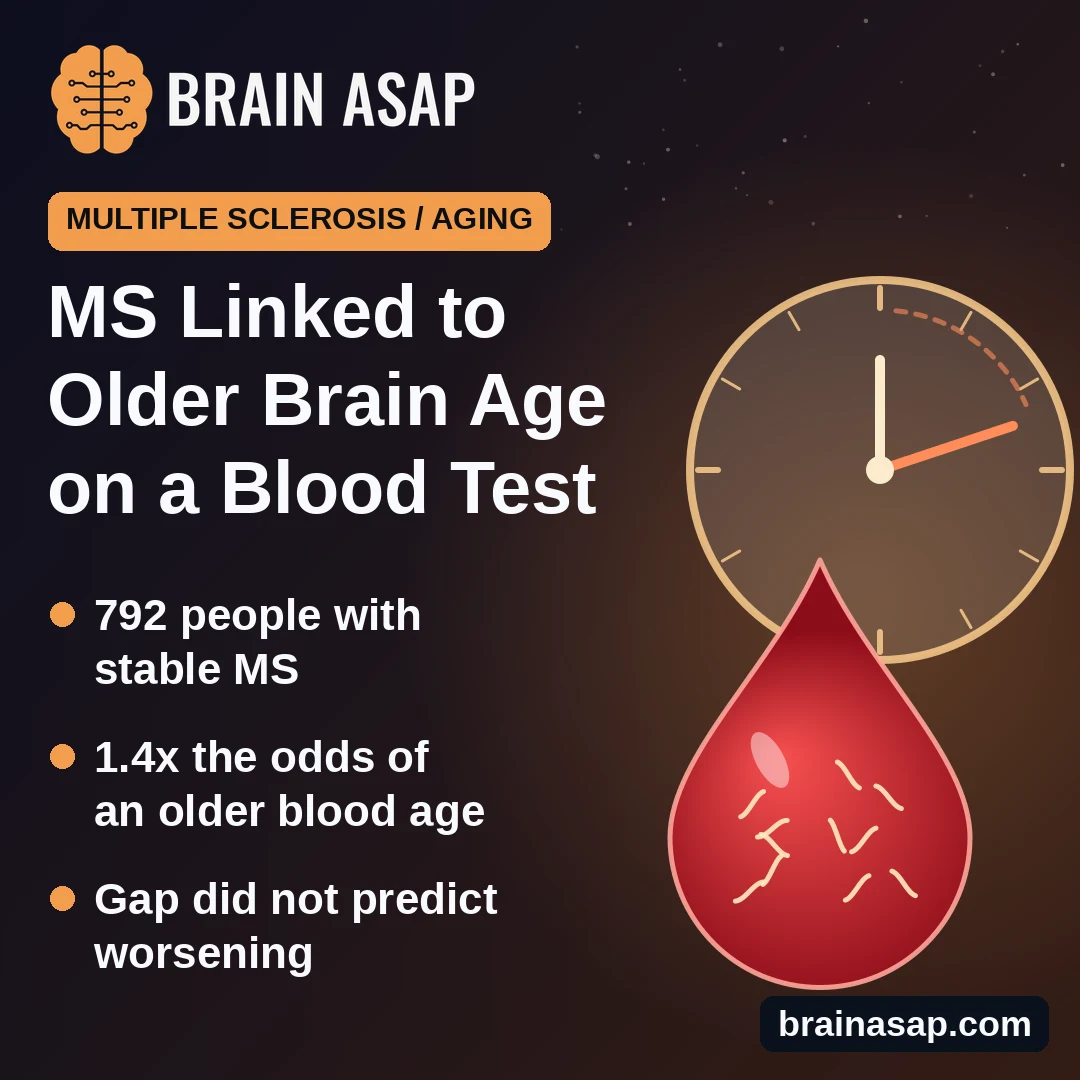
TL;DR: In 792 people with stable multiple sclerosis, a blood marker of nerve damage more often placed them in an older age band than their actual age, compared with 302 people without MS. The gap was larger in people with more disability or progressive MS, but…
Read article ↗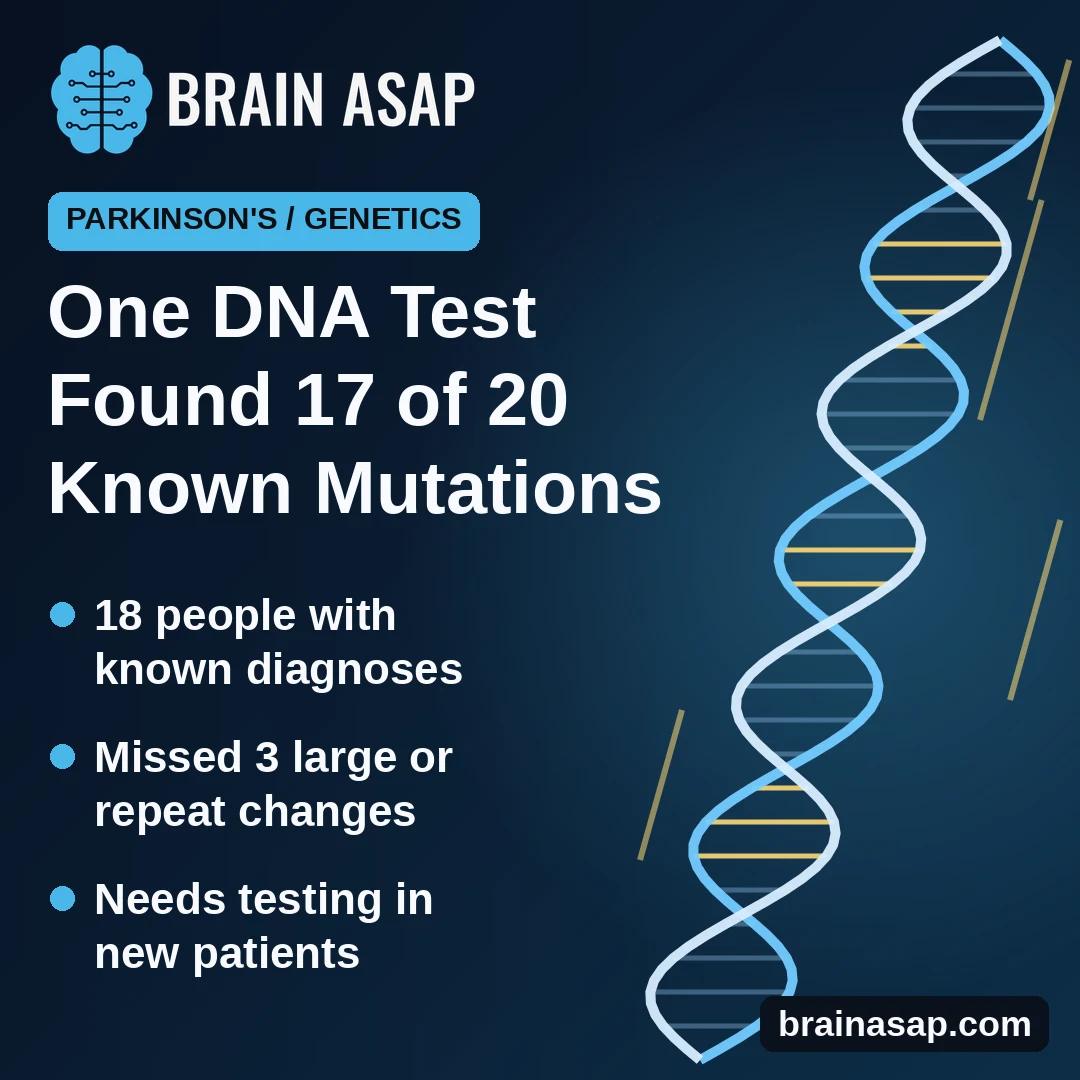
TL;DR: A single long-read DNA test covering 564 genes found 17 of 20 known disease-causing changes in 18 people with Parkinson’s or inherited repeat disorders. It missed three large or repetitive changes, so it needs more work before it could replace several s…
Read article ↗
TL;DR: A 2026 meta-analysis in Neurological Sciences pooled 10 studies that gave people with Parkinson’s disease, tested while on their dopamine medication, and healthy adults the same “think of as many ideas as you can” tasks. On average, the two groups score…
Read article ↗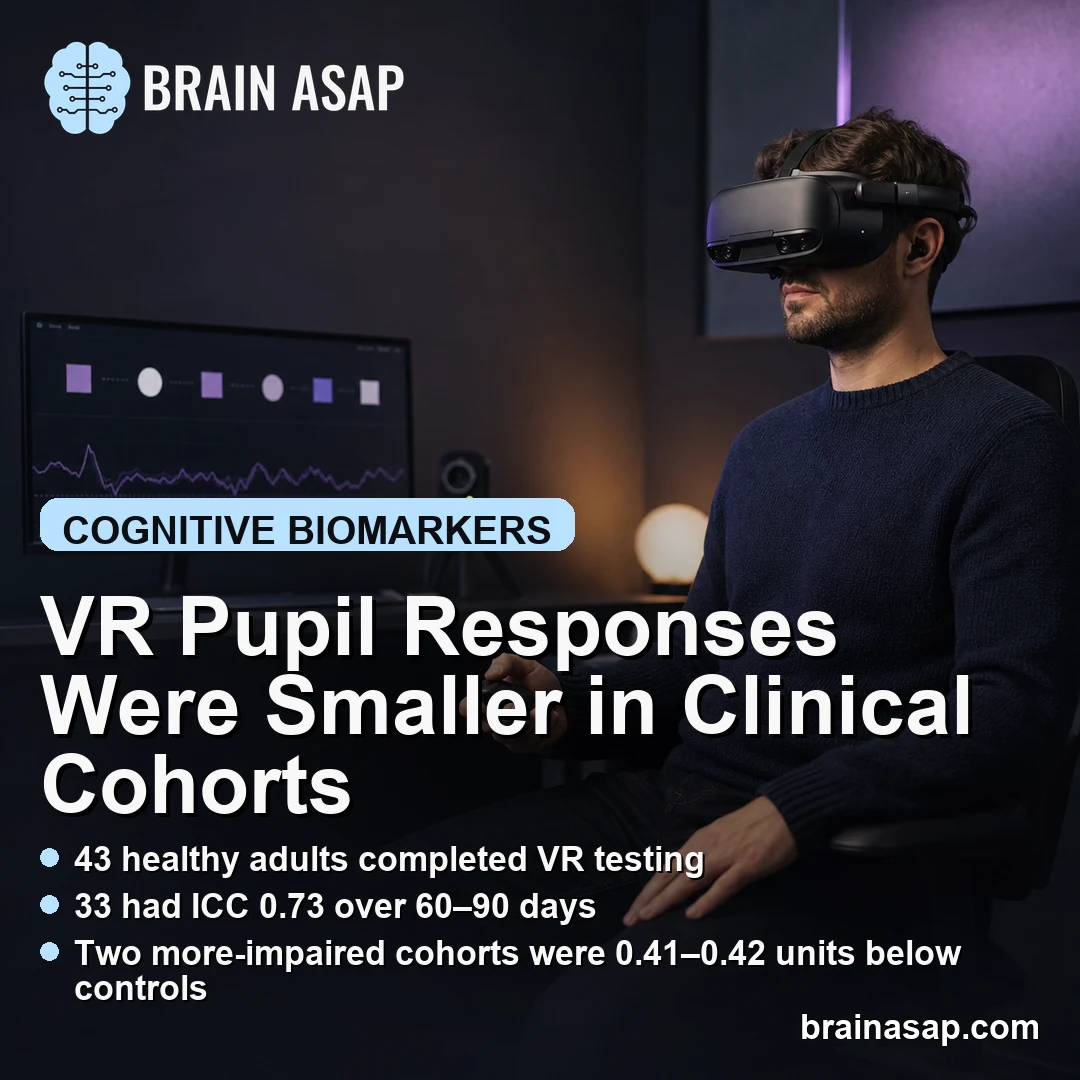
TL;DR: A 2026 medRxiv preprint found that pupil dilation measured inside a virtual reality (VR) headset increased as working-memory load rose in healthy adults, was reproducible 60–90 days later in 33 returnees, and was smaller under the highest load in cognit…
Read article ↗