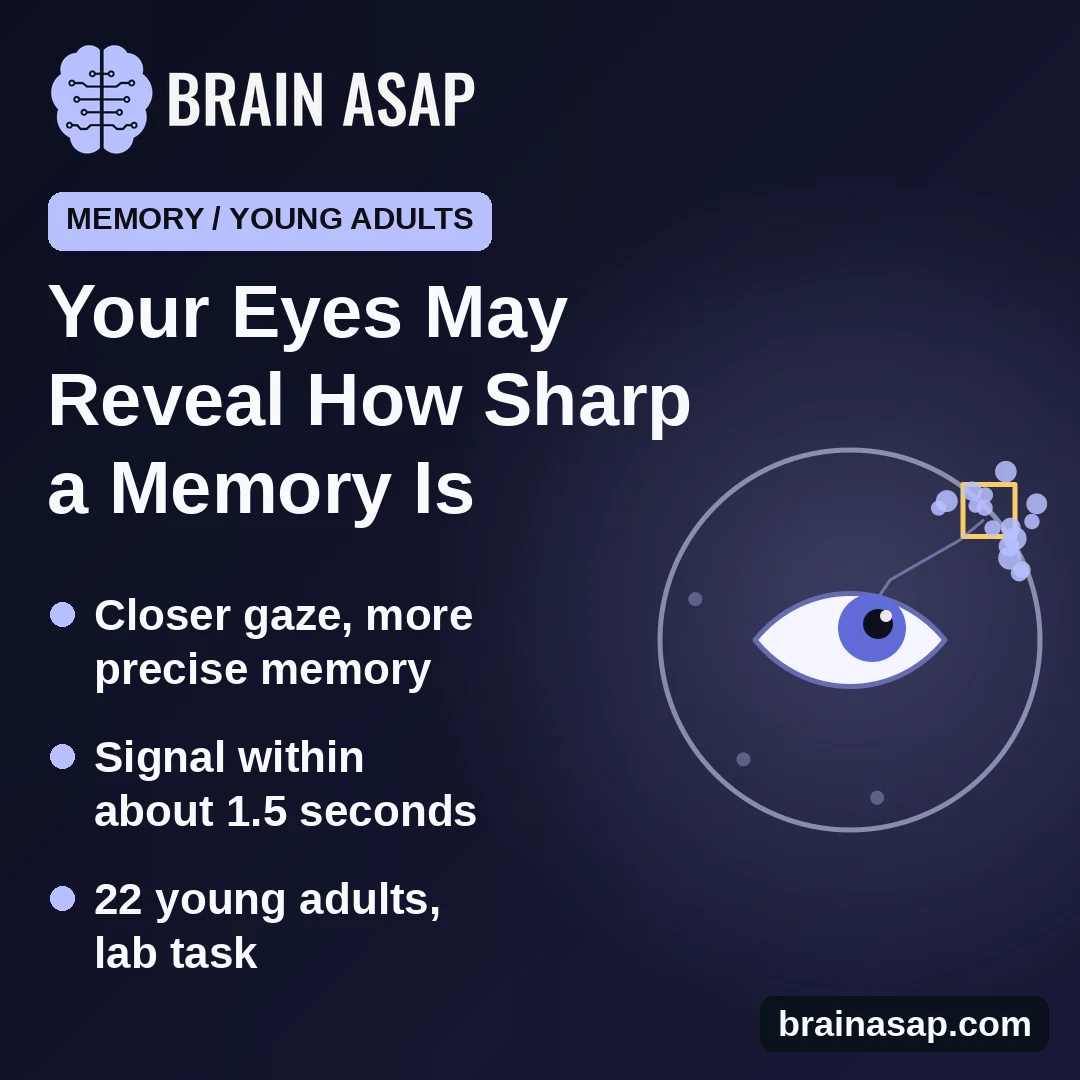
TL;DR: When 22 young adults tried to recall where they had seen everyday objects, their eyes drifted toward the right spot before they answered. The closer their gaze, the more precise their memory turned out to be. Key Findings Eyes found the spot: Gaze lande…
Read article ↗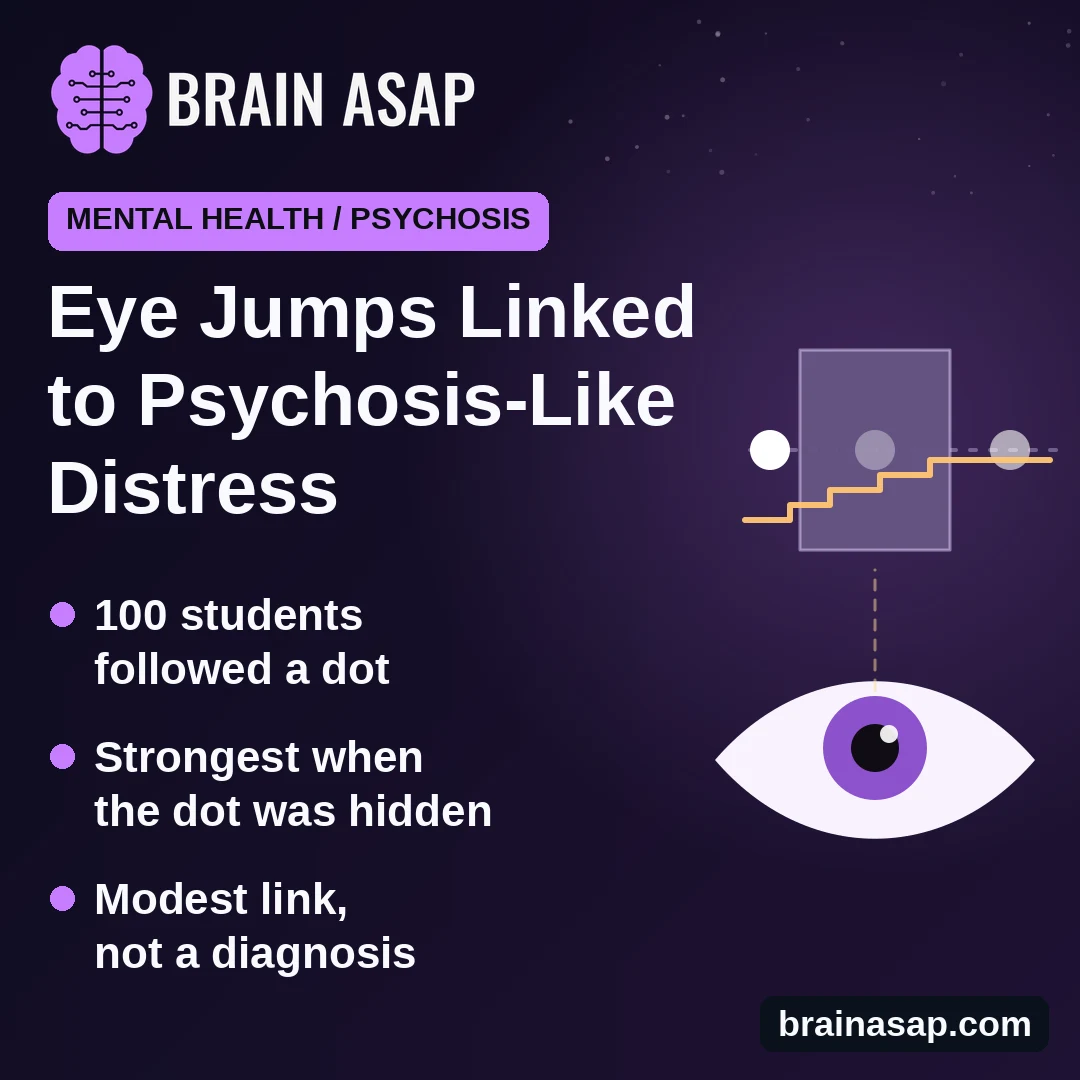
TL;DR: Among 100 college students, those more distressed by unusual experiences like odd perceptions or suspicious thoughts made more jerky “catch-up” eye jumps while following a moving dot. The link was modest, and it was strongest when the dot briefly disapp…
Read article ↗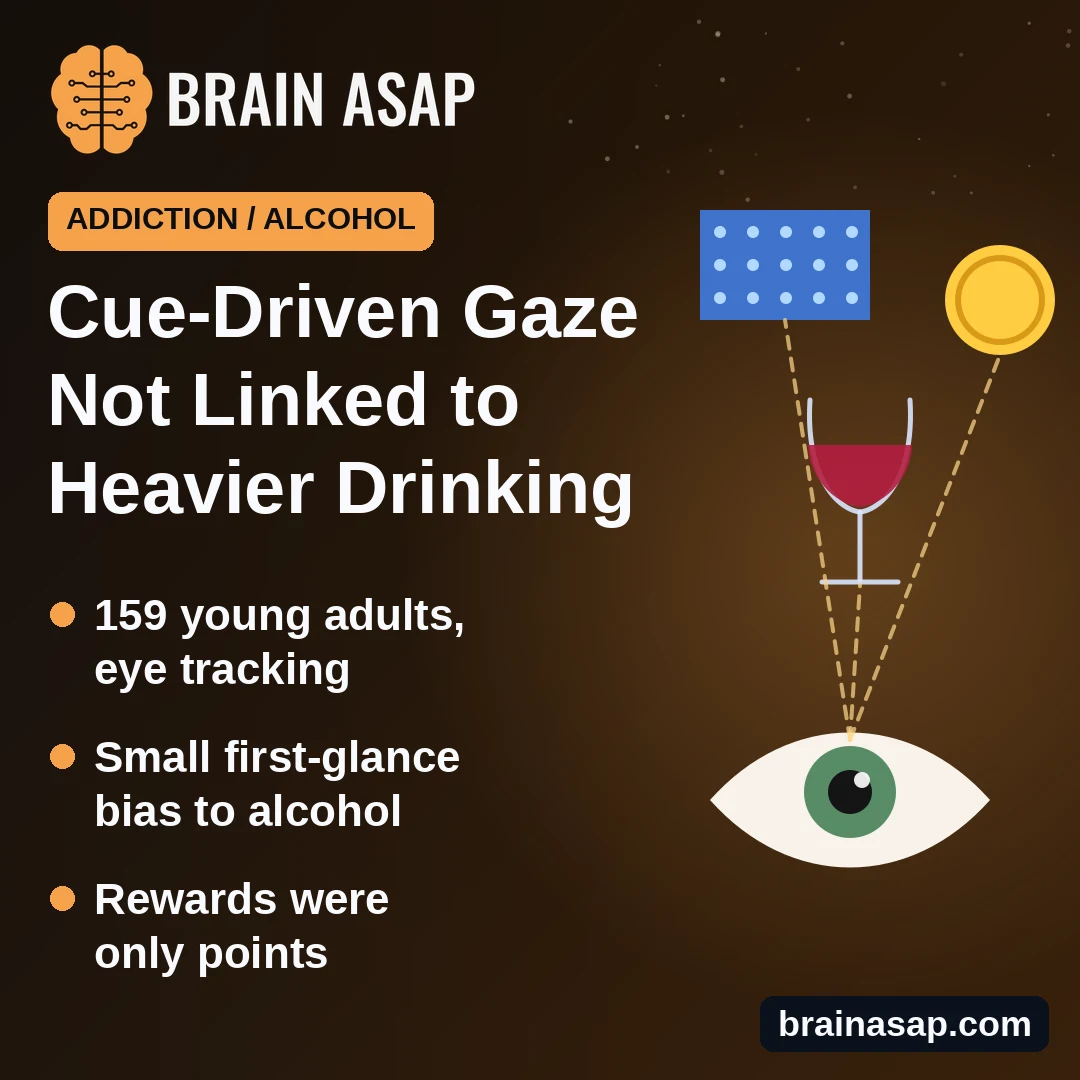
TL;DR: In 159 young adults, people whose eyes were drawn to reward cues rather than to the rewards themselves glanced first at alcohol images slightly more often than one comparison group, but not the other. They did not drink more, contrary to an earlier stud…
Read article ↗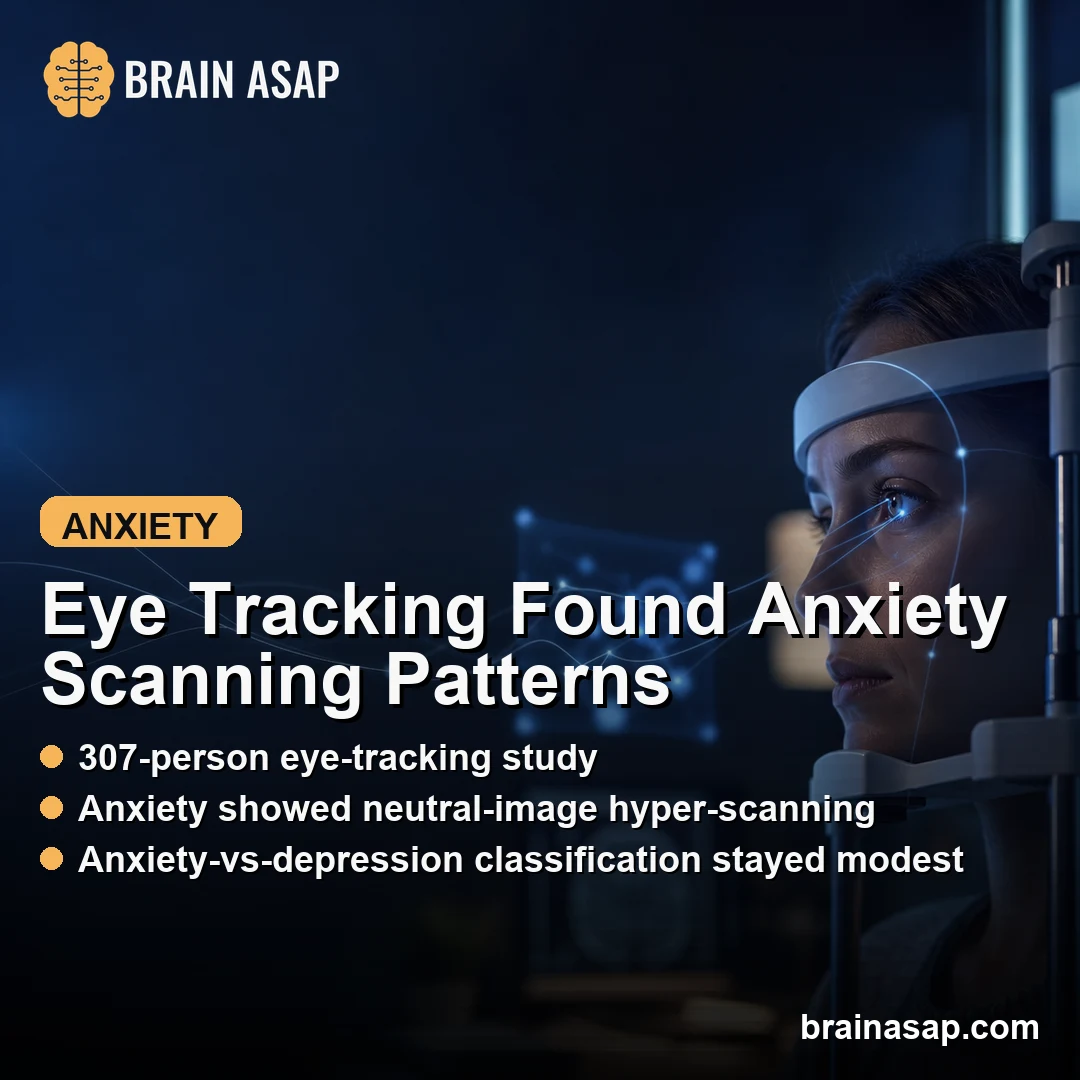
TL;DR: A 2026 study in The British Journal of Psychiatry found that people with anxiety disorders showed hyper-scanning during neutral image viewing and hyper-pursuit during moving-dot tracking, suggesting that eye-tracking could capture measurable patterns of…
Read article ↗
Depression is a growing mental health concern, especially among young adults. New AI-powered research offers a rapid, objective screening tool to identify those at high risk using eye tracking technology. This innovative approach could revolutionize early dete…
Read article ↗