tVNS Improved Reward-Effort Efficiency in Severe Depression Symptoms
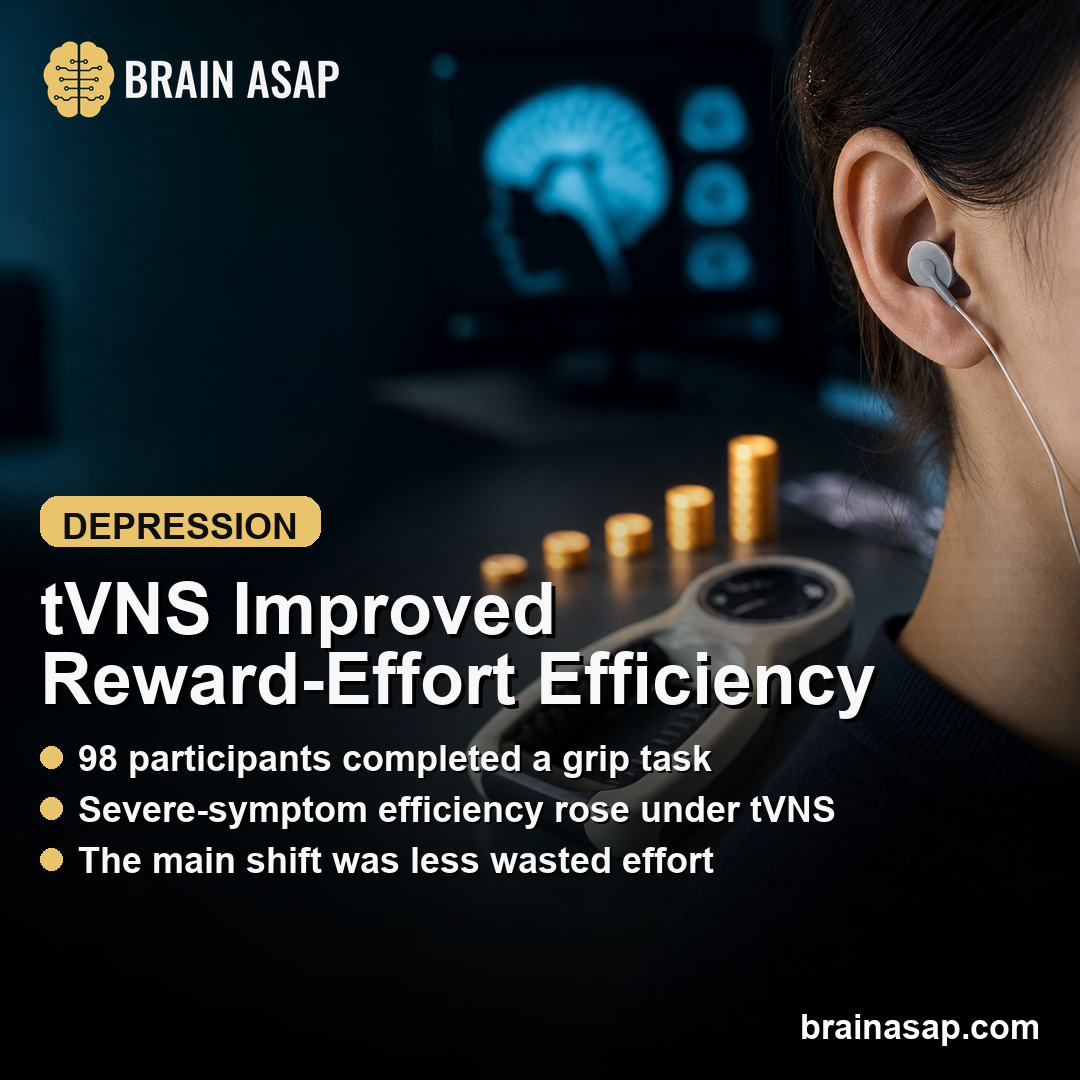
tVNS Improved Reward-Effort Efficiency in Severe Depression Symptoms

TL;DR: A 2026 preprint on medRxiv tested transcutaneous vagus nerve stimulation (tVNS), a noninvasive ear-based stimulation method, during a grip-strength reward task and found that people with severe depressive symptoms made more efficient effort choices under active stimulation than under sham. Key Findings Reward-effort task included 98 participants: The analysis included 53 people with major …
Read more

Sharper Cognitive Precision Predicted 40 Extra Minutes of Goal-Directed Work

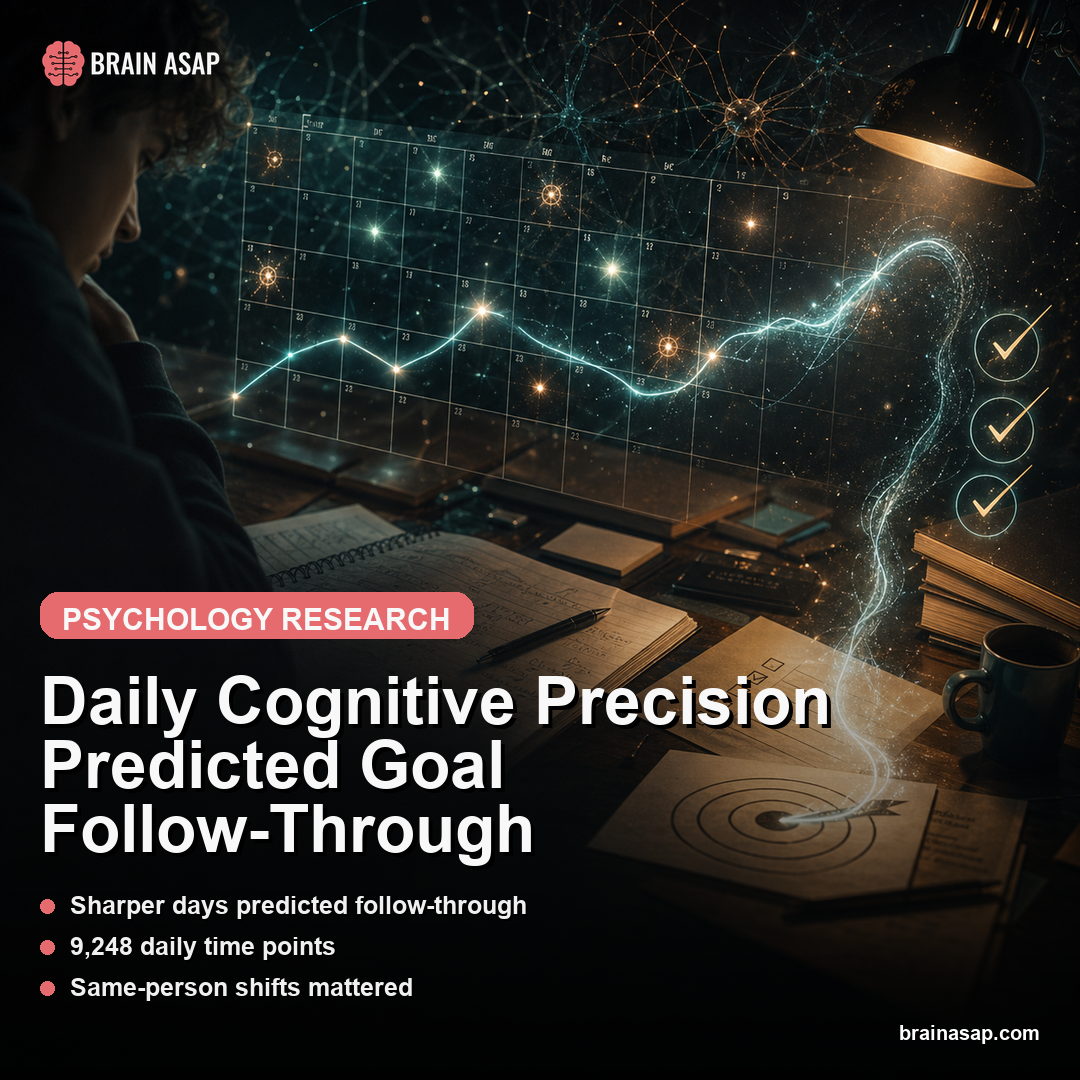
Daily Cognitive Precision Predicted Goal Follow-Through

Daily Cognitive Precision Predicted Goal Follow-Through TL;DR: Sharper-than-usual cognitive days predicted same-day follow-through: a one-standard-deviation jump in precision translated to roughly 40 extra minutes of goal-directed work. Key Findings Sharper days predicted follow-through: The study followed university students intensively rather than comparing high- and low-performing people once. 9,248 daily time points: Microtasks measured fluctuations in …

Read more

GLP-1 Receptor Agonists Like Semaglutide (Ozempic) May Treat Reward System Dysfunction (2024 Review)

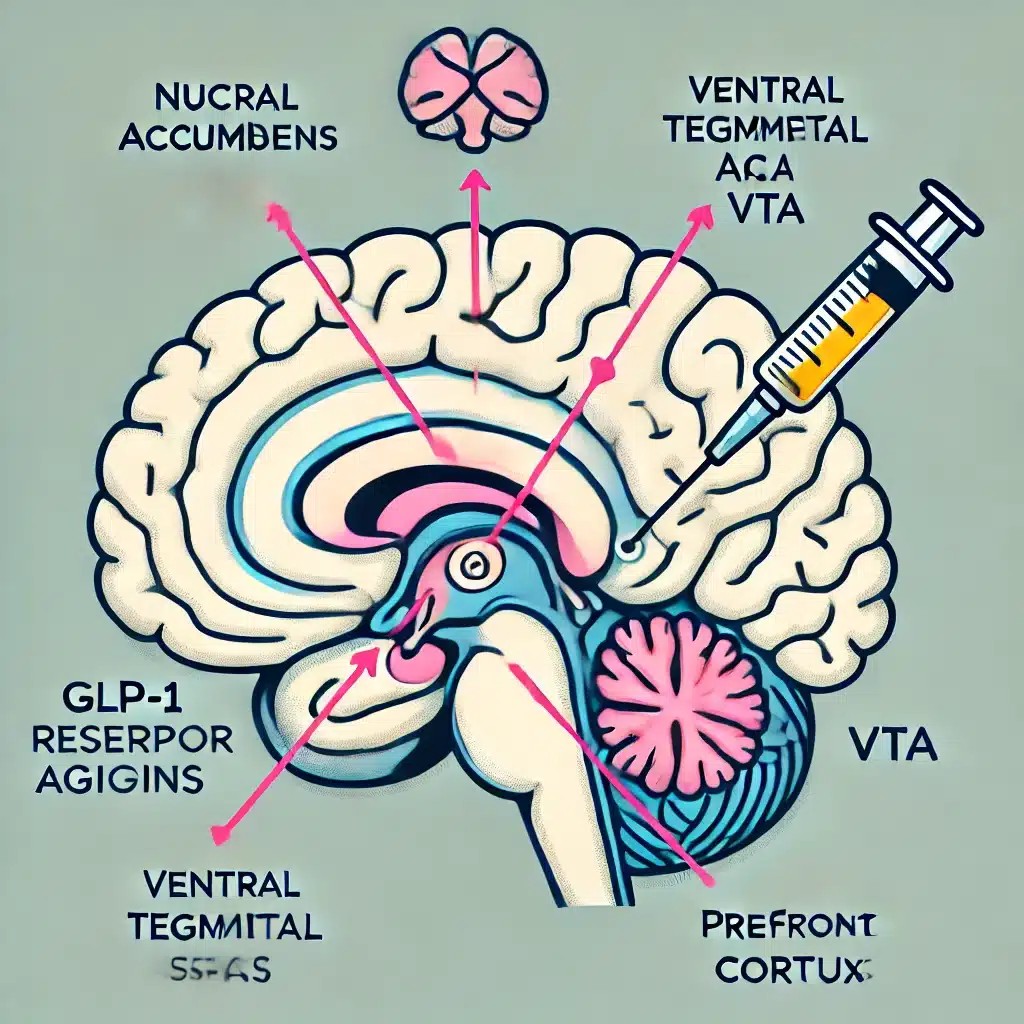
GLP-1 receptor agonists (GLP-1RAs) show promise in regulating the reward system and potentially treating motivation and reward-processing disorders. Highlights: Regulation of Reward System Dysfunction: GLP-1RAs influence the brain’s reward system, which is involved in behaviors related to food and substance use. Brain Activation: These agonists affect brain regions differently in individuals ranging from lean to …

Read more

Antidepressant Mechanisms of Aerobic Exercise (2024 Review)

Aerobic exercise reduces depressive symptoms by decreasing inflammation, boosting dopamine transmission, and enhancing motivation and cognitive control. Highlights: Depression & Dopamine: Depression is linked to disrupted dopamine transmission, affecting reward processing and motivation, particularly in effort-based decision-making. Inflammation’s Role: Exercise reduces systemic inflammation, which otherwise impairs dopamine transmission and contributes to depressive symptoms like anhedonia …

Read more

Fasting Increases Dopamine Signaling in Reward Center of Brain (Mouse Study)

Researchers have uncovered new insights into how fasting alters dopamine signaling in the brain’s reward circuitry. Their findings, published in the Journal of Neurophysiology, suggest that fasted mice exhibit enhanced dopamine release in the ventral tegmental area (VTA) of the brain compared to fed mice. This may help explain fasting’s impact on motivation and reward-seeking …

Read more

The “Perception of Multitasking” May Improve Performance & Motivation

Research reveals that our perception of multitasking is often an illusion – most cognitive tasks cannot actually be done simultaneously. Surprisingly, this illusion of multitasking can improve performance on activities, even when the tasks remain unchanged. Key Facts: Although multitasking refers to doing multiple things concurrently, true multitasking is rare for cognitive tasks requiring attention. …

Read more

Brain Reward System Dysfunction in Depression & Mental Disorders

Researchers explored how our brain’s reward system connects to depression and other common mental health problems like social anxiety and eating disorders. They found that a dampened reward response seems to follow, rather than precede, symptoms of depression and other disorders. This highlights the important role that blunted enjoyment plays in the persistence of mental …

Read more