Krill Oil vs Fish Oil: Which is Better for Inflammation and Oxidative Stress?

TL;DR: Krill oil has a slight edge for inflammation due to astaxanthin, but fish oil wins for raising blood omega-3 levels and long-term cardiovascular outcomes. Fish oil has dominated the omega-3 supplement market for decades. But a smaller crustacean from Antarctic waters is making a quiet challenge: krill oil. Marketing claims abound—krill oil is more …

Read more

Fish Oil Supplements: UK Biobank Study Reveals 44 Favorable Health Outcomes

TL;DR: A comprehensive review of the UK Biobank found that fish oil supplements show favorable associations with health outcomes—not harmful ones—contradicting recent alarming headlines about atrial fibrillation risk. When a major study claims fish oil supplements increase heart arrhythmia risk, the headlines scream. But what happens when researchers dig deeper into the same dataset and …

Read more

The Hidden Link: How Obesity and Depression Trap Each Other in a Toxic Loop

TL;DR: Obesity and depression form a pathophysiological trap: inflammatory cytokines and dysbiotic bacteria from obesity trigger neuroinflammation and mood disruption, while depression’s behavioral changes and HPA axis dysfunction worsen obesity. Obesity and depression are twin epidemics in the modern world, and they’re not independent. People with obesity are 1.5 to 2 times more likely to …

Read more

Gut Microbiome and Depression in Children: How Missing Amino Acids May Drive the Connection

TL;DR: Dysbiotic bacteria in depressed adolescents cannot synthesize lysine and tryptophan, starving the brain of amino acids needed for glutamate transport and serotonin production—a causative link proven by transplanting dysbiotic bacteria into healthy rats. Depression in adolescents has tripled in the past two decades. Most treatments target a single neurotransmitter—serotonin. But a landmark multi-omics study …

Read more

Low Vitamin D Increases Stroke Risk & Worsens Post-Stroke Prognosis (2024 Meta-Analysis)

TLDR: Lower serum vitamin D levels are associated with an increased risk of stroke, particularly ischemic stroke, and are linked to poorer stroke outcomes. Highlights: The meta-analysis included 27 studies with 45,302 participants, finding a combined relative risk (RR) of 1.28 for stroke risk associated with low vitamin D levels. A lower level of serum …

Read more

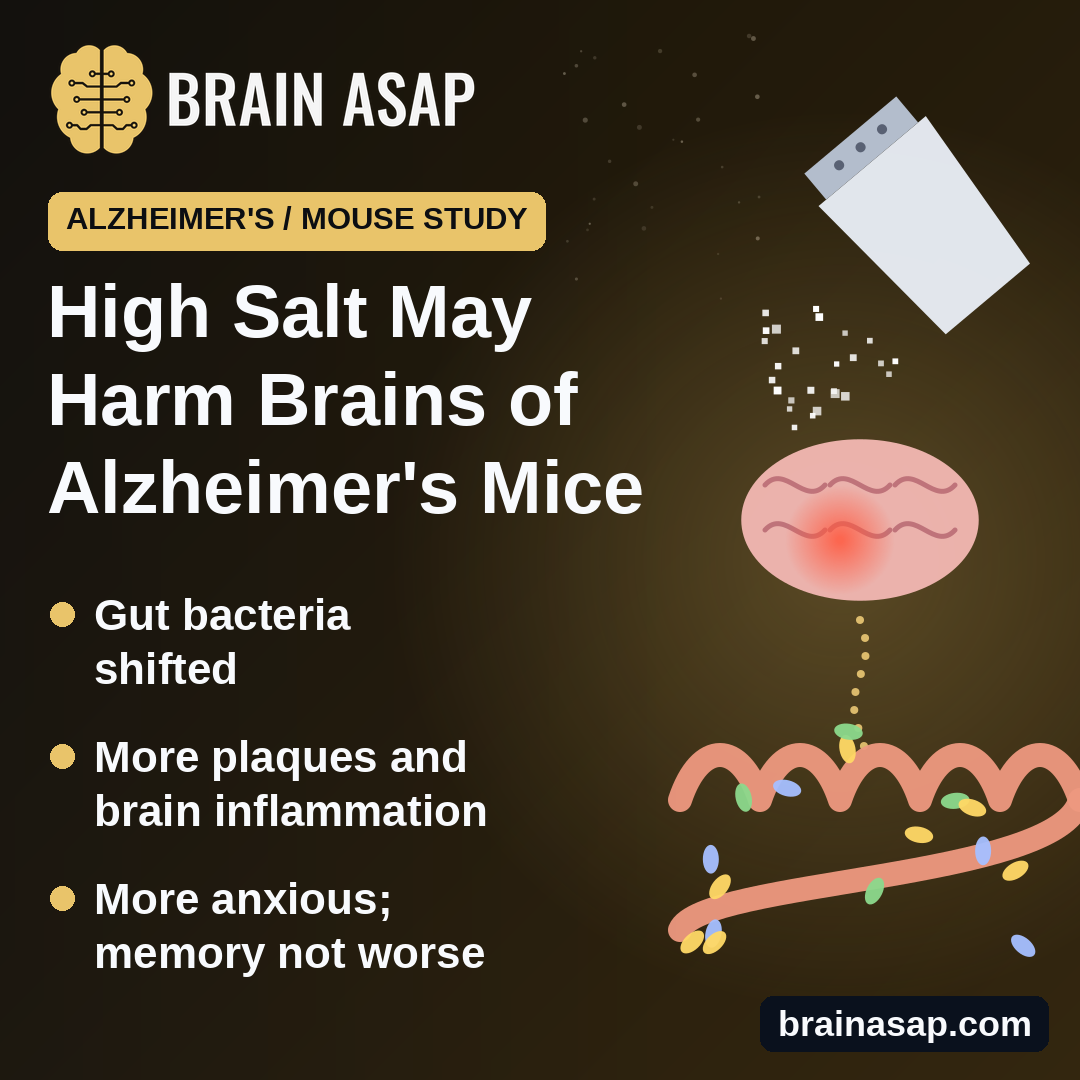
High Salt Intake Linked to Alzheimers Disease & Dementia Risk in Europeans (2024 Study)

TLDR: This study provides evidence that high salt intake is causally associated with an increased risk of developing dementia, including Alzheimer’s disease (AD) and undefined dementia. Highlights: Causal Association: High salt intake is significantly associated with an increased risk of any dementia (OR = 1.73) and specifically Alzheimer’s disease (OR = 2.10). Cognitive Performance: Higher …

Read more

Flavonoids in Diet Linked to Lower Risk of Depression Symptoms in Women

Eating foods rich in certain flavonoids may help lower the risk of experiencing depressive symptoms, suggests new research based on U.S. national health data. Key facts: Higher intakes of anthocyanidins, flavanones, flavones, and isoflavones were associated with lower odds of depressive symptoms after adjusting for confounders. There was an inverse association between total flavonoid intake …

Read more

Boost Your Brain: Foods that May Increase Neurotransmitter Levels

Food provides the building blocks for our mental and physical health. New research reveals that many common foods supply key neurotransmitters that regulate brain and nervous system function. Understanding how our diet provides these crucial molecules opens up possibilities for supporting brain health through food. Key Facts: Foods contain the same neurotransmitters used by the …

Read more

Fasting Increases Dopamine Signaling in Reward Center of Brain (Mouse Study)

Researchers have uncovered new insights into how fasting alters dopamine signaling in the brain’s reward circuitry. Their findings, published in the Journal of Neurophysiology, suggest that fasted mice exhibit enhanced dopamine release in the ventral tegmental area (VTA) of the brain compared to fed mice. This may help explain fasting’s impact on motivation and reward-seeking …

Read more

Edible Insects as Eco-Friendly Food: Health Benefits & Challenges of Eating Bugs

Insects are increasingly being recognized as a nutritious and eco-friendly alternative protein source that could help feed the world’s growing population. Recent research highlights the nutritional benefits of insects, their potential use as food ingredients, health-promoting bioactive compounds, impact of processing, barriers to adoption, and considerations around safety and regulation. Key Facts: Over 2,000 insect …

Read more