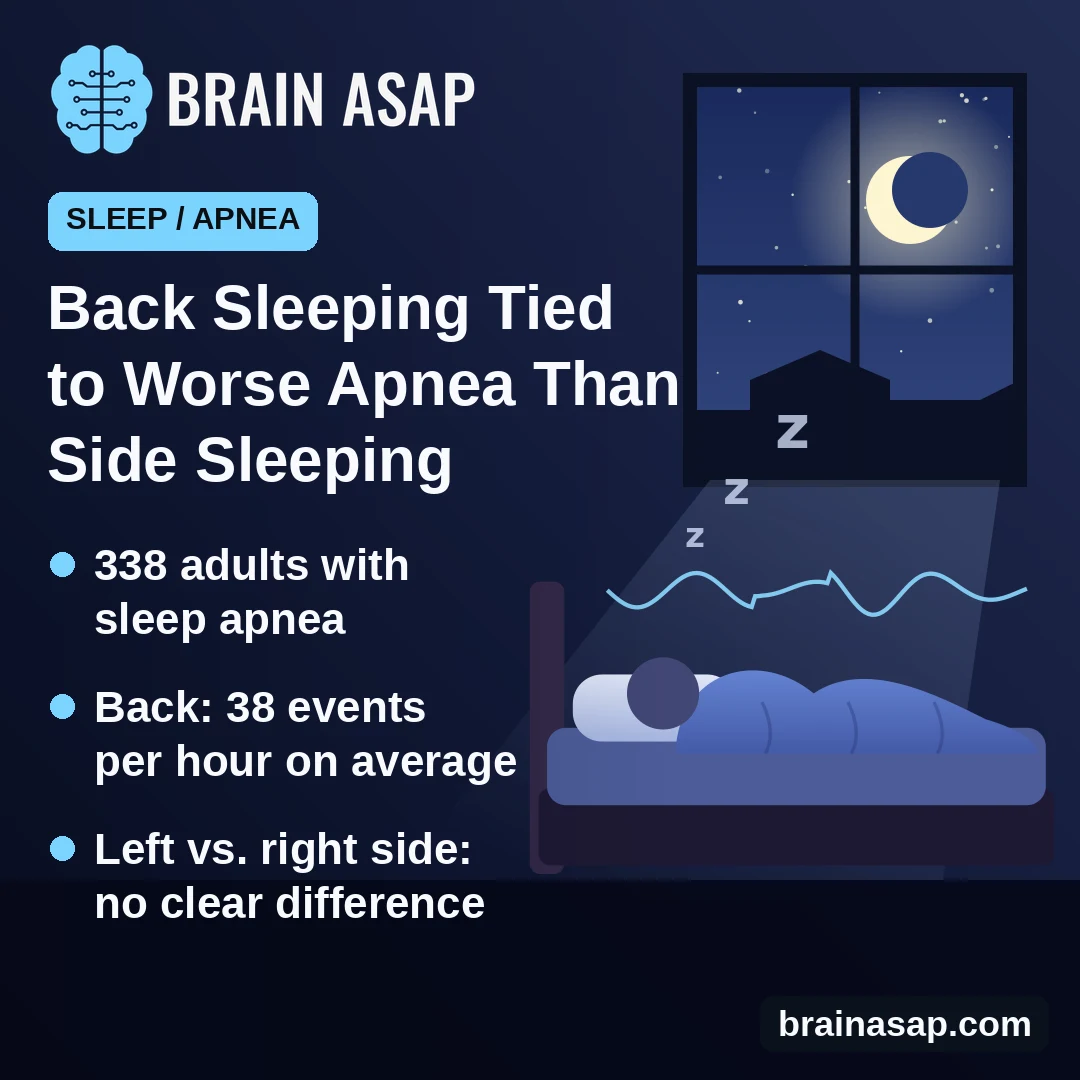
TL;DR: In 338 adults with sleep apnea, breathing events ran about 38 an hour on the back versus about 22 on either side. This past-records study shows a link, not that changing position helps. Key Findings Back sleeping worst: Among people who spent over 20% o…
Read article ↗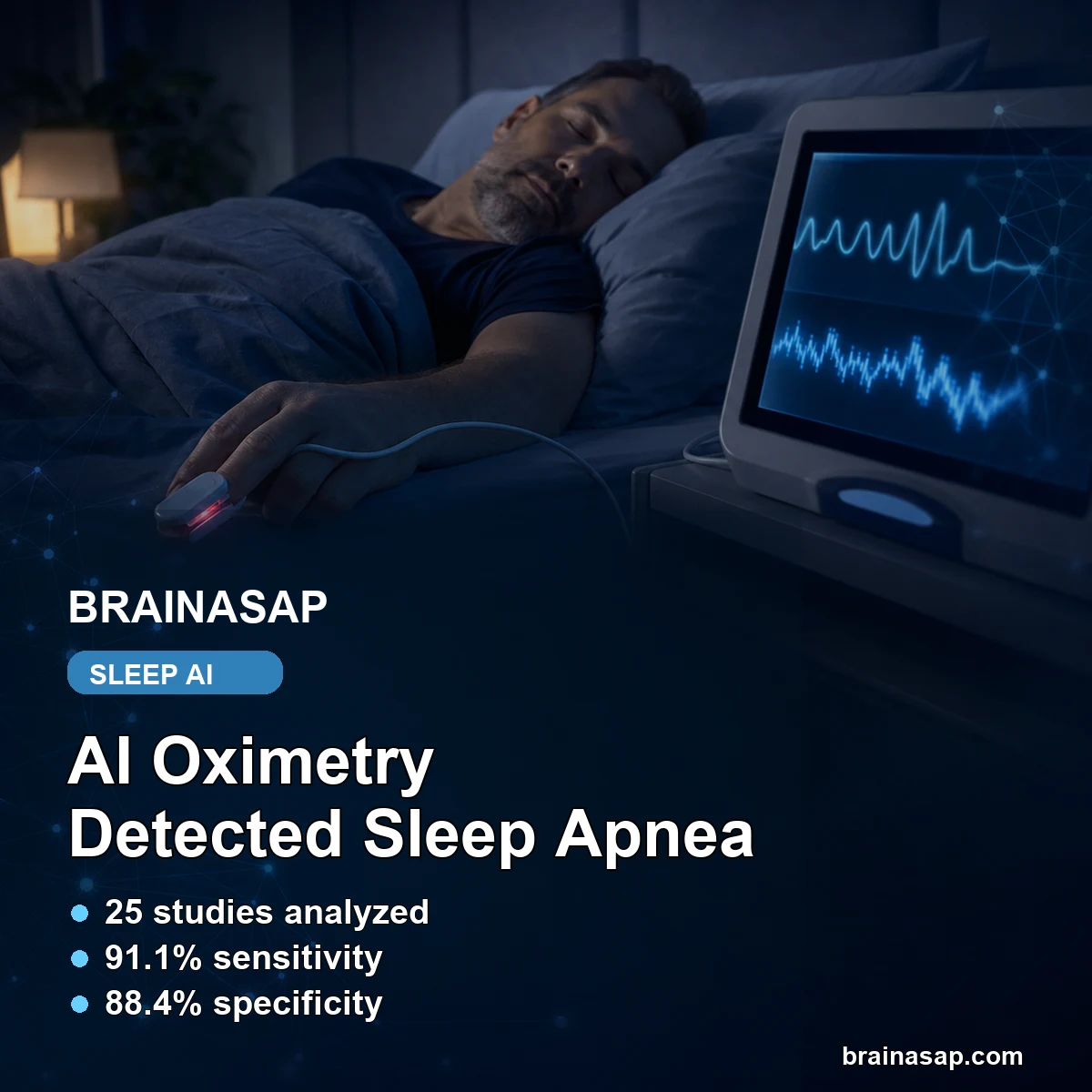
TL;DR: A 2026 systematic review and Bayesian meta-analysis in Journal of Medical Internet Research found that artificial intelligence models trained only on overnight pulse-oximetry oxygen-saturation data detected obstructive sleep apnea with 91.1% sensitivity…
Read article ↗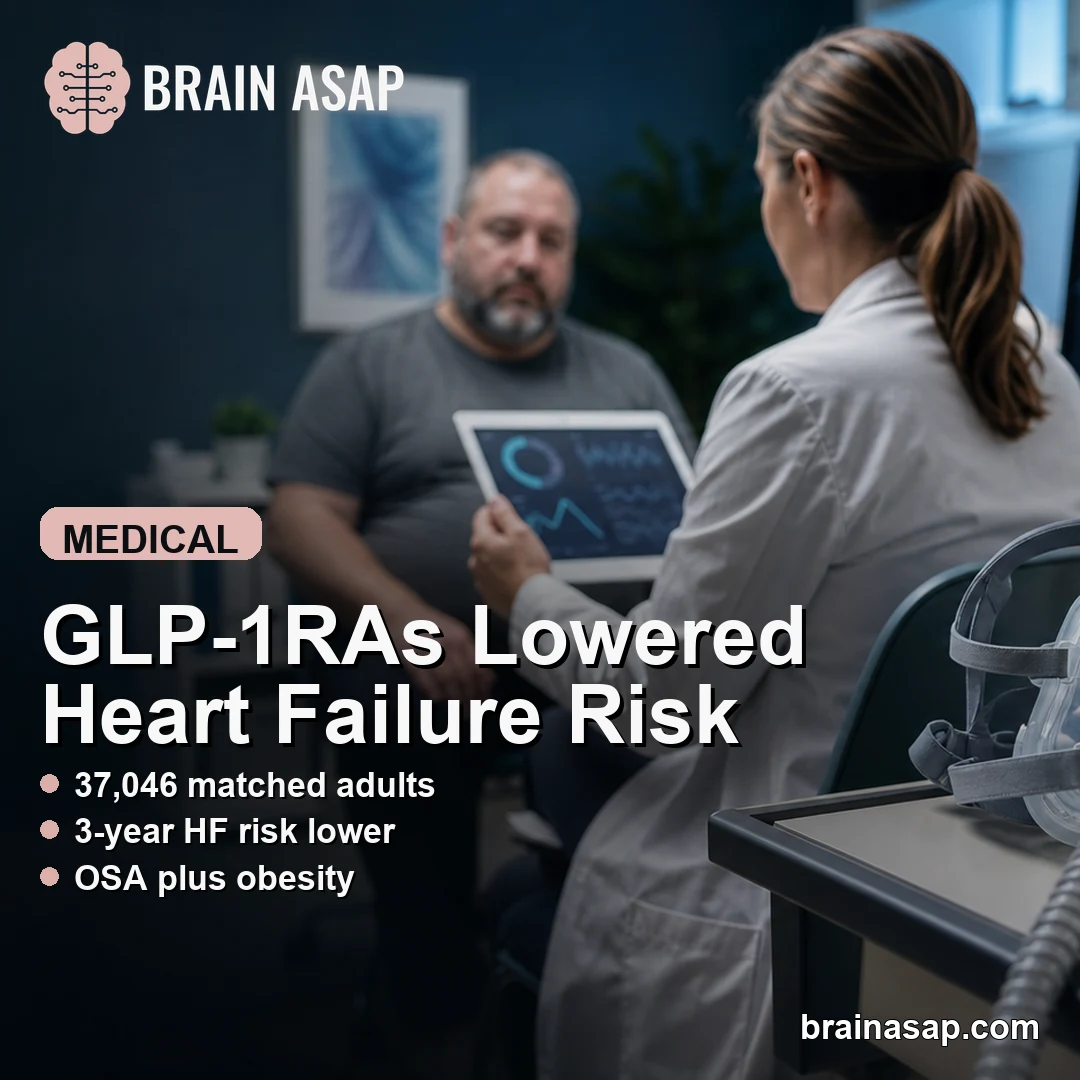
TL;DR: A 2026 real-world study in Journal of Clinical Sleep Medicine found that glucagon-like peptide-1 receptor agonist use was associated with lower 3-year cardiovascular-event risk in adults with obesity and obstructive sleep apnea. Key Findings 18,523 matc…
Read article ↗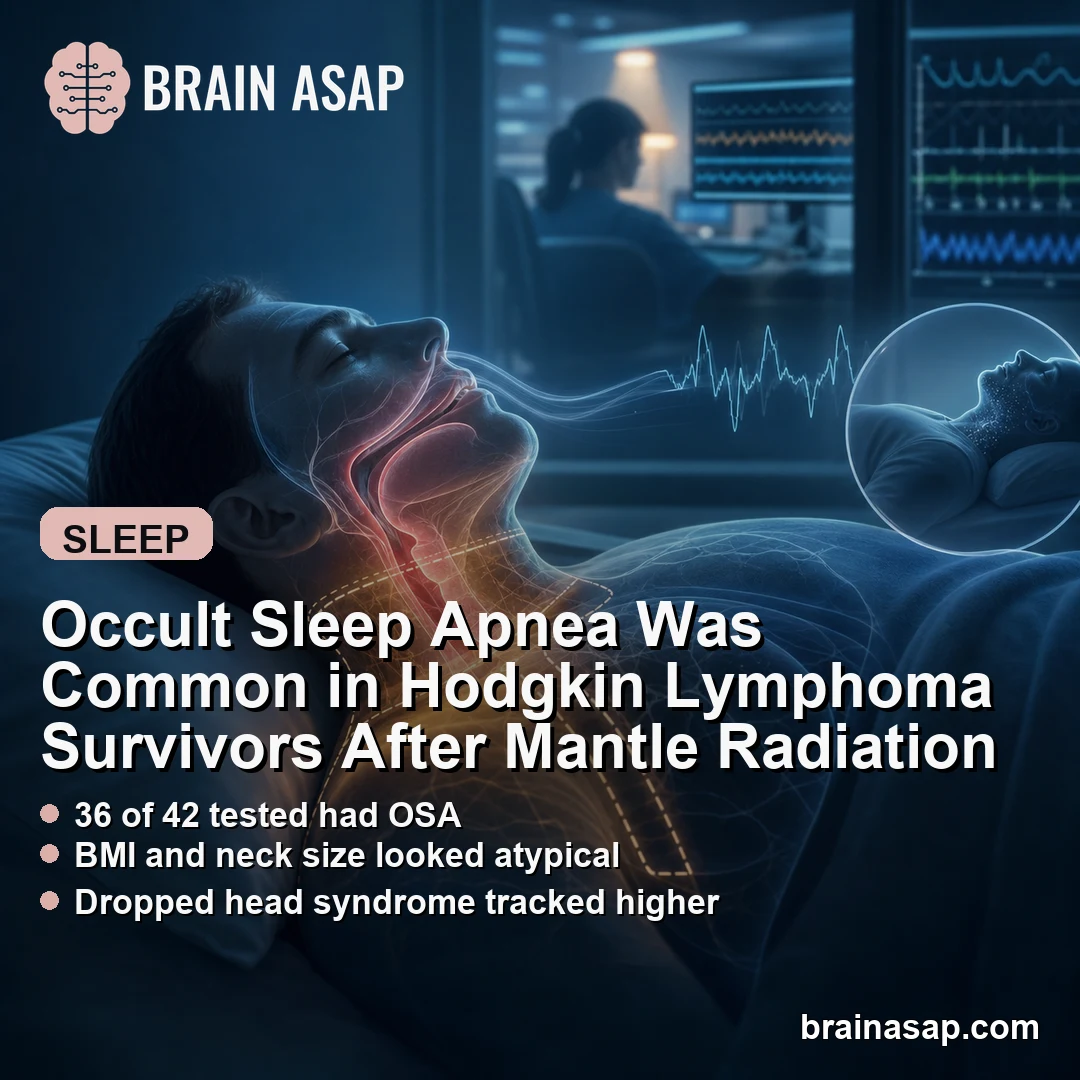
TL;DR: A 2026 study in Journal of Clinical Sleep Medicine found that 36 of 42 Hodgkin lymphoma survivors tested after mantle radiation therapy had obstructive sleep apnea (OSA), despite mostly normal BMIs and slender necks — an under-recognized phenotype linke…
Read article ↗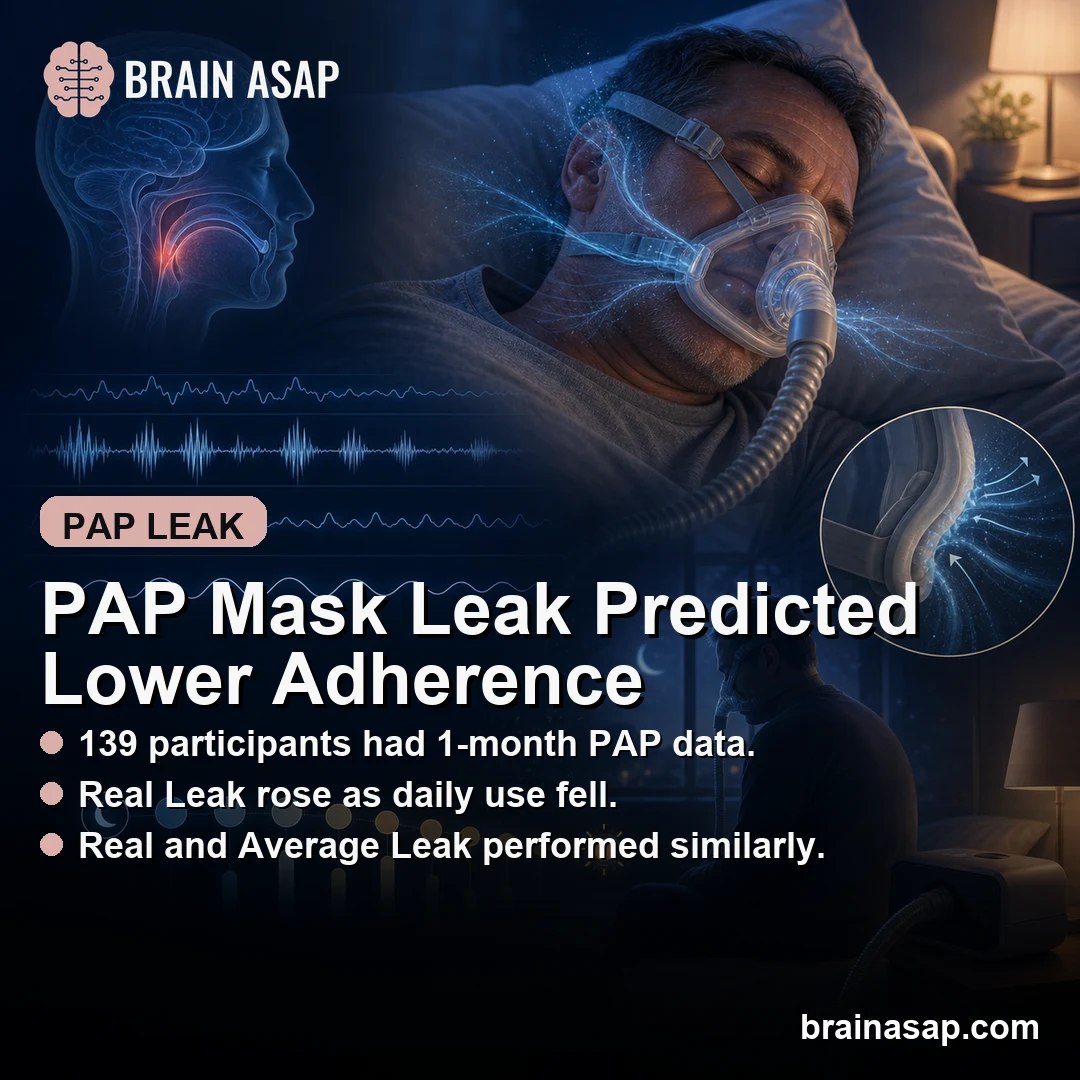
TL;DR: A 2026 HomePAP secondary analysis in Journal of Clinical Sleep Medicine found that higher PAP mask leak predicted lower obstructive sleep apnea treatment adherence, but a new Real Leak measure, unintentional leak after subtracting expected mask leak, di…
Read article ↗
TL;DR: A 2026 meta-analysis in Sleep and Breathing found that GLP-1 drugs, metabolic hormone medications involved in glucose, appetite, and weight regulation, were linked to fewer obstructive sleep apnea breathing events in adults with obesity. Key Findings Sl…
Read article ↗