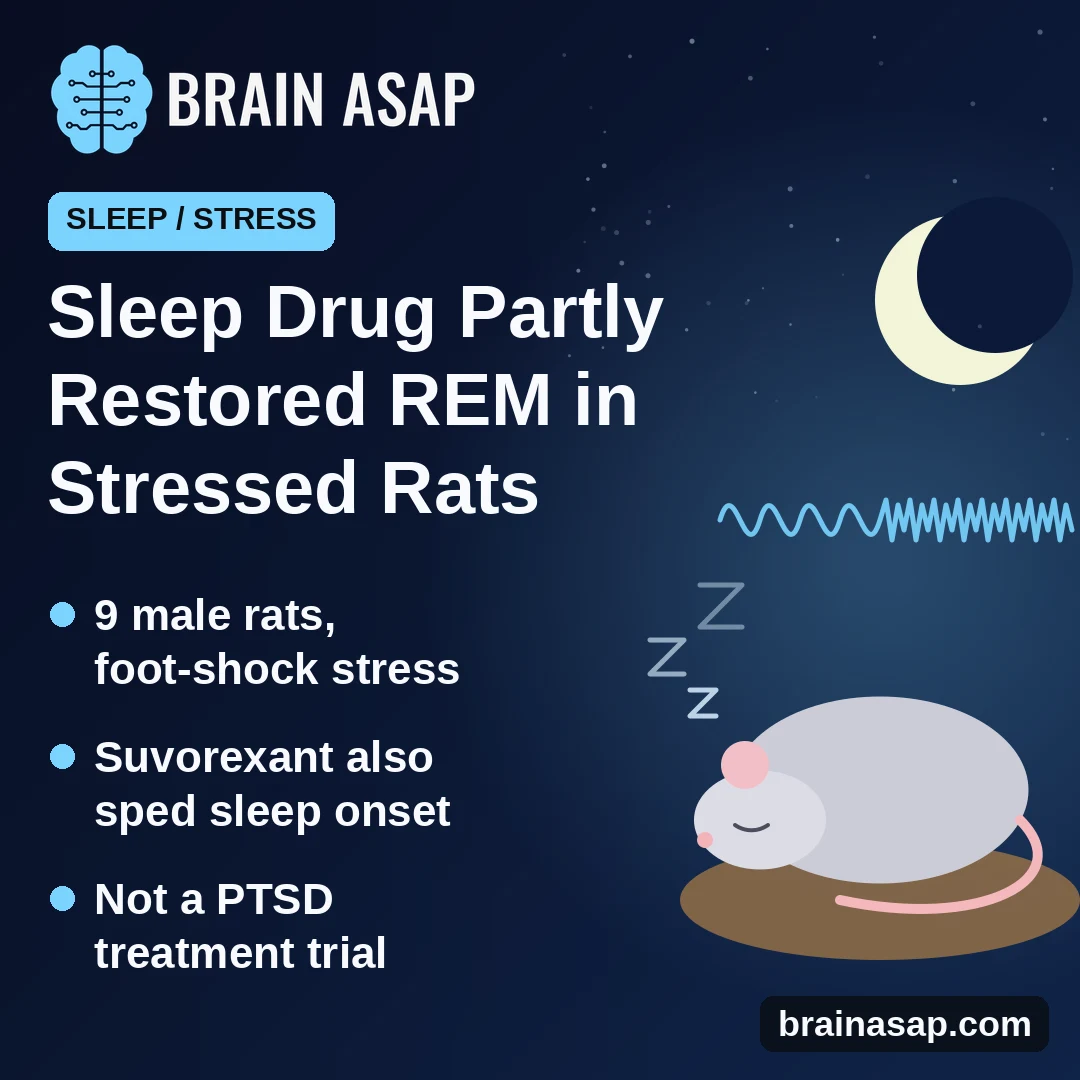
TL;DR: In rats stressed with mild foot shocks, REM sleep, the dream stage, dropped. The insomnia drug suvorexant and two related experimental drugs partly brought it back, and suvorexant also helped the rats fall asleep faster, but this was a small study in 9…
Read article ↗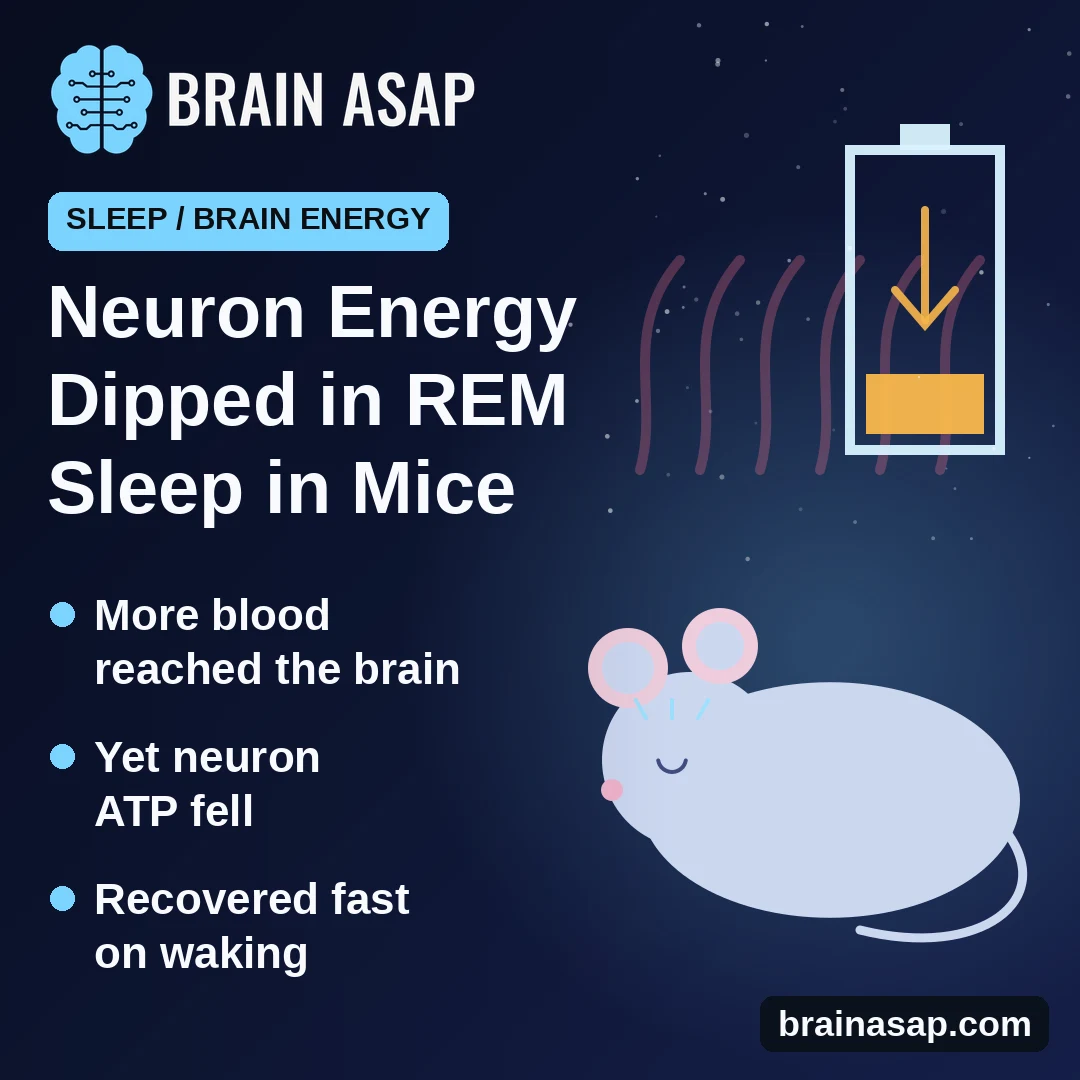
TL;DR: In sleeping mice, blood volume in the brain rose sharply during REM sleep, yet the energy molecule ATP inside neurons dropped. It bounced back as soon as the mice woke, suggesting REM sleep spends energy faster than blood supply alone can explain. Key F…
Read article ↗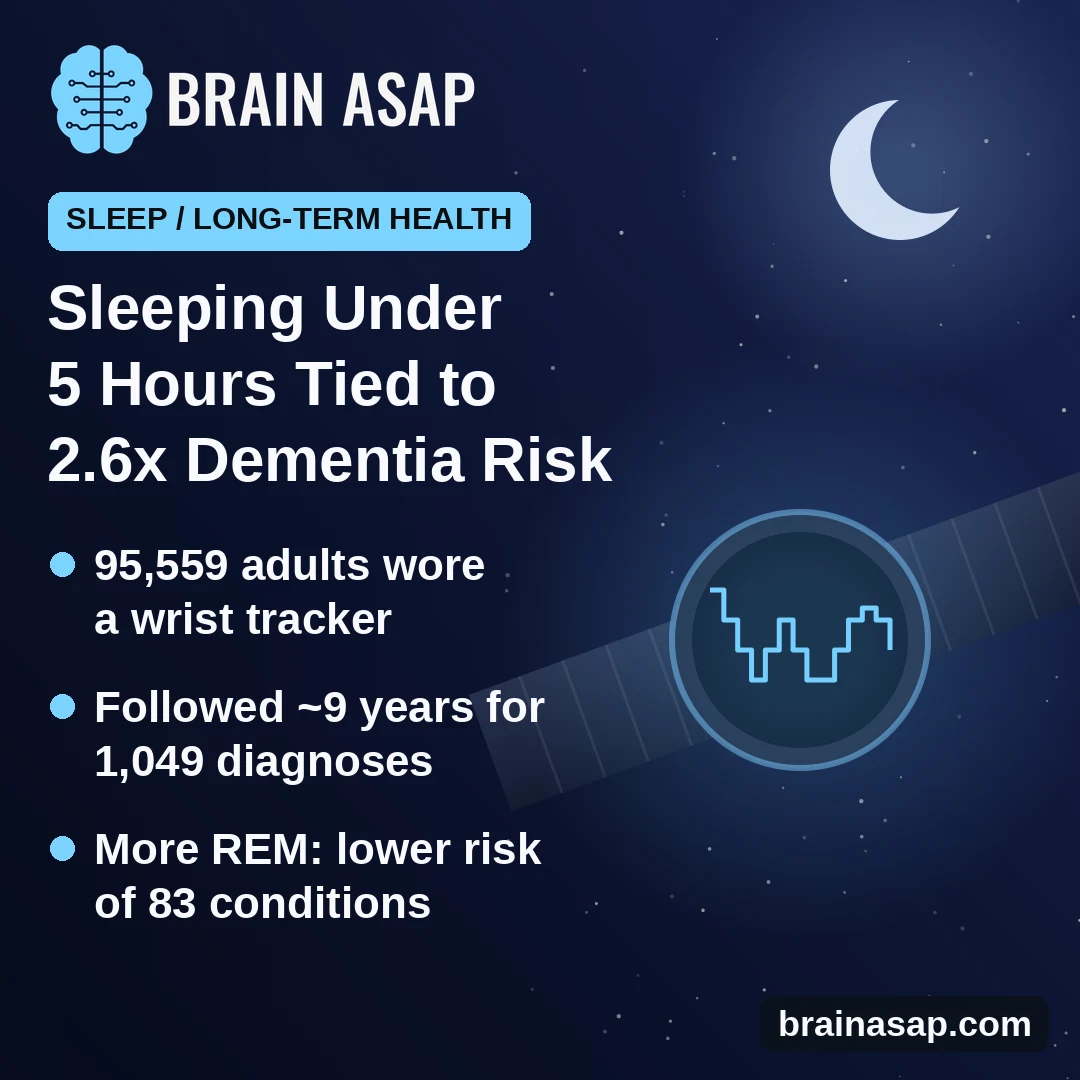
TL;DR: Researchers used wrist trackers to estimate the sleep stages of 95,559 British adults, then followed their hospital records for about 9 years. Adults who spent more time in REM sleep had lower risk of 83 different diagnoses, and adults sleeping under 5…
Read article ↗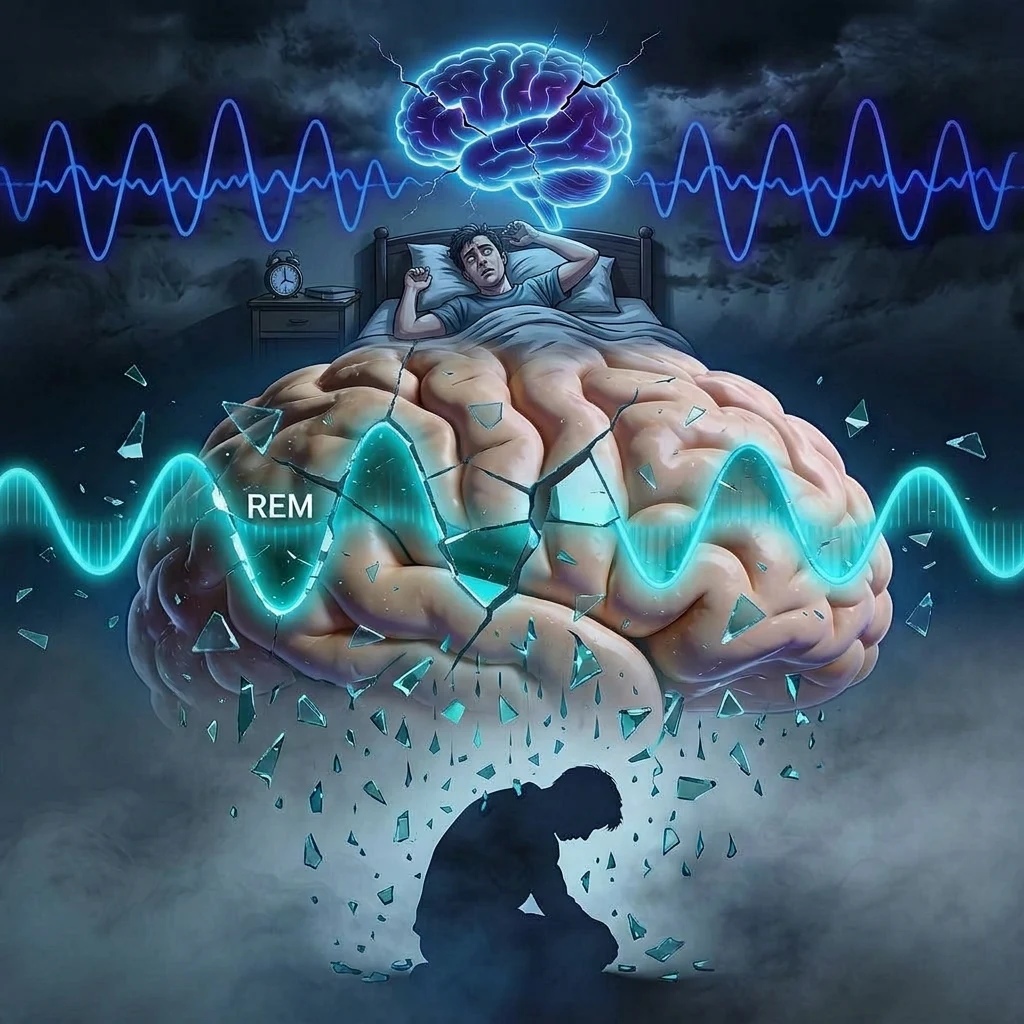
The Brain That Won’t Shut Down: How Fragmented REM Sleep Breeds Depression TL;DR: Chronic insomnia fragments REM sleep through persistent hyperarousal, preventing emotional memory consolidation and creating a vicious cycle that breeds depression—but cognitive-…
Read article ↗
A study found that REM sleep deprivation significantly impacts brain connectivity, particularly within the default mode network (DMN) and between the DMN and other brain networks, highlighting the importance of REM sleep for maintaining optimal brain function.…
Read article ↗