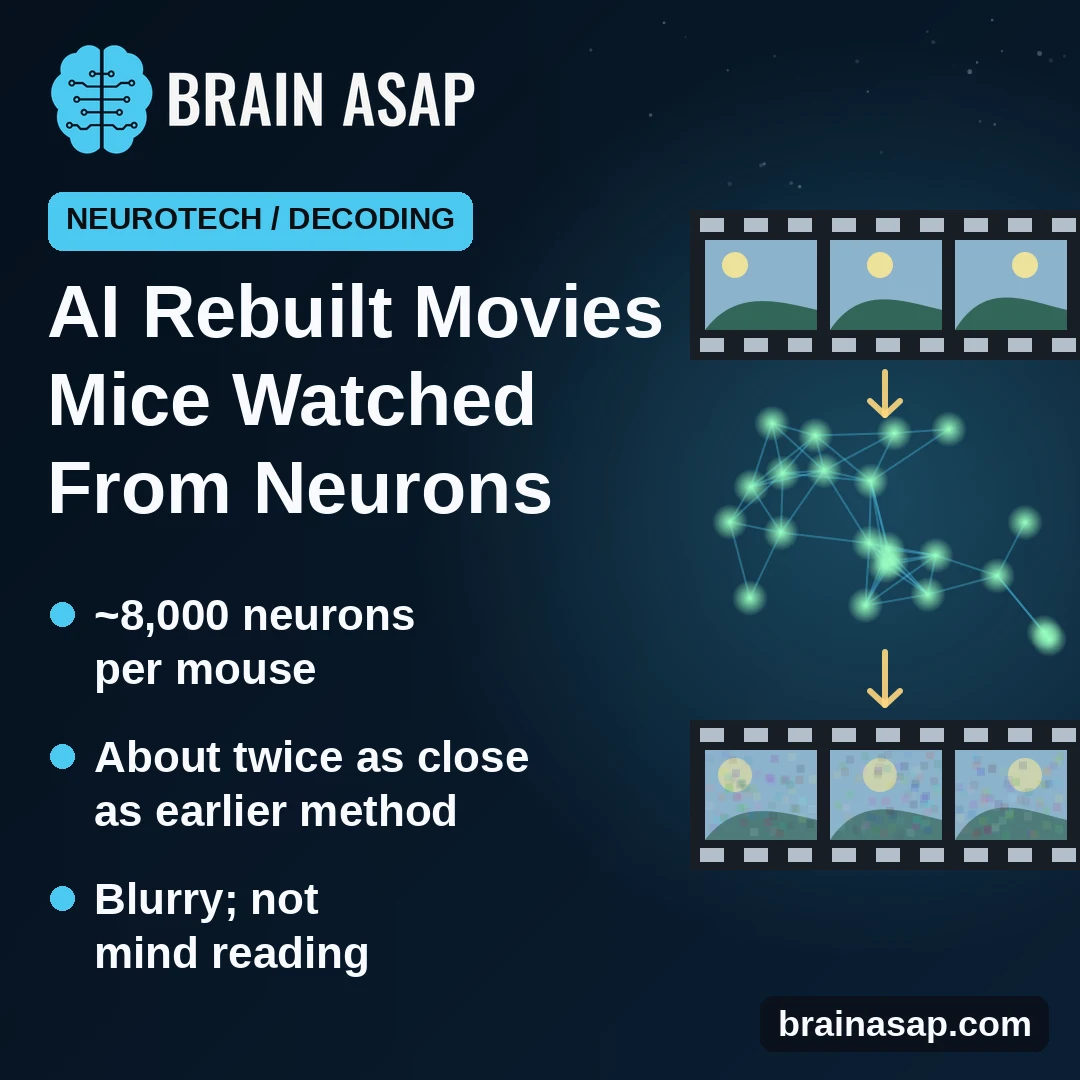
TL;DR: Researchers rebuilt 10-second movie clips that mice had watched, using only recordings from about 8,000 neurons in each mouse’s visual cortex. The blurry, low-resolution results matched the originals fairly well, but this is not mind reading. Key Findin…
Read article ↗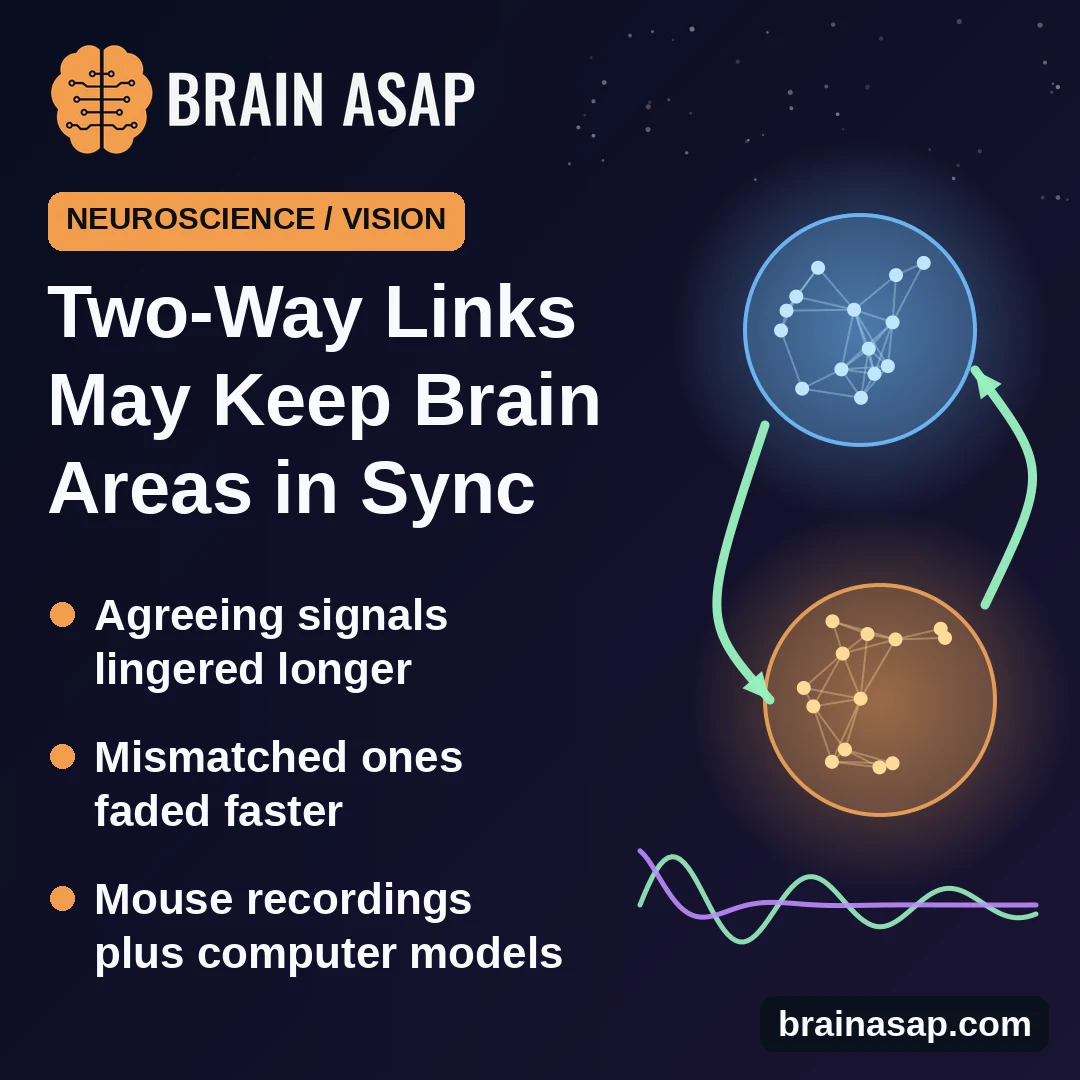
TL;DR: In mice, two visual areas of the brain kept signals they agreed on going longer and let mismatched signals fade faster. The two-way wiring between the areas appears to be what makes this happen. Key Findings Two areas recorded at once: 194 neurons in th…
Read article ↗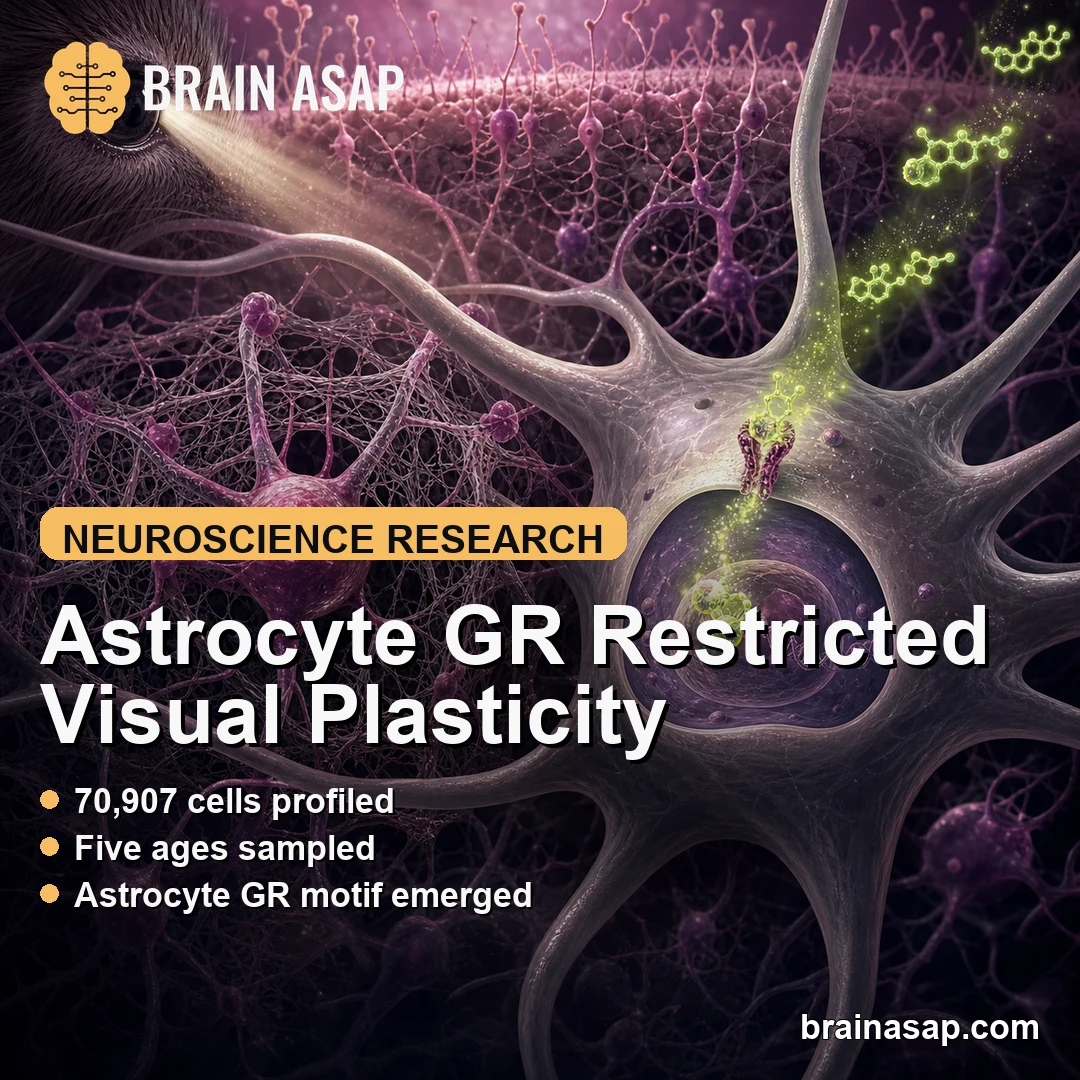
TL;DR: A 2026 mouse study in Nature found that the astrocyte glucocorticoid receptor pathway helped mature visual cortex circuitry and restricted ocular dominance plasticity, linking light exposure, stress-hormone input, and astrocyte-driven circuit closure. K…
Read article ↗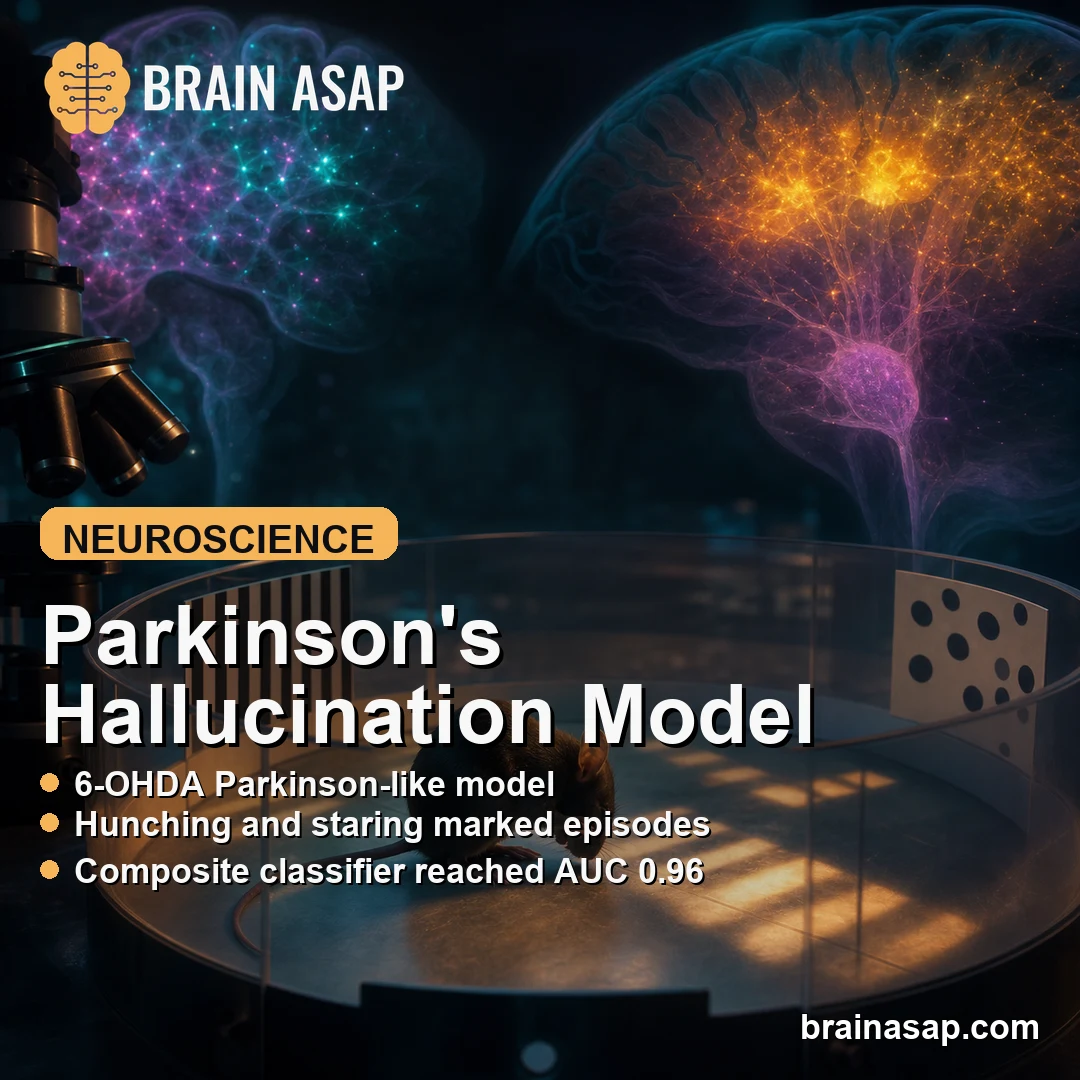
TL;DR: A 2026 study in Signal Transduction and Targeted Therapy built a Parkinson’s visual hallucination mouse model and found that a combined behavior map identified hallucination-like episodes better than any single movement measure. Key Findings Model: Rese…
Read article ↗
How Psychedelics Hijack Brain Waves to Create Hallucinations TL;DR: A psychedelic drug that activates serotonin receptors dramatically amplifies slow 5-Hz brain oscillations in visual and memory regions, suggesting a mechanism for how hallucinogens distort per…
Read article ↗